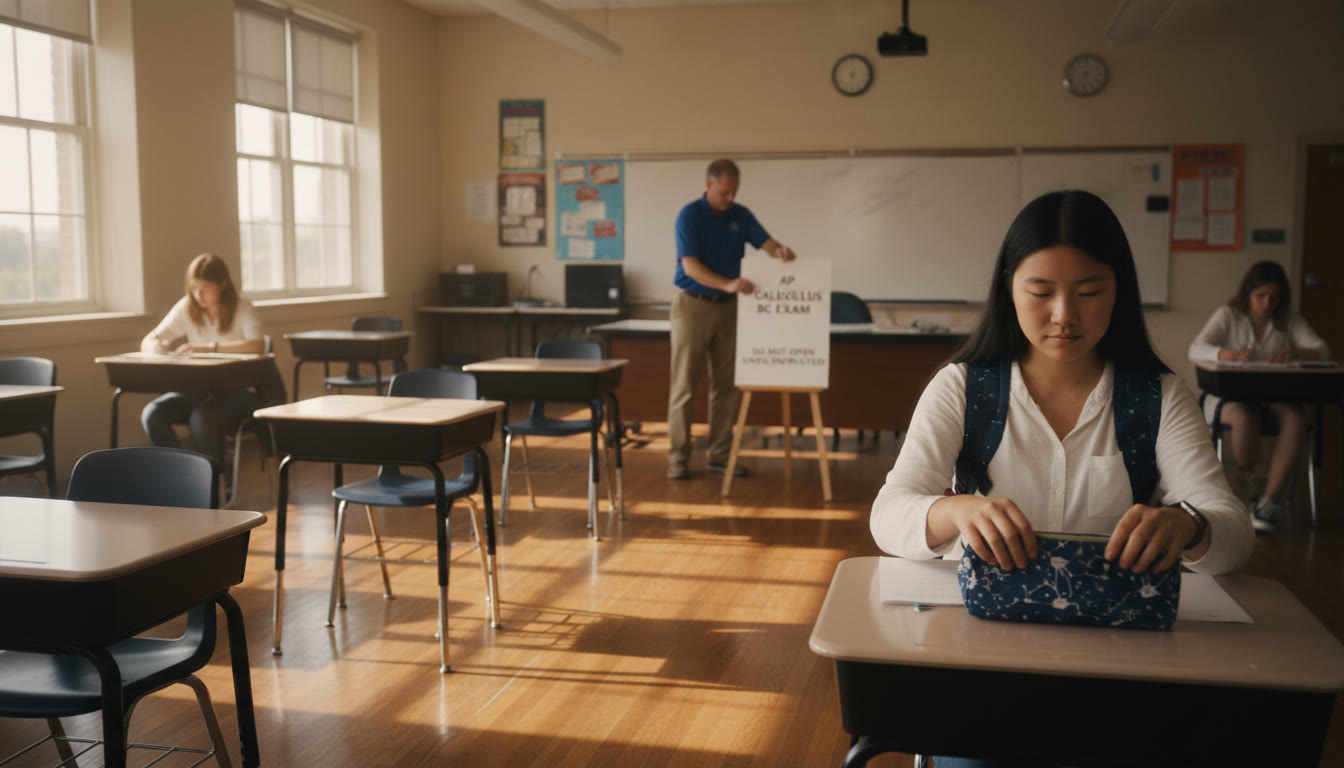

Walk Through the Door: Why Small Details in the Room Matter
You’ve studied the content, practiced the FRQs, and timed yourself through practice sections. But when you sit down in that testing room, small, practical details—where you’re seated, when the clock starts, and what happens during breaks—shape how you perform. This guide breaks down what will likely happen in the room and gives you simple, real-world strategies so exam day feels like a controlled performance instead of a surprise.
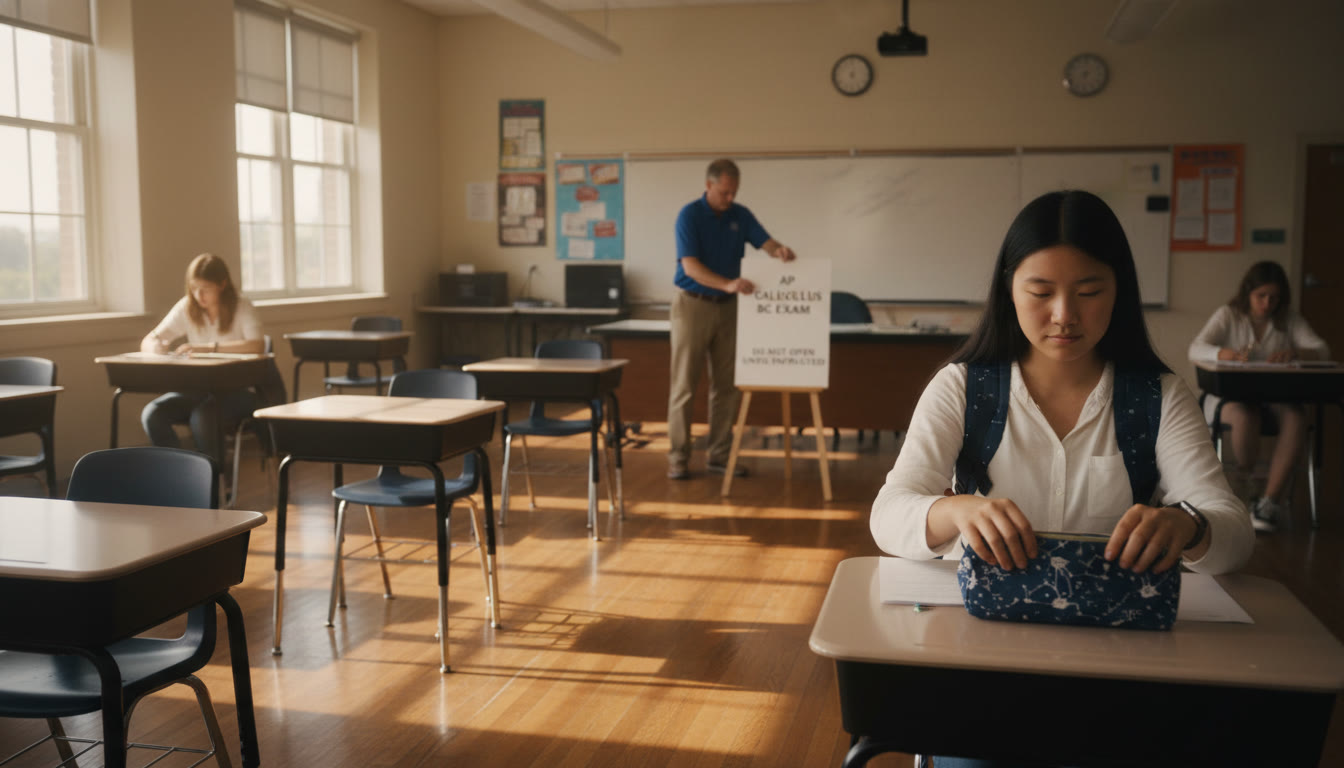
What to remember before you walk into the room
Before you step into the test room, confirm the basics: your start time and location, what to bring (photo ID if required, approved calculators, pencils, and your student account info for digital exams), and whether your school is administering the paper/hybrid/digital version of your AP. These logistical checks eliminate last-minute stresses that can otherwise sap your focus during the first ten minutes of the exam.
Seating: How it’s decided and why it matters
Seating for AP exams is rarely random chaos. Proctors and AP coordinators plan seating to meet security and accessibility requirements, reduce distraction, and help with smooth administration. Here’s how it typically works and how you can make the most of your assigned seat.
How seating is determined
- Assigned by proctor or coordinator: Many rooms have a predetermined chart so proctors can quickly verify who’s in each seat and keep a record of where exam materials were distributed.
- Spacing and sightlines: Desks are arranged to prevent students from seeing each other’s papers or screens and to make proctoring easier.
- Accommodations: If you have approved accommodations—like extra spacing, a separate room, or specialized equipment—those are applied during seating assignments.
How to use your seat to your advantage
- Arrive a little early to find any signs and place only permitted items on your desk (pencil, eraser, calculator if allowed, photo ID, and any approved materials).
- Face forward and set up an uncluttered workspace. Visual clutter can increase cognitive load; a neat desk helps your brain settle into the task.
- If you need to move—if the lighting is overly harsh or you can’t see the clock—politely tell the proctor sooner rather than later. They’ll document and decide whether a small change is possible.
Timing: When the clock starts, and what it really means
Understanding timing rules is critical. Some AP exams are offered in paper format, some fully digital, and some hybrid. The way time is tracked depends on the format, and knowing the mechanics keeps you from unintentionally losing minutes that add up.
Starting times and how they’re tracked
Proctors announce the official start and read instructions aloud. For digital exams, each student typically starts their exam when they enter the start code for their device, which means students might begin Section I at slightly staggered times. The important thing: the timer starts when the proctor tells you to begin or when you activate your start code—so pay close attention to directions.
Section timing and pacing strategies
Most AP exams are divided into sections (e.g., multiple-choice and free-response). When the proctor marks the start and stop time for each section, that’s your official window. Here are practical pacing approaches:
- Front-load a quick scan: In the first 3–5 minutes of a section, skim the full set of questions to identify easy points you can capture quickly.
- Set micro-checkpoints: For example, in a 60-minute section with 30 questions, aim to hit question 10 by 20 minutes and question 20 by 40 minutes. This keeps you from getting stuck too long on a single item.
- Use the last 5–10 minutes for review: Flag questions quickly instead of wasting time on perfecting one answer; return with fresh perspective during review time.
Digital exams: timers, pause features, and automatic submission
If you’re taking a digital AP, the testing platform monitors the clock. For scheduled breaks between sections in digital exams, the testing app (such as Bluebook) will automatically end Section I and begin the break when your timer runs out. Students resume Section II by clicking the resume button when the break timer ends. Remember:
- Staggered starts mean your personal timer, not the room’s clock, determines your section end.
- Some accommodations allow pausing as needed—this must be preapproved.
- When the timer reaches zero, answers are submitted automatically if the device is connected. If not, proctors have procedures to assist, so stay calm and follow their instructions.
Breaks: rules, reality, and smart use of downtime
Breaks can feel like a relief—but they also come with strict rules designed to protect exam security. Knowing what you can and cannot do during breaks helps avoid accidental violations and gives you a plan to recharge your brain without jeopardizing your score.
What you typically can and cannot do during scheduled breaks
- Do not access notes, textbooks, phones, or communicate about the exam. Using any electronic device during breaks can lead to score cancellation.
- You may be allowed to leave the room under proctor supervision; however, leaving the building is usually forbidden. Follow the proctor’s instructions about where you may go for a quick stretch or bathroom break.
- Food and drink generally aren’t permitted in the exam room unless approved as an accommodation. You might be allowed a quick snack or drink in a supervised area during the official break.
Breaks for students with accommodations
Students with approved accommodations may receive extra breaks, extended breaks, or the ability to pause as needed. These are arranged in advance through the Services for Students with Disabilities (SSD) process. If you have approved accommodations, make sure your SSD coordinator confirms them well before exam day—usually far enough in advance to appear in the exam setup.
Proctor expectations and the quiet choreography of exam day
Proctors are there to keep the testing environment fair and safe, not to intimidate. They’re trained to read instructions, manage timing, monitor the room during testing and breaks, and handle incidents. Understanding their duties can help you anticipate the flow of the day and know when to ask for help.
Common proctor actions you’ll see
- Reading official instructions aloud and distributing materials just before the start time.
- Posting start and stop times and updating them as sections begin.
- Walking the room to ensure students are working on the correct section and to check for prohibited items.
- Monitoring the room during scheduled breaks and unscheduled leaves (like brief restroom visits).
When to talk to a proctor
If a technical issue, timing discrepancy, or unexpected health need arises, raise your hand and explain calmly. Proctors follow a documented incident procedure; they’ll record the issue and either resolve it on the spot or flag it for College Board review. Never try to troubleshoot devices or timing problems yourself—ask for assistance immediately.
Common exam-day scenarios and how to handle them
Let’s walk through several real situations so you’ll know how to act instead of guessing under stress.
Scenario 1: My timer didn’t start when I thought it should
- Raise your hand, tell the proctor the exact time you entered the start code or clicked the start button, and request confirmation. The proctor will document and resolve according to the testing manual.
- Don’t restart or try to fix anything yourself—doing so might create security concerns.
Scenario 2: I need a bathroom break or feel faint
- Signal the proctor. Short restroom visits are typically permitted but may be recorded as an unscheduled break (which could subtract from your testing time in some formats).
- If you feel unwell, proctors can pause the testing device for students with approved accommodations or follow a procedure to document the incident and advise next steps.
Scenario 3: Another student is distracting me
- Don’t confront them. Try to refocus with a quick breathing exercise. If it persists, quietly raise your hand and ask the proctor for intervention.
- Proctors can move students or address the distraction without interrupting your test time if it’s safe to do so.
Practical checklists: what to do the night before and during the morning of the exam
Little rituals make a big difference. Build a reliable pre-exam routine that reduces friction and preserves mental energy for the test itself.
The night-before checklist
- Confirm your exam location, start time, and whether the test is digital, hybrid, or paper.
- Pack a small testing kit: approved calculator (fresh batteries), two #2 pencils, erasers, a photo ID if required, and any approved accommodation documentation.
- Lay out comfortable clothes in layers (classrooms can be chilly or warm), and prepare a simple, familiar breakfast.
- Get a good night’s sleep. Even 60–90 minutes more sleep tends to beat extra late-night cramming.
Morning-of checklist
- Eat a protein-rich breakfast to avoid energy dips. Keep caffeine moderate—enough to sharpen focus, not spike nerves.
- Arrive early to the testing site to handle check-in and any last-minute instructions calmly.
- Review a quick 10–15 minute light warm-up: a few practice multiple-choice problems or a short review of formula sheets—nothing heavy.
Using breaks strategically: short mental resets that work
When break time comes, don’t use it as an excuse to re-study. The aim is restoration. Here are easy, evidence-aligned tactics:
- Breathe and move: a five-minute walk or stretching routine loosens muscles and refreshes blood flow to your brain.
- Hydrate and snack smart: a bite of fruit or a small granola bar helps maintain steady glucose without making you sluggish. Only do this if the proctor allows and if it’s compliant with testing rules or accommodations.
- Do a short, focused mental check: note which questions you want to revisit and what strategy you’ll use (e.g., re-evaluate algebraic setup vs. re-check arithmetic), then let it go and reset your attention for Section II.
Table: Quick reference for common AP exam room rules and their practical implications
| Rule | What It Means For You | Quick Action |
|---|---|---|
| No electronic devices during testing or breaks | Phones, smartwatches, and earbuds are prohibited; using them can cancel your score. | Leave devices at home or turn them off and store them according to the proctor’s instructions before the exam. |
| Timed sections cannot be extended unless approved | Regular students must finish within posted times; only approved accommodations allow extra time. | If you believe you need accommodations, arrange them through your school SSD well before exam day. |
| Breaks monitored and restricted | Breaks are supervised and you cannot discuss exam content or access unauthorized materials. | Use breaks for mental reset only—no reviewing notes or phones. |
| Proctor records incidents | Technical problems or disruptions will be documented and reviewed; don’t try to “fix” anything on your own. | Notify the proctor immediately and follow instructions. Stay calm. |
Mindset: small rituals to protect focus in the room
Exam rooms can feel sterile, but you bring your own rituals that cue calm and competence. Consider a 60-second breathing routine, a five-second visual anchor (a simple phrase like “one task”), or a tactile ritual (arranging pencils in a line). These micro-routines slow your heart rate and let you direct attention where it’s needed.
How tutoring and targeted prep help with exam-day logistics
Knowing testing logistics is a form of preparation. Many students focus only on content, but a few tutoring sessions that simulate the room, timing, and break rules can lower anxiety and translate studying into exam performance. Personalized tutoring—like Sparkl’s 1-on-1 guidance—can tailor practice under timed conditions, provide expert strategies for pacing, and simulate the exact timing and break structure of the exam you’ll take. That preparation can make the difference between feeling rushed and feeling prepared.
What targeted practice should include
- Timed section simulations that mimic staggered digital starts or paper-based section transitions.
- Break simulation so you practice resetting quickly and revisiting flagged problems under real constraints.
- Personalized feedback on pacing and section strategy so your natural tendencies (like overworking one problem) are corrected with specific drills.
Final exam-day comportment: small habits that pay off
On test day, your goal is twofold: maximize effective work time and minimize avoidable mistakes. That’s the payoff of practicing logistics: when you’re not worried about where to sit, when the timer starts, or whether a brief break will be allowed, you can devote mental energy to answering questions clearly and efficiently.
Quick exam-day do’s and don’ts
- Do arrive early and check in calmly.
- Do listen carefully to proctor instructions and watch posted start/stop times.
- Do use breaks to reset—move, breathe, hydrate (if allowed)—and avoid studying during that time.
- Don’t access your phone or discuss exam content with anyone during or after the test.
- Don’t panic if something goes wrong—raise your hand, explain the issue to the proctor, and let them document it.

After the exam: what to do in the 30 minutes that follow
Once the exam is over, don’t immediately start reciting questions or posting about them. College Board exam security rules forbid discussing or sharing exam content. Instead, use the next 30 minutes to decompress and review the next steps:
- Double-check any instructions the proctor gives about returning materials or next-day procedures.
- Do a light mental cooldown—listen to music, take a short walk, and avoid processing test questions aloud.
- Log any notes about how sections felt and what pacing adjustments you’ll make for future exams or retakes.
Wrapping up: Turn logistics into an advantage
Seating, timing, and breaks are not incidental—they’re part of the test. When you understand the mechanics and rehearse them, you reduce friction and boost focus. That’s why the best preparation blends content mastery with realistic practice: timed sections, room simulations, and break strategies. If you want targeted support, consider short, focused sessions that replicate exam conditions; personalized tutoring like Sparkl’s can give you 1-on-1 guidance, tailored study plans, and AI-driven insights so those practice runs translate into confident performance on exam day.
Walk into the room knowing the rules, breathe steadily, and let your preparation do the work. You’ve got this.






















No Comments
Leave a comment Cancel