

Why Mindset Matters: Two Modes, One Student
You’re not a machine that runs one program all day. You are a flexible thinker who needs to flip a mental switch when you move from an AP Calculus or Physics day to an AP Literature or History day. The trick isn’t to be equally brilliant at both at every moment—it’s to intentionally prepare your brain so it can perform the right kind of work when you need it.
This blog is a practical, human guide to building and practicing those switches. You’ll get routines, micro-habits, examples, and a realistic plan for the week that keeps you sharp without burning out. We’ll also look at how tailored help—like Sparkl’s personalized tutoring, which offers 1-on-1 guidance, tailored study plans, expert tutors, and AI-driven insights—can speed up the process when you need targeted support.

How STEM and Humanities Thinking Differ (And Why That’s Good)
At a glance, STEM and humanities both require deep thinking—but they often use different muscles.
- STEM days favor precision, step-by-step logic, quantitative reasoning, and checking work. Think algorithms, formulas, and explicit procedures.
- Humanities days reward interpretation, argumentation, narrative sense, synthesis of different perspectives, and creative expression. Think themes, textual evidence, and persuasive voice.
Neither mode is superior. Being deliberate about which mode you need trains your brain to be efficient. When you practice switching, you stop carrying the residue of one style of thinking into the next—and that’s often where mistakes and frustration arise.
Before You Start: A Simple Assessment to Tune Your Plan
Take 10 minutes and answer these quick diagnostic questions to figure out your baseline:
- How comfortable do I feel with step-by-step problem solving right now? (1–5)
- How fluent am I at writing thesis-driven responses under time pressure? (1–5)
- How often do I get distracted when switching between subjects? (Never–Often)
- What’s my energy peak today—morning, afternoon, or evening?
Use the answers to schedule your harder work at your energy peaks. If your brain is fresh in the morning, do rigorous STEM problem sets then and reserve afternoons for reading, annotation, and essay outlines.
Daily Routines: A Lightweight Ritual to Shift Modes
Rituals cue your brain. Even small rituals—two minutes—can make the mental flip easier.
Transition Into a STEM Day (15–30 minutes)
- 1–2 minute breath and posture check: sit upright, put away your phone face down.
- 3–5 minute warm-up: solve two quick problems you can finish in under five minutes (calculation or conceptual).
- Set a clear goal: “Complete three calculus problems and review Taylor series notes.”
- Use a focused timer (Pomodoro 25/5 or 50/10) and write a short checklist on top of your page.
Transition Into a Humanities Day (15–30 minutes)
- 2 minute breathing and reading posture: pick a pen you like to write with.
- 5 minute preview: skim chapter or essay headings, underline two lines you think might be evidence for a theme.
- Set a creative goal: “Draft an outline for a practice response using three textual details.”
- If you’re prone to perfectionism, give yourself a timed ‘messy draft’ window—10 minutes where neatness is banned.
Concrete Strategies for STEM Days
STEM days are about clarity, practice, and error analysis. Here are techniques that actually move the score needle.
- Do targeted problem sets: Not all practice is equal. Focus on problems that match the AP exam format and your weaknesses.
- Practice under test conditions: Use timed sets and remove your notes. If a question is multiple parts, practice determining which part gives the clue to the next.
- Keep a mistake log: Record the type of error (algebra, interpretation, arithmetic) and how you’ll avoid it next time.
- Explain out loud: Talk through a solution as if teaching someone. This exposes hidden leaps in logic.
- Use visuals: Diagrams, labeled axes, or quick sketches reduce cognitive load and prevent careless errors.
Example STEM Session
Plan: 90 minutes. 25 minutes: timed multiple-choice set; 5 minute break; 45 minutes: two free-response problems with written solution; 15 minutes: error log and focused review of one weak concept.
Concrete Strategies for Humanities Days
Humanities days ask for interpretation, evidence, and voice. Your aim is to move from surface comprehension to purposeful argument.
- Annotate like a lawyer: Mark claims, evidence, rhetorical techniques, and counterarguments. Write one-sentence summaries in the margins.
- Practice short timed responses: The AP essay is about making a strong, structured case in limited time. Write 20-minute thesis-driven responses weekly.
- Build evidence banks: Keep a running list of quotes, facts, and primary sources you can reuse across prompts.
- Read across contexts: Compare how different authors treat a similar theme. This trains synthesis and comparative skills.
- Talk about ideas: Discussing interpretations with a peer or tutor will sharpen your claims and expose weak evidence.
Example Humanities Session
Plan: 90 minutes. 10 minutes: focused reading and margin notes; 30 minutes: draft a 20-minute timed essay; 10 minute break; 30 minutes: revise and annotate feedback; 10 minutes: add a quote to your evidence bank.
Weekly Schedule Blueprint: Balancing Depth and Variety
Here’s a flexible weekly plan you can adapt depending on which APs you’re taking. The goal is concentrated practice with deliberate transitions.
| Day | Primary Focus | Session Structure | Mini-Goal |
|---|---|---|---|
| Monday | STEM Deep Work | 1×90 min problem set + 30 min review | Master one problem type |
| Tuesday | Humanities Drafting | 2×60 min reading + timed essay | Strong thesis & evidence |
| Wednesday | Mixed Practice | 45 min STEM, 45 min Humanities | Switch quickly with 5 min ritual |
| Thursday | Full-Length Practice (Alternate) | 3–4 hour exam simulation (alternate APs each week) | Test endurance & timing |
| Friday | Reflection and Error Clinic | 60–90 min review + tutor check-in | Fix recurring errors |
| Weekend | Light Review and Recharge | Short sessions, reading, and creative work | Consolidate and rest |
This blueprint keeps deep-focus sessions balanced with variety so your brain doesn’t get stuck in one groove for too long—a common source of fatigue.
Switching Quickly: Micro-Habits That Work
Sometimes you’ll have back-to-back classes or study blocks. These micro-habits help you pivot in minutes.
- Reset the desk: Put away notebooks and materials from the previous subject. Visual clutter drags attention.
- Two-breath reset: Inhale for 4 seconds, exhale for 6. Do this twice and your prefrontal cortex re-centers.
- One-line summary: Before you stop a study block, write one sentence summarizing what you learned and one question to start with later.
- Switch soundtrack: If you use music, change playlists—minimal ambient for STEM, lyrical or none for humanities.
Common Pitfalls and How to Avoid Them
Even with a good plan you can stumble. Here are frequent traps and practical fixes.
- Trap: Carryover thinking—Approach a poetry question with the mindset of a math proof. Fix: Pause, label the task (Interpretive vs Procedural), and reframe the question out loud.
- Trap: Time mismatch—Spending 90% of your study block on one subject. Fix: Use block timers and protect short transition windows.
- Trap: Stale practice—Doing the same problem types without escalating difficulty. Fix: Rotate difficulty weekly and simulate exam conditions monthly.
- Trap: Over-reliance on notes—Always studying with answers present. Fix: Test yourself with closed-book recall and build an error log.
How to Use Feedback Effectively
Feedback accelerates growth when it’s specific and actionable.
- Annotate feedback in two colors: One color for conceptual issues, another for execution mistakes.
- Turn feedback into tasks: If an essay comment says “weak evidence,” assign a 30-minute session to collect three stronger sources and practice integrating them.
- Use weekly tutor check-ins: A short 20–30 minute session (like those offered through Sparkl’s personalized tutoring) to prioritize weaknesses and get targeted strategies can make your study time much more efficient.
Real-World Context: Why Both Modes Matter Beyond AP
College and career paths value both precision and interpretation. Engineers who can tell a compelling story about their design stand out. Historians who can use statistics to support an argument are more persuasive. By practicing switching minds now, you build a career skill—adaptability—that professors and employers prize.
When to Reach Out for Help (And How to Ask)
Not every struggle needs a tutor, but if you notice persistent plateaus, anxiety around test day, or inefficient study habits that waste hours, it’s time to get outside help. When you do, be specific:
- Show your error log or recent timed practice.
- Point to two specific goals (e.g., “improve free-response timing” or “build comparative evidence in essays”).
- Ask for a short diagnostic session first, and a tailored plan after.
Personalized tutoring, like Sparkl’s, can be particularly useful because it couples expert tutors with AI-driven insights and tailored study plans—so you don’t waste time practicing the wrong things.
Mindset Scripts: Short Phrases To Use Before Starting
Words shape feelings. Try these short scripts right before a session to prime the right mindset.
- STEM: “One step at a time. Check assumptions.”
- Humanities: “Claim, support, connect.”
- After a mistake: “This tells me where to focus—not who I am.”
- Before a timed write: “I have one clear idea. I will prove it.”
Example Week: Putting It All Together
Below is a realistic snapshot of how a busy AP student might organize a week during a two-month ramp-up to exams. This balances depth, mixed practice, and recovery.
| Day | Morning | Afternoon | Evening |
|---|---|---|---|
| Monday | STEM deep problem set (90 min) | Class/Review notes | Light reading for humanities (30 min) |
| Tuesday | Timed humanities essay (45 min) | Peer review or tutor feedback | Practice AP multiple choice (30 min) |
| Wednesday | Mixed 45/45 (STEM/Humanities) | Club/Activities | Reflection & error log (30 min) |
| Thursday | Full-length practice for selected AP (3 hrs) | Light recovery | One-on-one tutoring check-in (if needed) |
| Friday | Targeted review of weaknesses | Group study or discussion | Relaxation and hobbies |
| Weekend | Optional practice & reading | Long walk or exercise | Plan next week & rest |
Managing Test-Day Mindset for Different Exams
On the morning of a STEM-heavy exam, use a short checklist: get breakfast with slow carbs, warm up with two simple problems, pack your calculator with fresh batteries, and arrive 30 minutes early. For humanities exams, read a short passage to get into interpretive mode, jot down a two-line thesis practice, and arrive with a favorite pen and a calm breathing routine.
Whatever the day, one last micro-ritual helps: write one sentence to yourself at the top of your scratch paper—”I will do the clearest thinking I can right now.” That tiny act grounds you in purpose rather than panic.
Final Thought: Build Flexibility, Not Rigidity
Developing a mindset for STEM versus humanities days is less about having a perfect system and more about learning to be deliberate with your attention. Small predictable rituals, targeted practice, and honest feedback turn switching from a friction point into a competitive advantage.
If you want to speed things up, consider short, focused check-ins with a tutor who understands your mix of AP subjects; Sparkl’s personalized tutoring blends 1-on-1 guidance, tailored study plans, expert tutors, and AI-driven insights to help you focus exactly where you need it. But remember: the most powerful tool is your consistent practice—balanced, reflective, and patient.
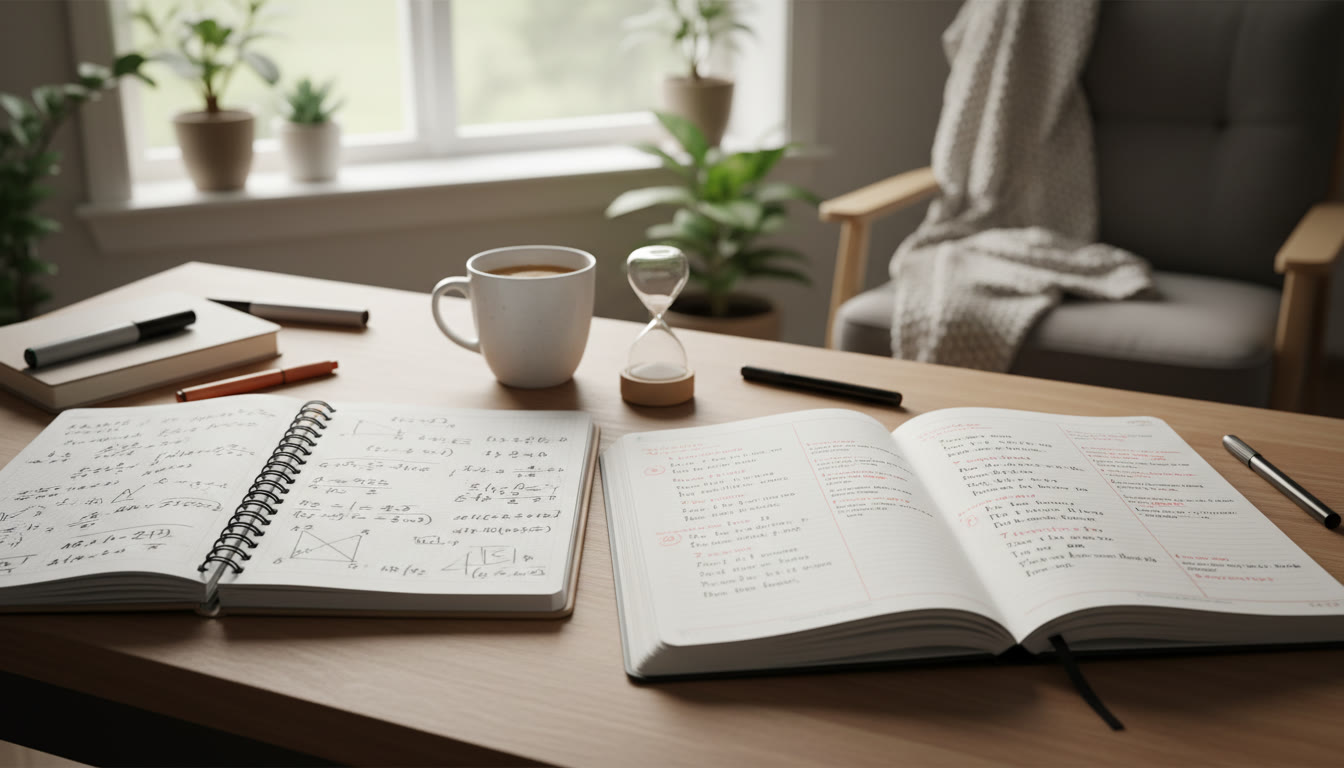
You’re training not just for an exam, but for a way of thinking that will pay off across college and life. Start small, be consistent, and make the switch a deliberate part of your plan. You’ll be surprised how quickly your brain learns to flip the right switch.
Good luck—and remember, the smartest students don’t work harder; they learn smarter.





























No Comments
Leave a comment Cancel