
Why Safety and Ethics Matter in AP Science Investigations
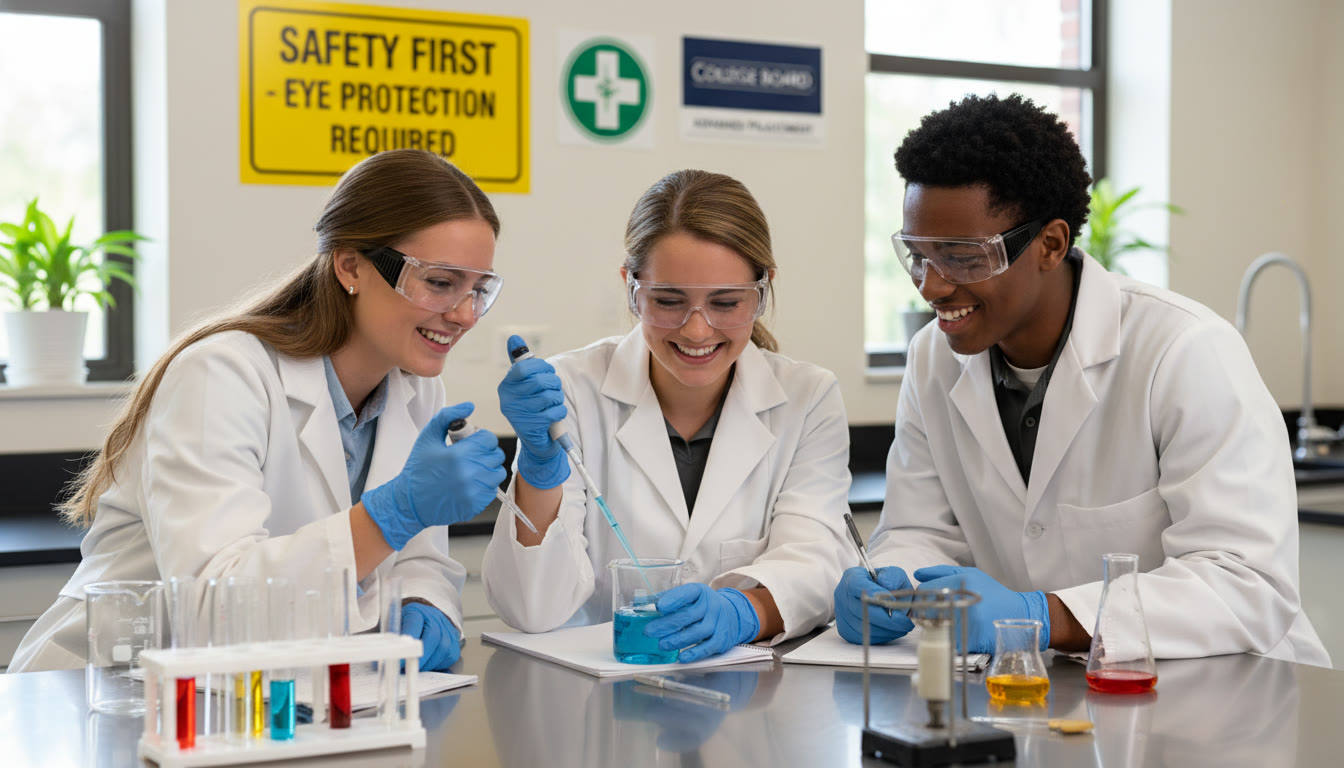
Imagine you’re in a lab, pipette in hand, or outside collecting water samples for an Environmental Science investigation. The excitement is real: this is where curiosity meets practice. But along with curiosity comes responsibility. Safety keeps you and everyone around you physically unharmed. Ethics keeps your work honest, reproducible, and worthy of trust. In AP science courses—whether Biology, Chemistry, Physics, or Environmental Science—teachers expect more than clever results; they expect research that respects people, animals, the environment, and the scientific method.
Foundations: Core Principles of Lab Safety
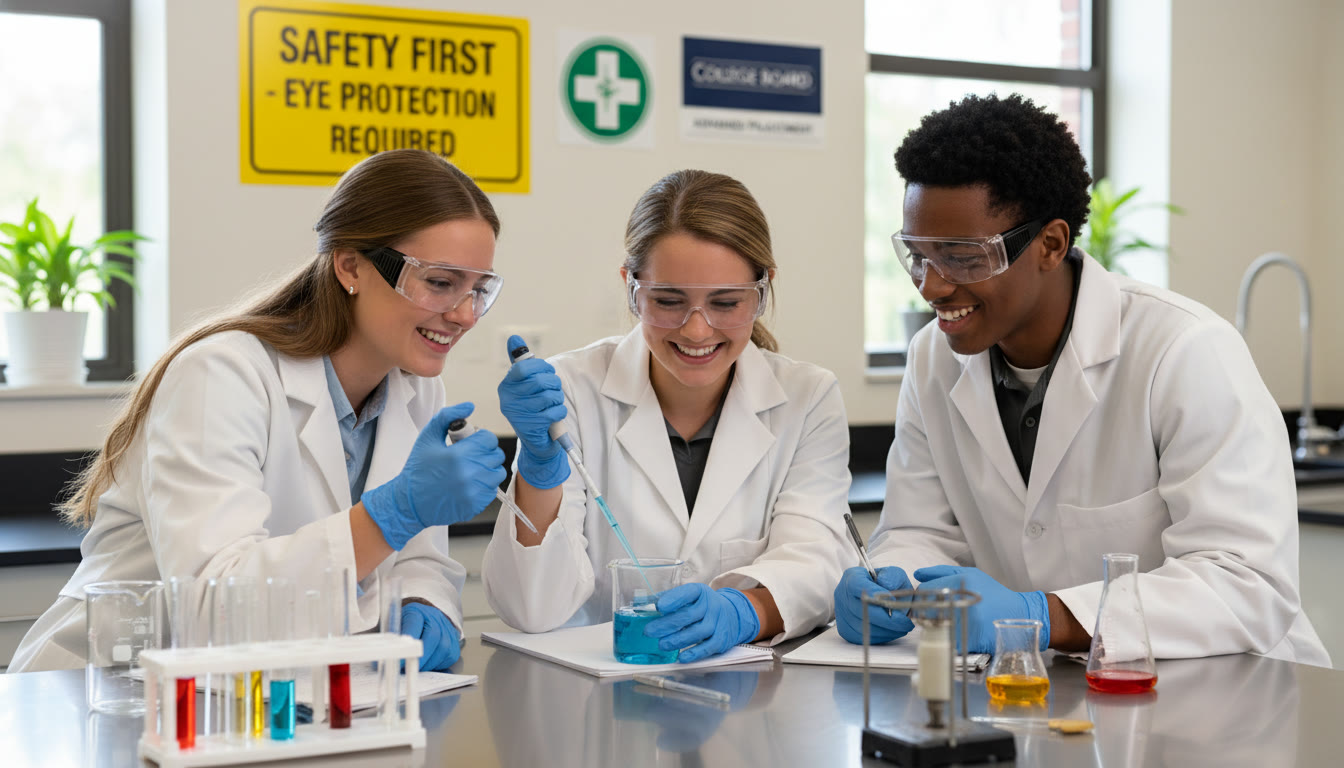
Every safe investigation rests on a few non-negotiable fundamentals. These are practical rules you’ll follow every time you enter a lab or field site:
- Know the risks: Identify hazards before you begin—chemical, biological, mechanical, electrical, and even environmental.
- Wear appropriate PPE: Safety goggles, gloves, lab coats, and closed-toe shoes are common requirements; in fieldwork, sun protection and sturdy footwear may be essential.
- Follow protocols: Standard Operating Procedures (SOPs), teacher instructions, and safety data sheets (SDS) exist for a reason—use them.
- Plan for emergencies: Know where the fire extinguisher, eyewash, first-aid kit, and exits are. Practice evacuation and spill-response steps mentally so you’re not frozen when something happens.
- Maintain an orderly workspace: Clutter increases accidents. Clean as you go and label everything clearly.
Quick Checklist Before You Start Any AP Investigation
- Have you read the experimental procedure and safety notes?
- Is your station free of unnecessary items?
- Do you have the correct PPE and materials ready?
- Is there an adult or instructor aware of your activity?
- Do you have a plan for spills, broken glass, or other mishaps?
Ethics in the Lab: Beyond “Don’t Cheat”
Ethics in scientific investigations is broader than academic honesty. It covers how you treat living subjects, how you design experiments, and how you handle and present data. Ethical thinking is what turns a good experiment into credible science.
Honesty and Data Integrity
Scientific integrity is built on accurate data recording, transparent methods, and faithful reporting. This means:
- Recording raw data promptly and legibly (or saving original digital files).
- Not altering or fabricating data—even to make results look cleaner.
- Reporting uncertainties and unexpected results honestly; these are often the most informative parts of an investigation.
Responsible Treatment of Living Subjects
If your AP investigation involves organisms—plants, microbes, or animals—responsible treatment matters. Follow any local rules and your teacher’s guidance. For human subjects, informed consent is required; for animals, minimize stress and follow ethical handling practices.
Fair Experimental Design
Bias in experiments can sneak in through small design choices. Ethical investigators think critically about control groups, randomization, sample size, and how variables are measured to avoid misleading conclusions.
Fieldwork Considerations: Respecting the Environment and Community
Many AP science investigations take place outside the classroom. Fieldwork has unique safety and ethical aspects:
- Environmental impact: Minimize disturbance—avoid trampling vegetation, remove only the necessary samples, and follow local collection rules.
- Permits and permissions: Some areas require permission to sample; always check before you collect.
- Cultural respect: Be mindful of private property, local communities, and culturally sensitive sites.
- Weather and terrain planning: Prepare for heat, cold, rain, and rough ground. Share your location and estimated return time when working off-campus.
Designing an AP-Ready Investigation with Safety and Ethics in Mind
When you design an investigation—especially one meant for AP assessment or the AP Research course—build safety and ethics into the plan, not as an afterthought. Here’s a useful framework to follow:
1. Define the Research Question Clearly
Ask a focused, answerable question. A clear question helps you identify potential hazards and ethical concerns early.
2. Perform a Risk Assessment
List each step of your procedure and note potential hazards, probability of occurrence, and mitigation strategies. Risk assessments are a standard practice in professional labs and show AP scorers that you thought critically about safety.
3. Prepare an Ethics Statement
For investigations involving living things, human data, or environmental collection, add a short ethics statement describing how you ensured consent, welfare, and minimal impact.
4. Plan Data Management
Decide how you’ll collect, store, back up, and anonymize data where appropriate. Clear record-keeping makes your results reproducible and defensible.
Common Lab Hazards and How to Handle Them
Here are practical responses to hazards students encounter in AP labs. These are quick, memorable tips—not a replacement for teacher instructions or SDS documents.
| Hazard | Prevention | Immediate Action |
|---|---|---|
| Chemical spill | Work with small quantities, use trays, wear gloves and goggles | Alert teacher, contain with spill kit, follow SDS; for skin contact, rinse with water |
| Broken glass | Use proper glassware handling, inspect for chips | Notify teacher, sweep up with brush and dustpan; never use bare hands |
| Fire | Keep flammables away from flames, tie back hair | Turn off heat source if safe, use fire blanket or extinguisher as trained, evacuate if needed |
| Biological contamination | Work in biosafety cabinets if required, autoclave materials, wash hands | Isolate spills, notify teacher, disinfect surfaces |
| Electrical shock | Inspect cords, keep liquids away from equipment | Disconnect power, don’t touch victim if still in contact, call for help |
Data Ethics: Reporting, Sharing, and Attribution
Strong science communicates not just results, but context. When you write lab reports or AP Research papers, consider these data ethics tips:
- Include uncertainties: Every measurement has error—state it and explain how you calculated it.
- Report negative results: Null or negative findings are valuable and part of honest science.
- Cite appropriately: Attribute methods or ideas that are not your own. In AP work, clarity about what you did vs. what your sources did is important.
- Protect personal information: If your investigation uses human data, remove or anonymize identifying details and explain consent procedures.
Case Studies: Learning from Real Scenarios
Real examples help make the abstract rules concrete. Below are short, classroom-friendly case studies and the lessons they teach.
Case Study 1: The Forgotten Label
A group used the wrong reagent because a bottle had lost its label. The result was an inconclusive experiment and a minor chemical splash. Lesson: labeling and double-checking are simple, effective safety measures. Always relabel containers if you transfer contents and verify before use.
Case Study 2: The Unreported Outlier
A student omitted an unexpected data point that didn’t fit the hypothesis. The teacher later demonstrated that the outlier was caused by an equipment flaw, not an error in reasoning—valuable learning lost by omission. Lesson: report anomalies and investigate their source; they can reveal important procedural issues or new phenomena.
Case Study 3: Field Trip Respect
During a stream study, a group removed more organisms than needed and left containers behind. The teacher used it as a teachable moment about environmental stewardship and permitting. Lesson: minimize sampling impact and follow leave-no-trace principles.
How AP Scorers View Safety and Ethics
AP exam readers and AP Research reviewers look for scientific rigor and honest methods. Clear documentation of safety planning and ethical considerations strengthens your submission. Demonstrating that you considered possible failures and took steps to mitigate them signals maturity and responsibility—the kinds of traits college programs value.
Study Habits and Tools to Improve Safety and Ethical Practice
Practice and preparation reduce mistakes. Here are study strategies that help you internalize safety and ethical habits:
- Simulate procedures mentally: Walk through steps in your head or on paper, identify risky steps, and ask how you would respond to problems.
- Use checklists: Develop pre-lab and post-lab checklists—these are used by professional labs because they work.
- Peer review: Have classmates read your procedure to catch unclear steps or overlooked hazards.
- Reflective logs: After each lab, jot down what went well, what surprised you, and what you would change for safety or ethics next time.
How Personalized Tutoring Can Help
Some students find targeted guidance useful when preparing for AP investigations. Personalized tutoring—like Sparkl’s 1-on-1 guidance—can help you build tailored study plans, practice safety protocols, and review ethical considerations specific to your project. A tutor can offer step-by-step walkthroughs, simulate examiner questions, and provide AI-driven insights into experimental design so you enter the lab more confidently and responsibly.

Practical Templates You Can Use
Below are short templates you can adapt for AP lab reports or research proposals.
Risk Assessment Template
- Task Step: [e.g., Heating solution]
- Hazard: [e.g., Burns, fumes]
- Likelihood: [Low/Medium/High]
- Severity: [Minor/Moderate/Severe]
- Mitigation: [e.g., Use tongs, fume hood, PPE]
Ethics Statement Template
“This investigation involved [describe subjects]. All procedures were approved by [teacher/school review]. For human participants, informed consent was obtained from all volunteers and data were anonymized. For biological materials, disposal and containment followed school biosafety procedures to minimize risk and environmental impact.”
Assessment Rubric Snapshot: What Teachers Often Look For
Knowing what teachers expect helps you prepare efficiently. The snapshot below highlights common grading considerations relating to safety and ethics:
- Clear documentation of risk assessment and mitigation.
- Transparent methods and raw data presentation.
- Evidence of ethical reasoning (consent, minimal harm, environmental care).
- Appropriate use of controls and attention to bias.
- Reflection on limitations and error sources.
Common Myths and Misconceptions
Let’s bust a few myths that can trip up students:
- Myth: “Small mistakes aren’t important.”
Fact: Small errors can compound or hide systemic problems. Log them and learn from them. - Myth: “Ethics only matters for big projects.”
Fact: Ethical thinking applies to every investigation, from simple titrations to complex field studies. - Myth: “Safety slows me down.”
Fact: Safety planning saves time in the long run by preventing accidents and repeating experiments.
Preparing for AP Exams: Translating Lab Experience into Responses
AP exams and free-response questions often probe your understanding of experimental design, error analysis, and ethical considerations. When answering, be explicit: name the hazard, explain the mitigation, describe the ethical implications, and state what your data show including uncertainties. Short, clear, structured responses score well.
Final Tips: Developing a Responsible Scientist’s Mindset
Safety and ethics are not just rules to memorize—they are habits and values that shape how you approach questions and people. To cultivate this mindset:
- Be curious but cautious: curiosity drives questions; caution ensures you can pursue them responsibly.
- Ask questions out loud: if something seems risky or unclear, voice it—teachers expect questions.
- Value transparency: share unexpected results and mistakes; they are often the seeds of discovery.
- Practice humility: admit what you don’t know and seek guidance—this is a strength, not a weakness.
Where to Go from Here
Start small: next time you plan an investigation, add a one-paragraph risk assessment and a one-paragraph ethics statement to your notebook. Use checklists, practice simulations, and discuss your plans with peers or a tutor. If you want tailored support—like building a lab-ready checklist specific to your AP course or getting a mock evaluation of your experimental plan—consider scheduling focused sessions with a personalized tutor. Personalized tutoring can provide targeted feedback on safety wording, ethics statements, and experimental design so your work is both compelling and responsible.
Closing Thoughts
Safety and ethics aren’t obstacles to creativity; they’re the framework that lets creativity thrive. When you take safety seriously and think ethically, your experiments gain credibility, your learning deepens, and you build habits that will serve you in college and beyond. Approach your AP investigations with curiosity and care—your future self (and the people around you) will thank you.
Good luck—plan well, stay safe, and let your curiosity lead responsibly.





























No Comments
Leave a comment Cancel