

Why Keep Going After Your AP Exams?
Finishing AP exams can feel like reaching the summit of a long climb: relief, pride, and a little extra free time. But for curious students who want to keep momentum—especially those aiming for competitive colleges or meaningful summer experiences—what comes next matters. The post-AP months are a golden window to translate the knowledge you’ve honed into deeper projects: independent research, national competitions, and collaborative labs. These are the activities that teach intellectual independence, give you concrete accomplishments to discuss in essays and interviews, and—perhaps most importantly—help you discover what you want to study in college.

How to Choose the Right Path: Research vs Competition
Before listing options, pause for a quick decision framework. Your choice should reflect three things:
- Interest Depth — How excited are you about the subject beyond coursework?
- Time Commitment — Can you commit weekly hours this semester or over the summer?
- Goal Alignment — Do you want publications/awards, skill development, or experience working with faculty?
If you crave deep exploration and potentially publishable work, independent or mentored research is ideal. If you love time-boxed challenges and recognition—competitions and Olympiads offer fast feedback and resume-building wins. And you can mix both: a research project leading to a poster at a fair or an entry in a competition is a sweet spot.
Quick Self-Checklist
- Do I have a topic that keeps me asking questions after my AP class ended?
- Can I realistically dedicate 5–15 hours a week for several weeks?
- Do I want support (mentor, lab) or to run this independently?
High-Impact Opportunities: Research That Stands Out
Research doesn’t require a lab coat or grant money. High-school research projects can be theoretical, computational, experimental, or archival. The core is a clear question, a method to explore it, and evidence-backed conclusions.
Types of Research You Can Do
- Laboratory Research — Partner with a university lab or local research institute to run experiments and learn scientific methods.
- Computational and Data Science — Use public datasets to ask new questions, clean data, run analyses, and visualize results.
- Humanities/Archival — Dive into primary sources, digitized archives, or conduct qualitative interviews.
- Design and Engineering — Build a prototype, document iterations, and test measurable outcomes.
- AP Capstone Continuations — If you completed AP Research or AP Seminar, consider extending that project into a more thorough study or publication.
How to Find a Mentor
Mentors accelerate learning and give credibility. Start local: teachers, nearby college professors, or researchers in community institutions. Email with a short, focused pitch: introduce yourself, mention the AP class and topic, propose a specific, doable contribution (data cleaning, literature review, running experiments), and request a short meeting. Be professional, persistent, and grateful.
Competitions That Reward Creativity and Rigor
Competitions are structured, motivating, and often come with feedback and networking. Choose contests that match your subject and timeline—some run year-round; others have strict deadlines.
Types of Competitions
- Science Fairs and Research Symposia — Local to international levels; great for tangible research presentations.
- STEM Olympiads and Problem Solving Contests — Physics, Chemistry, Biology, Math, and Informatics events sharpen theoretical skills.
- Engineering and Design Challenges — Robotics competitions, bridge building, app or game jams.
- Essay and Policy Competitions — Leverage skills from AP Language, AP U.S. History, and AP Comparative Government.
- Business and Entrepreneurship Contests — Pitch competitions and case challenges for students who loved AP Economics.
Practical Roadmap: From Idea to Submission
Here’s a practical, week-by-week approach to a 10–12 week post-AP project that balances depth with feasibility.
12-Week Roadmap
- Week 1: Finalize topic and research question. Do a focused literature scan.
- Weeks 2–3: Design methodology (experiment, dataset plan, interview questions) and gather materials.
- Weeks 4–8: Execute: collect data, code, prototype, or conduct interviews. Keep a lab notebook or digital journal.
- Weeks 9–10: Analyze results, create visuals, run necessary re-tests.
- Weeks 11–12: Write draft report, prepare poster or slide deck, and polish for submission or presentation.
Table: Selected Programs and Competitions to Consider
The table below highlights program type, estimated commitment, and best-fit AP subjects. Use it as a starting point—many programs have cohorts, deadlines, and specific entry requirements.
| Program Type | Estimated Commitment | Best-Fit AP Subjects | Outcome |
|---|---|---|---|
| Local/Regional Science Fairs | 6–12 weeks | AP Biology, AP Chemistry, AP Physics | Poster presentation, awards, potential advancement |
| Data Science Projects (Kaggle-style) | 4–10 weeks | AP Computer Science, AP Statistics | Portfolio submission, GitHub project |
| Humanities Research Summits | 8–12 weeks | AP English, AP History, AP Art History | Published essays, conference presentations |
| Engineering/Robotics Competitions | 8–16 weeks | AP Physics, AP Calculus | Prototype demos, awards |
| Essay/Policy Challenges | 2–6 weeks | AP Government, AP Macroeconomics, AP Language | Cash prizes, publication, internships |
Crafting a Standout Project: Tips from Mentors
Here are habits and approaches that differentiate a good project from a great one.
1. Ask a Question That’s Narrow and Answerable
“Does X influence Y in this context?” is better than “What causes Z?” Specificity leads to clear methods and measurable outcomes.
2. Document Everything
Maintain a research journal: dates, what you did, code versions, failed trials. Admissions officers and judges value process as much as results.
3. Iterate Rapidly
Design-test-refine cycles make projects resilient. Early failures give you insight and make final results more convincing.
4. Learn the Language of Your Field
Read 3–5 recent papers or high-quality projects in your area. Mimic the clarity of good abstracts and visuals.
5. Prepare an Elevator Pitch and a Longer Narrative
You’ll need a 30-second pitch for interviews and a 500–700 word narrative for applications or competition statements. Practice both.
Showcasing Your Work: Portfolio, Essays, and Interviews
One project can live in several places: a personal website or GitHub, the activities section of your college app, and as a core anecdote in essays or interviews. Structure how you present it.
What to Include in a Project Write-up
- One-sentence thesis of your research or problem solved.
- Why it mattered: context and motivation.
- Your method and specific contributions.
- Key results, visuals, and honest limitations.
- What you learned and what’s next.
Time Management and Well-Being
Ambition is great, but burnout is counterproductive. Balance deep work with rest so your project remains a learning opportunity rather than a source of stress.
Healthy Rhythms
- Block 90–120 minute focus sessions followed by 15–30 minute breaks.
- Set weekly goals rather than daily perfection standards.
- Celebrate small wins: a clear figure, a working prototype, or a refined thesis sentence.
How Sparkl’s Personalized Support Fits In
Independent work is rewarding, but targeted support makes it more efficient. Sparkl’s personalized tutoring can help at multiple stages: shaping your research question, learning statistical methods, practicing presentation skills, or refining application essays. The advantage of 1-on-1 guidance and tailored study plans is that you spend less time guessing and more time producing meaningful work. Expert tutors and AI-driven insights can point out gaps in your methodology, suggest reading, or model how to present complex results clearly—without doing the work for you.
Examples: What Successful High School Projects Look Like
Concrete examples illuminate the range of possibilities. Below are short sketches of realistic projects that began in the months after AP exams.
- Biology — A student expanded an AP Biology lab into a study on urban pollinator diversity, sampling gardens across neighborhoods and analyzing species richness with statistical tests.
- Computer Science — An AP CS student scraped public transit data to optimize bus routes during off-peak hours and released visualizations on a personal site.
- History — Using digitized newspapers, a humanities student traced discourse around a 20th-century event, producing a thematic analysis and a conference paper.
- Physics/Engineering — A small team designed a low-cost water sensor, prototyped circuits, ran calibration trials, and entered a regional engineering challenge.
Funding, Ethics, and Permissions
Some projects require IRB-style review, parent and school permissions, or small funding for materials. Grants and small school funds exist for student research—ask your counselor or local community foundations. Always follow ethical guidelines when working with human subjects or living organisms; clear informed consent and transparent methodology are non-negotiable.
Final Thought: Curiosity Trumps Prestige
It’s tempting to chase the highest-profile award or the most impressive program. But admissions officers and competition judges notice sincere curiosity, thoughtful methods, and clear communication. A modest project with meticulous execution and heartfelt reflection often outshines a flashy project that lacks depth.
Parting Checklist
- Choose a doable question and commit to a timeline.
- Find a mentor or a supportive community—and be proactive in outreach.
- Document process diligently and prepare multiple presentation formats.
- Use resources wisely: focused tutoring, peer feedback, and platforms to host your work.
- Keep health and balance in mind—consistency over burnout.
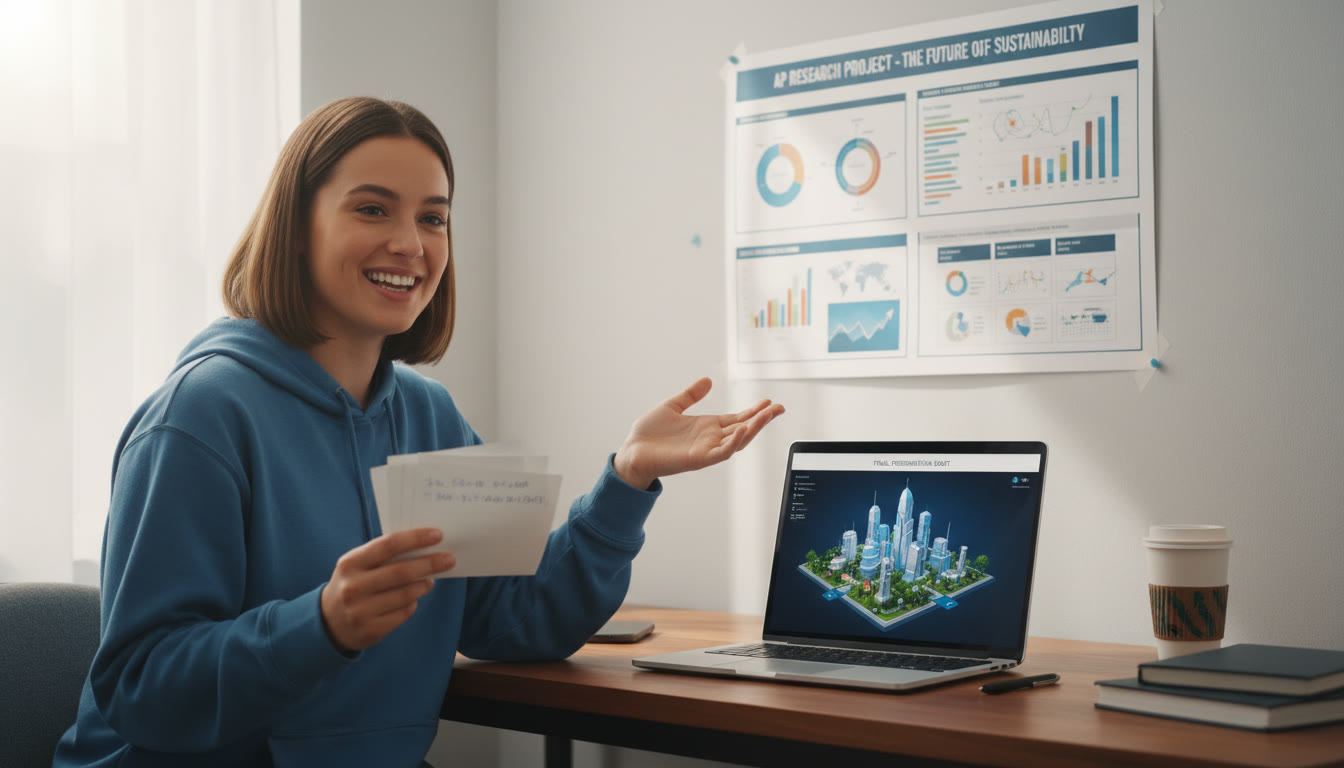
Next Steps You Can Take This Week
Ready to turn post-AP energy into action? Here are three immediate, concrete moves:
- Draft two research questions this weekend and pick one; aim for one-sentence clarity.
- Identify one potential mentor—email them with a 3-sentence ask and a proposed meeting time.
- Set calendar blocks for research sessions and one weekly check-in to reflect and adjust.
Post-AP time is a rare combination of freedom and momentum. Use it to explore, prototype, and fail fast. Your best project won’t be the one that wins every award; it will be the one that taught you how to think like a scholar, solve real problems, and tell the story of that learning. And when you want targeted help—whether it’s building a study plan, preparing a presentation, or getting feedback on a draft—Sparkl’s personalized tutoring can be the nudge that turns good work into great work. Go curious, stay kind to yourself, and let your post-AP projects be the beginning of something bigger.

























No Comments
Leave a comment Cancel