

Why Templates Will Transform Your German Writing
If you’re preparing for AP German or any high-stakes German writing task, the idea of templates might sound a little…boring. But templates aren’t about robotically repeating phrases — they’re scaffolds. They give you a reliable structure so your language can shine where it matters: idiomatic expressions, precise grammar, and persuasive content. Think of them as the safety rails that let you sprint confidently toward a great score.

How templates help during prep and exam
- Reduce decision fatigue: You won’t waste time wondering how to start or end a letter.
- Improve coherence: Standardized paragraph flows help graders track your argument or narrative.
- Focus on quality language: With structure in place, you can prioritize accurate grammar and rich vocabulary.
- Easy to adapt: Templates are starting points — switch out phrases for variety and higher register.
Below you’ll find templates for common AP-style tasks: formal letters, informal letters, opinion articles, and short informative articles. Each template includes a flexible German skeleton, tips for vocabulary choices, and short model sentences you can reuse and adapt.
Before You Write: Quick Strategy Checklist
- Read the prompt carefully: identify audience, purpose, and required elements.
- Plan in German: jot a quick outline (Stichpunkte) — 2–3 minutes for AP timed tasks.
- Use varied sentence structures: mix simple, compound, and subordinate clauses.
- Keep one central idea per paragraph; signal progression with connectors (erstens, außerdem, schließlich).
- Proofread for agreement, tense consistency, and common traps (cases, separable verbs).
Template 1: Formal Letter (Beschwerde / Antrag / Anfrage)
When to use
Use a formal letter for complaints (Beschwerde), official requests (Antrag), or inquiries to institutions. Formal register, correct salutations, and clear signposting are essential.
Structure (Recommended)
- Opening salutation
- Short introduction stating purpose
- Background / factual details
- Specific request or desired resolution
- Polite closing and signature
Template (Formal register)
Sehr geehrte(r) Frau/Herr [Name],
in Bezug auf [Thema/Problem] möchte ich mich mit folgendem Anliegen an Sie wenden. (Kurz und prägnant das Ziel nennen.)
Am [Datum] / Vor kurzem / Seit [Zeitraum] habe ich festgestellt, dass [konkrete Fakten und relevante Details].
Aus diesem Grund bitte ich Sie höflich um [konkrete Maßnahme / Lösung / Information]. Ich wäre Ihnen dankbar, wenn Sie [Frist, falls nötig] antworten könnten.
Für Rückfragen stehe ich Ihnen gerne zur Verfügung. Vielen Dank im Voraus für Ihre Unterstützung.
Mit freundlichen Grüßen,
[Vorname Nachname]Phrases to elevate tone
- Ich möchte höflich darauf hinweisen, dass…
- Ich bitte um eine zeitnahe Lösung / Rückmeldung.
- Ich danke Ihnen für Ihr Verständnis und Ihre Mühe.
Template 2: Informal Letter / Email (an Freund/in oder Klassenkamerad/in)
When to use
Use this for personal correspondence: invitations, sharing news, or casual requests. Tone is friendly, conversational, and relaxed.
Structure
- Greeting
- Friendly opening (How are you?)
- Main message with personal detail
- Close with a call to action or future plan
- Signing off
Template (Informal register)
Liebe(r) [Name],
wie geht es dir? Ich hoffe, alles läuft gut bei dir. Ich wollte dir kurz schreiben, weil [Grund / Neuigkeiten].
[Detail: erzähle eine kurze Geschichte oder Information — benutze Perfekt für abgeschlossene Ereignisse, Präteritum sparsam].Hast du Lust, am [Tag] zusammen [Aktivität] zu machen? Lass mich wissen, ob das für dich passt.
Liebe Grüße,
[Dein Name]Casual phrases to vary register
- Wie du weißt, …
- Ich freue mich schon darauf, …
- Schreib mir bald zurück!
Template 3: Opinion Article (Meinungsartikel / Blogbeitrag)
When to use
Opinion articles are common in AP writing tasks asking you to argue for or against a proposition. The tone should be semi-formal, persuasive, and well-organized.
Structure (Classic argumentative)
- Intro with hook and thesis
- Argument 1 with evidence/example
- Argument 2 with evidence/example
- Counterargument and rebuttal
- Conclusion with a clear stance and call to action
Template (Semi-formal)
Einleitung: Heutzutage wird häufig diskutiert, ob [Thema]. Meiner Meinung nach [klare Position], weil [kurzer Grund].
Erster Punkt: Zunächst einmal ist zu bedenken, dass [These]. Zum Beispiel [Beispiel / Beleg].
Zweiter Punkt: Darüber hinaus [weiterer Grund oder Vorteil] — dies zeigt, dass [Erklärung].
Gegenargument und Widerlegung: Manche behaupten, dass [Gegenargument]. Dennoch ist dieses Argument nicht überzeugend, weil [Widerlegung / zusätzliche Belege].
Schlussfolgerung: Zusammenfassend lässt sich sagen, dass [kurze Zusammenfassung]. Daher sollte man [konkreter Vorschlag oder Appell].
Useful connectors for coherence
- Erstens, zweitens, schließlich
- Darüber hinaus / Außerdem
- Einerseits … andererseits
- Zusammenfassend / Abschließend
Template 4: Short Informative Article (Kurzbericht / Informationstext)
When to use
Use this style for summaries, reports, or short informative pieces. Clarity and neutrality are key; keep personal opinions minimal unless asked.
Structure
- Lead (Wichtigste Information zuerst)
- Supporting facts and explanation
- Context or implications
- Brief concluding sentence
Template (Neutral register)
Lead: Am [Datum/Ort] fand [Ereignis] statt. Wichtig ist, dass [Hauptpunkt].
Details: Laut [Quelle / Angabe] kam es zu [konkreten Fakten]. Zusätzlich wurde berichtet, dass [weiterer Fakt].
Kontext: Dies ist relevant, weil [langfristige Auswirkungen / Zusammenhang].
Abschluss: Abschließend lässt sich festhalten, dass [kurze Zusammenfassung].
Helpful Phrase Bank (High-Utility Expressions)
| Function | German Phrase | When to Use |
|---|---|---|
| Opening formally | Sehr geehrte Damen und Herren, | Formal letters, official emails |
| Stating reasons | Aus diesem Grund / Daher / Deshalb | Arguments and requests |
| Adding information | Darüber hinaus / Außerdem | Paragraph transitions |
| Giving examples | Zum Beispiel / Beispielsweise | Support claims |
| Concluding | Zusammenfassend / Abschließend | Final paragraph |
Common Grammar Pitfalls and Fast Fixes
1. Cases and prepositions
German cases trip up many learners. Tip: memorize prepositions with their case (e.g., mit = Dativ, für = Akkusativ). When in doubt, simplify sentences to avoid complex case chains during a timed exam.
2. Separable verbs
Remember the verb placement: in main clauses the prefix separates (Ich rufe dich an), in infinitive constructions it stays attached (anrufen). Practice common separable verbs in short sentences to build automaticity.
3. Subordinate clauses and verb-final order
Use subordinating conjunctions (weil, dass, obwohl) carefully — the conjugated verb goes to the end. A quick trick: mark subordinate clauses in your outline and keep their content short if you’re unsure.
4. Tense consistency
AP tasks often prefer Perfekt for spoken/personal past and Präteritum for literary/official narratives. Pick one past tense and stick with it unless the prompt requires both.
Practical Exercises: Turn Templates into Muscle Memory
Practice makes templates second nature. Here are exercises you can do in 15–30 minutes daily.
- Timed rewrite: Take a formal prompt and produce a 150–200 word formal letter in 20 minutes. Focus on organization and one complex sentence.
- Swap register: Write the same message once formally and once informally. Observe vocabulary and syntax differences.
- Phrase replacement: Keep the template skeleton and replace two phrases each time with synonyms or higher-register alternatives.
- Peer review: Exchange letters with a partner and highlight strong connectors and grammatical errors.
Using Feedback Effectively
Feedback transforms good writing into great writing. If you have access to 1-on-1 tutoring — for example, Sparkl’s personalized tutoring — use it strategically: ask tutors to focus on your recurring errors (case mistakes, verb placement) and on boosting register and idiomatic expressions. Personalized tutoring and tailored study plans can reduce weak spots quickly by giving you targeted correction and practice.
Model Responses: Short Examples You Can Adapt
Formal complaint (short)
Sehr geehrte Damen und Herren,
am 12. September habe ich in Ihrer Schule an einem Informationsabend teilgenommen. Leider musste ich feststellen, dass die Veranstaltung deutlich später als angekündigt begann und mehrere Vortragende technische Probleme hatten. Dies führte dazu, dass wichtige Informationen verkürzt wurden.
Ich bitte Sie höflich, künftige Veranstaltungen besser zu organisieren und rechtzeitig zu informieren. Vielen Dank für Ihr Verständnis.
Mit freundlichen Grüßen,
[Name]
Opinion paragraph (short)
Heutzutage gibt es viele Diskussionen über digitale Prüfungsmethoden. Meiner Meinung nach bieten digitale Prüfungen Vorteile, weil sie flexibler sind und die Ergebnisse schneller verfügbar sind. Allerdings muss die Chancengleichheit gesichert werden, damit alle Schüler unabhängig von ihrer technischen Ausstattung gut teilnehmen können.
Checklist for Final Review (2–3 minutes)
- Salutation and closing appropriate to the prompt
- One idea per paragraph and clear transitions
- Correct case usage for objects and prepositions
- Verb placement correct in subordinating clauses
- Consistent tense and register
- Spelling check for proper nouns and common confusables (das/dass)
How to Keep Improving After You Master Templates
Templates are a launchpad, not a finish line. To continue improving:
- Read authentic German texts — newspapers, blogs, short stories — to absorb natural phrasing.
- Write regularly and track progress with a simple rubric: Content, Organization, Language, Mechanics.
- Practice speaking the same structures out loud; production strengthens recall during the exam.
- Use targeted resources — flashcards for case-preposition pairs, drills for separable verbs, and focused tutor sessions to eliminate persistent errors.
Why Personalized Help Accelerates Progress
Everyone improves faster with tailored guidance. A tutor can identify patterns in your mistakes, provide alternate phrase options that match your level, and simulate timed conditions. Services like Sparkl emphasize 1-on-1 guidance, tailored study plans, expert tutors, and AI-driven insights to make each practice session efficient and relevant. Even occasional targeted sessions can lead to noticeable gains by removing roadblocks and boosting confidence.
Final Words — Confidence, Not Perfection
Templates will give you the confidence to start writing, but real improvement comes from mindful practice: deliberately varying phrases, checking grammar systematically, and using feedback to tighten your language. In the exam, clarity and coherence score highly. A well-structured letter or article filled with mostly-correct grammar and natural expressions will outscore a perfectly grammatical but disorganized text.
Parting tip
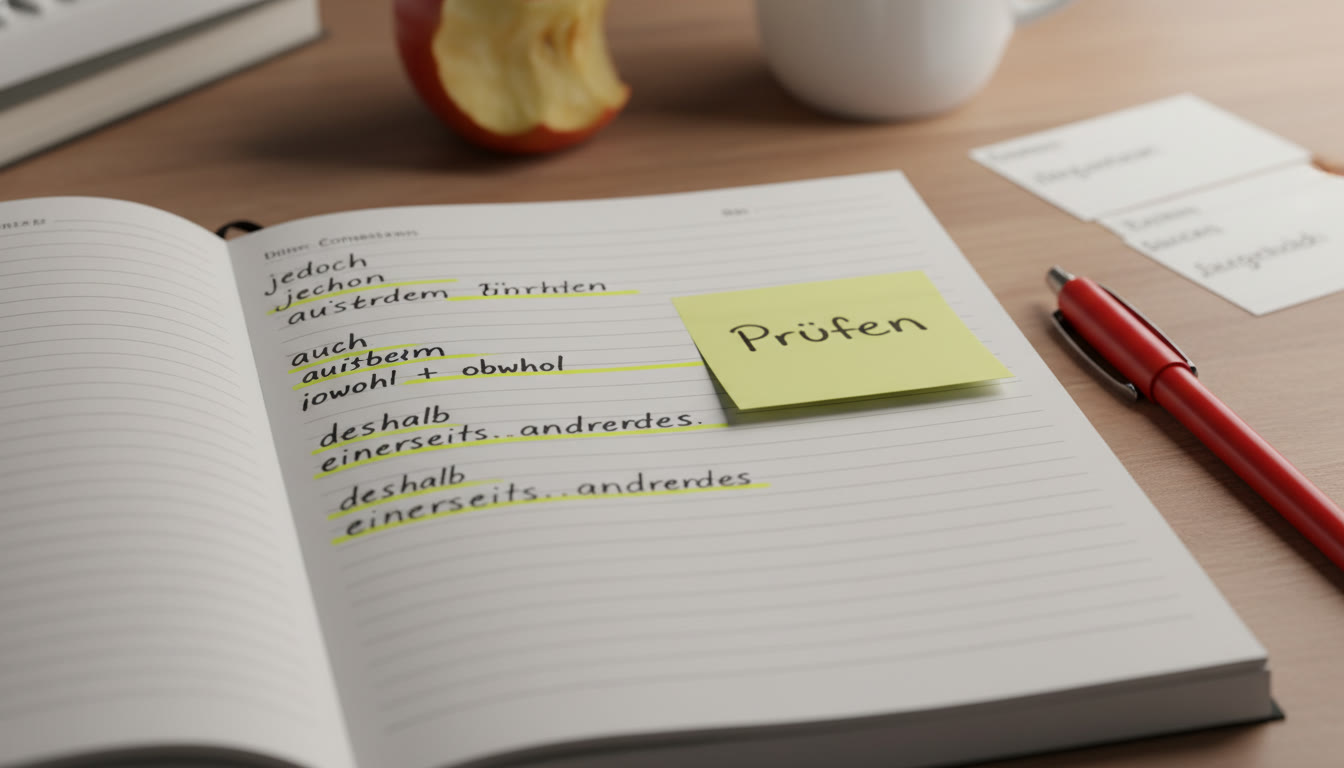
Keep a personal mini-template notebook: one page per task type with your favorite openings, connectors, and closings in German. Review it like vocabulary before the exam — short, frequent reviews beat marathon cramming.
Viel Erfolg — du schaffst das! With structure, focus, and a little help where needed, German writing becomes a strength you can rely on. If you want, I can turn any of the templates above into a personalized practice sheet tailored to your current level and target score.



























No Comments
Leave a comment Cancel