

Why Listening Speed and Syllable Awareness Matter for AP Chinese
If you’ve ever felt your heart race while a listening track plays and phrases fly by faster than your brain can process, you’re not alone. The AP Chinese listening section isn’t just about knowing vocabulary or grammar — it’s about timing, pattern recognition, and the tiny building blocks of sound that make Mandarin work: syllables and tones. Build that awareness and you’ll not only catch more content, you’ll interpret nuance, infer implied meaning, and answer faster and more confidently.

The listening challenge in plain English (and Pinyin)
AP Chinese listening tasks feature short dialogues, announcements, instructions, and a series of rejoinders. That means you’ll hear rapid exchanges that often rely on context and implied meaning rather than neat textbook sentences. Mandarin’s syllable-based nature makes it possible to catch key chunks if you tune your ear — and training that ear is the difference between catching 50% and catching 90% of the content.
Core Concepts: Syllables, Tones, Reduplication, and Speed
Before diving into drills, let’s get clear on the musical parts of Mandarin you’ll need to master.
Syllable awareness
Mandarin is built from syllables, each carrying a vowel nucleus and often an initial consonant (and sometimes a final consonant in certain dialects). A single syllable can represent a whole morpheme — think of words like “mā” (妈) or “xué” (学). When native speakers speak naturally, syllables run together. Your job as a listener is to recognize syllable boundaries fast so you can map what you hear to meaning.
Tone recognition
Tones change meaning. Catching tones helps you eliminate wrong candidate words — especially in multiple choice. But at high speed, tones can be neutralized or sandwiched into connected-speech patterns. Training must include tonal contours in context, not only isolated tone drills.
Reduction, contraction, and natural speed
Like any language, Mandarin reduces and blends. Function words get swallowed, and syllables can be compressed. Becoming comfortable with natural-speed recordings helps you learn what’s likely to be reduced and which syllables will be emphasized.
Practical Strategies You Can Use Today
Here are concrete, tested practice methods that target speed and syllable awareness — no fluff, just the kind of work that builds real results.
1. Slow-to-fast shadowing
Shadowing is repeating speech immediately after (or with) the recording. Start with slowed-down audio (50–70% speed) to lock in syllable segmentation and tones. Once comfortable, raise the speed to 100% and then to slightly above natural speed. This trains brain and mouth to keep pace and reinforces syllable boundaries.
2. Syllable segmentation drills
Pick a short paragraph (30–45 seconds). Listen once. Then listen again and write only the syllables (in pinyin or characters if you prefer). Don’t worry about translating — focus on chunking. Repeat until you can consistently capture the syllable stream. Over time, move to longer excerpts and faster audio.
3. Tone-pair practice in context
Isolated tone drills are useful, but tone pairs within words or phrases are more realistic. Listen for common tone sandhi (tone changes in context) and practice by identifying how the tones change in fast speech. This sharpens your ability to choose the right meaning when answer choices include tonal near-misses.
4. Rejoinder simulation
AP Chinese often asks for the best next response. Practice by listening to short role-plays and pausing just before the reply — predict the response out loud, then listen to several possible answers and choose the best fit. This builds pragmatic intuition and trains you to expect typical rejoinders.
5. Focused mini-listens
Do 10-minute micro-sessions that target one skill: numbers & times, transportation announcements, voice messages, classroom instructions, or culturally specific vocabulary. Narrow focus equals faster gains.
Sample Weekly Listening Plan (Squeezed for Busy Students)
This plan balances intensity and recovery — crucial for steady improvement without burnout. Modify to fit your schedule; consistency matters more than duration.
| Day | Practice (minutes) | Focus | Technique |
|---|---|---|---|
| Monday | 30 | Syllable segmentation | Slow-to-fast shadowing; write syllables |
| Tuesday | 25 | Tone pairs | Listen to short dialogues; mark tone changes |
| Wednesday | 40 | Rejoinders | Rejoinder simulation; predict & choose replies |
| Thursday | 20 | Numbers & dates | Rapid-fire listening of announcements |
| Friday | 30 | Full-speed practice | Timed AP-style listening sets; self-check |
| Saturday | 45 | Integrated practice | One mixed listening block; full review |
| Sunday | Rest or light review | Reflection | Analyze mistakes; set next week goals |
Tools and Materials That Actually Help
You don’t need every app. You need the right materials used well.
Curated audio sources
- AP Central official audio from the Course and Exam Description — prioritize authentic exam formats first.
- Short radio reports, announcements, and voice mail samples — these mimic exam stimuli closely.
- Spoken-word podcasts at intermediate pace for cultural content and natural flow.
Practice interfaces
- Use apps or audio players that let you change speed without changing pitch (so tonal cues remain natural).
- Record yourself shadowing — hearing yourself highlights where syllables or tones slip.
How to Diagnose and Fix Listening Mistakes
Listening errors are instructive. Instead of getting frustrated, use a simple three-step fix routine.
1. Categorize the error
- Is it a vocabulary failure? (You didn’t know the word.)
- Is it a segmentation failure? (You heard the sounds but mis-chunked them.)
- Is it a tone confusion? (You heard the syllable but misread the tone and meaning.)
2. Targeted repair
Once you identify the category, pick an activity that fixes it. Vocabulary gaps need spaced repetition. Segmentation errors need more shadowing and syllable drills. Tone confusion benefits from narrow band tone-pair practice.
3. Reinforce with mixed practice
After repair, practice with mixed, authentic audio to ensure the fix works under speed and stress.
Examples & Mini Exercises You Can Do Right Now
Try these bite-sized drills anytime — on the bus, between classes, or in a study hall.
Exercise A: The 10-Syllable Capture
Play a 15–20 second clip. Your goal: write down the first ten syllables you hear in pinyin. Don’t translate. Compare with transcript. Repeat three times. Track accuracy over time.
Exercise B: Rejoinder Prediction
- Play a 10–12 second conversation that ends with a question.
- Pause and say aloud what you’d reply in Chinese.
- Listen to the available responses; choose the best one and explain why.
How to Use Mock Tests Strategically
Mock tests are not just score checks. Done well, they reveal patterns of error and train exam rhythm.
Simulate realistic conditions
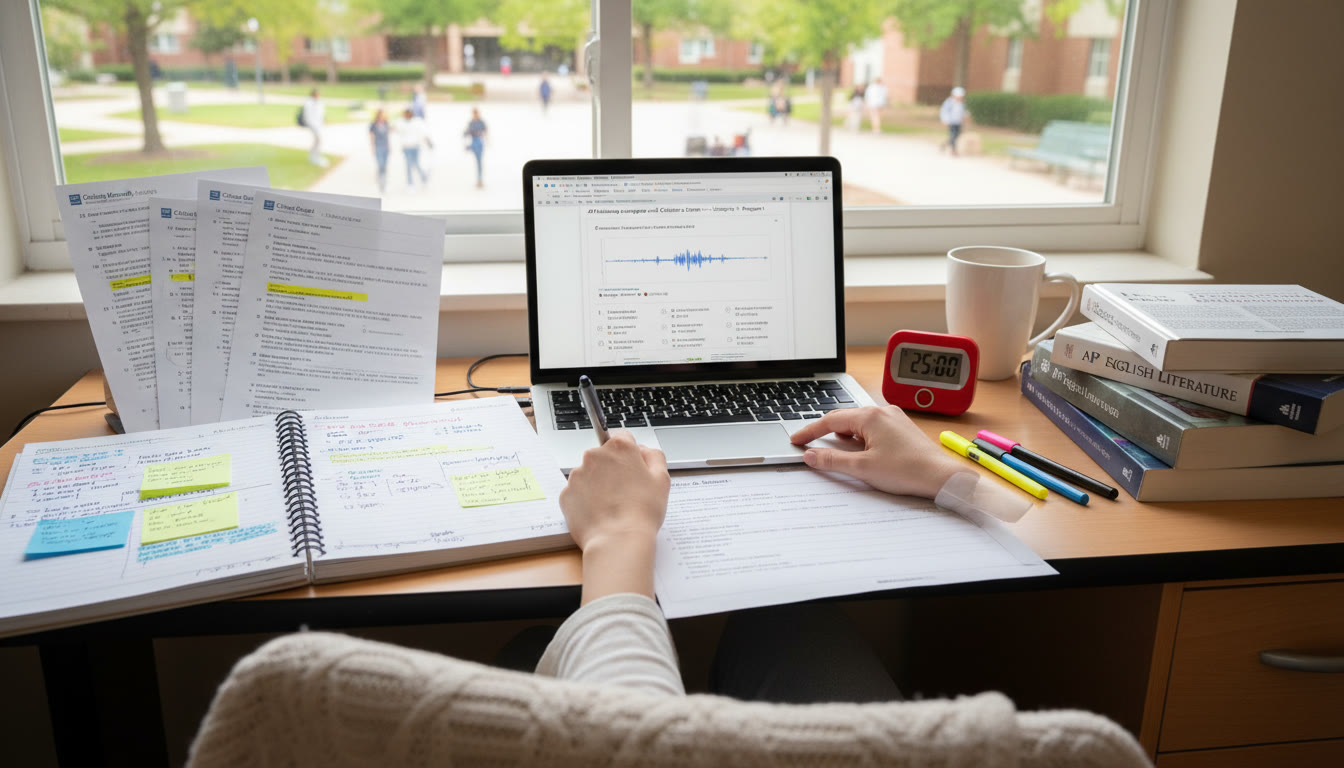
Use headphones similar to the ones provided on exam day. Time each section precisely and avoid pausing during the section — forced speed practice is where gains happen.
Analyze, don’t just score
After each mock, list the types of mistakes, then schedule two targeted drills to address the top two recurring problems. If you find recurring pronunciation confusions, include a tutor or peer to correct you live.
Personalized Tutoring: When and Why It Helps
Some issues — like persistent segmentation blindspots or subtle tonal confusions — respond fastest to guided feedback. That’s where tailored 1-on-1 sessions shine. A good tutor listens to your specific errors and prescribes targeted practice rather than a one-size-fits-all plan.
For students preparing for AP Chinese, Sparkl’s personalized tutoring can be a helpful complement: 1-on-1 guidance to diagnose listening weaknesses, tailored study plans that slot into your school rhythm, expert tutors who model natural speech, and AI-driven insights that track your progress and recommend the next micro-skill to practice. Used sparingly and smartly, tutoring accelerates the habit loop — practice, feedback, adjustment — that builds reliable listening comprehension.
How to Stay Calm and Sharp on Test Day
Speed and stress are related. If your brain panics, processing slows. Practice the following to keep calm.
Pre-test routine
- Sleep well the night before (7–9 hours).
- Eat a balanced meal 1–2 hours before testing to avoid blood-sugar dips.
- Warm up with a 10–15 minute listening routine of familiar, slightly slower material to get your ear in gear.
During the exam
- Use the first three seconds of each audio to locate the speaker(s) and context mentally (announcement, classroom, voicemail).
- Listen for anchor words: numbers, places, names, and connectors (但是, 因为, 所以). These often carry the answer.
- If you miss one detail, move on. The test rewards pattern recognition over perfect recall.
Tracking Progress: Metrics That Tell You You’re Improving
Don’t rely on vague feelings. Track specific, measurable gains.
Three metrics to log weekly
- Percentage of correctly identified syllables in 30-sec clips.
- Accuracy on AP-style listening multiple choice (timed) across three sets.
- Number of different error categories reduced (vocab, segmentation, tone) compared to last week.
Common Pitfalls and How to Avoid Them
Being aware of traps saves time and anxiety.
Pitfall: Relying only on subtitles or transcripts
Why it hurts: reading biases your ear. Fix: do blind listening first, then consult the transcript only after you’ve made a best-effort guess.
Pitfall: Practicing at only one speed
Why it hurts: you’ll be unprepared for real-world variance. Fix: include slowed, normal, and slightly accelerated speeds in each practice session.
Pitfall: Ignoring cultural context
Many listening items depend on cultural knowledge (holiday references, bureaucratic phrasing, common social responses). Learn the cultural frames as part of listening practice — they often contain the key to implied meaning.
Real-World Context: Why These Skills Matter Beyond the Test
Good listening is not just about exam points. In college classrooms, study abroad, and real conversations, the ability to parse syllables and track fast speech makes every interaction richer. Employers notice people who can follow and respond quickly in another language; your fluency opens doors academically and socially.
When to Consider Extra Help
If after six weeks of disciplined practice your listening score or mock performance is stuck, bring in targeted help. A tutor can:
- Diagnose subtle recurring errors faster than trial-and-error practice.
- Provide live corrective feedback during shadowing.
- Create a refined plan that prioritizes the highest-impact drills for your profile.
Remember: tutoring isn’t a crutch if used correctly. It’s an amplifier for well-designed practice. Sparkl’s tutors, for example, combine personalized attention with AI-driven progress tracking that helps you focus exactly where you lose syllables or drop tones — making every minute of practice count.
Final Checklist: 10 Habits of Effective AP Chinese Listeners
- Do short, focused listening sessions daily rather than occasional long marathons.
- Shadow at multiple speeds and record yourself weekly.
- Practice syllable segmentation and tone pairs in context.
- Do rejoinder prediction drills frequently.
- Simulate test conditions for at least one full practice every two weeks.
- Log your errors and prioritize the top two each week.
- Use authentic audio (announcements, voice messages) regularly.
- Warm up before the exam with familiar listening material.
- Review cultural frames that commonly appear on the exam.
- Get targeted feedback when progress stalls — don’t stay stuck.
Parting Thought
Mastering AP Chinese listening is a mix of ear training, pattern recognition, and strategic practice. Think of speed and syllable awareness as a musical skill: you’re retraining your ear to hear the beats and notes that structure Mandarin speech. With consistent, focused practice — the right drills, realistic mocks, and periodic targeted feedback — you’ll find that what once felt too fast becomes comfortably within reach. If you ever need a coach to diagnose a stubborn blind spot, personalized options like Sparkl’s 1-on-1 tutoring and tailored study plans can accelerate breakthroughs by turning small weaknesses into big strengths.
Keep the practice simple, make it frequent, and tune your ear week by week. The next time that listening track starts, you might even find yourself smiling — because you know you’ve got the rhythm.























No Comments
Leave a comment Cancel