

Why Listening Matters for AP Students
If you’re preparing for AP exams, you probably picture textbooks, multiple-choice drills, and essay prompts. But one underrated way to level up your comprehension, vocabulary, and cultural awareness is through deliberate listening practice. Whether you’re tackling AP Spanish Language and Culture, AP English Language (for rhetorically savvy listening into current affairs), or just trying to sharpen your study habits, curated audio and audiovisual sources make passive exposure into active learning.
What ‘Listening’ Does for Your AP Skills
Listening trains more than your ears. It strengthens pattern recognition, speeds up your processing of spoken words and rhetorical devices, and increases your ability to infer tone and intent—skills that translate directly to sections of AP exams that require synthesis, analysis, and rapid comprehension.
- Improves vocabulary in context—words stick when you hear them naturally used.
- Enhances cultural references that often appear in AP free-response questions.
- Builds stamina for long passages—useful for multi-part exam prompts.
- Teaches rhetorical moves through real-world examples: anecdotes, statistics, counterarguments.

A Framework for Using Listening Sources Effectively
Not all listening is equal. To get AP-ready results, you need structure. Here’s a practical framework that turns casual listening into a scoring habit.
1. Purpose — Know What Skill You’re Targeting
Decide whether you’re focusing on vocabulary, rhetorical analysis, cultural fluency, or rapid comprehension. Your purpose shapes the content you pick and how you study it.
2. Select — Choose High-Value Sources
Pick sources that match your target skill. News pieces are great for formal register and argument structure; podcasts build conversational fluency and nuance; scripted series expose you to narrative devices and sustained dialogue.
3. Structure — Active Listening Routine
- First listen: passive, for gist and tone.
- Second listen: pause to annotate—vocabulary, rhetorical devices, markers of argument.
- Third listen: practice summarizing aloud or in writing within 90 seconds (mimics AP time pressure).
4. Reflect — Turn Exposure into Evidence
Write a short paragraph connecting what you heard to an AP skill. For example, identify a persuasive strategy and explain why it’s effective. Repeating this habit builds the muscle of evidence-based analysis.
Best Listening Sources: News, Podcasts, and Series—How to Pick the Right Ones
Here’s a curated selection of source types and why they’re useful for AP prep. For each category I’ll give examples of the style to look for and how to study them.
News — For Formal Register, Rhetoric, and Current Events
Why it helps: News segments are often concise, use formal diction, and present arguments or summaries of complex issues. They’re excellent for AP English Language students who need to identify claims and evidence and for AP Spanish students who want exposure to formal register and topical vocabulary.
- Look for: short feature pieces (3–8 minutes) and editorials that give a clear thesis and evidence.
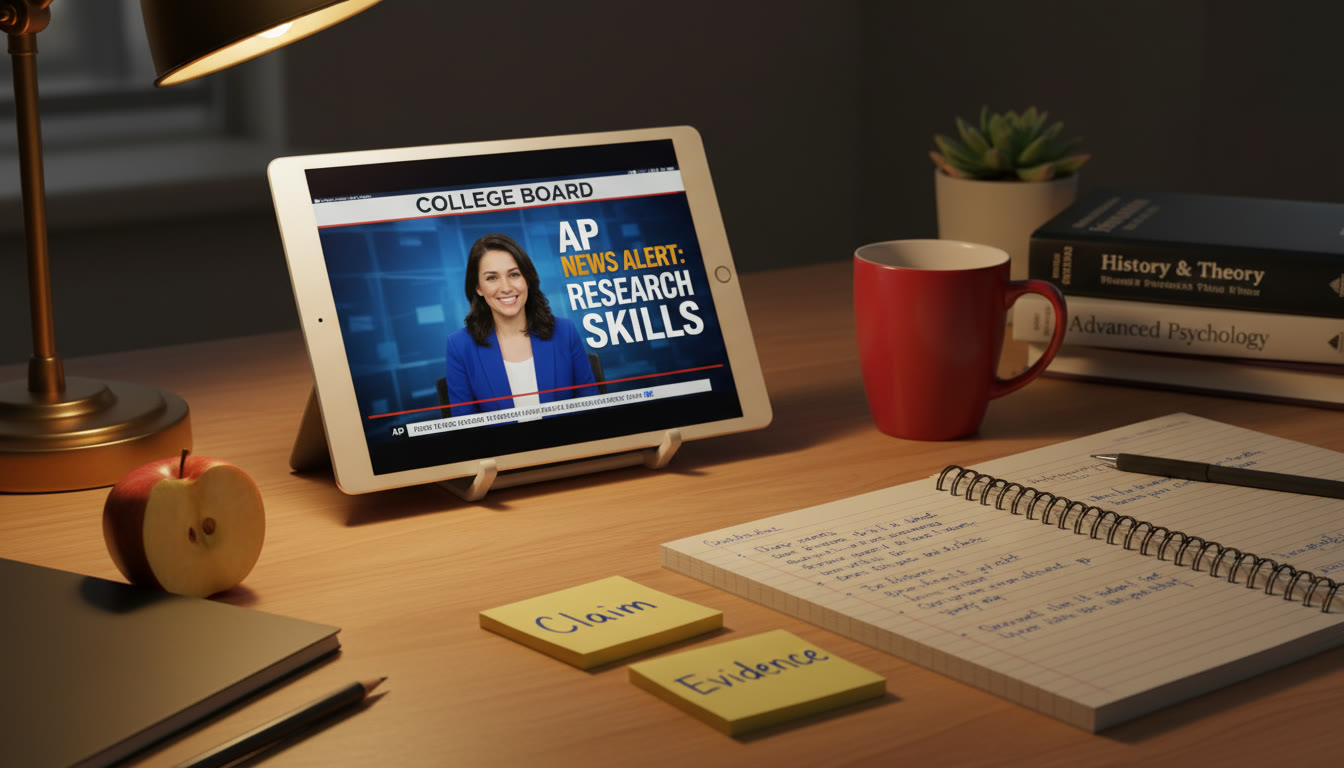
- Study tip: transcribe a 2-minute segment and highlight the speaker’s claim and three supporting details.
Podcasts — For Conversational Fluency and Extended Argument
Why it helps: Podcasts come in many flavors—interviews, narrative storytelling, investigative deep-dives. They’re perfect for getting used to different accents, colloquial phrasing, and diverse rhetorical approaches.
- Look for: interview formats to study turn-taking and question framing; narrative episodes for identifying story structure and descriptive language.
- Study tip: during interviews, note the interviewer’s strategies—how they challenge a claim, encourage elaboration, or summarize complex ideas.
Scripted Series and Documentaries — For Sustained Listening and Cultural Context
Why it helps: TV series (scripted or documentary) develop themes across episodes and use extended dialogue, which helps with inference, character analysis, and cultural registers. Subtitles can be used strategically: read on first, then listen without the text.
- Look for: episodes with strong narrative arcs or well-researched documentaries.
- Study tip: watch an episode once with subtitles, then rewatch select scenes without, and summarize character motives or argumentative positions in one paragraph.
Recommended Listening Matrix (Examples and How to Use Them)
The table below is a simple, practical matrix you can use to mix and match listening sources according to your goals and time available. Swap in specific titles that match your language (English or Spanish) and level.
| Goal | Source Type | Study Action (10–30 minutes) | Frequency |
|---|---|---|---|
| Vocabulary in Context | Short News Clips | Transcribe 2–3 minutes, pick 8 new words, make flashcards | 3×/week |
| Rhetorical Analysis | Opinion Podcast Episodes | Identify claim, evidence, appeals, tone; write a 150-word analysis | 2×/week |
| Conversational Fluency | Interview Podcasts | Shadow the speaker for 5 minutes; imitate cadence and phrasing | Daily (15 min) |
| Cultural Context | Documentary Series | Take notes on context, timeline, and perspectives; do a 3-minute summary | 1×/week |
Practical Listening Routines You Can Start Today
Below are simple routines tailored to different time budgets. Pick one and stick with it for two weeks—consistency beats intensity.
10-Minute Daily Routine (Busy Student)
- First 2 minutes: select a short news clip or podcast excerpt.
- Next 5 minutes: listen actively—note the main idea and one rhetorical move.
- Last 3 minutes: record a 60–90 second spoken summary (use your phone) and listen back.
30–45 Minute Focus Session (Weekend Study)
- Listen to a full podcast episode or documentary segment once.
- Second pass: annotate vocabulary and highlight the thesis and supporting details.
- Write a 200-word paragraph that connects a rhetorical strategy to an AP skill (e.g., synthesis, evaluation).
Weekly Deep Dive (Exam Prep Mode)
- Select an episode or two that are dense with argumentation or narrative.
- Transcribe a key 3–5 minute segment and analyze sentence-level choices (imagery, parallelism, concessive clauses).
- Practice delivering a concise oral synthesis; get feedback from a tutor or peer.
How to Turn Listening Practice Into AP Scores: Skill Mapping
It’s not enough to enjoy a podcast—you need to tie what you hear to AP exam tasks. Below are common AP skills and how listening practice maps to them.
- Claim and Evidence Identification: News editorials and opinion podcasts are prime practice. Ask: What is the claim? What counts as evidence?
- Rhetorical Analysis: Pay attention to ethos/pathos/logos, tone shifts, and structural cues across a segment.
- Synthesis: Use multiple listening sources on the same topic (news + interview + documentary) and practice combining perspectives in a short essay.
- Argumentation: Debate a podcast host’s position by preparing counter-evidence—this strengthens argumentative writing.
- Language and Tone: Series and narrative podcasts teach register, idiom, and connotation—useful for both comprehension and choice of diction in essays.
Study Tools and Tech Tricks to Amplify Listening
Small tools make big differences. Here are practical tech tips that turn passive listening into an efficient study session.
- Speed controls: Slow down to 0.9× for transcription practice; speed up to 1.25–1.5× for gist training.
- Playback loop: Use the 15–30 second loop to dissect challenging sentences.
- Transcription tools: Auto-transcripts are a starting point—correct them to reinforce spelling and syntax.
- Voice notes: Record short spoken summaries to build confidence in oral synthesis.
- Timers: Use a Pomodoro split (25/5) for focused listening and analysis segments.
Real-World Example: Turning a 20-Minute Podcast Into an AP Practice Session
Here’s a step-by-step example you can replicate.
- Pick a 20-minute opinion podcast about a current issue.
- First listen: take one-line notes of the thesis and two surprising facts.
- Second listen: transcribe the opening 3 minutes. Highlight any persuasive devices.
- Task: Write a 200-word analysis describing how the host establishes credibility and uses evidence.
- Bonus: Find a contrasting news brief and compose a 150-word synthesis comparing the perspectives.
Where Personalized Tutoring Fits (Yes, Sparkl Can Help)
Self-study is powerful, but targeted feedback speeds progress. A personalized tutor can help you:
- Identify recurring weaknesses (e.g., inference, synthesis, unfamiliar idioms).
- Create tailored study plans that incorporate the exact listening sources you need.
- Give live feedback on spoken summaries and written analyses—crucial for improving clarity and argumentation.
Services like Sparkl’s personalized tutoring can be especially useful here: 1-on-1 guidance, tailored study plans, expert tutors who model best practices, and even AI-driven insights that identify which listening skills to prioritize next. Think of tutoring as a turbocharger for the listening framework above—especially helpful during the last 6–8 weeks before the exam.
Sample Weekly Plan (8 Weeks Out from Exam)
This sample schedule balances variety with targeted practice. Adjust volume based on your strengths and available time.
| Week | Primary Focus | Listening Mix | Key Task |
|---|---|---|---|
| Week 1 | Vocabulary and Gist | Short news clips, 10-min podcasts | Transcribe and make 30 flashcards |
| Week 4 | Rhetorical Devices | Opinion podcasts, editorials | Write three 200-word rhetorical analyses |
| Week 6 | Synthesis Practice | News + Interview + Documentary | Combine sources in a 350-word synthesis |
| Week 8 | Exam Simulation | Mixed sources under timed conditions | Timed writing and oral summaries, tutor review |
Measuring Progress: Simple Metrics That Work
Track these measurable improvements to see real gains:
- Transcription accuracy (% words correct after two passes).
- Time to summary (how quickly you can verbally summarize a segment).
- Argument identification (how many distinct claims you find in a 5-minute piece).
- Vocabulary retention (how many new words you use correctly in writing after two weeks).
Share these metrics with a tutor for targeted adjustments—Sparkl’s experts, for instance, can turn metrics into a tailored revision plan that addresses the precise “skill gaps” you have.
Common Pitfalls and How to Avoid Them
- Passive Listening: If it’s background noise, it won’t change your skills. Use the active framework above.
- Too Much Variety, Too Little Depth: Rotate sources but spend enough time on each to analyze it thoroughly.
- Ignoring Feedback: Self-review is great, but targeted feedback—especially on written synthesis—accelerates improvement.
- Overreliance on Subtitles: Use subtitles strategically: read once, then switch them off to force auditory comprehension.
Bringing It Together: A Final Checklist Before Exam Day
- Have a bank of 10–15 short news clips and 6–8 podcast episodes you’ve analyzed.
- Practice 90-second spoken summaries until they’re crisp and structured.
- Schedule at least one 1-on-1 tutor session focused solely on listening analysis in the final two weeks—use it for live feedback on your weakest area.
- Keep a simple progress log: transcription accuracy, summary time, and vocabulary retention.
Parting Advice: Make Listening a Habit, Not a Chore
Listening can be joyful and intellectually rewarding—it’s not just exam prep. Mix curiosity with discipline: follow topics that fascinate you, but always apply the active-listening routine that turns exposure into skill. And when you need a nudge or structured feedback, a tailored tutoring partner like Sparkl can make the difference between steady progress and breakthrough performance.
Final Thought
The best listening practice is purposeful, varied, and measurable. With a manageable routine and the right feedback loops, you’ll not only get better at AP-specific tasks—you’ll gain a lifelong skill: understanding complex ideas quickly and responding to them clearly. So put on those headphones, pick a piece that challenges you, and listen with intent.

























No Comments
Leave a comment Cancel