

Why Speaking Partners and Study Pods Beat Solo Cramming
Preparing for AP exams can feel like scaling a cliff with a backpack full of textbooks. But you don’t have to climb it alone. Speaking partners and study pods turn individual effort into shared momentum. They create structure, introduce social accountability, and let you practice the exact skills AP exams test: explanation, argumentation, and fluency under pressure.

Whether you’re aiming for a 5 in AP Biology or AP U.S. History, the most successful students blend independent study with small-group rehearsal. Speaking partners sharpen oral reasoning and confidence. Study pods deepen conceptual understanding through peer teaching, problem-solving, and targeted review sessions.
Core Principles for Structuring a High-Impact Pod
Before you pick people or schedule sessions, agree on a few core principles. These will keep your pod productive, fair, and sustainable.
- Purpose-Driven Sessions: Every meeting should have a stated goal — not just “study AP stuff” but “review AP Chemistry kinetics problems and rehearse an explanation of collision theory.”
- Predictable Rhythm: Consistency beats intensity. Twice-weekly 90-minute sessions often outperform sporadic 4-hour marathons.
- Roles and Rotation: Assign roles (facilitator, timekeeper, recorder, challenger) and rotate them so everyone builds varied skills.
- Accountability with Kindness: Track progress, but keep feedback constructive. High performers help peers without gatekeeping.
- Active Learning Focus: Favor retrieval practice, teach-back, timed drills, and applied problem sets over passive rereading.
Choosing the Right People: Size, Mix, and Mindset
Not all groups are created equal. The chemistry of a pod influences its productivity more than raw talent.
Ideal Size
4–6 members hits the sweet spot. Smaller groups (2–3) work well for speaking partners and focused debates; larger groups (7–10) can be useful for broader review but often dilute participation.
Skill Mix
Balance matters. A mix of strong, average, and emerging students creates opportunities for peer teaching — a highly effective learning method. Strong students reinforce knowledge by teaching; emerging students gain access to explanations paced for comprehension.
Shared Mindset
Look for peers who value growth over comparison. Agree early on that mistakes are learning gold — the moment someone gets a concept wrong is the moment the whole group can learn it deeply.
Designing Session Types: What to Do in 90 Minutes
Once you’ve assembled a pod and picked a schedule, rotate through session types to cover the breadth of AP exam demands: content mastery, applied skills, and exam simulation.
Session Type A — Focused Content Deep-Dive (60–90 minutes)
- 10 min: Quick warm-up quiz (5–7 retrieval questions) to prime memory.
- 30–40 min: Two members teach a short unit (10–12 minute teach-back each) while others take notes and ask clarifying questions.
- 15–20 min: Challenging problem set or past free-response question (timed).
- Remaining time: Group reflection and identification of follow-up actions.
Session Type B — Speaking Partner Practice (45–60 minutes)
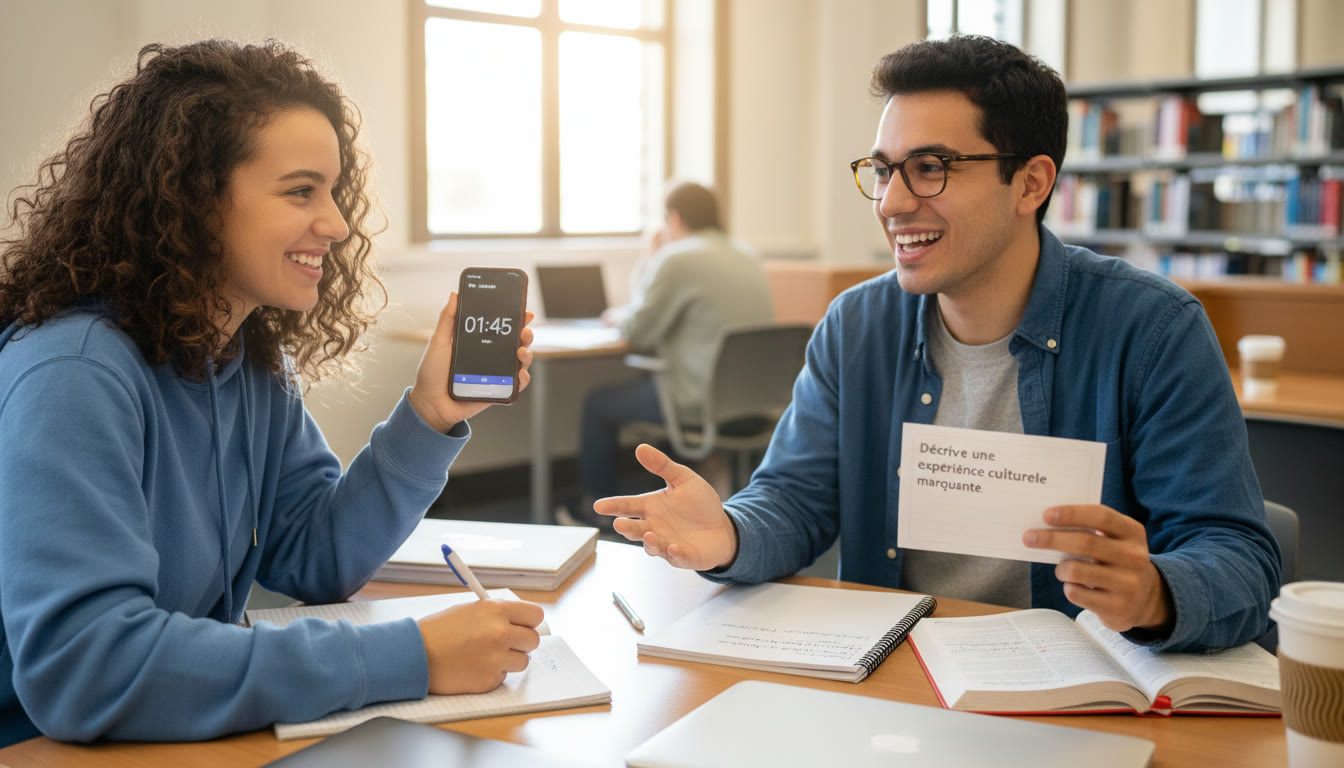
- 15 min: One-on-one practice — student A explains a prompt or thesis while B times and notes structure.
- 15 min: Switch roles.
- 15–30 min: Group critique focusing on clarity, evidence, pacing, and use of AP rubric language.
Session Type C — Exam Simulation & Debrief (90–120 minutes)
- Simulate one section (e.g., 1–2 free-response questions or 30 multiple choice) under timed conditions.
- Peer grade using AP rubrics with one or two senior members or a tutor providing guidance.
- Debrief: Identify top 3 recurring mistakes; plan corrections for next session.
Sample Weekly Schedule
Here’s a practical schedule you can adopt or adapt. It balances structure and flexibility while preserving study momentum.
| Day | Session | Focus | Duration |
|---|---|---|---|
| Monday | Pod Meeting | Content Deep-Dive & Problem Set | 90 min |
| Wednesday | Speaking Partner | Timed Explain and Critique | 60 min |
| Friday | Independent/Office Hours | Individual Work or Tutor Drop-In | Self-Paced |
| Sunday | Mini-Sim | Short Exam Practice & Reflection | 60–90 min |
Roles That Keep Meetings Efficient
Assigning roles encourages accountability and ensures tasks don’t fall through the cracks. Rotate roles each meeting so everyone practices leadership and critique.
- Facilitator: Opens the meeting, keeps the agenda, calls on speakers.
- Timekeeper: Ensures activities stay within limits (critical for timed practice).
- Recorder: Captures action items and key explanations; shares a short summary after the meeting.
- Challenger: Plays devil’s advocate — asks probing questions and pushes for evidence and clarity.
- Support Lead: Collects resources (past questions, rubric excerpts) and coordinates any tutor visits.
Active Techniques to Use Inside Your Pod
Move beyond passive reading. Use research-backed strategies that improve retention and exam performance:
- Teach-Back: Explain a concept in 10 minutes as if to a younger sibling — teaching consolidates knowledge.
- Interleaving: Mix topics within a session (e.g., combine AP Calculus and AP Statistics practice) to improve flexible application.
- Spaced Retrieval: Revisit topics at increasing intervals across weeks to lock memory in long-term storage.
- Rubric-Oriented Practice: Grade responses against AP rubrics and translate rubric language into simple checklists.
- Error Journals: Keep a shared doc of common mistakes and strategies to correct them.
Using Tutors and Expert Guidance Wisely
Pods don’t have to be purely peer-run. Bringing in a tutor strategically elevates learning. A brief monthly session with an expert can clarify sticky concepts, model high-scoring responses, and reset your study plan. If you’re using a service like Sparkl’s personalized tutoring, coordinate: have the tutor observe one session, give a targeted masterclass, and help build a tailored study roadmap. That combination of peer practice plus expert calibration is especially powerful.
Digital Tools and Shared Resources
Use a small set of tools and stick with them to reduce friction:
- Shared doc for session agendas and notes (one source of truth).
- Calendar invites with clear locations and objectives.
- Timer app for strict timed practice.
- Question bank spreadsheets with columns: Topic, Question, Attempted (Y/N), Score, Notes.
Measuring Progress: Metrics That Matter
Don’t evaluate success only by how you feel. Track concrete metrics:
- Average score on weekly mini-quizzes.
- Number of past free-response questions completed and peer-graded.
- Turn-taking equity: ensure each member has equal speaking/practice time.
- Concept retention rate: percent of previously reviewed concepts recalled correctly after one week and after three weeks.
Sample 90-Minute Agenda (Printable)
| Time | Activity | Purpose |
|---|---|---|
| 0–10 min | Warm-Up Quiz | Activate recall and identify immediate weak spots |
| 10–35 min | Teach-Back (Member A) | Deepen understanding via explanation |
| 35–60 min | Guided Practice Problems | Apply and test procedural skills |
| 60–75 min | Speaking Partner Drill | Improve clarity and timed responses |
| 75–90 min | Debrief and Assignments | Solidify action items and individual homework |
Handling Conflict, Burnout, and Unequal Contribution
Every group will face bumps. Tackle them directly and kindly.
- Unequal Contribution: Use a simple ledger — each meeting record who prepared and who participated. If someone falls behind, offer to reassign a lighter role temporarily rather than ostracize.
- Personality Clashes: Move from accusation to observation: “I noticed we often interrupt each other when discussing evidence — can we try hand signals to manage turns?”
- Burnout: Recognize signs early. Add a restorative session — low-pressure review, mindfulness, or a short social catch-up that reminds members why they started.
Examples: How Pods Look for Different AP Courses
AP English Language & Composition
Speaking practice is invaluable. Use speaking partners to rehearse thesis-driven mini-lectures and to critique rhetorical analysis. Rotate mock timed synthesis prompts and peer-grade with the rubric.
AP Biology
Alternate lab-method teach-backs with diagram-heavy explainers. Use pods to examine graphs, design mini-experiments, and interpret data — skills mirrored in the exam’s free-response questions.
AP Calculus
Work through scaffolded problem sets, where one member explains the conceptual approach while another checks algebraic execution. Use whiteboards for visual communication of limits and integrals.
When to Bring in a Tutor or External Expert
If your group is consistently stuck on a concept after two sessions, schedule an expert intervention. An expert tutor can:
- Break down misconceptions into digestible steps.
- Model a high-scoring exam response and help the group translate rubric language into practical checklists.
- Provide a tailored study plan that builds on your pod’s rhythm.
Services like Sparkl’s personalized tutoring are worth considering for periodic calibration: short, targeted sessions with an expert can save weeks of unproductive practice.
Celebrating Milestones Without Losing Focus
Small wins fuel sustained effort. Celebrate when the group completes a set of past exam sections, improves average quiz scores, or produces consistently stronger rubrics-based responses. Keep celebrations brief and tied to the next goal — recognition is motivating, but momentum wins exams.
Final Checklist: Launching Your Pod
- Recruit 4–6 members with complementary skills and a growth mindset.
- Agree on meeting cadence, core principles, and communication norms.
- Set up shared digital tools: calendar, agenda doc, question bank.
- Decide on roles and rotate them weekly.
- Plan a monthly expert check-in (tutor or teacher) to align with AP rubric expectations.
- Track metrics and adjust session structures based on data, not just vibes.
Parting Advice: Make It Human
At its best, a study pod is a learning community — not a testing factory. Keep conversations real. Share strategies that helped you sleep better before a test, celebrate small improvements, and invite vulnerability when a concept won’t stick. That culture of psychological safety is as important as any study schedule.
And remember: expert guidance can amplify everything your pod does well. A few targeted sessions with a skilled tutor — for example, one that provides 1-on-1 guidance, tailored study plans, and AI-driven insights like Sparkl’s personalized tutoring — will often convert steady effort into accelerated results.
Ready to Start?
Pick your people, set a date for your first 90-minute session, and commit to two months. Track progress, tweak your approach, and let the social energy of speaking partners and study pods transform AP preparation from lonely grind into collective achievement.
Good luck — and study smart. Your best scores are built one clear explanation, one timed drill, and one supportive peer at a time.

























No Comments
Leave a comment Cancel