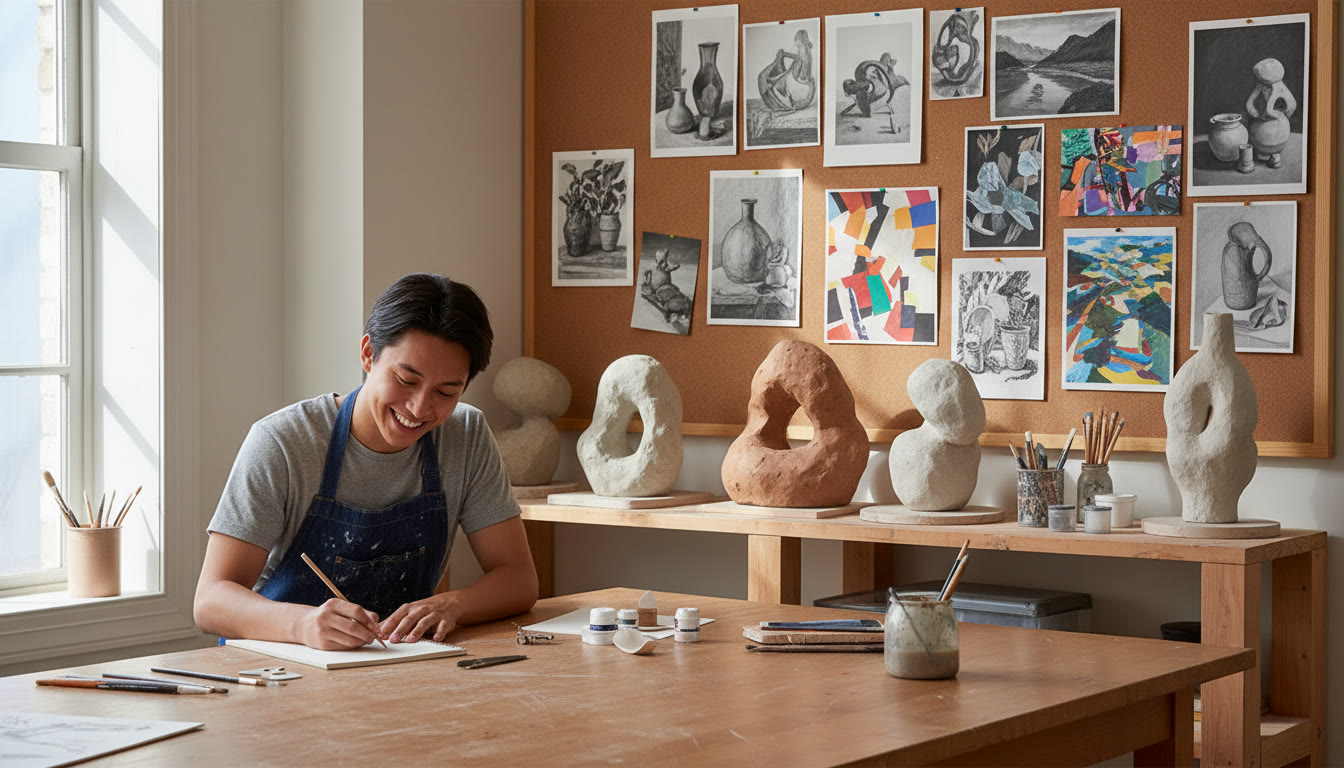

Mixed Portfolio Day: Why Combining 2D, 3D, and Drawing Edits Works
Think of a Mixed Portfolio Day as a creative sprint and a reflective studio session rolled into one. For AP students preparing a portfolio for AP Studio Art (or any advanced portfolio-based evaluation), this hybrid approach—bringing together 2D pieces, 3D works, and iterative drawing edits—does more than save time. It amplifies your visual language, helps you discover connections between different media, and produces a cohesive body of work that tells a stronger story to reviewers.
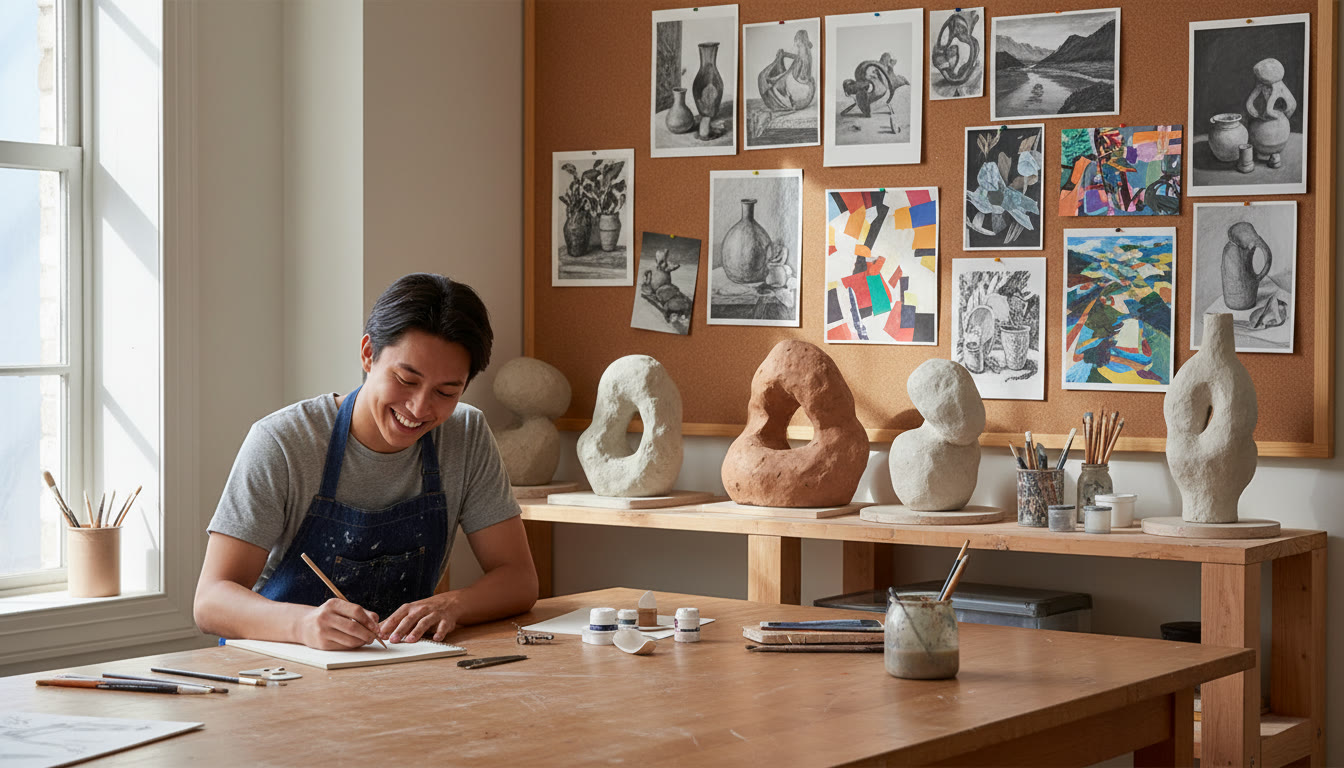
What “Mixed Portfolio” Means
A mixed portfolio intentionally displays a range of media and processes: observational drawings, photographic or digital 2D pieces, and tactile 3D pieces like ceramics, sculpture, or installations. But it’s not just variety for variety’s sake. The goal is coherence—consistent themes, recurring motifs, or shared problem-solving approaches that reveal your creative identity.
Plan the Day: Structure, Purpose, and Goals
One of the best things you can do before a Mixed Portfolio Day is design a practical schedule. Treat it like a studio lab session: define outcomes, break tasks into manageable parts, and leave time for reflection.
Morning: Set Intentions and Warm Up
- 30 minutes — Warm-up sketches: gesture, contour, and tonal studies to tune your eye.
- 30 minutes — Quick 2D ideation: thumbnails, color explorations, and compositional tests.
- 15 minutes — Checklist & priorities: choose which pieces to develop, refine, or photograph.
These early bits are low-stakes but high-payoff. Warm-ups loosen your hand and open creative channels; quick 2D ideation helps you decide what ideas will translate effectively across media.
Midday: Focus Sessions (2D and 3D Blocks)
Alternate concentrated blocks—one on 2D work (painting, print, or digital) and one on 3D work (clay, wire, mixed-material sculpture). The alternation keeps your mind fresh and encourages cross-pollination. When you return to a medium after a break, you often see solutions you missed earlier.
- 90 minutes — 2D focused refinement: final layers, color harmonies, or editing digital images for presentation.
- 90 minutes — 3D modeling/sculpting: building armatures, refining surfaces, or planning finishes.
Afternoon: Drawing Edits and Cross-Media Integration
Use this time to revisit drawings—your strongest communicative tool. Edit for clarity, mood, and compositional strength. Then test how a drawing concept could inform a 3D piece, and vice versa. Make small prototypes or annotated sketches that show those transitions.
- 60 minutes — Drawing edits: tonal adjustments, cropping, or experimenting with mixed media overlays.
- 45 minutes — Rapid prototyping for cross-media ideas: maquettes, collage mock-ups, or photo composites.
How to Make Your Portfolio Cohesive While Showing Range
Coherence and range are not opposites—they’re complementary. The trick is to let a few recurring elements unify the body of work while allowing each piece to exhibit distinct skills and media fluency.
Choose 3–5 Unifying Threads
These can be visual (a color palette, recurring shapes), conceptual (identity, migration, memory), or formal (emphasis on negative space, texture-focused surfaces). Use these threads to make connections between a delicate graphite drawing and a hefty plaster cast.
Practical Exercises for the Mixed Portfolio Day
Below are exercises you can slot into your day to generate purposeful work and edits.
- Mirror Swap: Draw a quick portrait, then make a 3D head maquette using only the drawing’s proportions. This teaches you to translate planar information into volumetric decisions.
- Texture Transference: Create a texture study in 2D (rubs, frottage) then use it as a surface treatment on a small sculpture.
- Series Compression: Choose three ideas and make them into a triptych: one drawing, one 2D print, one small 3D object. Keep them visually linked.
Example Schedule (Sample)
| Time | Activity | Outcome |
|---|---|---|
| 9:00–9:30 | Warm-up drawings | 6 quick value/gesture sketches |
| 9:30–10:00 | 2D ideation | Thumbnail compositions |
| 10:15–11:45 | 2D refinement | Polished painting/digital edit |
| 12:15–2:00 | 3D block | Maquette or refined sculpture |
| 2:15–3:15 | Drawing edits | Cropped, reworked drawing |
| 3:30–4:30 | Cross-media mockups | Annotated plan for portfolio presentation |
Presentation Matters: Photographing and Preparing Images
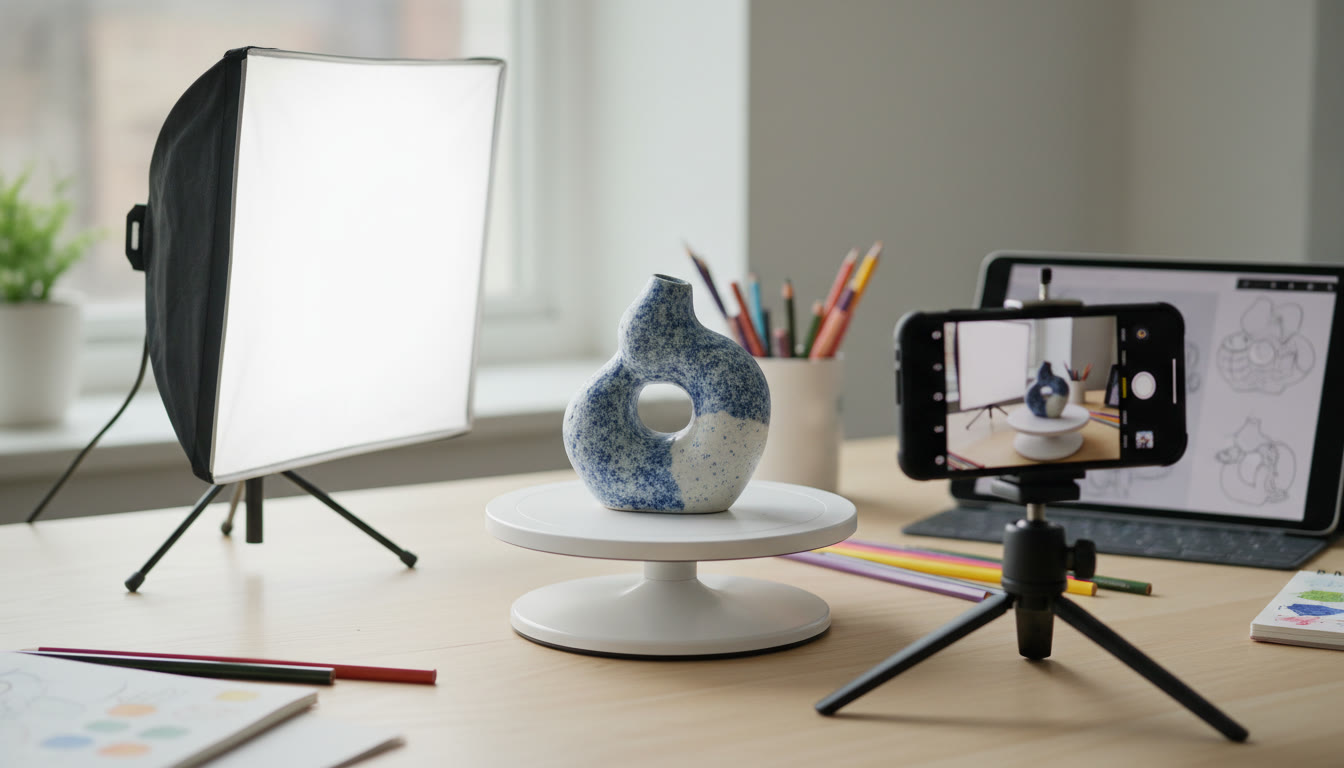
How you photograph and edit work can be the difference between a hesitant nod and an enthusiastic look from an AP reviewer. High-quality documentation shows details, scale, and surface texture, and provides context for 3D works.
Documentation Checklist
- Neutral background and even lighting for 2D works.
- Multiple views for 3D works (front, side, back, detail close-ups).
- Consistent image sizing and resolution across your portfolio images.
- Include a scale reference when scale matters (ruler, hand, coin).
Spend time editing photos—crop mindfully, correct white balance, and avoid excessive filters. The edits you make for presentation are part of your artistic practice and say something about your attention to detail.
Editing Drawings: Small Changes with Big Impact
Drawing edits are about choices: what to keep, what to erase, and how to amplify the message. Whether you’re working in charcoal, ink, or digital line work, editing can elevate a study into a statement piece.
Targeted Editing Techniques
- Cropping: A tighter crop can intensify focus and eliminate distracting elements.
- Value Push: Deepen core shadows or lift highlights to increase contrast and legibility.
- Selective Detail: Sharpen one focal area and leave surrounding areas looser to draw the eye.
- Layering Media: Consider adding a small wash, collage element, or printed texture to a drawing to create dialogue with your 2D/3D pieces.
How to Show Growth — and Why It Matters for AP
AP reviewers look for evidence of sustained investigation and thought. They want to see that you didn’t just execute beautiful objects, but that you engaged in a process: experimentation, failure, revision, and refinement.
Document Process, Not Just Products
Include preparatory sketches, failed experiments that taught you something, and annotated notes. A viewer who sees your thinking can more readily appreciate the decisions behind your final pieces.
Using Feedback Effectively
Feedback is fuel. The Mixed Portfolio Day is an ideal time to collect feedback and iterate quickly—the concentrated environment helps you test revisions immediately.
Who to Ask and How to Ask
- Teachers: Ask for specific feedback (composition, concept clarity, technical execution).
- Peers: Use peer critique for first impressions—what reads at a glance?
- Mentors or Tutors: For targeted growth, 1-on-1 guidance helps prioritize edits and plan next steps.
If you’re considering tutoring support, Sparkl’s personalized tutoring can slot into this process beautifully—providing one-on-one guidance, tailored study plans, and expert tutors who help you clarify goals and prepare presentation strategies. Their AI-driven insights can also flag recurring weaknesses and suggest practice routines, which is especially useful when you want to track measurable improvement over time.
Balancing Time: How Much to Spend on Each Medium
There’s no universal formula, but a sensible distribution is to spend time proportionate to the weight each medium will have in your final portfolio. If your submission requires two 2D and one 3D sequence, allocate more refinement time to the 2D pieces—but don’t neglect the 3D documentation. A strong 3D piece can elevate an entire submission.
Sample Time Allocation
| Portfolio Requirement | Suggested Time Split |
|---|---|
| Mostly 2D (dominant) | 2D: 60% | Drawing Edits: 20% | 3D: 20% |
| Balanced 2D and 3D | 2D: 45% | Drawing Edits: 20% | 3D: 35% |
| 3D focused | 2D: 30% | Drawing Edits: 20% | 3D: 50% |
Common Pitfalls and How to Avoid Them
Even confident students run into the same traps. Here’s how to avoid them on your Mixed Portfolio Day.
- Too Much Variety Without Linkage: Avoid random diversity. Use consistent visual or conceptual threads.
- Overworking Pieces: Know when to stop. Over-polishing can strip spontaneity and weaken impact.
- Poor Documentation: Take time to photograph properly; rushed images can undercut strong work.
- Neglecting Process Documentation: Include your sketches and tests—reviewers value evidence of growth.
Realistic Expectations: What a Productive Mixed Portfolio Day Looks Like
A productive day doesn’t mean finishing ten museum-ready pieces. It means producing meaningful progress: a refined 2D piece, a polished drawing edit, a functional 3D prototype, and clear documentation of process and decisions. That combination signals both capability and thoughtful practice to an AP reviewer.
Measuring Success
- Quality over quantity: fewer resolved pieces that show depth are better than many superficial ones.
- Evidence of iteration: visible changes from first sketch to final work.
- Clarity in presentation: well-photographed, consistently edited images that communicate scale and materiality.
Using Technology to Complement Studio Practice
Digital tools are not cheats—they’re extensions of your process. Use phone cameras with a tripod, a basic photo editing app for color correction, and simple 3D modeling or compositing software to explore how a drawing might translate into an installation. Keep the digital work honest; it should document or inform your practice, not obfuscate it.
Finishing Touches and Submission Prep
Before you submit, assemble a concise presentation packet. Label works with titles, dates, materials, and a short statement (one or two sentences) about process or intent. Sequence your images so narrative flow is clear—lead with strong work and end with pieces that leave a lasting impression.
Final Checklist
- All images consistent in size and color balance.
- Process documentation included (sketches, notes, failed tests with a short note on what you learned).
- Artist statement or piece descriptions are concise and reflective of intent.
- Backup copies of images and statements in multiple formats.
How to Keep Momentum After Mixed Portfolio Day
Use the outcomes of your day to set the next week’s goals. Which pieces need incremental changes? Which experiments deserve more time? Consider scheduling brief weekly check-ins with a mentor or tutor—these keep momentum and maintain accountability. If you prefer structured guidance, Sparkl’s personalized tutoring and tailored study plans can help translate a single productive day into sustained progress: targeted exercises, goal tracking, and regular expert feedback.
Mini-Routines to Stay Creative
- Daily 10-minute sketch warm-up to keep your hand active.
- Weekly photo-documentation session to keep images up to date.
- Monthly review of your unifying threads to ensure coherence.
In Closing: Make the Mixed Portfolio Day Your Studio Superpower
By intentionally designing a Mixed Portfolio Day—balancing 2D refinement, 3D making, and strategic drawing edits—you create an environment where ideas can flow, be tested, and be translated across media. The result is a portfolio that doesn’t just display skills, but tells a compelling story of growth, exploration, and artistic voice. Keep your process visible, prioritize clarity in presentation, and make time for feedback. Small, deliberate edits often produce the biggest leaps.
Above all, be curious. Treat each experiment as data, each failure as a lesson, and each edit as an opportunity to make your voice clearer. With focused days like this and the right support—whether a thoughtful teacher, a peer critique group, or personalized tutoring from Sparkl—you’ll be well on your way to a portfolio that reflects not only what you can make, but who you are as a creative thinker.
Final Studio Prompt
Tomorrow, pick one drawing you love and one 3D object you’re curious about. Spend an hour editing the drawing and an hour adapting one formal idea from it into the 3D object. Document the process in three images and one short note about what changed in your understanding. That single experiment could become the seed of a powerful portfolio thread.





















No Comments
Leave a comment Cancel