
Visual Storytelling: Sequencing Portfolio Panels for AP Art Students
Why Sequencing Matters — More Than Pretty Pictures
Sequencing is the backbone of a compelling portfolio. For AP Art students, whether you’re submitting a 2-D Design, Drawing, or a breadth/concentration mix, the order you present your images tells a story. It converts isolated works into a cohesive narrative, reveals your thinking process, and helps evaluators see your artistic development. Think of your panels not as individual stops on a tour, but as chapters in a short novel about your interests, intentions, and growth.
What Evaluators Look For
Collegeboard readers evaluate portfolios for three main threads: quality, concentration (or investigation), and breadth. Sequencing helps emphasize these threads by:
- Highlighting a central concept (concentration) through repeated motifs and evolving techniques.
- Demonstrating technical skill and refinement across time (quality).
- Showing a range of approaches, media, and problem-solving strategies (breadth).
Good sequencing steers attention toward your strongest work while still honoring experimentation. It’s the difference between a scattershot gallery and a persuasive, focused argument.
Foundations of Effective Sequencing
Start with Intent: Define Your Core Narrative
Before arranging images, write a one-sentence statement: What is this portfolio about? It could be thematic (“urban solitude”), formal (“color relationships and edge control”), or methodological (“iterative image-making through printmaking”). This guiding line becomes your spine: every panel should in some way reflect back to it.
Group by Relationship, Not by Chronology
Students often sequence strictly by date, but chronological order only tells part of the story. Group images by relationship — visual motif, technique, or conceptual stage. For instance, place early experiments beside later resolved pieces to highlight refinement. Pair photos of process (sketches, mock-ups) with final works to reveal decision-making.
Use Rhythms and Pacing
Treat the portfolio like music. Alternate high-impact works with quieter studies. A dramatic composition followed by a subtle tonal study creates contrast that makes both pieces read more clearly. Pacing keeps the viewer engaged and prevents visual fatigue.
Concrete Sequencing Strategies
1. Lead with a Strong Statement Piece
Your opening panel functions like a thesis sentence. Choose an image that is technically strong and conceptually central. It doesn’t have to be the most complex — it must be unmistakable in voice and intention.
2. Show Process Near the Works They Influence
Place process images close to the final works they informed. If your concentration revolves around a repeated motif, show the sketch, the experiment, and the finished panel consecutively so readers can trace your decisions.
3. Create Visual Echoes
Repetition is persuasive. Use recurring shapes, colors, or compositional strategies across panels. Echoes can be subtle: a repeated curve in three different media can feel like a thread running through your concentration.
4. Mind the Edges — Cropping and Orientation
How you crop an image affects sequencing. A tight crop can create intimacy; a wider frame conveys environment. Vary orientation (horizontal vs. vertical) thoughtfully to break monotony — but avoid jarring the viewer. Keep a consistent image quality and color calibration across panels so transitions are smooth.
5. Consider Color Flow
Color relationships have emotional and visual weight. Transition from cool to warm palettes, or use a neutral gray panel to rest the eye between highly saturated works. Sequencing by color can subtly enhance thematic links: a recurring blue might symbolize distance, a recurring red might signal intensity.
Practical Layouts and Examples
Three Sequencing Blueprints
Here are three practical models you can adapt. Use them as starting points, not rules.
- Linear Narrative: Best for a clear chronological investigation. Start with inspiration and end with resolution. Ideal for concentrations that evolve methodically.
- Clustered Concept: Group images into thematic clusters (A, B, C) and present clusters in a deliberate order to emphasize relationships.
- Alternating Contrast: Alternate experimental studies with resolved works to highlight problem-solving and growth.
Sample Sequencing Table
| Position | Image Type | Purpose | Suggested Visual Cue |
|---|---|---|---|
| 1 | Statement Piece (final) | Establishes voice and thesis | Strong composition, bold color |
| 2 | Process Sketch | Shows ideation | Loose pencil or thumbnails |
| 3 | Experiment (alternate medium) | Displays risk-taking and breadth | Different texture or scale |
| 4 | Resolved Work (final) | Shows refinement and technical skill | High detail, polished edges |
| 5 | Comparative Pair | Highlights choices and revisions | Two similar compositions side-by-side |
Technical Considerations for Digital Submission
Image Quality and File Management
Upload crisp, well-lit images. Avoid heavy filters that obscure surface detail. Keep consistent color balance and white point across submissions — minor shifts can read as inconsistencies in craftsmanship. Save files with descriptive names that include the piece title, date, and medium to stay organized.
Resolution, Cropping, and Backgrounds
Crop to emphasize composition, not to remove context that was intentional (like surrounding negative space). When photographing works on paper, flatten shadows and use a neutral backdrop. For mixed-media or sculptural work, include one close detail and one contextual photograph so readers can appreciate both surface and scale.
Common Sequencing Pitfalls and How to Avoid Them
Pitfall: Overcrowding with Similar Works
Repetition is useful, but redundancy is not. If several pieces are visually near-identical, choose the strongest two and use the rest as process evidence rather than main panels.
Pitfall: Jarring Transitions
A sudden shift from a high-contrast oil painting to a low-key charcoal study can feel disorienting. Smooth transitions with intermediary pieces or neutral panels to give readers time to recalibrate.
Pitfall: Ignoring Process
Some students underplay sketches and mock-ups. Including process work doesn’t weaken your portfolio — it enriches it. Place process near the final to show cause and effect.
Storytelling Techniques for Stronger Concentrations
Use Motifs Like a Visual Language
Choose motifs — a particular line, pattern, or color — that appear throughout. Motifs function like recurring phrases in a poem; they build recognition and emotional resonance. The motif can transform in material and scale, demonstrating both continuity and growth.
Show Problem-Solving
AP readers value the ability to respond to constraints. Include a panel where you deliberately set a limitation (limited palette, reduced scale, or a new medium) and show how you worked through it. Sequencing this panel next to the results makes the problem-solving legible.
Narrative Arcs Work
Even a short portfolio benefits from an arc: introduction (inspiration), development (experimentation), and conclusion (resolution). Use sequencing to create this arc — place pieces to mark each stage, and let the final panels feel like a natural culmination.
How to Iterate and Test Your Sequence
Paper Mock-Ups and Digital Mock-Ups
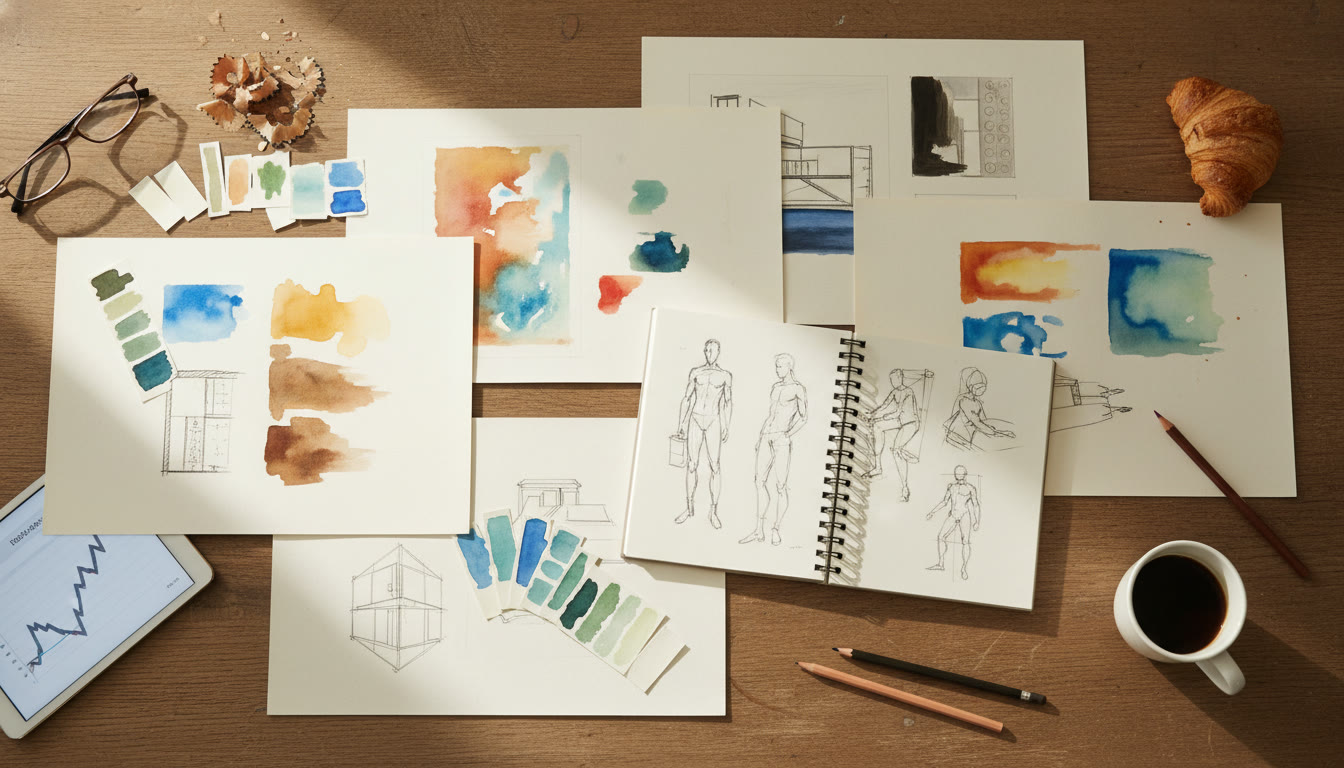
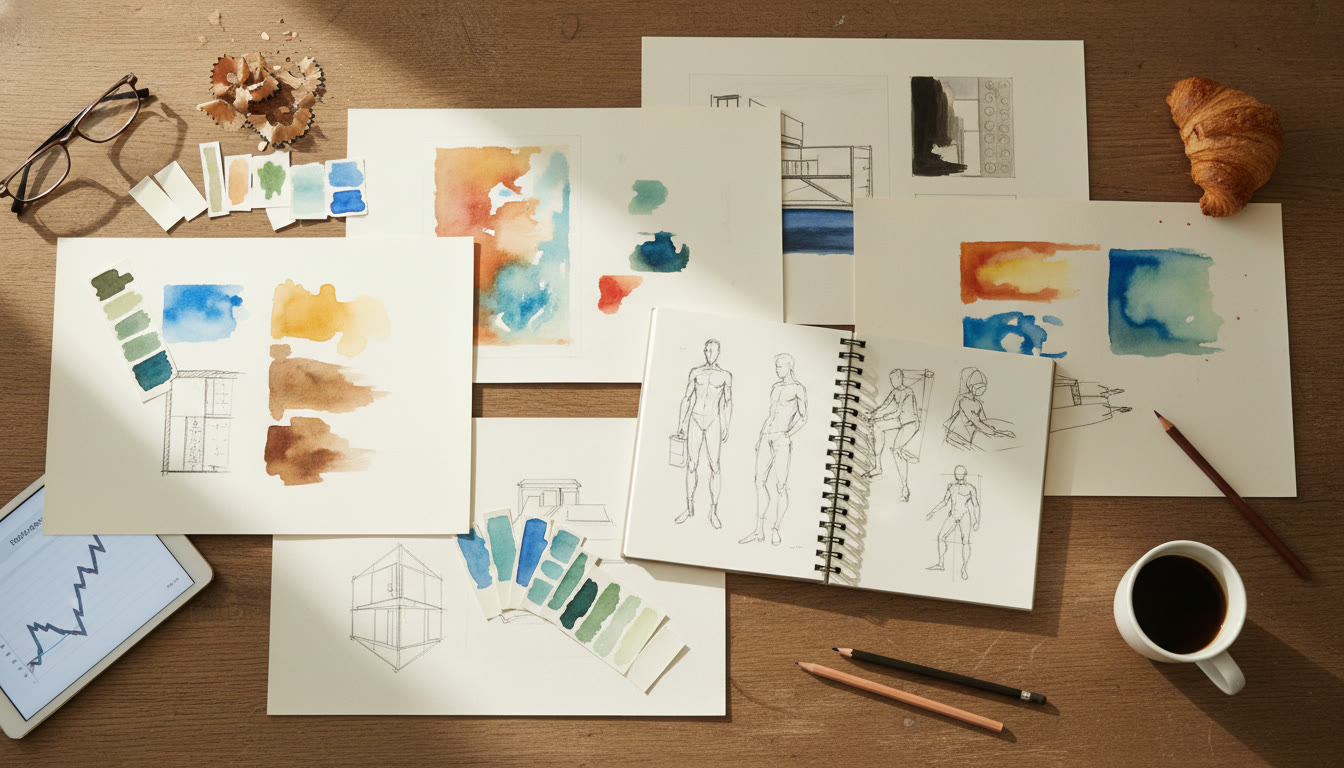
Print thumbnails and physically rearrange them on a table; this tactile approach often reveals pacing issues you won’t notice on-screen. Alternatively, create a digital slideshow and watch the images advance — timing will expose awkward transitions.
Peer Review and Expert Feedback
Ask for targeted feedback: “Does image 3 make you look twice?” instead of a general “How is my portfolio?” Specific questions lead to actionable advice. If possible, consult an instructor or a mentor for one-on-one guidance. Sparkl’s personalized tutoring can be particularly helpful here — an expert tutor can give tailored feedback, suggest sequencing adjustments, and help refine your artist statement so everything aligns.
Presentation Day: Final Checklist
- Confirm image resolution and file sizes meet submission requirements.
- Check color profiles and exposure on multiple devices.
- Proofread titles, dates, and medium labels for accuracy and consistency.
- Ensure your one-sentence intent and any written reflections echo the visual narrative you created.
Quick Troubleshooting Tips
If a panel feels weak in context, ask: Does it advance the narrative or merely decorate it? If it doesn’t, replace it with process evidence or a stronger work. When in doubt, prioritize clarity — a clear, smaller idea presented well beats a sprawling but unfocused page.
Real-World Examples and Mini Case Studies
Case Study A: The Urban Concentration
Student A centered a concentration on “City Windows.” They opened with a polished mixed-media piece of a reflected window (statement), followed by two thumbnail sketches and a block-printed experiment showing the same frame in different lights. Mid-portfolio, a high-contrast charcoal study deepened the mood, and the sequence closed with a large, resolved painting that synthesized the earlier experiments. The result: a clear visual argument about reflection and separation.
Case Study B: The Formal Investigation
Student B focused on “Edge and Negative Space.” The sequence alternated abstract cut-paper studies with photographs exploring shadow edges. This gave readers a rhythmic alternation between study and application — each formal experiment immediately translated into a different medium, which made the concentration feel rigorous and deliberate.
Balancing Breadth and Concentration
Your portfolio should show both depth (concentration) and range (breadth). Use sequencing to make the concentration the spine, and tuck breadth examples alongside or between segments. This demonstrates that you can both commit to investigation and approach problems with varied tools.
Where Sparkl’s Tutoring Fits In
Personalized tutoring — like the 1-on-1 guidance Sparkl offers — can accelerate this balancing act. Tutors can help you select which images emphasize technical growth or conceptual depth, create a tailored study plan for last-minute refinements, and use AI-driven insights to identify which panels make the strongest narrative impact. When you’re uncertain about a transition or about how to present a process image, an expert eye can point out subtle sequencing moves that make a portfolio feel professional and intentional.
Final Thoughts: Sequence as a Skill
Sequencing is a learned craft: it blends visual intuition, narrative thinking, and careful editing. Think of it as an editorial choice — you are curating an experience for a reader who will evaluate your decisions in minutes. Be ruthless about clarity, generous about showing your process, and thoughtful about rhythm. With practice, your portfolios will do more than display work — they will persuade, illuminate, and linger.

Parting Advice
Start early, prototype often, and seek feedback from people who ask the right questions. Remember: your portfolio is not just evidence of ability; it’s an invitation into your creative mind. Sequence your panels so that every image earns its place and contributes to a compelling, cohesive story.
If you’d like help refining a sequence or preparing final files, consider scheduling targeted sessions — a few hours of focused tutoring can transform an ambiguous layout into a persuasive narrative that speaks to readers immediately.
Good luck — make your images sing together.



























No Comments
Leave a comment Cancel