

Two Weeks to Shine: Why a Focused 14-Day Plan Works
The last 14 days before your AP Capstone presentation feel intense for a reason: this is where months of research, collaboration, and critical thinking become a live conversation. But intensity doesn’t have to mean chaos. With a clear, humane plan you’ll turn frantic scrambling into purposeful polishing. This article gives a day-by-day roadmap, practical checklists, and rehearsal strategies so your delivery is calm, confident, and compelling.
What ‘Success’ Looks Like in 14 Days
Success isn’t perfection. You don’t need every slide to be a design masterpiece; you need clear argument flow, evidence that supports your claims, seamless transitions between speakers (if you have them), and the ability to handle questions. Over the next two weeks you’ll tighten structure, fortify evidence, test timing, and rehearse the parts that will make the presentation memorable.
Big-Picture Priorities for the Final 14 Days
- Clarify your narrative — the story your data tells.
- Polish evidence — accuracy, attribution, and citations ready.
- Refine slides — clean visuals and readable text.
- Plan transitions — who says what and when.
- Rehearse under realistic conditions — time, tech, and Q&A.
- Practice stress management — sleep, hydration, and short breaks.
The 14-Day Day-By-Day Plan
The table below gives a compact schedule. After the table, each block unpacks the actions and mindset for that phase.
| Day | Focus | Outcome |
|---|---|---|
| Day 14 | Structure & Narrative Audit | Clear thesis and outline |
| Day 13 | Evidence Check | Primary evidence verified |
| Day 12 | Slide Drafting | All slides created |
| Day 11 | Design & Visual Polish | Readable, consistent slides |
| Day 10 | Script & Speaking Notes | Speaker notes and cues ready |
| Day 9 | Rehearse Segments | Smooth segment delivery |
| Day 8 | Full Run-Through | Timing and flow checked |
| Day 7 | Feedback Session | Actionable revisions |
| Day 6 | Q&A Preparation | Answers and evidence at hand |
| Day 5 | Second Full Run-Through | Polished timing |
| Day 4 | Tech Check & Logistics | All tech works; backup ready |
| Day 3 | Dress Rehearsal | Confidence in attire and delivery |
| Day 2 | Light Run & Rest | Clarity without fatigue |
| Day 1 | Calm Preparation | Mindset and checklist ready |
Days 14–12: Structure, Evidence, and First Draft Slides
Start with the spine of your presentation: thesis, claims, evidence, and the logical steps that connect them. Ask: what is the single thing I want the audience to remember? Then map each slide to that idea.
- Day 14 — Structure & Narrative Audit: Draft a 1-page outline with timings and who delivers each point. If you have co-presenters, this is the time to confirm the division of labor.
- Day 13 — Evidence Check: Verify all facts and citations. For AP Capstone, your ability to point to precise sources and explain methodology matters. Make a one-page evidence inventory listing source, page/paragraph, and why it supports your claim.
- Day 12 — Slide Drafting: Build raw slides. Focus on content before design. Use large headings, short bullets (3–5 per slide max), and reserve complex visuals for critical moments.

Days 11–9: Visuals, Speaking Notes, and Segment Rehearsals
Now turn draft slides into clear visuals and craft the words you’ll say. Practice in small chunks.
- Day 11 — Design & Visual Polish: Use consistent fonts and a simple color palette. Replace long bullets with concise phrases. Add visuals only when they clarify—graphs, photos, and timelines can be more persuasive than text.
- Day 10 — Script & Speaking Notes: Write speaker cues, not full scripts. Notes should include the sentence openers you rely on and the key statistics you must name verbatim.
- Day 9 — Rehearse Segments: Run each section alone and record yourself. Listening back reveals filler words, pacing issues, and unclear transitions.
Days 8–6: Full Runs, Feedback, and Q&A Prep
Switch to full runs and invite fresh eyes. Focus on tightening time and answering questions gracefully.
- Day 8 — Full Run-Through: Time your presentation and note which slides overrun. Aim to finish 1–2 minutes under your limit to allow for brief technical issues or longer answers during Q&A.
- Day 7 — Feedback Session: Present to 2–3 peers, a teacher, or a mentor. Ask for one thing you should cut and one you should add. Use that feedback to edit ruthlessly—clarity beats comprehensiveness.
- Day 6 — Q&A Preparation: Predict probable questions and prepare short, evidence-backed responses. Practice answering out loud. If a question is unexpected, practice the “bridge” technique: acknowledge, briefly restate your core point, and answer with an example.
Days 5–3: Polish, Technology, and Dress Rehearsal
Final polish is both technical and performative. Simulate the environment as closely as possible.
- Day 5 — Second Full Run-Through: Run everything exactly as you will on the day—tech, slide advance, and handoffs. Record the session if possible.
- Day 4 — Tech Check & Logistics: Test the presentation on the device you’ll use. Confirm remote clicker function, display compatibility, and internet requirements. Prepare backups: a PDF of slides on a USB, and access to your cloud copy.
- Day 3 — Dress Rehearsal: Wear what you’ll wear on presentation day and rehearse at least twice in that outfit. Clothes affect posture and confidence; make sure you can move and gesture naturally.
Days 2–1: Tapering and Mental Preparation
Reduce cognitive load and focus on clarity and well-being.
- Day 2 — Light Run & Rest: Do a short run-through of the first and last 3 minutes of your talk—the opening hook and the conclusion—then rest. Sleep is not negotiable.
- Day 1 — Calm Preparation: Pack your bag with backups (USB, charger, printed notes). Eat a balanced meal, hydrate, and do 10 minutes of breathing or visualization. Visualize delivering your key line with calm certainty.
Slide and Script Checklist (Quick Reference)
- Title slide: project title, team members, and one-sentence takeaway.
- Agenda slide: 3–5 clear sections.
- Background slide(s): why this question matters.
- Methods slide: concise description of research approach.
- Evidence slides: data visuals, quotes with citations, and interpretation.
- Conclusion slide: restate contribution and implications.
- Q&A slide: prompt for questions and a final, memorable line.
How to Structure Your Rehearsals
Rehearsal technique matters more than the number of hours. Focused, deliberate practice produces better results than marathon runs.
- Block Practice: Work on sections with similar cognitive demands together (e.g., the methodology section where you describe procedures).
- Variable Practice: Run parts in a different order so you can handle non-linear Q&A follow-ups.
- Simulated Pressure: Add small stressors during rehearsal—a ticking timer, a friend interrupting with a question—to build resilience.
- Record and Review: Video your full run once or twice; watch at 1.25x speed and note three concrete actions to change.
Handling Q&A Like a Pro
Q&A can feel like a minefield, but it’s an opportunity to showcase depth. Move from defensiveness to curiosity.
- Listen fully before you answer.
- Restate the question in your own words to buy time and clarify.
- Answer succinctly, then link back to evidence. If you don’t know, say so and offer how you would find the answer.
- Use bridging phrases: “That’s a great point; what our data shows is…”
Common Last-Minute Problems and Fixes
Problems crop up. Prepare fixes so you don’t invent them in front of an audience.
- Slide font is too small — Use a minimum of 24–28 pt for body text.
- Timing runs long — Cut one example or move a visual to a handout.
- Technical glitch — Have a PDF backup and be ready to present from a printed outline.
- Nervousness — Pause, breathe, and use a brief anecdote to center yourself.
Real-World Example: A Two-Speaker Flow
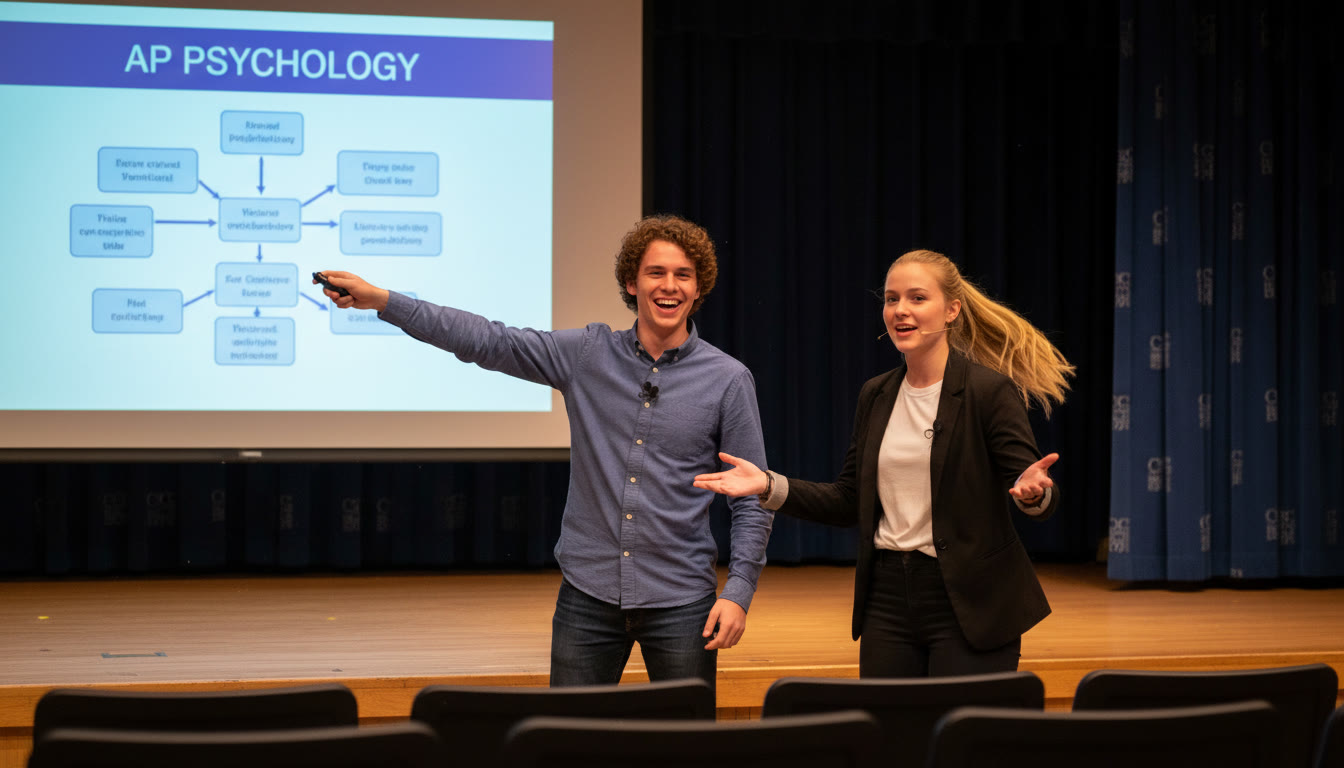
Imagine a team of two presenting on “The Impact of Urban Green Spaces on Student Wellbeing.” Here’s a simple division of labor that fits a 12-minute window:
- Speaker A (0:00–3:00): Hook, research question, and outline.
- Speaker B (3:00–6:00): Methods and data collection overview.
- Speaker A (6:00–9:00): Key findings and interpretation.
- Speaker B (9:00–10:30): Implications and limitations.
- Both (10:30–12:00): Conclusion and single-sentence takeaway; prompt for questions.
How Tutoring Fits Into the Final Two Weeks
If you feel stuck, targeted tutoring can make the difference between a polished presentation and a panicked one. Short, focused sessions—30 to 60 minutes—work best. A great tutor helps refine your narrative, offers practice Q&A, and gives feedback on delivery. Sparkl’s personalized tutoring offers 1-on-1 guidance, tailored study plans, expert tutors, and AI-driven insights that help you use your practice time efficiently. A few guided sessions during Days 9–6 can dramatically tighten your Q&A skills and presentation flow.
Mindset and Wellness: Your Silent Performance Partner
Two weeks of intense work are easier when you protect sleep, nutrition, and small moments of rest. Performance psychology tips:
- Sleep like it matters—because it does. Memory consolidation and emotional regulation happen during sleep.
- Move your body—short walks clear mental clutter and improve vocal quality.
- Hydrate—vocal cords don’t like dry air; keep water nearby.
- Practice 5-minute mindfulness or breathing exercises before runs to reduce filler words and steady cadence.
Checklist for Presentation Day
- Chargers, clicker, USB with PDF, printed one-page outline, and business-card-sized speaker cue cards.
- Confirm arrival time and technology access with your teacher or organizer.
- Do a quick two-minute vocal warm-up and a single run of your opening line.
- Stand tall for 30 seconds before you begin—posture affects voice and confidence.
Final Thoughts: Clarity Over Complexity
In these last 14 days, ruthlessly favor clarity. The most memorable presentations are those where the audience can follow the arc—problem, method, evidence, and implication—without being lost in visual clutter or tangential detail. You’ve already done the hardest part: produced rigorous research. The final two weeks are about translation—making your work accessible and persuasive in the short time you have.
A Short Encouragement
Every great presenter started somewhere fragile and nervous. The process of preparing, refining, and rehearsing is itself a skill that will serve you beyond the Capstone: career interviews, college talks, and professional presentations. Be kind to yourself during these two weeks—progress beats perfection.
Quick Reference: 3 Things to Do Tonight
- Write a one-sentence thesis you can say in under 10 seconds.
- Make a single backup of your slides in PDF format.
- Schedule a 30-minute focused rehearsal for Day 9 and invite one peer for feedback on Day 7.
If you’d like, I can convert this plan into a printable checklist, a timed rehearsal script tailored to your exact presentation length, or a suggested short practice schedule for co-presenters. Good luck—you’re closer than you think, and with a focused 14-day plan you’ll walk into that room ready to make a memorable, professional impression.


























No Comments
Leave a comment Cancel