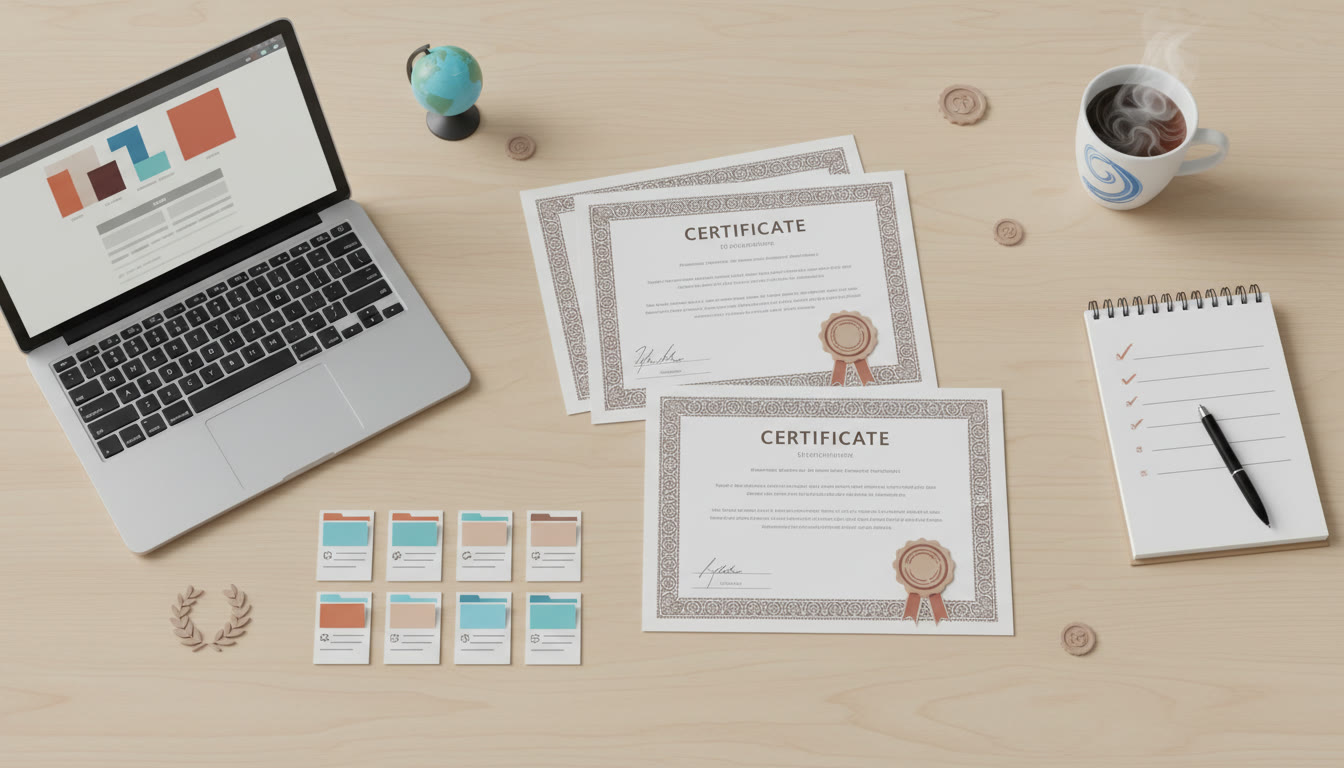

IB DP Scholarship Strategy: How to Assemble Scholarship Proof Documents (Awards, Letters, Media)
Applying for scholarships as an IB Diploma Programme student is both an art and a system: art because you need to tell a memorable story about who you are and why you deserve support; system because scholarship panels want clear, credible proof. This guide walks you through how to gather, verify, format, and present the evidence that turns achievements into convincing, trustworthy documents—so your essays, interviews, and timelines reinforce each other instead of leaving admissions officers hunting for context.
Why careful documentation changes the conversation
Two students might both list “regional science award” on an application. What separates them on paper is the context and the supporting proof. Reviewers look for both verifiable accomplishments and a narrative that shows depth: sustained effort, leadership, and real impact. A crisp, authenticated certificate or a signed letter from a project supervisor can convert a line in your résumé into a full story in a reviewer’s mind. In short, polished proof builds credibility—and credibility opens more doors than a long list of unverified claims.
Types of scholarship evidence and what they communicate
- Certificates and award letters: Official recognition, often with the clearest authentication.
- Recommendation letters: Testimony about character, role, and impact—ideally on official letterhead and signed.
- Media coverage and public records: Press articles, school newsletters, or broadcast mentions that confirm public recognition.
- Academic work: Extended Essay excerpts, research posters, or competition solutions that demonstrate mastery.
- Transcripts and predicted grades: Official academic records and coordinator statements that show performance trends.
- Digital artefacts: Screenshots, video timestamps, archived pages, and official emails with metadata.
Core principles before you start collecting
- Start with authenticity: prioritize originals and documents with institutional letterhead or official signatures.
- Provide context: a one-line summary attached to each item helps a reviewer understand role, scale, and timeframe.
- Prioritize impact: highlight evidence that shows leadership, initiative, or measurable results rather than every certificate you own.
- Make verification easy: supply contact details for signatories or award issuers if allowed by the application portal.
Awards and certificates: collecting smartly
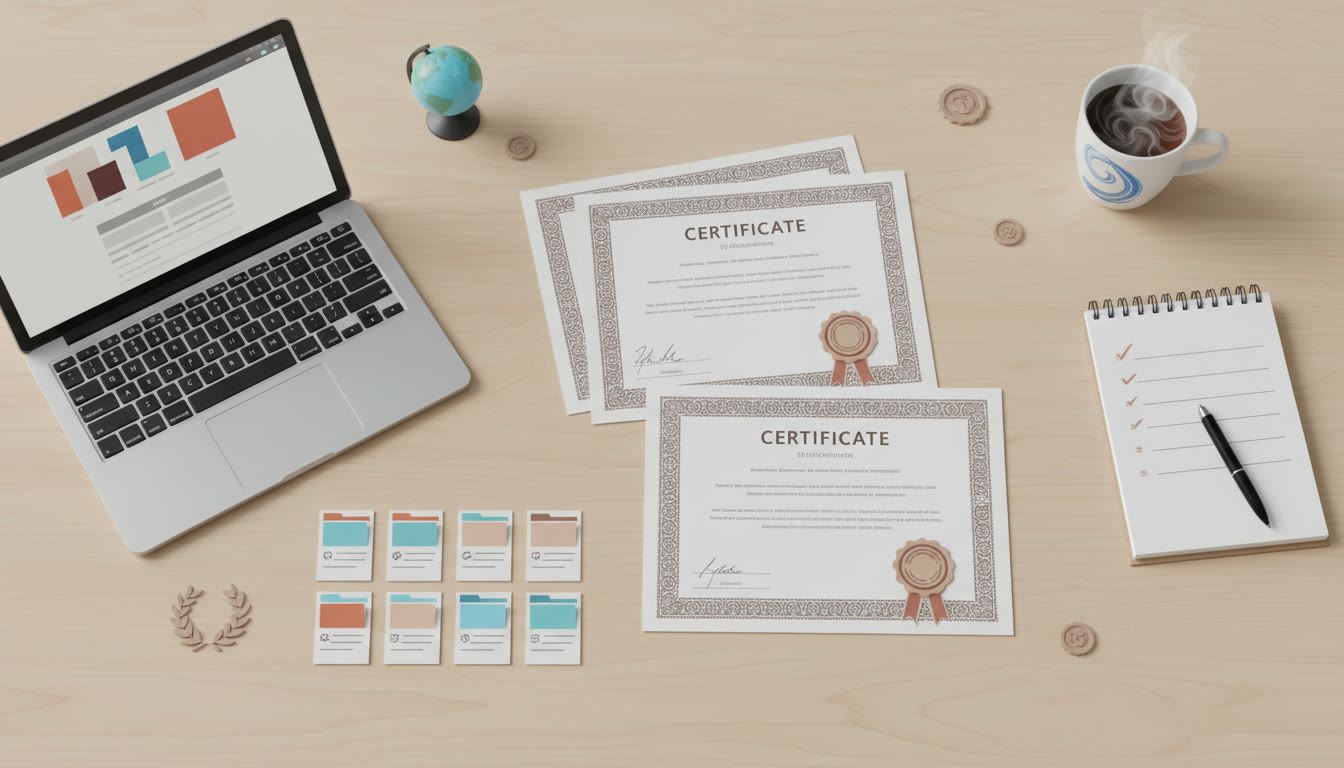
Awards are often the most straightforward proof, but the strength of an award document depends on completeness. An ideal award file includes the issuing organization’s letterhead, recipient name, title of award, date, signature, and an identifying reference number if available. If the award came from a club, coach, or community organization, ask for a short, signed cover note explaining the selection criteria. If your certificate is in a language other than the application language, include a certified translation and a short translator’s note stating their affiliation.
Recommendation letters: the subtle proof that persuades
Letters are where voice meets verification. They should be specific—describe situations, actions, and consequences—and ideally quantify results: how many students benefited, how much fundraising occurred, or how the project scaled. Make it easy for recommenders to help you: provide a one-page fact sheet with dates, roles, outcomes, and the competencies you’d like them to illustrate. Give them plenty of time and a clear submission method.
If you want tailored interview practice or one-on-one document review, Sparkl offers personalized tutoring, mock interviews, and targeted feedback to help bring those letters and narratives into your essays. Consider sharing your evidence inventory with a trusted tutor so they can help you shape the strongest application thread.
Media and public coverage: capture and preserve
Media proof can be deceptively powerful: a short article, a school newsletter, or a radio spot tells a reviewer that your achievement was visible and recognized beyond your immediate circle. When collecting media proof, save the whole article or broadcast page—not just the snippet. Capture the full webpage with date and URL, save a PDF, and take a time-stamped screenshot. If coverage is on social media, capture the original post, number of reactions, and comments that confirm participation or leadership. Because links break, prefer PDFs and local copies over linking alone.

Academic work, research, and portfolios
For evidence tied to learning—Extended Essays, research posters, or competition submissions—submit the strongest, most relevant excerpt plus a brief explanatory cover note. Identify what the work demonstrates: methodological rigor, originality, or collaboration. If your project had a faculty supervisor, a short supporting letter that explains your contribution adds weight. Where appropriate, include grading rubrics or adjudication forms from competitions to show the assessment criteria that led to recognition.
Transcripts, predicted grades, and coordinator statements
Official transcripts and predicted grade reports are foundational. Ensure that transcripts are scanned as PDFs directly from your school office so they retain official seals and signatures. If your school provides a coordinator statement or a counselor letter, include it: these documents add perspective on school context, course availability, and relative academic standing. If a portal allows only a limited number of uploads, use a consolidated PDF containing the transcript, predicted grades, and a one-page coordinator note.
Formatting, scanning, and file standards
How you present files matters as much as what you present. Follow these practical guidelines:
- Scan at a readable resolution (300 dpi is a good standard) and save as searchable PDF where possible.
- Name files consistently: use a short, clear pattern that includes your last name, document type, and a brief descriptor.
- Combine related documents into one PDF with a simple table of contents as the first page.
- Avoid overly large files—compress gently to keep under portal limits while preserving legibility.
- Keep an index or README PDF that summarizes every item and explains why it is included.
Sample document checklist and naming table
| Document | Minimum proof | Preferred enhancement | File name example |
|---|---|---|---|
| Award Certificate | Signed certificate with issuer name and date | Short cover note explaining selection process | Nguyen_Award_ChemistryRegional_Certificate.pdf |
| Recommendation Letter | Signed letter on official letterhead | One-page fact sheet for recommender | Patel_Letter_TeacherName_Science.pdf |
| Media Coverage | PDF of article or screenshot with URL and date | Archived snapshot or transcript of audio/video piece | Singh_Media_NewsArticle_SchoolProject.pdf |
| Research / EE excerpt | PDF of excerpt with supervisor note | Adjudication rubric or poster image | Garcia_EE_Excerpt_SupervisorNote.pdf |
| Transcript / Predicted Grades | Official school transcript PDF | Coordinator statement about course context | Osei_Transcript_PredictedGrades_Coordinator.pdf |
How to name files so reviewers never have to guess
Choose a naming convention and stick with it. A reliable pattern is: LastName_DocType_ShortDescriptor.pdf. For multi-document files, add a numeric prefix to preserve order: 01_Summary.pdf, 02_Awards.pdf, 03_Recommendations.pdf. When a portal asks for a single upload, use your summary as the first page so reviewers see a guided map before they dive into evidence.
Dealing with missing, disputed, or informal evidence
Sometimes you lack an original certificate or a piece of evidence is in dispute. Be transparent and provide alternate verification: an official email from the awarding body, a signed supervisor affidavit, a program booklet, score sheets, or a contemporaneous photograph of the event. If an award was team-based, clarify your role and contribution with a supervisor statement. Admission and scholarship committees expect gaps; what matters is your effort to substantiate claims and provide context.
Translations, notarization, and authenticity
If documents are in another language, include a certified translation plus the original. Some scholarship processes ask for notarized copies; when in doubt, confirm requirements with the awarding portal or coordinator. Avoid altering documents; instead, add a brief cover note that explains what each file is and why it matters. If a portal accepts only certain formats, follow their rules strictly—compliance is part of trust.
Bringing evidence into essays and interviews
Your essays should reference evidence, but not read like an itemized list. Use documents to lend credibility: when you describe leading a community garden project in an essay, the reviewer should be able to find a nearby file—a letter from the project supervisor or a photo from a local newspaper—that confirms your description. In interviews, treat evidence as a prop for storytelling: know which document you might cite if a panel asks for proof and be ready to explain the context in one concise sentence.
Here’s a short example of integrating proof into an essay paragraph (short, illustrative excerpt):
“I organized weekly workshops that grew participation from five students to fifty; the program’s community recognition—outlined in the attached supervisor letter—helped us secure a permanent classroom space and a seed grant that expanded our reach.”
That sentence links your action to an outcome and points a reviewer to the supporting file, which should be clearly labeled in your portfolio.
Mock interviews and evidence-driven practice
When practicing interviews, rehearse concise explanations for each major piece of evidence: what it is, why it mattered, and what you learned. Time yourself so that, when asked a question, you can answer in 60–90 seconds and then offer to point the interviewer to a specific document. Consider a short sheet that lists “If you’d like proof of X, see file: 03_Awards_Page5″—this keeps the interaction efficient and shows preparation.
If you use external tutoring for interview coaching, be specific about what you want: active listening, behavior-based questioning practice, or feedback on how to weave evidence into anecdotes. Sparkl‘s tutors can provide mock interviews and help you practice pointing to the right documents in a calm, professional way.
Checklist and timeline: what to do and when
- Early (several months before deadlines): request recommendation letters, gather original certificates, and create a master inventory document.
- Mid-phase (weeks to a couple of months before): scan and format files, draft the summary/index, and test combined PDFs for accessibility and size limits.
- Final phase (days to a couple of weeks before): run final checks—OCR for PDFs so search works, verify signatures are legible, and ensure translations or notarizations are attached where required.
Common mistakes and how to avoid them
- Uploading low-resolution scans: the fix is a 300 dpi rescan and contrast adjustment.
- Relying only on broken links: always include a local PDF copy.
- Overloading reviewers with irrelevant evidence: prefer curated, high-impact items over bulk.
- Failing to provide context: every file benefits from a one-line descriptor explaining its significance.
Security, privacy, and sharing sensitive information
Be mindful of personal data on documents. Redact national ID numbers, bank details, or sensitive third-party information if those items are not required. When sharing lists of referees, confirm their willingness to be contacted and provide up-to-date email addresses. Keep encrypted backups of your master portfolio and maintain a version history so you can restore earlier files if something is accidentally replaced.
Putting the whole package together
One of the most persuasive moves is a short, two-page “Evidence Summary” at the front of your portfolio. The first page is a one-paragraph personal statement that ties your thread (academic focus, service, leadership) to the scholarship criteria. The second page is a table of contents that lists each file with a one-line explanation of why it’s included. This little map respects reviewers’ time and directs them quickly to the strongest proofs.
Final academic point
A scholarship portfolio is a disciplined argument: every document should support a claim in your essays or interviews and be organized so validation is immediate. Focus on verified, contextualized evidence, use clear naming and a concise summary to guide reviewers, and rehearse how you will reference proof in interviews so your narrative and your documents work together to show not just what you achieved, but how and why it matters.



























No Comments
Leave a comment Cancel