
Competitions That Complement IB DP: Why thoughtful choices matter
There’s a special kind of energy in competitions: late-night problem sets, prototype rebuilds after a failed test, and the quiet satisfaction of mastering one more technique. For IB DP students, competitions can do more than give you a trophy — they can provide rich material for CAS reflections, fuel for the Extended Essay, and concrete stories for essays and interviews. But not every contest is equally useful. The goal is to pick competitions that deepen learning, show sustained engagement, and map to the narrative you want to present to universities.
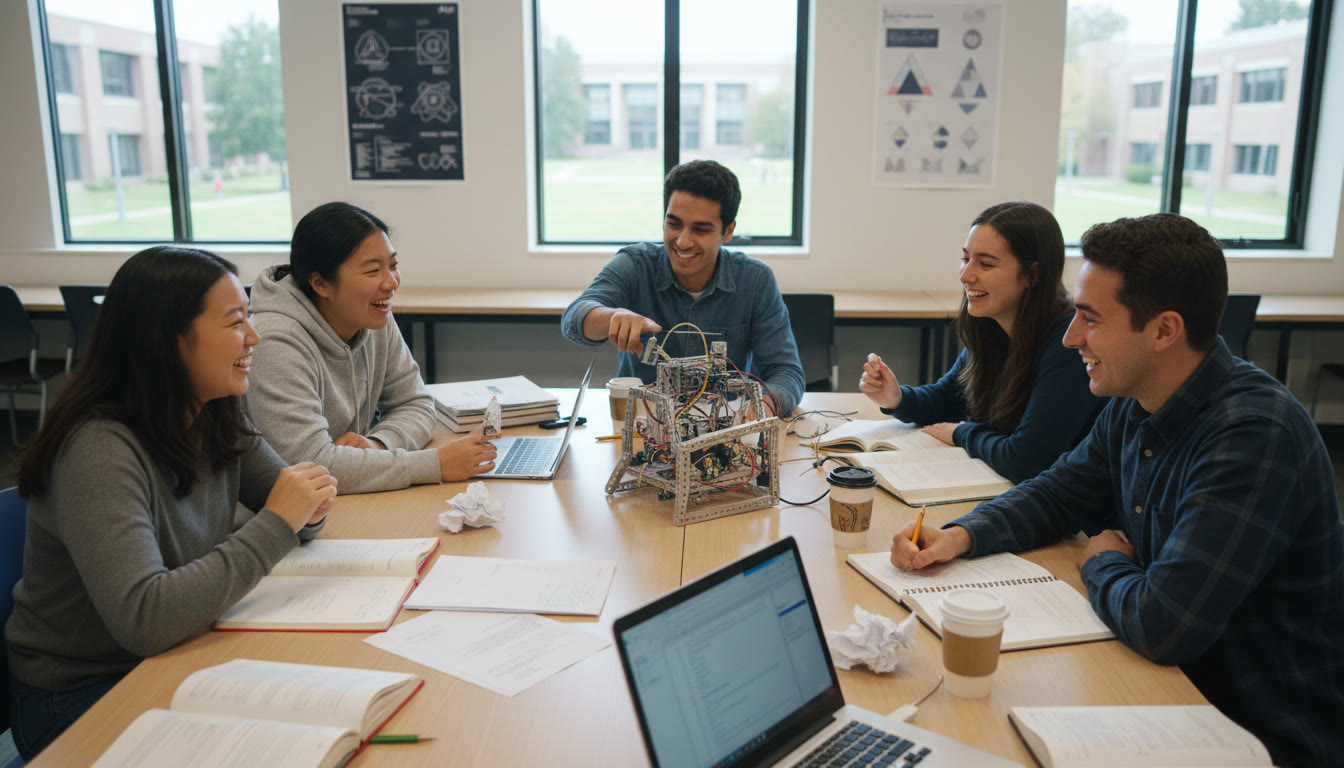
The difference between busywork and meaningful engagement
It’s tempting to collect participation certificates like stamps in a passport. Admissions readers and IB moderators can usually tell the difference between scattered participation and sustained, meaningful engagement. A single, deeply pursued competition that leads to leadership, reflection, or a documented project will typically carry more weight than a laundry list of unconnected activities. That depth is especially powerful when it integrates with IB DP components like CAS, the Extended Essay (EE), and Theory of Knowledge (TOK).
How competitions map to core IB DP components
Think of competitions as working tools in your learning toolkit. The right contest can: provide primary data for an EE, serve as an authentic CAS experience (planning, activity, reflection), sharpen TOK arguments, or give concrete evidence of skills in your activity list. Below is a practical table to help you see the fit at a glance.
| Competition Type | Skills & Evidence | Best-fit IB subjects / DP components | How to present it in applications |
|---|---|---|---|
| Science fairs / research competitions | Experimental design, data analysis, perseverance, lab notebook evidence | Biology/Chemistry/Physics HL & EE | Frame as a research project: question → method → results → reflection |
| Math modelling / olympiads | Problem-solving, abstraction, proofs, team modelling reports | Mathematics HL / IA material | Show process and mentoring: how you prepared, learned from failure, and helped peers |
| Model UN / debate | Research, public speaking, negotiation, policy writing | History / Global Politics / TOK | Use as evidence of intellectual curiosity and communication skills |
| Robotics / engineering challenges | Design iteration, coding, project management, teamwork | Computer Science / Design Technology / EE ideas | Explain iterative prototyping and leadership roles |
| Arts & portfolio competitions | Creative process, discipline, exhibition-ready work | Visual Arts / Music / Theatre | Link pieces to studio practice, themes, and reflective CAS learning |
CAS and competition synergy: reflections that show growth
Competitions are ideal CAS material because they naturally include planning, activity, and reflection. A strong CAS entry ties an activity to learning outcomes — for example, how organizing a coding team developed collaboration skills, or how entering a chemistry competition required ethical decisions in data reporting. Admissions readers look for evidence of reflection: what you learned, how you changed, and what you did with that learning.
Which competitions should you choose? A practical framework
Use this simple decision framework when scanning options. You want choices that are aligned, feasible, and promotable in an application.
- Alignment with academic interests: Choose competitions that deepen subjects you enjoy or plan to study at university.
- Depth over breadth: Focus on a few competitions where you can contribute meaningfully and show progression.
- Level and timeline: Be realistic about local vs. regional vs. international levels and how they fit your school calendar.
- Evidence potential: Prefer competitions that produce artifacts — papers, lab notebooks, videos, portfolios — that you can submit or reflect on.
- Leadership and collaboration opportunities: Look for roles that let you mentor, lead, or manage a project.
- Authenticity: Pick what genuinely excites you; authenticity shows in essays and interviews.
Matching competitions to university narratives
Admissions teams value coherent narratives. If you’re building a case for studying engineering, a sequence of robotics challenges, technical internships, a project-based EE, and sustained CAS reflections creates a clear story. Conversely, scattered trophies across unrelated fields (e.g., poetry contest one month, programming hackathon the next) can make your application look unfocused unless you deliberately tie the experiences together under a theme like creativity or community impact.
Examples by subject: smart competition picks
Here are subject-based ideas and how to turn them into compelling evidence.
Sciences
Science competitions and fairs are natural fits for EE topics. A student who runs a month-long experiment for a science fair already has a research process to adapt into an EE: literature review, experimental protocol, results, and discussion. Even if a science fair doesn’t permit publishing, the lab notebooks, protocols, and judges’ feedback become primary evidence.
Mathematics
Math contests demonstrate analytical rigor. Use modeling competitions to show applied mathematics — for instance, transforming a modeling report into an IA-like narrative or an EE exploring a mathematical problem or a real-world application. If you tutor peers after contest prep, document that mentorship as leadership for CAS.
Humanities & Social Sciences
Debate, Model UN, and essay contests are perfect for students who want to study law, politics, history, or international relations. For EE alignment, an essay prize can seed an original research question, and Model UN position papers can evolve into primary sources for a comparative politics investigation.
Arts & Languages
Competitions in art, music, or writing produce tangible portfolios and recordings — ideal for arts-related course applications. Document rehearsals, drafts, critiques, and final submissions to show deliberate practice over time. Language competitions and translation contests can also tie into language-related EEs or TOK exploration of meaning and interpretation.
Computer Science & Engineering
Hackathons and robotics are great for applied CS and engineering narratives. A hackathon demo, GitHub repository, or technical poster becomes concrete evidence. Describe your development cycle, unit testing, and user feedback to show structured technical thinking.
Turning competition experience into application assets
Competitions are raw material; how you shape that material determines its usefulness in essays, activity lists, and interviews. Admissions officers don’t only want winners — they want learners. Here are concrete ways to transform a competition into memorable application content.
- Tell the process story: Describe the challenge, the steps you took, and the turning point. Emphasize learning or a pivot — e.g., discovering that the original hypothesis was wrong and how you recovered.
- Quantify when possible: Hours logged, improvement in scores, team size, or metrics from experiments help admissions readers visualize impact.
- Show leadership and initiative: If you organized a prep group, started a mentorship program, or led a project team, make that clear.
- Use artifacts: Judges’ feedback, code repos, photographs of prototypes, competition reports, and reflective CAS entries are powerful.
- Connect to future study: Explain briefly how the experience shaped your academic interests or career plans.
Sample essay snippets to demonstrate technique
Short, specific sentences can become the backbone of a 250–650 word essay. Here are brief models that show structure without betraying any single school’s prompt:
- “When the prototype failed three times, I redesigned the sensor array and learned that iteration mattered more than speed — a shift that carried through to my research methodology in the EE.”
- “Preparing position papers for Model UN taught me to balance source perspectives; that habit reshaped how I approached primary sources in my history investigation.”
- “Tutoring teammates during contest prep sharpened my explanations and became evidence of leadership in my CAS reflections.”
Interview prep: crisply narrate competition experiences
Interviews reward clarity. Use a three-part structure: context, action, outcome (and reflection). Keep answers short, anchored in specifics, and ready with a small artifact or anecdote that shows depth.
- Context: What was the problem or role? (One sentence.)
- Action: What did you actually do? (Two sentences with specifics.)
- Outcome & reflection: What changed and what did you learn? (One to two sentences.)
Example: “In a regional robotics event, our drive code kept stalling. I isolated a memory leak, rewrote the control loop, and organized a test schedule. We moved from last to mid-finalist, and I learned that debugging is as much about patience and documentation as it is about code.” That kind of sentence gives an interviewer a concrete image and invites a follow-up.
Planning your competition arc: a timeline table
Competitions require forward planning. Below is a compact timeline you can adapt to your school calendar and the upcoming entry cycle.
| Stage (relative to the upcoming entry cycle) | Key actions | Evidence to collect |
|---|---|---|
| 12–18 months before | Explore options, pick 1–3 priority competitions; plan training schedule | Initial project proposal, mentor contacts, practice logs |
| 6–12 months before | Enter preliminaries, refine project/portfolio, start documenting | Drafts, lab notebooks, code commits, media of practice sessions |
| 3–6 months before | Compete in finals or submit final materials; capture judges’ feedback | Final reports, scores, testimonials, photos/videos |
| 1–3 months before applications | Write essays tying competition learning to academic goals; prepare interview stories | Reflections, polished activity descriptions, condensed evidence |
| Post-results | Update activity lists and CAS reflections; archive artifacts for requests | Certificate scans, judge letters, published materials |
Balancing IB workload with competition prep
Time management is the practical challenge. Competitions are valuable, but the DP assessments and internal deadlines remain priority. Think in terms of weekly budgets and milestone-based planning rather than open-ended effort.
- Set a weekly hour cap for competitions during heavy assessment windows.
- Use short sprints: 2–3 focused practice sessions of 60–90 minutes are usually more effective than one long, unfocused block.
- Protect reflection time: CAS reflections and documentation are often the first things omitted under stress — schedule them as non-negotiables.
Simple weekly allocation (example)
| Activity | Avg hours / week (peak) | Avg hours / week (assessment-heavy) |
|---|---|---|
| Classes + homework | 30–35 | 35–45 |
| Competition prep | 6–12 | 3–6 |
| CAS / reflection | 2–4 | 1–2 |
| Rest & wellbeing | 10–15 | 8–12 |
Adjust the numbers to your reality. The key is to avoid letting competition prep permanently erode time reserved for internal assessments, extended essay work, and sleep.
How targeted tutoring and coaching can help (where Sparkl naturally fits)
Many students find it useful to bring in targeted support to accelerate skill development and to structure prep without over-committing personal time. Sparkl‘s 1-on-1 guidance can help students plan practice schedules, refine application narratives, and translate competition artifacts into strong CAS and EE evidence. Working with expert tutors or mentors can also provide feedback loops that mimic judges’ critiques, and targeted sessions can help you prepare crisp interview answers and compelling essay material.
Examples of where tailored support pays off:
- Technical mentoring to tidy a robotics codebase so you can present a clean demo.
- Feedback on a research poster or paper to sharpen methodology before submission.
- Mock interviews that rehearse competition stories and reduce nerves.
Final checklist: choosing competitions wisely
- Does this competition deepen an academic interest or contribute to your EE? If yes, it passes the first test.
- Can you document the work with artifacts you would feel confident sharing? Prioritize contests that produce tangible evidence.
- Is there room for leadership, mentorship, or measurable growth? Choose experiences that let you demonstrate more than individual talent.
- Can you maintain quality in DP core assessments while preparing for this competition? If not, reconsider timing or scale back.
- Will this experience give you a clear, authentic story you can tell in essays and interviews? If the answer is no, think about alternatives.
Competitions can be transformative when chosen and executed thoughtfully. They are not mere résumé items; they are learning experiences that, when reflected upon and documented, illuminate intellectual curiosity, resilience, and the capacity to grow. Prioritize depth, collect evidence, articulate your learning, and let your competition journey strengthen — rather than distract from — your IB DP aims.
End of academic guidance.






















No Comments
Leave a comment Cancel