
IB DP TOK Exhibition: Common Object Choices That Backfire (And Better Alternatives)
There is a quiet thrill in picking an object for the TOK exhibition. A tiny thing on a table can open a conversation about knowledge, belief, perspective, and evidence. But the thrill can turn to frustration when your object is too obvious, too personal, or too vague to sustain a real TOK inquiry. This piece is written for IB students who are elbow-deep in IA notes, balancing EE drafts, and trying to craft a TOK exhibition that actually sings rather than snores.
Below you will find practical warnings about object choices that commonly backfire, clear alternatives that preserve your intellectual mileage, sample knowledge questions, and planning tips to keep the exhibition tight, rigorous, and memorable. I also weave in where targeted support can help if you need a hand moving from idea to polished display.
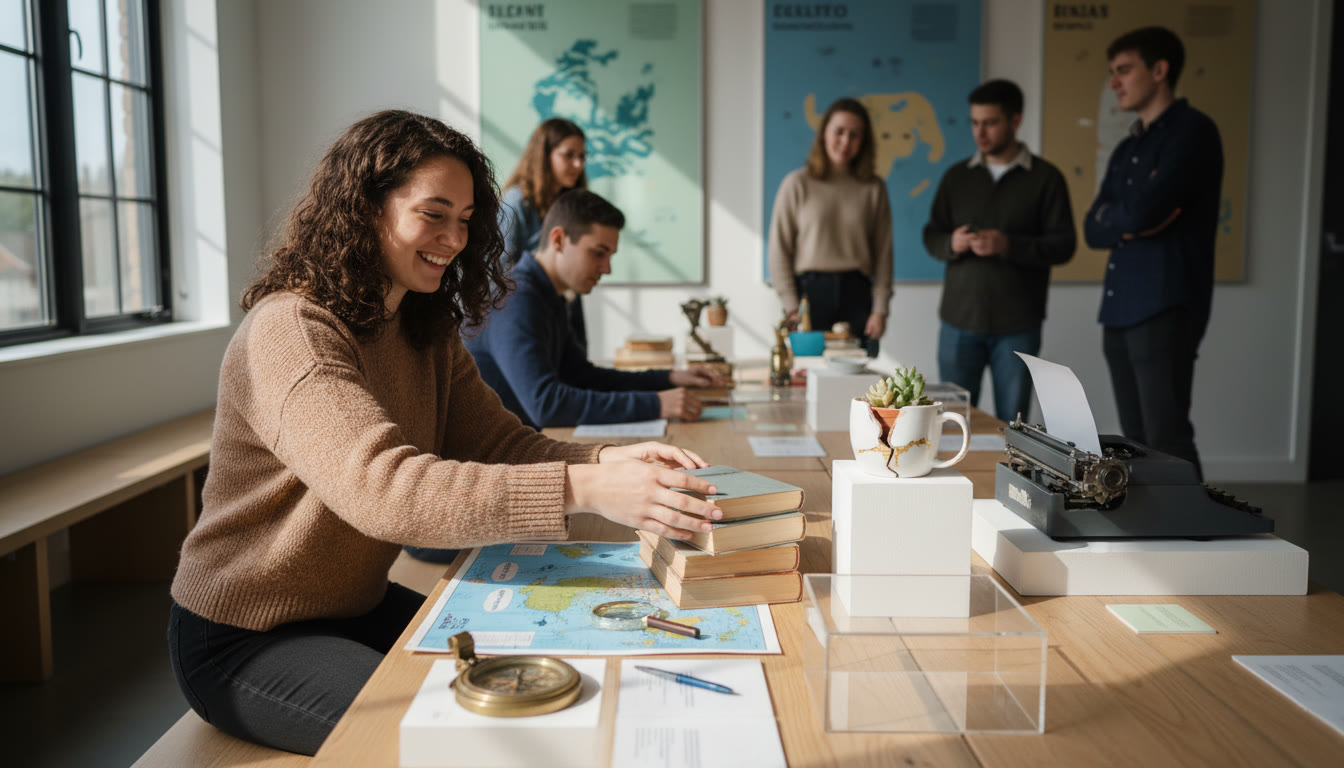
Why the object matters more than you think
The TOK exhibition is not a prop contest. The object is a thinking trigger: something that anchors your explanation of a prompt and helps you explore a knowledge question (KQ) with clarity and evidence. A poor object choice forces you to do heavy lifting with words alone; a smart object makes your analysis feel inevitable. The difference often comes down to three traits: specificity, provenance, and interpretive richness.
- Specificity — Generic items force generic claims. A phone is different from a notification screenshot showing a fact-check label.
- Provenance — Who made it, who used it, and where it came from matter for how it functions as evidence.
- Interpretive richness — The object should invite more than one legitimate reading, so you can discuss perspectives and limitations.
Thinking about those three traits early saves time later. It also makes linking to an IA or EE easier, because your object can become a small case study within larger research or assessment pieces.
Common object choices that backfire, and what to pick instead
Below are eight objects students often grab without thinking — and why each choice frequently disappoints. For each one, I offer a better, more TOK-friendly alternative and a sample knowledge question you could explore.
1. The generic smartphone
Why it backfires: Nearly everyone brings a phone to the exhibition. As an object it is too broad: it collapses many technologies and many knowledge practices into one lump. Describing how phones affect knowledge without focusing on a narrow aspect can feel superficial.
Better alternative: Choose a single, concrete artefact related to the phone. For instance, a screenshot of a verified news correction, a notification from a fact-checking app, or the printed terms-and-conditions excerpt for a major platform. Those specific pieces let you talk about mediation, authority, and trust with evidence.
Sample KQ: To what extent does the design of a digital platform shape what counts as reliable knowledge?
2. The world map or globe
Why it backfires: A map is tempting because it signals big ideas about perspective and bias. But a generic globe invites vague claims. Which map? Which projection? What era? Without context, the globe becomes decoration, not evidence.
Better alternative: Use a particular map with history and intent. A colonial-era chart, an election map with color breaks, or two maps of the same place produced by different institutions give you concrete material to compare and ask how maps construct knowledge.
Sample KQ: How do choices in representation affect what a map allows us to know?
3. A trophy or medal
Why it backfires: Trophies often lead to sentimental, anecdotal claims about achievement. They can be powerful emotionally, but as TOK objects they risk being one-person stories that are hard to interrogate as evidence for broader knowledge claims.
Better alternative: Pair the trophy with documentation: the selection criteria, a press release, or a statistical snapshot of who was eligible. That lets you ask about standards, authority, and the difference between recognition and knowledge.
Sample KQ: In what ways do standards and criteria shape what is recognized as knowledge or success?
4. A single printed quote on paper
Why it backfires: A quote can feel clever, but a printed line without context is an interpretive dead end. It encourages you to interpret what the quote means without interrogating the source, context, or the act of quoting itself.
Better alternative: Bring the original source alongside the quote — an article, a speech transcript, or a handwritten draft that shows revision. Compare different versions or contemporaneous responses to the quote to show how meaning shifts.
Sample KQ: How does context influence what a statement appears to mean?
5. A national flag
Why it backfires: Flags are emotionally charged and widely recognized, which tempts broad assertions about identity. But flags also carry multiple, contested meanings. If you simply rely on symbolism without local or historical anchors, the analysis feels unrooted.
Better alternative: Focus on a specific episode involving the flag — a legislative change, a controversy, or a redesigned emblem — and show documents, news clippings, or interviews that reveal competing interpretations.
Sample KQ: To what extent do symbols function as reliable sources of knowledge about a community?
6. An old family keepsake with no provenance
Why it backfires: Personal objects are tempting because they are intimate, but they often rest on memories and anecdotes that are hard to verify. For TOK, the risk is letting emotion stand in for critical inquiry.
Better alternative: Keep the family object but supplement it with corroborating evidence: a photo of the object in use, a short recorded interview with a relative, or a provenance document. This allows reflection on memory, testimony, and the limits of personal knowledge.
Sample KQ: How reliable is personal testimony as evidence for historical claims?
7. A self-portrait or photograph of yourself
Why it backfires: Using your own image can turn the exhibition inward rather than outward. It is hard to generalize from one life experience without careful framing, and examiners can feel invited to accept anecdote as argument.
Better alternative: Use the photo as an entry point, then compare it with other images or statements from different social contexts. That comparative frame helps you ask how perspective and framing shape visual knowledge.
Sample KQ: In what ways does framing influence what a photograph seems to show?
8. A generic textbook or lecture notes
Why it backfires: Textbooks are useful, but bringing one without specifying which passage, what edition, or which claim you are interrogating turns the object into a placeholder. Textbooks are summaries, not primary cases for deep TOK analysis.
Better alternative: Select a disputed case study, an original research paper, or a lab notebook extract that reveals how knowledge claims were constructed. That makes it possible to discuss methodology, error, and consensus.
Sample KQ: How do methods influence what we accept as scientific knowledge?
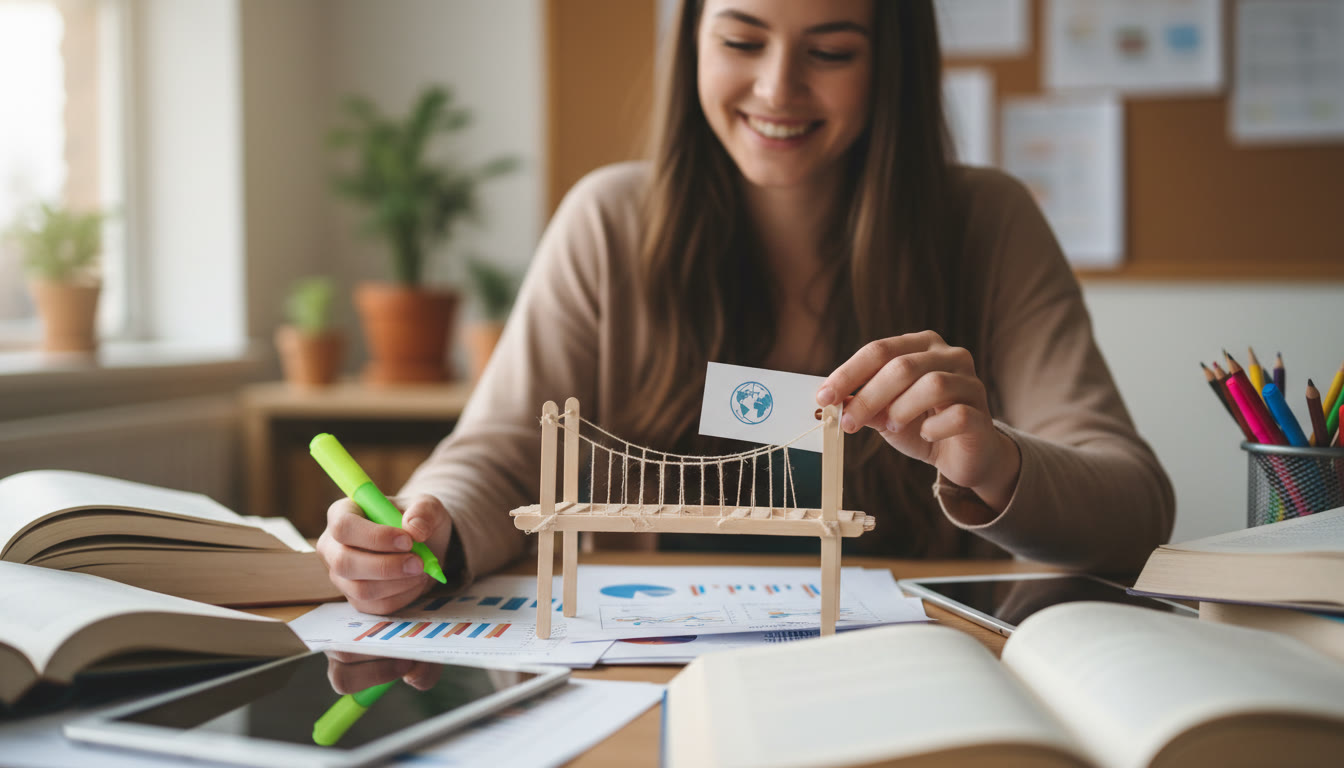
Quick-reference table: bad choices, why they fail, and smarter swaps
| Common choice | Why it backfires | Better alternative | Possible KQ |
|---|---|---|---|
| Smartphone (generic) | Too broad; invites generalities | Specific screenshot or app notification | How does mediation alter trust in knowledge? |
| World map or globe | Lacks contextual detail | Historical map or contested map pair | How do representations shape knowledge? |
| Trophy/medal alone | Anecdotal and sentimental | Documentation of criteria or selection | What role do standards play in recognizing knowledge? |
| Single quote | Context-free and ambiguous | Original source and responses | How does context shape meaning? |
| Flag | Emotionally charged but vague | Case study of a flag-related episode | Do symbols reliably convey communal knowledge? |
| Family keepsake | Hard to verify alone | Corroborating evidence or interviews | How reliable is testimony for historical knowledge? |
| Self-photo | Too personal to generalize | Comparative images and contexts | How does framing affect photographic knowledge? |
| Textbook | Summary-orientated, not primary | Original study, lab log, or case file | How do methods shape scientific claims? |
How to salvage a risky object choice
Sometimes you already own the object that seems risky. Rather than abandoning it, consider these salvage moves:
- Contextualize: Add provenance, related documents, or photographs that show origin or usage.
- Pair it: Combine the object with a contrasting artefact so you can analyze differences.
- Bring voices: Short witness statements, interview snippets, or a quick transcript help you test claims based on testimony.
- Be explicit about limitations: Acknowledge what the object cannot tell you and why that matters for the KQ.
- Show process: If the object is the result of a method, show steps, drafts, or logs to discuss how knowledge was produced.
Checklist for choosing an exhibition object
- Does it connect clearly to the chosen prompt?
- Is it specific enough to avoid generalities?
- Can you show or cite its provenance?
- Does it invite at least two plausible interpretations?
- Will it allow you to discuss knowledge issues such as evidence, perspective, or method?
- Can you pair it with additional material to strengthen analysis?
- Is it portable and display-friendly for a gallery setting?
- Do you have time to prepare a concise, rigorous commentary that links object to KQ?
Examples that connect TOK with IA and EE work
One of the strengths of a smart object choice is that it can feed into other assessments. If your IA or EE involves primary data, experiments, or interviews, the TOK object can be a micro-case study that illuminates broader methodology questions. For instance, if your EE investigates sources in local history, a verified document used in the EE can function as your exhibition object to discuss testimony and bias. If your IA is a science lab, a raw data table or a lab notebook extract can become a TOK artefact to discuss reproducibility and error.
That cross-pollination saves effort and tightens your argumentation. If you need help aligning object selection with IA or EE goals, targeted 1-on-1 support can make the difference between a good idea and an exam-ready presentation. Sparkl‘s personalized tutoring can help you craft KQs, choose evidence, and refine commentary so every object carries maximum analytical weight.
Practical display and commentary tips
Remember that assessors look for clarity as much as insight. Your object should be displayed simply, with concise labels and a commentary that does three things: connect to the prompt, lay out the KQ, and show two distinct perspectives with supporting evidence. Keep language precise, avoid sweeping generalizations, and use the object to show inquiry rather than to assert conclusions.
- Label: Short title, source, and a one-sentence provenance note.
- Signpost your KQ: Put the KQ where it is visible and link it to the object in the first line of commentary.
- Evidence box: Include 1-2 supporting documents or images next to the object.
- Limitations: Add a short note on what the object cannot show.
If you want help rehearsing a commentary or refining a KQ, working through a couple of mock displays with an experienced tutor can sharpen argument and presentation. Many students find that expert feedback pulls vague essays into clear, assessable work without losing their own voice.
Common pitfalls to avoid when writing the exhibition commentary
- Don’t let narrative drown inquiry. A neat story is good, but it must serve the KQ, not replace it.
- Don’t generalize from one instance without discussing limits to generalizability.
- Don’t rely solely on emotion or personal value; explain why the object yields reliable or unreliable knowledge.
- Don’t ignore counter-evidence; use it to show nuance and reflexivity.
Final quick workflow to finish with confidence
Use this simple sequence in the current cycle of planning: choose an object with the three traits above, draft a tight KQ linking object and prompt, collect 1-2 pieces of corroborating evidence, write a 300–400 word commentary that contrasts two perspectives, then rehearse explaining your display in 90 seconds. If anything feels thin, return to the object and ask whether a small change in selection or added document could deepen the analysis.
If you are juggling IA, EE, and TOK at the same time, reserve slots in your week for focused bursts on each assessment rather than multitasking at the same time. Small, concentrated edits produce better TOK commentary than long, distracted sessions.
Choosing an object is not about finding the most dramatic thing you own; it is about finding the clearest doorway into a knowledge question. Reserve the dramatic for your tone and the careful evidence for your argument. Precise objects lead to precise thinking, and precise thinking is what earns credit in the exhibition.
Good scholarship in the TOK exhibition looks like careful choices, clear limits, and a readiness to interrogate the evidence you present. End with an object that prompts inquiry, not one that patches over it.



















No Comments
Leave a comment Cancel