

Avoiding Plagiarism in the IB DP: Paraphrasing vs Patchwriting — What IB Actually Flags
Internal Assessments (IA), the Extended Essay (EE) and Theory of Knowledge (TOK) are where you show your thinking in public. They are also the moments when sourcing, paraphrase skills and academic honesty matter most. It’s easy to worry that using a source will trip a red flag; the good news is that most problems come from patterns you can spot and habits you can change. This blog is written for students who want pragmatic, human-friendly guidance: clear definitions, side-by-side examples, step-by-step routines for rewriting, and short checklists to use before you submit. The advice here is aimed at helping you keep your voice, cite correctly, and avoid the subtle trap of patchwriting.

We’ll treat paraphrasing like a craft you learn by doing. Patchwriting is not a mysterious failure; it’s usually a note-taking and time-management issue. Fix the routines, and you fix most of the problem. I’ll also point out practical ways tutors and supervised sessions can help — including how personalised tutoring, such as that offered by Sparkl‘s programmes, can give focused feedback on drafts without doing the thinking for you.
What exactly is paraphrasing?
Paraphrasing is restating someone else’s idea in your own words while preserving the original meaning and crediting the source. A successful paraphrase transforms vocabulary, sentence structure and emphasis so the resulting sentence reads like your thinking. Paraphrase is a tool for integration: you place an idea into the flow of your argument, explain why it matters, and link it to the evidence or analysis that follows. Importantly, even a perfect paraphrase needs a citation — because the intellectual debt remains.
What is patchwriting and why is it risky?
Patchwriting sits between quoting and paraphrasing. It often looks like clever editing: a few words swapped, a clause moved, a synonym dropped into the original sentence. But the result still echoes the source’s phrasing and structure. Patchwriting signals to readers that the writer has not fully internalised the idea; instead of transforming the content into their own voice, they’ve lightly edited someone else’s sentence. That is what examiners notice: a flip between the student’s voice and the author’s voice, or a paragraph that reads like a collage of near-identical phrasings.
Why the difference matters to IB assessors
The IB values intellectual ownership. In IA work you are showing how you conducted and interpreted an inquiry; in the EE you demonstrate sustained, independent analysis; and TOK is explicitly about how you understand knowledge claims. Paraphrase shows comprehension and synthesis; patchwriting suggests reproduction without full processing. Practically, assessors judge the authenticity of ideas, the rigour of argumentation and the appropriateness of sources. Clear citations and consistently original phrasing give examiners confidence that the ideas are genuinely yours and that you’re engaging critically rather than compiling.
How examiners and supervisors recognise problems
- Shifting voice: a paragraph where the style suddenly becomes more formal or dense than your normal writing.
- Unchanged sentence scaffolding: when the order of ideas and clauses follows the original too closely.
- Retained distinctive phrasing: unique terms or turns of phrase appear verbatim, especially without quotation marks.
- Chain summarising: a paragraph that strings multiple sources together with little synthesis.
- Missing or inconsistent attribution: citations that appear in the bibliography but not beside the related text.
Short side-by-side example
Seeing a clear example helps. Below is a short original sentence followed by three student responses. Read them aloud if you can — your ear will often hear what your eyes miss.
| Original | Poor attempt (patchwriting) | Good paraphrase | Quoted |
|---|---|---|---|
| Rising city populations have placed immediate strain on local freshwater systems, prompting short-term emergency measures. | Rising city populations have put pressure on local freshwater systems, prompting short-term emergency measures. | As more people move into cities, local supplies of freshwater are becoming strained, so authorities often adopt quick fixes instead of long-term planning. | “Rising city populations have placed immediate strain on local freshwater systems, prompting short-term emergency measures.” |
The patchwritten line uses much of the same wording and order as the original. The good paraphrase changes vocabulary and sentence structure and fits the idea into the student’s argument — while still requiring a citation. The quoted option is appropriate when the exact phrasing is important, but it must be marked and referenced.
From patchwriting to proper paraphrase: a stepwise rewrite
Try this exercise on a paragraph you find difficult. It converts a common research snippet into a paraphrase that is genuinely yours.
- Step 1 — Read and understand: read the source until you can explain the idea in a single sentence.
- Step 2 — Put the source away: write that single-sentence explanation without looking back.
- Step 3 — Expand in your voice: take that sentence and write two or three sentences that link the idea to your claim or data.
- Step 4 — Compare and tighten: check for accidental reuse of structure or phrasing and adjust until the sentence flows like your normal writing.
- Step 5 — Attribute: add the citation in the place where you used the idea.
Working this way turns source reading into a thought process: the paraphrase becomes the bridge between what an expert said and what your analysis adds.
IA, EE and TOK — similar principles, different emphases
The stakes and the shape of your writing differ slightly across tasks, and that affects how you should use sources.
- IA: Your work should make methodological decisions clear and show that sources are used to set context or justify methods, not to carry the argument. When summarising theory, paraphrase succinctly and then move to how the theory shapes the experiment or data interpretation.
- EE: The EE rewards sustained argument and independent judgement. Use paraphrase to synthesize literature into the narrative of your research question. If you reproduce the structure of a source’s argument without adding analysis, the examiner will not see independent thinking.
- TOK: TOK invites reflexivity. Bring sources in to contrast perspectives and then explicitly state their implications for your knowledge question. Short, well-attributed paraphrase followed by your evaluation works best.
Practical paraphrasing techniques you can use now
Here are specific sentence-level moves that reliably help you avoid patchwriting.
- Change clause order: start with the consequence instead of the cause, or break a long clause into two sentences.
- Swap grammatical forms: turn a noun phrase into a verb phrase (for example, “the escalation of pollution” → “pollution escalates”).
- Use synonyms carefully: replace non-technical words, but keep technical terms intact and cite them.
- Compress or expand: condense a multi-clause sentence into a short explanatory line, or expand a terse point to connect it to your claim.
- Combine sources: merge two related points from different authors into a single synthesised statement, then cite both.
Note-taking templates that prevent accidental copying
A simple, consistent note format reduces the urge to copy-and-paste. Below is a compact template to use digitally or in a notebook.
- Source citation (author, title, page)
- Summary in one line (your voice)
- Key phrase copied (in quotes) — only if you might quote directly
- How this fits my argument (one sentence)
- Draft paraphrase (write this from memory)
Keeping the copied phrases in quotes in your notes is crucial. That way you know which parts are verbatim and which are yours. When you later paste into a draft, you’ll see the quotes and either decide to quote them in the final work or rewrite.
Common student mistakes and fast fixes
Below are several recurring errors students bring to supervisors and simple moves that repair them.
- Copying full sentences into notes then reusing them verbatim — Fix: always label copied text as a quote and never paste it into your working draft without quotes and citation.
- Mixing two sources without synthesis — Fix: write one sentence that explains how they relate and follow with a sentence applying both to your point.
- Using long quotations to avoid paraphrase — Fix: reduce quotes to the essential few words that matter and paraphrase the surrounding idea.
- Forgetting page numbers — Fix: include page numbers in your research log at the time of reading; it saves time and reduces accidental mis-attribution.
Research log example (fields to keep)
| Field | What to record |
|---|---|
| Source | Author, title, date, page numbers |
| Short summary | One-line synthesis in your words |
| Potential quote | Text copied verbatim and marked with quotes |
| Relevance | Why this matters to your question or method |
Supervisor conversations and draft feedback
Supervisors are not there to rewrite your paper; they are there to guide your process. Bring them specific questions: “Am I relying on this source too much here?” or “Does this paragraph sound like my voice?” When they comment on source use, ask for examples of how to rephrase — targeted guidance beats general advice. Keep dated drafts and a record of changes; transparent drafting shows how ideas developed and can be invaluable if any question about authenticity arises.
Tools: how to use similarity checks and tutoring wisely
Similarity-checking software can be helpful as a learning tool — it shows overlap and helps you locate phrases that need attention. Treat any percentage as a prompt for review, not as a final verdict. Some overlaps are normal (technical terms, standardized expressions, or bibliographic entries), while others indicate closer copying. The final judgement is always contextual and human.
If you want individualised feedback on phrasing or structure, consider experienced tutors who can review drafts and model paraphrase techniques. For example, Sparkl‘s tutors offer 1-on-1 guidance, tailored study plans, and feedback that focuses on helping you express ideas in your own voice. A tutor can show where patchwriting tends to reappear in your work and give practical rewriting exercises tailored to your subject.
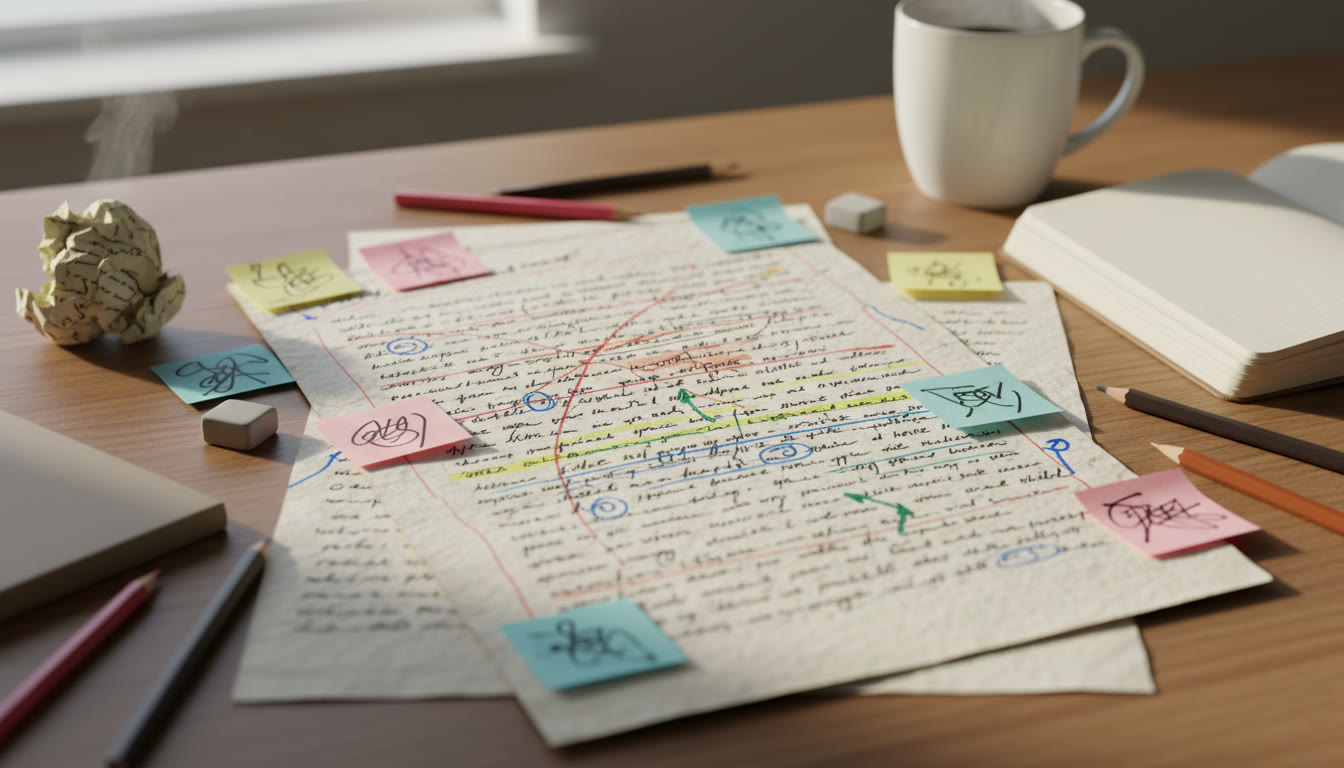
Final checklist to use before you submit
- Do all non-original ideas have explicit citations in the text?
- Do any long quotations have clear justification and are they followed by analysis?
- Does each paragraph read in a consistent voice and fit your argument?
- Is your bibliography complete and consistent with in-text citations?
- Have you kept drafts, a research log and dated feedback from your supervisor?
- Did you run a similarity check as a learning step and address flagged passages?
Practice exercise to build confidence
Pick a paragraph from a scholarly source. Close the document and write a one-sentence summary from memory. Open the source and check which words you accidentally copied. Rewrite the sentence so that its structure and vocabulary differ, then place it in a short paragraph explaining why that idea matters to your argument. Do this three times with different sources in a study session — you will notice your paraphrase becoming faster and more natural.
Closing thought
Paraphrasing well and avoiding patchwriting are not tricks; they are habits that combine good note-taking, deliberate rewriting and honest documentation. Build routines that force distance between reading and drafting, make attribution immediate, and use feedback channels — tutors, supervisors, peers — to catch patterns you can’t see yourself. When your IA, EE or TOK work reads as a sustained, personally shaped argument and your sources are both credited and integrated, you are doing the kind of academic work the IB seeks to reward.
The end goal is clear: demonstrate understanding, show original engagement, and document the intellectual path you followed.





















No Comments
Leave a comment Cancel