

IB DP Passion Projects: How to Present Failures and Iterations as Strength
If your passion project hasn’t followed a neat, linear path, breathe easy—this is normal and, if presented well, valuable. In the IB Diploma Programme, passion projects often live inside CAS or inform independent work like the Extended Essay or internal assessments. What matters to assessors, mentors, and admissions tutors isn’t that everything worked the first time; it’s how you respond, reflect, and use evidence of iteration to demonstrate learning.
This blog will walk you through a practical, human-centered approach to documenting setbacks, framing iterations, and turning bumps in the road into clear proof of the development the IB encourages. You’ll find suggested language, concrete journal entries, visual documentation tactics, and a simple template for turning failure into academically useful material. Along the way you’ll also see how focused support—whether from teachers, peers, or tools like Sparkl‘s tailored guidance—can help you sharpen reflections and present them with confidence.

Why assessors care about iteration
Assessors are not only interested in polished outcomes; they are looking for evidence of learning, critical thinking, and the traits of the IB learner profile—curiosity, adaptability, risk-taking, and reflection. A failed prototype, low turnout at a workshop, or a code branch that crashed are all meaningful when they are documented and analyzed. They become evidence that you tested hypotheses, gathered data, adjusted plans, and grew intellectually and personally.
Think of failure as data. Each setback tells a story about assumptions you made, information you lacked, or conditions that changed. Presenting that story clearly shows you can make evidence-based decisions—precisely the skill IB assessment seeks to reward.
Build the narrative: the arc that sells your learning
Your portfolio or CAS journal should tell a compact, honest story. Use an arc that highlights intention, action, setback, analysis, and iteration. This structure helps anyone reading your portfolio understand not just what you did but why each step mattered.
- Intention: What did you set out to test or achieve? Be precise about the hypothesis or outcome you expected.
- Action: What was your first plan and why did you choose it? Include who was involved and what resources you used.
- Setback: What went wrong or what surprised you? State the facts (what happened), then name the impact (who/what was affected).
- Analysis: Why do you think this happened? What evidence did you collect?
- Iteration: What did you change next? How did the new version differ and why?
- Outcome & Reflection: What did you learn, and how will this learning affect future practice? Connect it to specific skills or learner-profile attributes.
When you craft each entry with this arc, readers will see a clear chain from problem to learning. Keep entries short, dated, and evidence-linked so your portfolio reads as a set of replicable, thoughtful experiments rather than a list of events.
Practical things to log in your CAS/portfolio
Good evidence is varied and consistent. Aim for a mixture of visual proof, dated notes, and third-party feedback. The key is to create a trail that proves iterative learning.
- Dated reflections: Short entries that capture what happened, why it mattered, and what you changed next.
- Before/after photos: Visuals showing changes between versions, preferably with short annotations.
- Versioned files: Save drafts with version numbers or dates (v1, v2, vFinal; or use timestamps).
- Mentor or peer feedback: Screenshots, emails, or short notes from someone who observed your work.
- Quantitative data: Attendance numbers, test scores, time spent, error rates—whatever applies—and a simple analysis of trends.
- Annotated artifacts: Highlighted scripts, photos with notes, or short screencasts explaining changes you made.
A table that helps you frame common setbacks
| Type of setback | What happened | Learning opportunity | How to document it |
|---|---|---|---|
| Technical failure | Prototype doesn’t function as expected | Teaches troubleshooting, testing protocols, and resilience | Photographs of attempts, error logs, revised design notes, short video demo of corrected version |
| Low engagement | Workshop or survey had fewer participants than intended | Demonstrates outreach strategy, audience analysis, and adaptation | Attendance data, revised recruitment messages, annotated timeline of outreach steps |
| Time-management slip | Milestones missed due to unrealistic scheduling | Shows planning skills, prioritization, and improved scheduling | Updated Gantt chart or calendar screenshots, reflective entry on task estimates |
| Ethical or cultural surprise | Feedback revealed an unintended ethical/cultural concern | Highlights sensitivity, communication, and ethical decision-making | Feedback excerpts, revised consent forms or guidelines, reflective note linking changes to community impact |
Language that frames failure as strength
Words matter. How you describe a setback defines whether it reads as a weakness or as evidence of thoughtful inquiry. Swap passive or defeatist language for active, analytical phrasing. Be specific, concise, and rooted in evidence.
Helpful verbs and sentence starters
- “I tested…”
- “The data showed…”
- “This revealed an assumption we had about…”
- “In response, I adapted the design by…”
- “I measured the change using…”
- “This iteration improved X by…”
Short reflection examples you can adapt
Below are realistic, portfolio-ready snippets you can use as models. Keep each entry focused on evidence, analysis, and next steps.
Example 1 — Technical prototype: I built a low-cost water filter prototype and expected a 90% turbidity reduction after the first trial. The initial test reduced turbidity by only 45%. I logged pH and particle size readings, reviewed filter material choices, and consulted a mentor for material alternatives. Based on this, I replaced the media and increased flow-control measures; a second test reached 86% reduction. This process taught me how controlled variables and incremental testing improve experimental reliability.
Example 2 — Community engagement: My workshop aimed to recruit 30 students but only 12 attended. I surveyed the target group and discovered timing and messaging were barriers. I rewrote the promotional posts focusing on benefits rather than dates, partnered with a student club to expand reach, and moved the event to a later slot; subsequent workshops averaged 28 attendees. This taught me to test outreach assumptions and adapt logistics based on stakeholder feedback.
Example 3 — Research or writing setback: Early literature searches returned limited primary sources for my research question. Instead of forcing the question, I broadened my search terms, reached out to a local practitioner for interviews, and reframed the scope to include comparative case studies. The new approach yielded richer data and taught me how question refinement can be a productive response to limited evidence.
How to show iteration visually and digitally
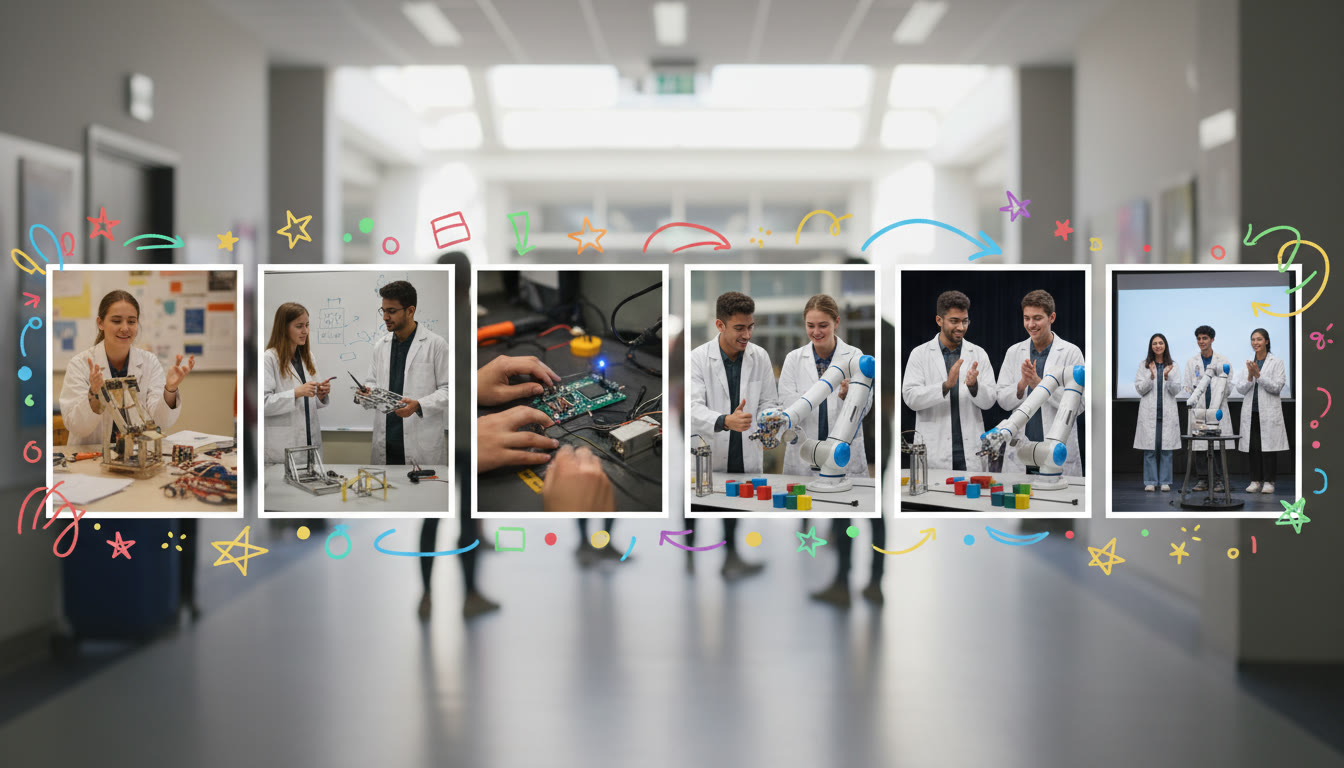
Visual evidence is immediate and persuasive. A thoughtful combination of dated photos, annotated screenshots, short video clips, and versioned documents paints a clear path of development.
- Before vs. after galleries: Put images side-by-side with short captions explaining the change and why it matters.
- Annotated photos: Use arrows or notes to point out specific fixes or redesigns.
- Short videos: 30–90 second clips showing a demo or a spoken reflection are powerful and personal.
- Version snapshots: Keep dated filenames and include a one-line note per file explaining its purpose (e.g., “v2 – reduced nozzle diameter to improve flow”).
- Simple analytics: Use a small chart or table to show improvement over time—attendance, error rate, or performance metrics.
| Visual | What to annotate | Why it matters |
|---|---|---|
| First prototype photo | Label the issue you observed | Makes it obvious that the change was intentional and evidence-driven |
| Second prototype photo | Highlight the fix and mention data that supports improvement | Links the visual change to measurable learning |
| Final demo screenshot | Note remaining limitations and possible next steps | Shows mature, honest reflection rather than spin |
Using feedback and mentors to validate iteration
External feedback transforms private mistakes into shared learning. Collect short, dated comments from mentors, peers, or community members and attach them to relevant entries. Even brief notes—”The redesigned flyer increased sign-ups”—are valuable because they corroborate your interpretation.
If you want structured help refining how you write and present those reflections, working with Sparkl‘s 1-on-1 tutors and tailored study plans can help you tighten language, choose the most persuasive evidence, and present iterations with academic clarity. Their expert tutors and AI-driven insights are useful for turning raw journal entries into portfolio-ready analysis while keeping your voice authentic.
Putting the portfolio together: order, clarity, and academic focus
Order your material so each project reads like a mini-research portfolio: title, aim, key evidence (photos, data, feedback), a short descriptive timeline of iterations, and a concise reflection that ties the experience to learning outcomes. Keep sections scannable—assessors often look for clear signposts: dates, short bullets, labeled images, and a final reflection that ties everything back to skills you can demonstrate.
Checklist for a strong submission
- Are entries dated and versioned?
- Is each setback paired with analysis and a clear next step?
- Do you have at least one piece of external feedback per major change?
- Have you linked iterations to specific skills or learner-profile attributes?
- Is your language active and evidence-based rather than defensive or vague?
Common pitfalls and how to avoid them
Avoid these mistakes that can make failure look like negligence rather than learning.
- Keeping failures private: If you bury failures, readers will suspect you have nothing to show. Document them.
- Being vague: “Things didn’t work” is not helpful. State what didn’t work, why you think that happened, and what you changed.
- Over-editing reflections: Reflections that sound like promotional blurbs lose credibility. Keep them honest and evidence-led.
- Forgetting context: Always say what you intended and how constraints (time, resources) affected outcomes.
Final presentation tips
When assembling a final dossier or online portfolio, keep formatting consistent, use clear labels, and place the strongest evidence close to the top of each project section. If you have limited space, prioritize entries that show a clear before/after improvement or an important conceptual pivot. Where possible, show quantitative change—numbers are hard to dispute and easy to scan.
Conclusion
In IB DP passion projects, failures are not stains on your record but the material of inquiry. When you document setbacks with dated evidence, analyze causes, iterate thoughtfully, and write reflections that connect action to learning, you transform mistakes into clear demonstrations of critical thinking, resilience, and skill development.




















No Comments
Leave a comment Cancel