

Why CAS matters for future med students
When you tell your story as an aspiring medical student, admissions teams are listening for more than grades. They want to see compassion in action, resilience under pressure, ethical judgment, and the ability to learn from real-world work. The CAS component of the IB Diploma is one of the strongest places to demonstrate exactly that. Done well, CAS shows not just what you did but who you became because of it—an essential distinction for students heading toward medicine.
CAS is uniquely positioned to let you combine creativity, activity and service into projects that reflect your commitment to health, ethics and community. This guide is written for students who want standout, ethically sound CAS projects that genuinely prepare them for a future in medicine—and for the portfolios that tell that story clearly and persuasively.

CAS as a platform, not a checklist
Some students collect hours; standout students collect learning. That means choosing activities that allow repeated engagement, measurable impact, and genuine reflection. Medical schools notice trajectories: sustained responsibility, evidence of leadership, and thoughtful grappling with ethical issues. Use CAS to practice patient-centered thinking, data-informed decision-making, and reflective professionalism.
What medical programs look for in CAS and portfolios
- Consistency and commitment: Extended projects or repeated roles beat one-off activities when it comes to demonstrating responsibility.
- Ethical awareness: Clear attention to consent, confidentiality, safety and cultural sensitivity.
- Impact and outcomes: Measurable improvements, documented changes, or clear feedback from beneficiaries and supervisors.
- Reflection and growth: Evidence you thought about what happened, what you learned, and how you changed.
- Transferable skills: Communication, teamwork, leadership, data handling, problem-solving and resilience.
Principles for choosing ethical CAS projects
Before listing ideas, keep a short checklist in mind. These principles protect your participants and strengthen your portfolio.
- Community first: Design projects around community-identified needs rather than simply what looks impressive.
- Sustainability: Prefer projects with ongoing benefit or clear handover plans over one-off events.
- Consent and confidentiality: Always obtain informed consent and protect personal information in any health-related work.
- Appropriate scope: Never perform clinical tasks beyond your training; focus on education, observation, companionship, logistics and advocacy if you don’t have clinical qualifications.
- Supervision and safeguarding: Ensure adult supervision where required and robust safeguarding for minors or vulnerable adults.
- Reflection built in: Schedule reflection milestones—before, during and after—to capture growth and learning evidence.
Top ethical CAS project ideas for aspiring med students
Below are tested, ethically framed project ideas that align well with a medical trajectory. Each idea includes practical steps, reflection prompts and ethical caveats you should track in your portfolio.
1. Community health education workshops
Design a series of workshops about hygiene, nutrition, basic first aid, or oral health for local schools, community centers or youth clubs. These workshops combine service and creativity: you’ll prepare materials, present repeatedly, adapt to different age groups, and collect feedback.
- Evidence: lesson plans, attendance sheets, before/after knowledge checks, photos with consent, supervisor notes.
- Reflection prompts: What misconceptions did you encounter? How did you adapt your approach? What does cultural sensitivity mean in this community?
- Ethical note: Obtain parental consent for minors, ensure information is evidence-based and non-judgmental.
2. Peer mental-health support program (non-clinical)
Create a peer-support framework at school: trained listeners, safe-space meetups, resource lists and awareness campaigns. Focus on signposting to professionals rather than giving clinical advice.
- Evidence: training modules, logs, anonymized summaries of outcomes, feedback surveys.
- Reflection prompts: How did you balance empathy with boundaries? When did you need to escalate to an adult or professional?
- Ethical note: Prioritize confidentiality, clear escalation paths and mandatory adult involvement for crises.
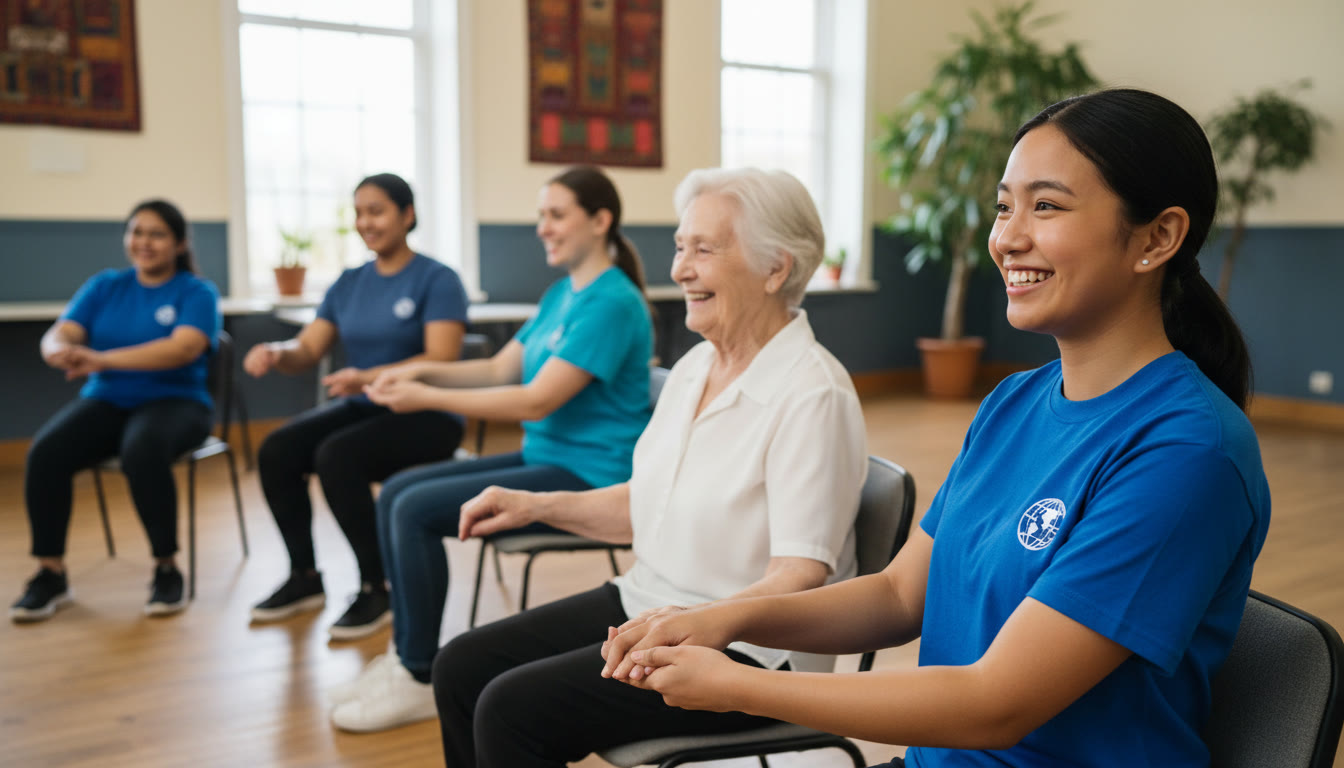
3. Assisted-living companionship and activity coordination
Regular visits to a care home where you organize accessible activities—art, music, gentle exercise—help you build communication skills and empathy. Long-term visits show commitment and relationship-building.
- Evidence: activity schedules, resident feedback, supervisor confirmations, reflective journals.
- Reflection prompts: What did you learn about aging, dignity and autonomy? How did you adapt activities for accessibility?
- Ethical note: Respect residents’ autonomy, obtain facility permission and family consent when appropriate.
4. First aid and CPR instructor pathway
Get certified in first aid and then teach basic safe practices in your community. Teaching is a high-impact way to show mastery of a practical skill and your capacity to transfer knowledge.
- Evidence: instructor certificates, event logs, participant evaluations.
- Reflection prompts: What challenges did learners face? How did you improve your instruction?
- Ethical note: Adhere strictly to certifying body guidelines and never encourage unqualified clinical interventions.
5. Health-literacy digital project for older adults
Run a program that helps older adults navigate telehealth, appointment systems or health apps. This combines creativity (resource design), activity (training sessions) and service.
- Evidence: step-by-step guides, session attendance, pre/post proficiency checks.
- Reflection prompts: What barriers exist to digital access? How did you ensure privacy and security?
- Ethical note: Protect personal data; teach secure practices and avoid storing sensitive information without consent.
6. Non-clinical research assistant or health-data literacy project
Partner with a local university, public-health NGO or school to help analyze anonymized data, present findings, or run community surveys. This teaches research ethics, data handling and critical thinking.
- Evidence: anonymized datasets (with permissions), analysis notes, presentations.
- Reflection prompts: How does data inform practice? What are the limits of your conclusions?
- Ethical note: Never access identifiable patient data without institutional approval and supervision; follow data protection rules.
7. Accessible sports or movement programs
Create and run inclusive exercise sessions for people with physical disabilities or chronic conditions. This highlights activity, leadership and inclusive design.
- Evidence: session plans, attendance, adaptations list, supervisor feedback.
- Reflection prompts: How did you modify activities for safety and dignity? What did participants gain?
- Ethical note: Work with qualified supervisors when medical considerations are present; prioritize safety.
8. Transparent fundraising for local health resources
Plan a multi-stage fundraiser for a clearly defined need—e.g., health education materials, hygiene kits—and publish transparent accounting and outcomes.
- Evidence: budget spreadsheets, receipts, distribution logs, beneficiary statements.
- Reflection prompts: How did you ensure funds reached intended recipients? What governance measures did you use?
- Ethical note: Maintain strict transparency, avoid conflicts of interest, and secure proper approvals for fundraising.
Project planning and a sample timeline
A strong CAS project is documented from idea to reflection. Below is a simple timeline you can adapt for a semester-long project.
| Phase | Duration | Key actions | Evidence to collect |
|---|---|---|---|
| Design & community consultation | 2–4 weeks | Meet stakeholders, set aims, plan safeguards | Meeting notes, letters of support, project plan |
| Pilot | 2–4 weeks | Run small sessions, collect feedback | Attendance, feedback forms, photos (with consent) |
| Implementation | 8–12 weeks | Scale up, monitor, adapt | Logs, supervisor notes, outcome measures |
| Evaluation & reflection | 2–4 weeks | Analyze impact, write reflections, plan handover | Final report, reflective essays, testimonials |
How to document impact and ethical safeguards
Strong documentation convinces examiners and admissions officers that your project was meaningful and responsible. Focus on five categories of evidence:
- Administrative proof: emails, permission letters and supervisor signatures that show legitimate oversight.
- Quantitative measures: attendance numbers, pre/post tests, funds raised, materials distributed.
- Qualitative feedback: short quotes from participants, anonymized testimonials or community reflections.
- Media evidence: photos and short video clips (with signed consent forms), sample resources you created.
- Reflective records: regular journal entries that connect actions to learning outcomes and ethical reasoning.
Sample reflection prompts to include in your portfolio
- What was the most surprising ethical dilemma you encountered and how did you resolve it?
- Which skills did you develop that are relevant to medicine, and how can you show evidence of them?
- How did community feedback change the direction of your project?
- What would you do differently to improve sustainability or inclusiveness?
How to present CAS on your IB profile and medical applications
Presentation matters: your portfolio should tell a clear story of progression and learning. Match specific CAS episodes to attributes medical schools value. Here’s a concise mapping you can use in statements and interviews:
- Communication: Leading workshops, public speaking or peer-support facilitation.
- Teamwork: Coordinating volunteers or co-running sessions with other students.
- Problem-solving: Adapting sessions for accessibility or limited resources.
- Ethical judgement: Building and following safeguarding and consent procedures.
- Leadership: Sustaining a program, mentoring new volunteers, or managing logistics.
Write short, evidence-backed narratives. For example: instead of saying “I ran workshops,” say “I co-designed and delivered a six-week health-literacy program for 60 older adults, improving digital appointment-booking confidence by 45% in post-session checks; I implemented anonymized feedback loops and a consent process to protect participant data.” Numbers, safeguards and reflection convert activity into credible learning.
Tools and support: where targeted help fits in
Building a standout CAS profile doesn’t mean you have to do everything alone. Get feedback on your reflections, practice application essays and refine presentation of evidence. Sparkl‘s personalized tutoring can be helpful here—one-on-one guidance to organize reflections, tailored study plans for interview prep, and expert input on evidence selection are the kinds of support that preserve the authenticity of your experience while sharpening how you present it.
Common ethical pitfalls and how to avoid them
Even well-intentioned projects can slip into risky territory. Watch for these common pitfalls:
- Performing beyond competence: Never provide clinical care or medical advice outside your qualifications.
- Inadequate consent: Always document informed consent for participants and guardians when appropriate.
- Data mishandling: Use anonymized records and secure storage for any personal information.
- Short-termism: Avoid projects that create dependence without sustainability; always plan handover.
- Tokenism: Don’t position a community as a backdrop; involve stakeholders in planning and evaluation.
Putting everything together: a checklist for a standout CAS portfolio
- Clear project aim linked to community need.
- Documentation of permissions, supervision and safeguarding.
- Quantitative and qualitative outcome measures.
- Regular, honest reflections showing growth and ethical thinking.
- Evidence of sustainability or transition plan.
- Connections drawn between CAS learning and skills relevant to medicine.
Final thoughts
CAS is a learning space where ethical sensitivity, steady commitment and reflective practice can shine—qualities that align closely with the values of medicine. Focus on sustained engagement, rigorous documentation, and thoughtful reflection, and you’ll build a CAS profile that tells a convincing, human story about your readiness for medical study and ethical patient care.
Strong, ethically grounded CAS work strengthens both your IB profile and your preparedness for a career in medicine.






















No Comments
Leave a comment Cancel