

IB DP CAS & Profile Building: How to Create a Sustainable Sports Initiative
When you picture a standout CAS project on your IB DP portfolio, you might imagine a bright banner, energetic sessions and a list of activities. But admissions officers and IB moderators look for depth—evidence that you planned thoughtfully, engaged consistently, reflected critically, and left something that will continue to benefit people after you move on. A sports-focused CAS initiative offers the perfect playground to do all of this: physical activity, community connection, leadership, and clear opportunities to demonstrate the CAS learning outcomes in meaningful, measurable ways.

This guide walks you through creating a sustainable sports initiative that both energizes your school community and builds a distinctive IB profile. We’ll cover idea-to-implementation steps, meaningful evidence for your portfolio, ways to measure impact, and how to frame reflections so they match the IB’s expectations. We’ll also touch on the kinds of academic and practical support many students find useful—like targeted tutoring, individualized planning and expert feedback—to keep momentum and clarity through the project.
Why choose a sports-based CAS project?
Sports projects are naturally compelling: they combine activity, creativity in programming, and service when they reach others. But beyond the surface appeal, a well-designed sports initiative demonstrates several high-impact attributes that the IB values: leadership, perseverance, collaboration, ethical decision-making, and engagement with community needs. Importantly, sports programs are ideal for sustainability—physically, socially, and operationally—so your project can show long-term thinking rather than a one-off event.
- Wide participation potential: students, younger learners, families and community partners can join.
- Clear metrics: attendance, retention, skill progression and environmental practices are measurable.
- Transferable skills: coaching, communication, project management and conflict resolution.
- Visible legacy: equipment libraries, student coach training, or a maintained facility are tangible outcomes.
Map your initiative to the CAS learning outcomes
The IB identifies specific learning outcomes for CAS that you should weave into every stage of the project. Think of them as checkpoints—each activity should help you demonstrate at least one of the outcomes in a concrete way. Here’s a student-friendly translation and examples of how a sports initiative can meet each outcome.
- Identify strengths and areas for growth: Self-assess as a coach, planner, or communicator and set targets for improvement.
- Take on challenges and develop new skills: Learn basic coaching certification, public speaking, or first aid to lead sessions safely.
- Initiate and plan experiences: Design a season plan, secure a venue, and draft risk assessments and schedules.
- Show commitment and perseverance: Run weekly sessions for a sustained period and keep logs when obstacles arise.
- Work collaboratively: Recruit student leaders, partner with community centers, and delegate roles.
- Engage with global or local issues: Address physical inactivity, social exclusion, or sustainability in sport.
- Consider ethical implications: Ensure inclusivity, fair play, and safe safeguarding policies.
Start smart: idea to project brief
Begin with a one-page project brief. It helps you stay focused and gives your supervisor a quick, professional snapshot of intent. Use simple sections: purpose, beneficiaries, proposed activities, resources required, sustainability strategy, timeline and supervision. A crisp brief turns a good idea into a plausible plan and shows evidence of planning when you add it to your portfolio.
Ask yourself these starter questions:
- Who will benefit (age, background, community group)?
- What type of sport or movement will you offer (team sport, adaptive activities, fitness sessions, or mixed-program)?
- Will this be weekly coaching, seasonal leagues, or a one-off festival with training components?
- How will you make it sustainable—financially, logistically and environmentally?
- Who will verify participation and learning (a teacher, community partner, or coach)?
Designing for sustainability: practical principles
“Sustainable” means more than eco-friendly habits. For a sports initiative, it means systems that persist beyond your direct involvement. Build redundancy into leadership, plan for resources, and design low-cost, low-waste solutions. Here are practical principles to guide you:
- Train student leaders: Create a short coaching-accreditation pathway so skills remain within the student body.
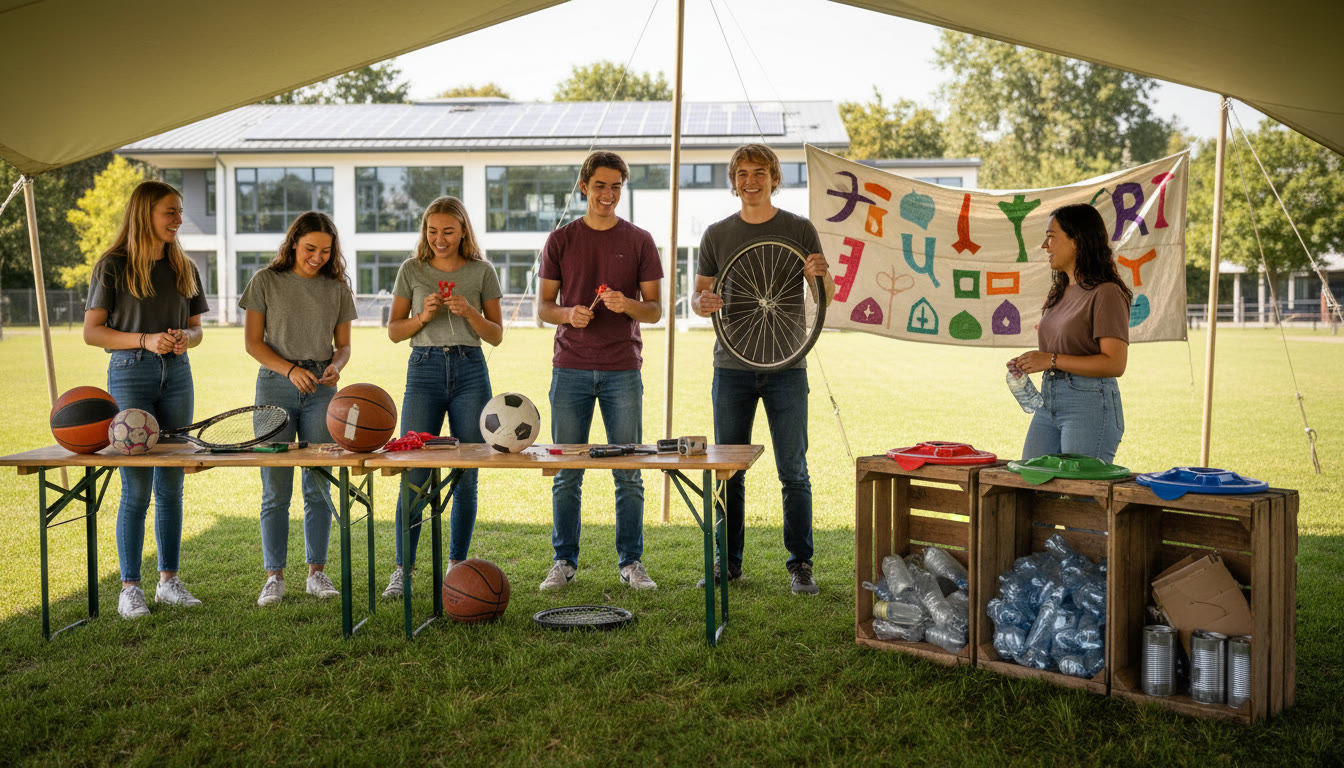
- Resource sharing: Set up a kit library with donated or recycled gear and an inventory system.
- Partnerships: Formalize agreements with a community centre, local club or school department to anchor the program.
- Financial foresight: Plan modest fundraising, micro-grants or in-kind support rather than relying on a single donor.
- Environmental choices: Choose durable equipment, reuse materials and minimize single-use packaging at events.
Sample rollout: a clear, portfolio-ready timeline
A table is one of the clearest ways to show that your project was planned and executed responsibly. Below is an example that you can adapt and include in your portfolio as a visual piece of evidence.
| Phase | Focus | Student roles | Sustainability checkpoints |
|---|---|---|---|
| Planning (4 weeks) | Needs assessment, partners, risk plan | Project lead, outreach officer | Partner agreement, low-cost kit list |
| Launch (2 weeks) | First sessions, recruitment | Coaches, session coordinators | Attendance tracking, equipment sign-out |
| Development (8–12 weeks) | Skills progression, leader training | Peer mentors, logistics team | Leader handbook, inventory checks |
| Consolidation (ongoing) | Transition student leaders, document processes | Training coordinators | Hand-over guide, partnership review |
Include this table in your CAS folder (digital or physical) with dates, sign-offs from supervisors, and a short reflection after each phase. That combination—evidence + reflection + verification—creates a strong narrative for your portfolio.
Collecting evidence: what to log and how to present it
Good evidence is both varied and curated. Don’t simply dump photos or attendance sheets into your CAS record; annotate them. Show what changed, why it mattered and how it links back to the learning outcomes.
- Quantitative records: attendance logs, hours contributed, participant retention, funds raised, kit inventory numbers.
- Qualitative evidence: short testimonials from participants, teacher or community partner comments, reflective journal entries.
- Multimedia: short clips of drills, photos of training sessions, before-and-after shots of a refurbished space. Add captions that explain your role and learning.
- Formal documents: risk assessments, partnership MOUs, leader training outlines and evaluation forms.
Tip: For the IB portfolio, a reflective note next to each piece of evidence that explicitly names the CAS learning outcome(s) illustrated will save time during moderation and makes your thinking transparent.
Reflection that strengthens your profile
Reflection is the bridge between doing and learning. The IB doesn’t only want to know that you ran sessions; it wants to know what you learned about yourself and others. Use structured reflection prompts regularly—after sessions, after milestones, and at project close.
- What challenge did I face today, and how did I respond?
- Which CAS learning outcome does this activity illustrate? Why?
- What feedback did I receive from participants or partners?
- How will I change the session plan based on what I learned?
- What evidence can I attach to demonstrate this learning?
Keep reflections concise but honest. A few well-considered reflections that tie to outcomes are more powerful than many shallow entries. Consider using a reflective rubric (self-assessed) that you update monthly to track growth over time.
Working with supervisors and community partners
Supervisors and community partners are essential validators of your project. Treat these relationships professionally: set clear meeting times, provide progress summaries, and ask partners for short statements you can include in your portfolio. That external confirmation strengthens the credibility of your log and shows that your initiative has community buy-in.
- Provide supervisors with your one-page brief and timeline so they know what to expect.
- Request a mid-project check-in and a brief end-of-project verification note.
- When working with minors in the community, ensure safeguarding guidelines are agreed and documented.
Many students find that external mentoring helps with time management and reflection. For targeted academic or project-planning support—like shaping your brief, polishing reflections, or practising presentation skills—some students use one-on-one tutoring to clarify goals. Sparkl’s personalized tutoring can provide tailored study plans, expert tutors and AI-driven insights to help you tighten your project narrative and keep progress on track.
Measuring impact: metrics that matter
Impact goes beyond raw numbers. Measure what aligns with your project goals and the needs you identified. If the purpose is inclusion, track new participant demographics and retention. If it’s environmental sustainability, measure waste reduction or number of repaired items in a kit library.
- Participation metrics: weekly attendance, repeat attendance rate, diversity of participants.
- Skill progression: simple pre/post skill checks for participants or leader competency scores.
- Sustainability indicators: percentage of equipment reused, funds recovered through repair drives, number of trained student leaders.
- Community outcomes: partnerships formed, public events run, participant testimonials that cite improved wellbeing or skill.
Include a short dashboard in your portfolio that highlights 4–6 key metrics with a one-line interpretation for each. That transforms raw data into a narrative of impact.
Common pitfalls and how to avoid them
Even brilliant ideas can falter. Here are common traps students fall into and how to navigate them:
- Pitfall: Trying to do too much too quickly. Fix: Start small and plan scalable steps.
- Pitfall: Weak evidence or un-annotated photos. Fix: Annotate every piece of evidence with context and the learning outcome it supports.
- Pitfall: No succession plan. Fix: Train and formally hand over responsibilities to a named student committee.
- Pitfall: Not aligning reflections to outcomes. Fix: Use direct language: “This activity helped me demonstrate (outcome). Evidence: (file name or link).”
How this project builds your IB DP portfolio and learner profile
A sustainable sports initiative is more than a line on your CAS record; it’s a story you can weave into your diploma portfolio and conversations about who you are as a learner. Admissions readers and scholarship panels look for candidates who demonstrate initiative, collaboration, resilience and awareness of wider issues. Your reflections, verified evidence and the legacy you create collectively show these attributes.
If you want help turning your evidence into a compelling narrative for presentations or interview practice, targeted mentoring and one-on-one coaching can be useful. Sparkl offers one-on-one guidance and expert tutors who can help you refine reflections and prepare polished portfolio summaries.
Quick checklist before you submit your CAS record
- Do you have a one-page brief with goals and partners?
- Are there clear supervisor verifications for key milestones?
- Have you linked each piece of evidence to a CAS learning outcome?
- Is there a documented succession plan or handover guide?
- Do your reflections show critical thinking, not just description?
- Have you included a simple impact dashboard (4–6 metrics) and a short conclusion?
Final thoughts: what makes a project truly sustainable and portfolio-worthy
At its best, a sustainable sports initiative is not only about the weekly sessions; it’s about systems: leadership structures that endure, practices that minimize waste and cost, and relationships that keep the work going. Your portfolio will stand out when it tells a coherent story—one that links careful planning, consistent action, critical reflection and a genuine community legacy. That narrative shows you as an IB learner who can combine thought and action, turn ideas into practice and reflect on the ethical and social implications of what you do. End your documentation with a concise summary of lessons learned and the handover plan so future students can pick up the baton and continue the work.
This closes the guidance on designing and documenting a sustainable sports initiative for your CAS project and building an IB DP profile that demonstrates lasting impact and personal growth.


























No Comments
Leave a comment Cancel