
The Dual Track Plan: A smart way for IB DP students to change course without closing doors
Switching your mind about a university major can feel like standing at a crossroads. The IB Diploma Programme trains you to think across subjects, so you already have a head start: you can turn that broad skill set into strategic flexibility. The “dual track” plan — applying to two closely related majors — is a structured way to express both interest and readiness for two pathways, while keeping your application narrative focused and credible.
Why this is a sensible strategy
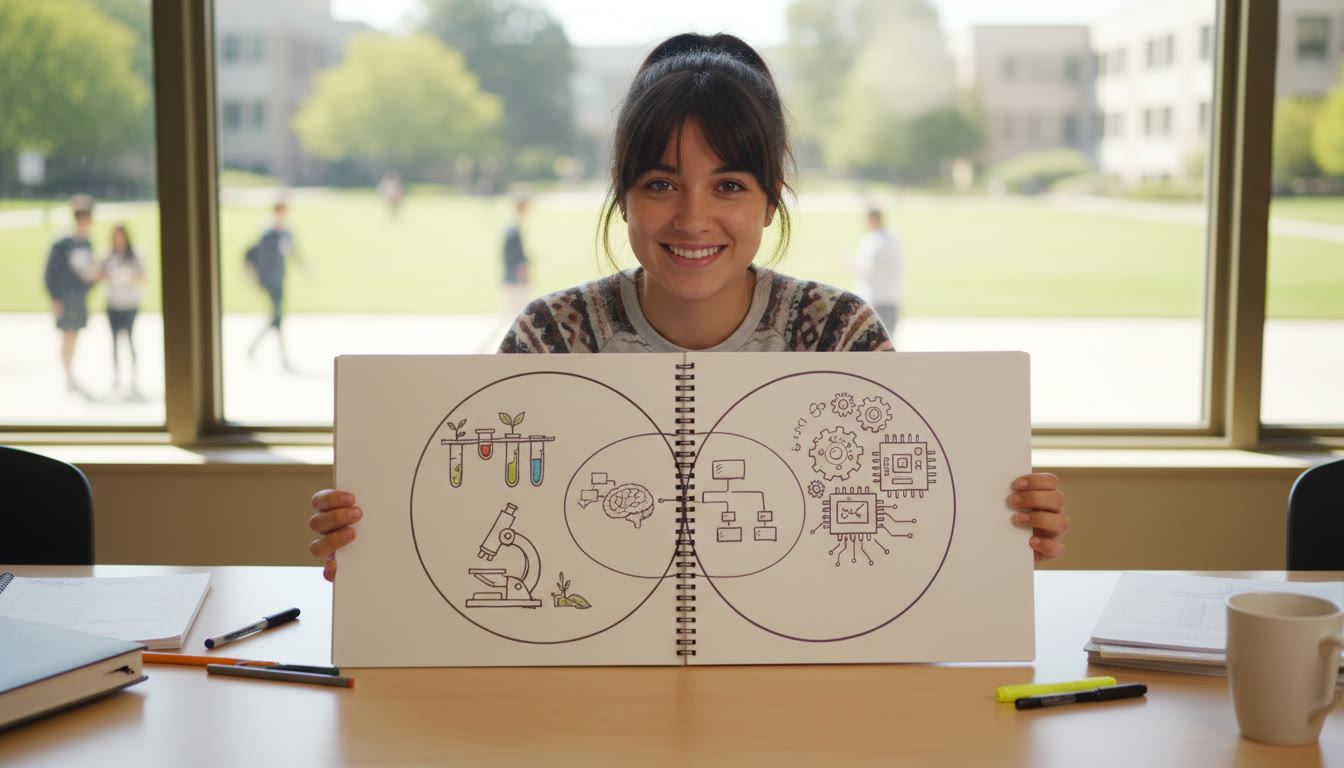
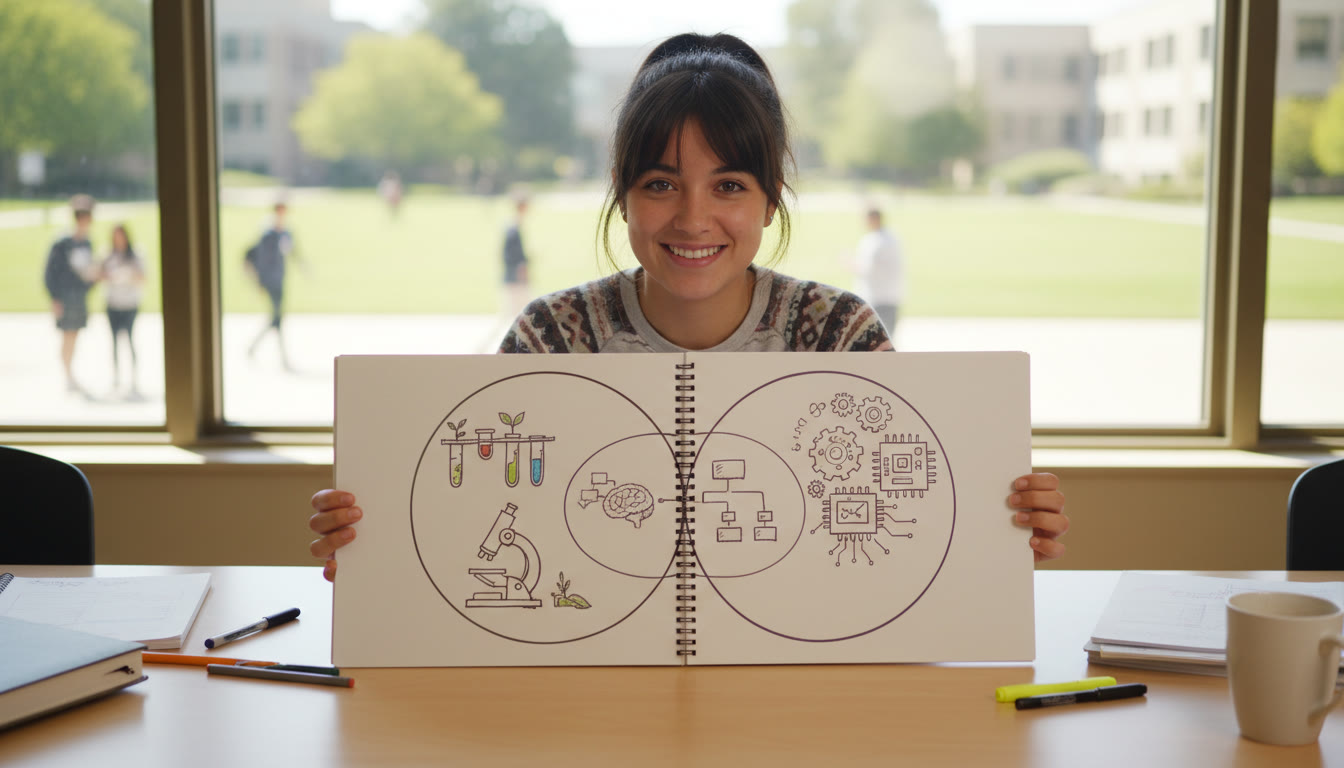
Think of a dual track as an intentional hedge. Instead of scattering your energies across wildly different options, you narrow to two related areas where your IB choices, projects, and extracurriculars naturally overlap. That overlap means you can write a single, cohesive story for admissions officers that still leaves room for two entry points — for example, applying to Mechanical Engineering and Mechatronics, or to Psychology and Cognitive Neuroscience.
- It reduces risk without diluting focus: your application looks consistent, not unfocused.
- It gives you time to test and pivot: during your first year at university you’ll have clearer data on fit.
- It uses your IB strengths: many Higher Level (HL) subjects align with multiple majors, so your work counts twice.
When a dual track is especially helpful
Consider a dual-track if any of these fit you:
- You like two neighboring fields and can articulate how they connect.
- Your subject choices give you credible preparation for both options.
- You’re aiming at competitive programs and want a sensible backup that still excites you.
- You’re not sure what kind of career each major leads to and want an exploratory start.
How to choose two related majors that actually pair well
Not every pair of majors will convince an admissions tutor. The trick is to choose majors that share skills, methods, or a conceptual foundation. Ask yourself: what overlaps between these fields can I show through my IB subjects, Extended Essay, internal assessments and extracurriculars?
Good pairings usually fall into one of these categories:
- Methodological overlap (e.g., statistics and rigorous research skills for Economics and Data Science).
- Content overlap (e.g., human biology for Psychology and Health Sciences).
- Applied overlap (e.g., programming and systems thinking for Computer Science and Robotics).
Practical steps to pick the right two
- Map your HL subjects against typical prerequisites for each major; look for shared requirements.
- Sketch a short two-paragraph rationale: paragraph one explains your primary interest; paragraph two explains the close second choice and the overlap.
- Check supplementary requirements early (portfolios, tests, interviews) so both choices remain realistic.
Aligning your IB subjects, Extended Essay and CAS to support two majors
Your Extended Essay and CAS projects are powerful evidence. They let you show depth without forcing you to pick a single narrow path. Here’s how to use them strategically.
- Choose an EE topic that sits on the border of both interests. For a student between Environmental Science and Geography, an EE investigating urban heat islands and green infrastructure bridges both disciplines.
- Use CAS to demonstrate applied curiosity: research internships, volunteer tutoring, or community projects that show real-world engagement relevant to both majors.
- Pick HL subjects that are defensible for both majors. If you’re torn between Economics and Business, HL Mathematics and HL Economics create a credible academic profile for both.
Table: Sample dual major pairs and how your IB profile can support them
| Major Pair | Why they pair | Recommended HL subjects | Example EE topic / CAS idea |
|---|---|---|---|
| Computer Science / Data Science | Shared quantitative methods and programming | HL Mathematics, HL Computer Science or HL Physics | EE: ‘A comparative analysis of algorithm efficiency in sorting methods’; CAS: coding workshop for younger students |
| Mechanical Engineering / Mechatronics | Overlap in mechanics, systems, and applied design | HL Physics, HL Mathematics, HL Design Technology | EE: ‘Optimizing lever systems for small payloads’; CAS: building a community robotics club |
| Psychology / Cognitive Neuroscience | Shared interest in behavior, cognition and research methods | HL Biology or HL Psychology, HL Mathematics (Analysis) | EE: ‘The effects of sleep on working memory in adolescents’; CAS: assisting at a local mental health awareness program |
| Environmental Science / Urban Planning | Shared focus on ecosystems, sustainability, and human geography | HL Geography, HL Biology, HL Environmental Systems | EE: ‘Green roofs and urban biodiversity’; CAS: urban tree-planting initiative |
How to phrase the overlap in application materials
Admissions readers want coherence. Your subjects, EE and CAS should tell a single story with two entry points. For instance: “I bring quantitative and computational skills developed through HL Mathematics and a year-long coding IA; simultaneously, my EE explored algorithmic bias, which connects my interest in computer science with its social impact, supporting applications to both Computer Science and Data Science.” That kind of paragraph signals intentional breadth.
Personal statement strategy: telling one story with two doors
Most universities prefer a clear narrative. A dual track doesn’t mean splitting your statement in half. Instead, choose a primary theme and weave in the secondary option as a natural extension.
- Lead with a focused anecdote or problem that ignited your interest — this becomes your anchor.
- Show the academic preparation that makes you ready (specific HL work, an IA, EE findings), and then show how that training applies to both majors.
- Mention the second major as complementary: explain how it deepens or broadens your primary interest.
Sample paragraph templates
Primary-first approach (use when one choice is stronger): “When I first built a weather-sensing station for my IA, I was hooked by both the physical design and the data analysis. My HL Physics prepared me to refine sensor accuracy, while HL Mathematics allowed me to analyze trends — a combination that led me to apply primarily to Environmental Engineering with a complementary application to Data Analytics, where the same tools address climate challenges from a different angle.”
Balanced approach (use when you genuinely feel split): “I’ve always been fascinated by systems — whether mechanical or algorithmic. Designing a small robotic arm for my Design Technology IA taught me troubleshooting and iterative testing; analyzing sensor output introduced me to data patterns. These twin experiences motivate applications to Mechanical Engineering and Computer Science, each promising a different route into systems thinking.”
Managing your IB workload while keeping two applications strong
Time management is where plans either come alive or collapse. The dual track adds a bit of planning overhead, but if your IB timetable already contains logical overlap, you don’t need to double your work — you need to be selective and evidence-driven.
- Prioritize depth in 2–3 pieces of evidence (EE, IA, a significant CAS project) rather than scattering small activities across many unrelated topics.
- Use a shared set of mock interview answers and personal statement drafts that can be lightly customized for each major.
- Make a weekly schedule that reserves time for diplomas demands, and allocate fixed slots for application work to avoid last-minute rushes.
Predicted grades, internal assessments and teacher recommendations
Teachers will be key allies. Discuss your dual-track plan with them early so recommendations can speak to your interdisciplinary strengths. For predicted grades and IAs, choose topics that highlight the skills needed by both majors: rigorous methodology, critical thinking, independent research and, where relevant, teamwork on practical projects.
Application materials: tests, portfolios, and interviews
Certain majors ask for more than transcripts. If one of your choices needs a portfolio or interview, treat that requirement as part of the dual strategy rather than a separate headache. A strong portfolio can be curated to emphasize works relevant to both majors, and interview prep can practice bridging answers that hit both technical competence and intellectual curiosity.
- Portfolio tip: organize by theme. A portfolio for Architecture and Industrial Design can be arranged around “problem — process — solution,” highlighting how each piece demonstrates form, function and research.
- Interview tip: prepare two short stories that showcase analytical and creative strengths — the same stories can be angled for both majors.

How counselling and targeted tutoring can sharpen your dual-track plan
A counselor or a dedicated tutor helps translate your academic record into persuasive applications. Working with someone who understands both admission mechanics and the IB’s assessment model can make your dual track feel tight, not messy. That’s where personalized support matters: tailored study plans, interview coaching, and essay reviews that keep your voice consistent while highlighting the two pathways.
For example, using Sparkl‘s personalized tutoring can give you focused one-on-one time to refine your Extended Essay argument, practice technical interview questions, and build a study timetable that supports both majors. Sparkl‘s tutors often combine subject expertise with admissions insight — they can suggest high-impact IA topics, spot where an essay needs clearer evidence, and help you present a cohesive academic narrative.
How to make the most of counseling time
- Bring specific questions: don’t ask “What should I do?” but rather “Which EE topic best connects my HL subjects to these two majors?”
- Request mock interviews and feedback loops for both majors so answers remain concise and tailored.
- Ask for a prioritized checklist to manage workload in the weeks leading to application deadlines.
Mini case studies: how students have made the dual track work
These condensed examples show how different profiles can turn a dual-track into a convincing application.
Case A: From Physics projects to two engineering doors
Anna loved building small machines and analyzing how they failed. She chose HL Physics and HL Mathematics and designed an IA around material fatigue in model bridges. Her EE explored energy dissipation in simple mechanical systems. She applied to Mechanical Engineering as her primary choice and Materials Engineering as her secondary. Her application emphasized hands-on design plus quantitative analysis; her portfolio included IA photos and lab notes. The overlap meant she didn’t need separate narratives — she had one story about durability and design that fit both majors.
Case B: Social curiosity bridging Psychology and Data Science
Jay combined HL Psychology with HL Mathematics and did a CAS project tutoring peers in statistics. His EE was a small empirical study on decision-making heuristics. For Psychology he emphasized experimental methods; for Data Science he emphasized his coding and data-cleaning processes. He used the same study as evidence for both applications, tailored slightly in each personal statement to highlight the method most relevant to the major.
Case C: Creative design that keeps engineering and architecture open
Leila loved the visual side of design and the structural side of building, so her subjects included HL Design Technology and HL Physics. Her EE investigated modular design for small living spaces. For Architecture she emphasized spatial thinking and composition in her portfolio; for Civil or Structural Engineering she emphasized load analysis and material choices. Both application tracks benefited from the same studio projects and lab reports that demonstrated different but related skills.
Risk management and backup moves
Even the best dual-track plan benefits from basic risk management. Choose at least one safety program where your predicted grades and subject mix are comfortably in range. Be realistic about specialized requirements (portfolios, auditions, or high-level prerequisites) and prepare alternatives like foundation years or transfer routes if both initial choices don’t pan out.
- Identify three tiers: reach (your primary), match (your secondary), and safety (a strong fallback).
- Keep a short list of transferable first-year modules that allow switching majors with minimal delay.
- Document learning outcomes from each IA or project so you can reframe them quickly for different applications.
Checklist: a practical planner for your dual-track application
- Choose two related majors and write a one-page rationale linking them to your IB work.
- Pick an EE topic that sits between both majors or supports the analytical method you need.
- Schedule teacher conversations about recommendations and predicted grades by your school’s deadline.
- Curate a portfolio or collect IA evidence that highlights skills relevant to both choices.
- Draft one strong personal statement and two short tailored paragraphs to adapt for the second major.
- Practice interview answers that bridge both majors and rehearse field-specific questions.
- Plan CAS to include at least one sustained project tied to your academic interests.
- Set weekly milestones for both schoolwork and application tasks to avoid last-minute panic.
Closing thought
The dual track is not about indecision; it’s about disciplined planning. When your subjects, essays and activities speak to the same core interests from two slightly different angles, you give admissions committees clarity and yourself the freedom to explore. Thoughtful preparation — focused projects, clear teacher recommendations, and consistent storytelling — lets you move toward a new major with intention and academic credibility.




















No Comments
Leave a comment Cancel