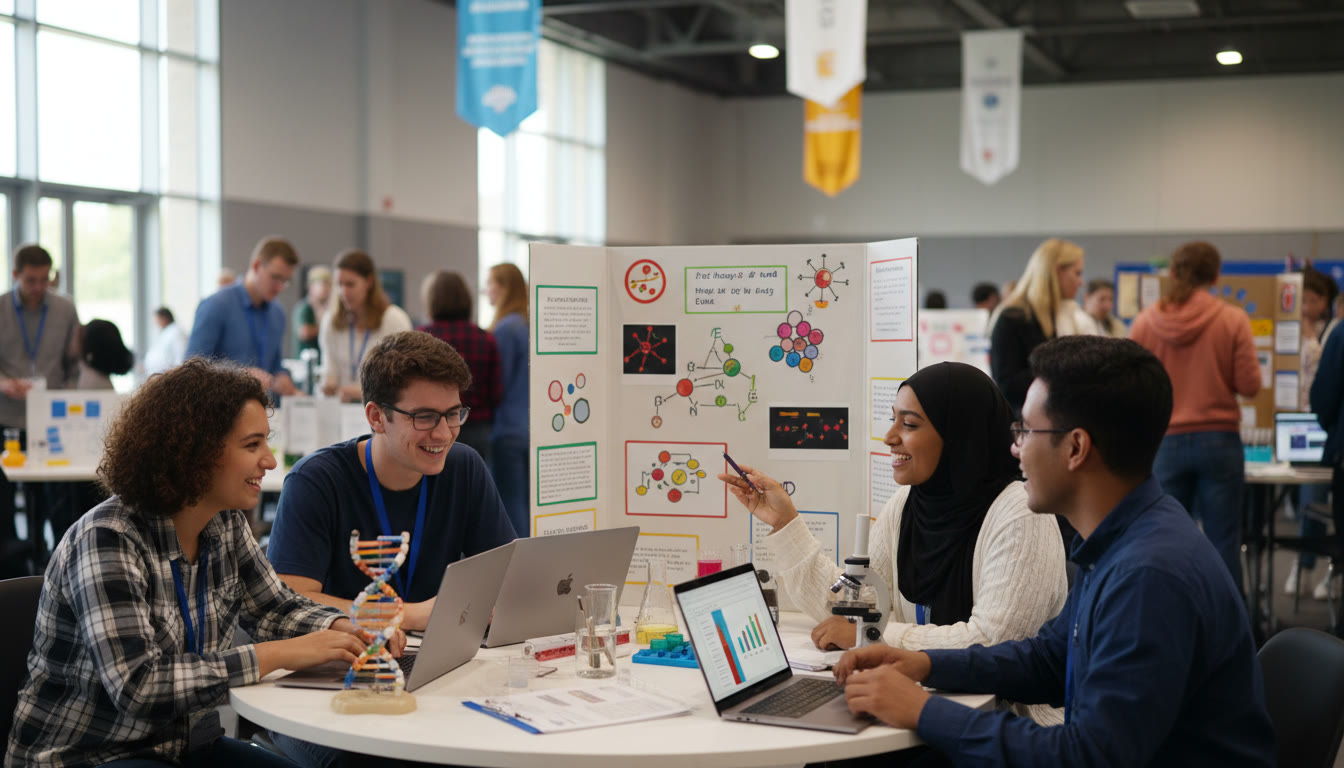

IB DP Career Exploration: Use Competitions to Test Career Fit — A Smart Student’s Guide
Competitions are more than trophies, certificates, or lines on an application. For an IB Diploma Programme student deciding between majors, careers, and counselling paths, competitions are low-cost, high-information experiments. They let you try a role, measure your reactions, and collect real evidence — all while you’re still working through the curriculum. This article walks you through how to pick the right contests, extract meaningful insight, and turn the experience into clearer subject choices, CAS projects, Extended Essay angles, and more thoughtful conversations with your counselor.
Why competitions are mini careers labs — and why that matters
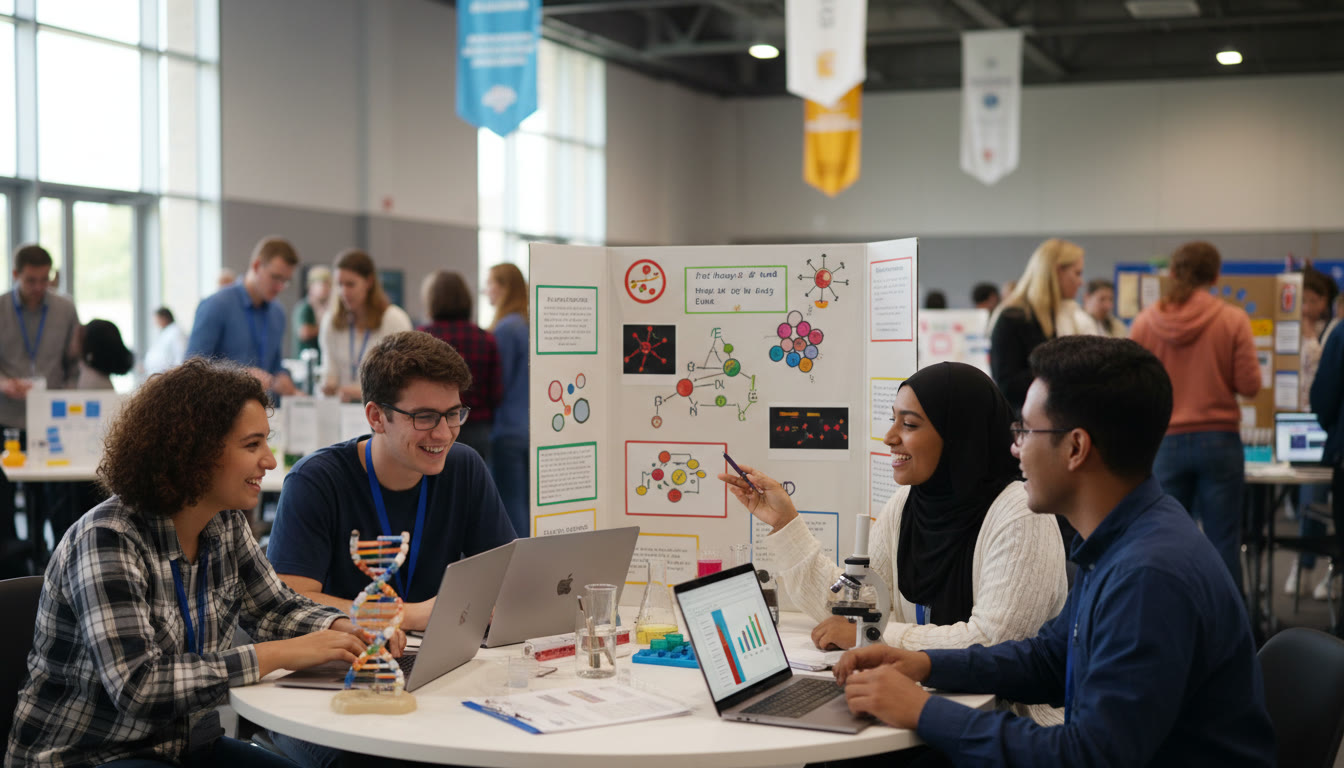
In the classroom you learn ideas; in competitions you test whether those ideas spark energy, endurance, and curiosity in you. A two-week hackathon, a regional debate, a national biology fair or a business case challenge forces concentrated work, problem-solving under pressure, and often teamwork. Those conditions mirror real vocational settings more closely than weekly homework.
Think of each competition as an experiment with three outputs: skill signals (what you can do), preference signals (what you want to do), and behavioral signals (how you work). Together these outputs give your counselor, university application, and — most importantly — you, a richer picture than grades alone can provide.
Types of competitions and what they reveal
Not all contests are created equal for career exploration. Here’s a quick table that helps you read what each type of competition typically tests and how to use that information.
| Competition Type | Core Skills Tested | Career Clues | Typical Time Commitment | Best IB Uses |
|---|---|---|---|---|
| Subject Olympiads (math, physics, chemistry) | Analytical problem-solving, abstract reasoning | Enjoyment of deep technical puzzles; tolerance for solitary study | Medium–High | EE topic, Higher Level subject choice, signaling STEM aptitude |
| Science/Research Fairs | Experimental design, iterative testing, data analysis | Curiosity for lab work, patience for long projects | High | Extended Essay, CAS experimentation, lab-based portfolio |
| Hackathons & Coding Competitions | Rapid prototyping, collaboration, product thinking | Affinity for building, user-focused design, teamwork | Short–Intense | CS interests, project portfolio, internship leads |
| Business / Case Competitions | Strategic thinking, presentation, market analysis | Comfort with ambiguity, leadership, and persuasive communication | Medium | Economics/Business EE topics, commerce-related portfolios |
| Debate & Model UN | Argumentation, research under pressure, public speaking | Interest in law, policy, or international relations; enjoy fast intellectual exchange | Medium | TOK examples, service projects, humanities EE |
| Design & Arts Competitions | Visual storytelling, iteration, critique response | Visual thinking, patience for craft, creative careers | Variable | Visual arts portfolios, CAS creativity strands |
How to choose the right competition for exploration (not just accolades)
- Start with a hypothesis: What do you want to test? (e.g., “Do I enjoy collaborative coding under time pressure?”)
- Match the experiment to the hypothesis: a weekend hackathon is a better test of prototyping than a year-long research fellowship if you want to test rapid collaboration.
- Pick the right commitment level: if you need to keep IB workload healthy, choose shorter, focused contests that still provide a clear signal.
- Ensure feedback: competitions that include mentor reviews or judge feedback are gold for learning — they give data you can reflect on.
- Prioritize one clear lesson over many trophies: it’s better to attend one well-chosen competition deeply than five superficially.
Preparing smartly — win or lose, you should learn
Preparation isn’t just about getting a medal. It’s about setting up an experiment you can measure. Before you begin, create a short prep plan:
- Define success metrics beyond placement — for example, “I want to iterate a working prototype” or “I want to lead one presentation.”
- Assign roles if you work in a team so you can isolate which tasks you enjoyed and which you did not.
- Keep a short research log during preparation — 200–400 words after each practice session is enough to track energy, setbacks, and recurring interests.
- Seek structured feedback: ask a mentor or teacher to watch a practice round and provide two strengths and two areas to try next time.
Structured help speeds learning. For students who want targeted support, Sparkl‘s personalized tutoring and benefits (like 1-on-1 guidance, tailored study plans, expert tutors, AI-driven insights) can be used to sharpen practice sessions, design reflection prompts, and accelerate growth between competitions.
What to measure — and what to ignore
Not all outcomes of a competition are equally informative about career fit. Here’s how to read the data you get:
- Measure: How much flow did you feel? Were you energized or drained after working deeply for several hours?
- Measure: Which tasks felt effortless (research, messy coding, editing visuals, public speaking)? Those are clues to natural strengths.
- Measure: How did you respond to feedback and failure? Enjoying the process of revision is a strong signal for research- or design-oriented careers.
- Ignore: A single win or loss as definitive proof. Competition outcomes are noisy signals influenced by judging criteria, team composition, and luck.
- Ignore: External validation as the only value. The real prize is clarity — what skill or environment you want to pursue next.
Reflective prompts to use immediately after a competition
Reflection turns raw experience into learning. Use these prompts within 48 hours of the event when memories are fresh:
- What three moments during the event felt energizing? Describe briefly why.
- Which tasks did you avoid or procrastinate on? What does that suggest about your preferences?
- What specific feedback surprised you? How will you test it next time?
- If you could design a week in that field, what would your ideal day include? (This reveals what daily work might feel like.)
- Would you eagerly sign up for the same kind of work again? Why or why not?
A simple scoring rubric to quantify interest and competence
Sometimes a measured score helps counsel conversations. Rate three dimensions on a 1–5 scale and compare over two or three competitions of the same type.
| Dimension | 1 (Low) | 5 (High) |
|---|---|---|
| Enjoyment (Would you choose to do this voluntarily?) | Not at all | Absolutely |
| Competence (How good did you feel doing the tasks?) | Struggled | Confident/strong |
| Endurance (Can you sustain similar work weekly?) | Very tiring | Comfortable for long periods |
Use the totals to spot patterns. High enjoyment + low competence is a development opportunity. High competence + low enjoyment suggests a skill to deploy strategically rather than a career zone to live in.
Translate competition learning into IB planning
Once you have signals, use them deliberately in IB-related decisions:
- Subject choices: If a competition revealed a strong appetite for analytical work, consider Higher Level math or sciences. If you thrived in structured argument, emphasize languages or humanities.
- Extended Essay: Convert a compelling competition question into an EE proposal — the research structure and motivation will already be aligned.
- CAS: Design a CAS strand that extends a competition project into service, creativity, or activity, showing depth and continuity.
- Counselor conversations: Bring reflection notes and the scoring rubric to meetings. Concrete evidence shortens the path to a useful recommendation.
How counselors and teachers should read competition portfolios
Counselors often face students with long lists of competitions. Here’s a quick framework to separate noise from signal:
- Ask for reflections, not just results. The student’s ability to articulate learnings matters more than a ribbon.
- Prioritize progression and depth: repeated effort in a domain is a stronger predictor of fit than isolated wins.
- Consider context: team-based achievements require both technical skill and collaboration — valuable in many majors.
- Look for transfer: did the student take techniques from one competition and apply them to another setting? That shows growth.
Three short student stories — how competitions changed a plan
These micro-cases are composite and anonymous, but they illustrate common pathways.
- Aisha: Entered a local robotics challenge skeptical of her mechanical skills. She discovered she loved systems thinking and enjoyed leading the testing phase. Her EE became a robotics control systems project and she chose Physics HL with a clearer idea of engineering pathways.
- Diego: Joined debate to build confidence; he found the research prep energizing but disliked the performance spotlight. He realized policy analysis and writing suited him better than courtroom advocacy, shifting his counselling toward political science and public policy tracks.
- Maya: Competed in a biology research fair with a long lab project that didn’t win. Despite not placing, she loved the iterative experiments and lab hours; the experience informed a decision to pursue laboratory research opportunities in the future.
Balancing time — protect your DP scores while exploring
Competitions can be time-draining. Use these practical guardrails:
- Set a single primary goal per term: either a high-impact competition or a major DP assessment — rarely both at peak intensity.
- Create a 6–8 week plan before any high-stakes school exam where competition work is reduced to maintenance.
- Use short competitions or preliminary rounds to test interest before committing to longer builds.
- Build a feedback loop with teachers: regular check-ins prevent surprises in predicted grades.
Practical checklist for the next entry cycle
- Identify two competitions that test different aspects of your interest (e.g., one solo analytic, one team creative).
- Define metrics for each: what will you notice that proves the hypothesis?
- Schedule reflection sessions: one immediately after and one month later to see if interest sustained.
- Connect one competition outcome to an IB artefact: EE idea, CAS project, TOK example, or counselor note.
- Maintain health priorities: sleep and a study routine beat last-minute cramming.
If you want structured help to get the most from a competition — both in preparation and in turning the outcome into academic choices — consider targeted tutoring that focuses on skills and reflection. For many students, Sparkl‘s approach to tutoring — 1-on-1 guidance, tailored study plans, expert tutors, and AI-driven insights — can sharpen performance and create clearer evidence for counseling conversations.
Common myths and how to avoid them
- Myth: Winning equals career fit. Reality: wins are noisy — focus on what the process revealed.
- Myth: Competitions are only for ‘naturally talented’ students. Reality: many competitions reward preparation, curiosity, and resilience — skills you can grow.
- Myth: You must prioritize competitions over the DP. Reality: competitions should inform the DP, not compete with it. Smart scheduling matters.
Final academic conclusion
Competitions are structured, time-bound experiments that provide practical signals about skills, preferences, and working style. Used intentionally — with hypotheses, measured reflection, and careful integration into IB planning — they reduce uncertainty when choosing subjects, Extended Essay topics, CAS directions, and potential majors. The goal is clarity: to know which daily activities energize you, which you can tolerate because you’re good at them, and which you should avoid when designing an academic and career path.

















No Comments
Leave a comment Cancel