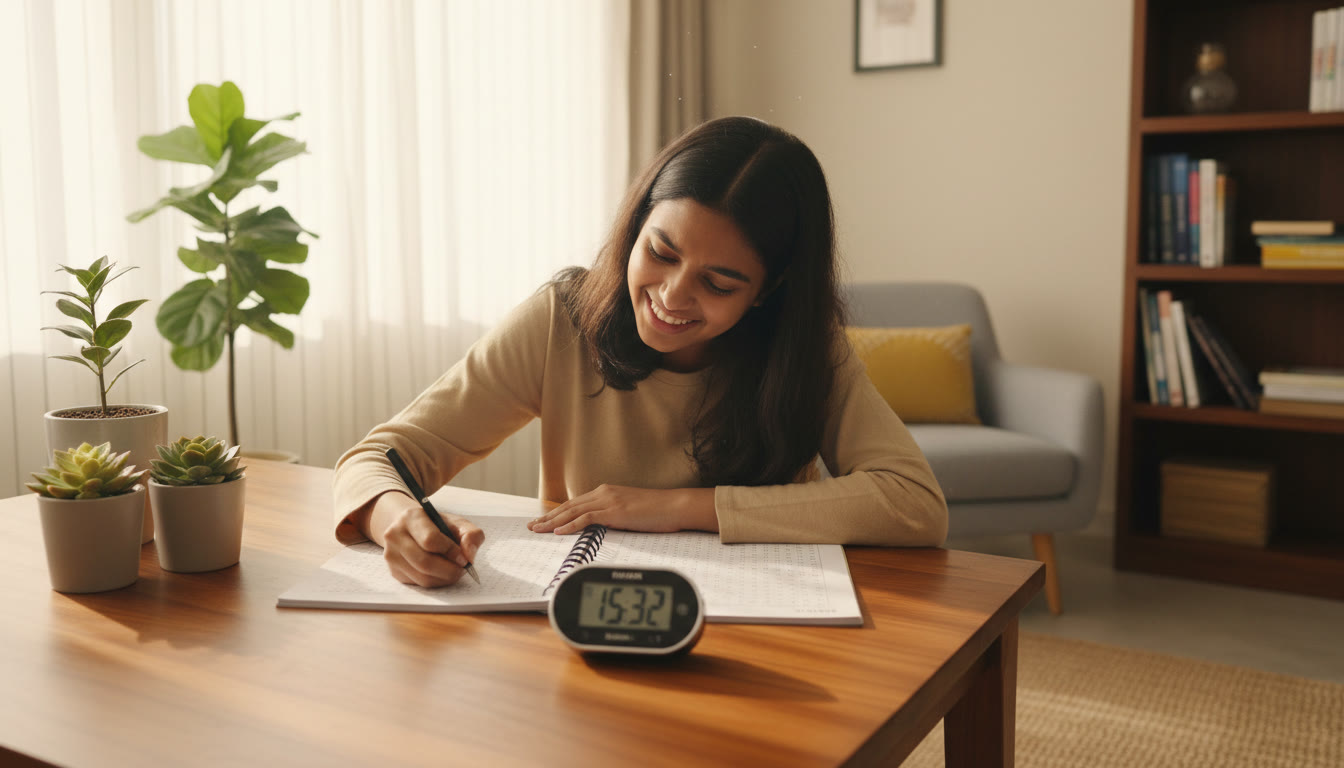

When a mock test stings: a calm, practical way to analyze NEET mistakes
One mock test can feel like a verdict or an opportunity — the difference is how you read it. If you treat a wrong answer as a character flaw it will slow you down; if you treat it as structured feedback, it becomes a blueprint for improvement. NEET is an objective, MCQ-based exam: every question has one correct option, there is negative marking for wrong answers, and full-length practice under the exact three-hour rhythm matters. OMR discipline, clear bubbling habits, and mastery across Physics, Chemistry and Biology are non-negotiable. There’s no partial credit for messy work — the exam rewards precision, strategy, and steady habits.
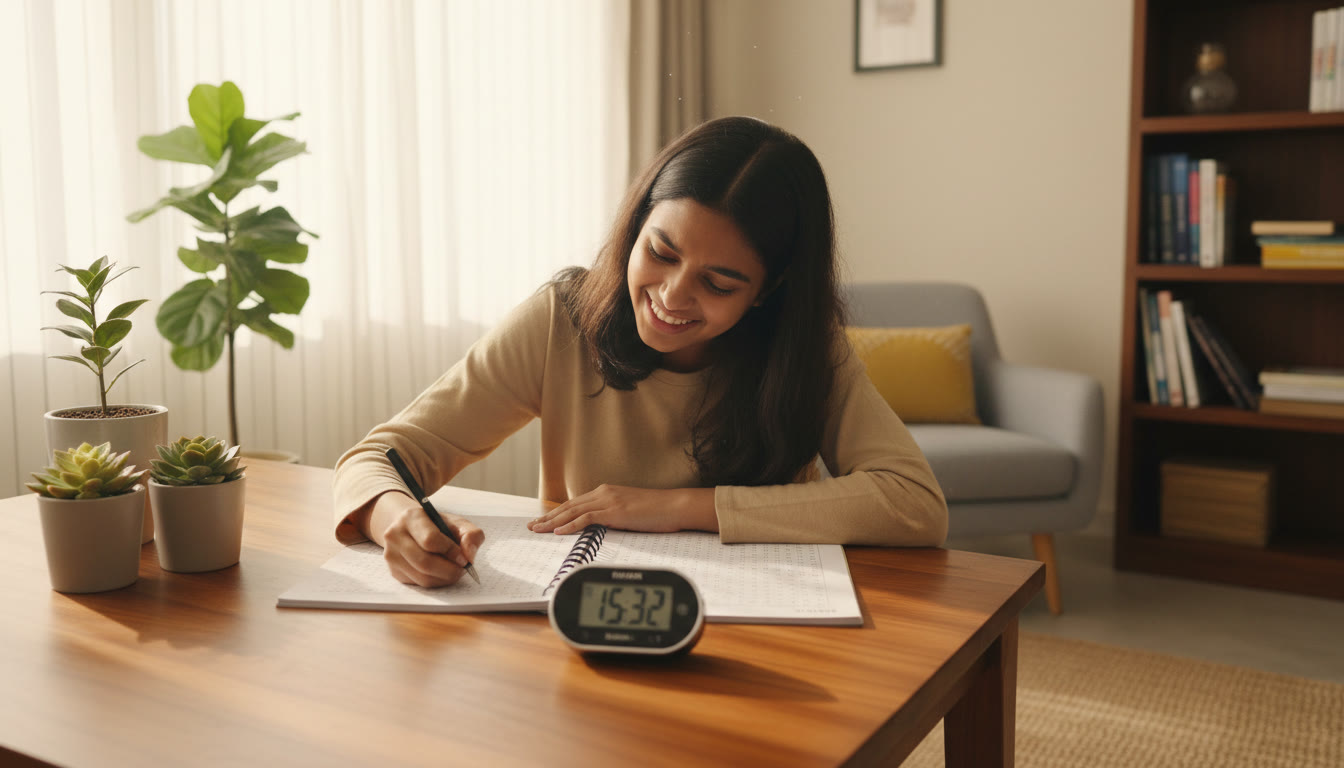
In the paragraphs that follow you’ll get a conversational, step-by-step way to analyze mocks and fix the exact errors that cause score leaks. This is practical — templates you can use the day after a mock, drills for each subject, tips to avoid OMR blunders, and a realistic weekly routine that converts pain into progress. If you have access to tailored help, things speed up: for example, Sparkl‘s personalized tutoring can pair 1-on-1 guidance with AI-driven insights to prioritize your weakest topics quickly. But even alone, the method below works because it treats mistakes as data, not destiny.
Start with the right mindset
Analysis starts with emotion management. After a mock, adrenaline or disappointment can push you to either binge study or avoid looking at the test at all. Pause for a short cooldown (20–30 minutes). Then follow a simple rule: separate an error into three neutral questions — what happened, why it happened, and what exact practice will prevent it next time. This keeps the process scientific and repeatable.
- Do: log the mistake immediately while the memory is fresh.
- Don’t: erase it as a one-off or over-generalize it into “I’m bad at X.”
- Do: prioritize mistakes that cost marks repeatedly or occur under time pressure.
Common categories of mock-test mistakes (and quick examples)
1. OMR and technical errors
These are the silent killers: shading two bubbles by accident, misaligning question numbers while transferring answers, or smudged marks that the scanner can’t read. They often show up as sudden score drops without an obvious pattern in subject knowledge. OMR mistakes are 100% avoidable with a consistent routine.
- Fixes: practice with a real OMR sheet, develop a steady shading pressure, keep a pen of the correct color as a spare, and decide when to fill answers (answer-as-you-go versus block-fill at stable intervals).
2. Time management and pacing errors
NEET’s three-hour structure rewards even pacing. Many students lose marks by spending too long on a single passage or diving into lengthy physics problems without clear first-step checks. The result: rushed finishing and careless errors on easy questions.
- Fixes: use sectional mini-limits in each mock (for example, 35–40 minutes per 45-question chunk), flag tricky questions quickly, and reserve the last 20–25 minutes for review and OMR sanity-checks.
3. Conceptual versus rote errors
Conceptual errors are repeat offenders; you’ll see a cluster of similar mistakes across tests (e.g., confusion in electrostatics sign conventions, repeating a misconception about chemical equilibrium, or mixing up homologous series in biology). Rote errors are usually memory slips — often reducible with active recall and spaced repetition.
- Fixes: identify the root concept, create a 10-minute micro-lesson to rewrite the idea in your own words, then test three fresh MCQs on that concept within 48 hours.
4. Negative-marking and guessing mistakes
Random guessing produces noise in your score. The right approach is probabilistic: use elimination to increase the chance of a correct guess or skip when elimination is weak. If two options remain after careful elimination, the expected value may justify an educated guess; if all four remain, a skip often saves marks.
- Fixes: practice elimination drills and mark questions for review instead of frantic guessing. Track how often educated guesses convert to correct answers to refine your rule.
Quick reference table: common errors, impact, and a one-minute fix
| Mistake | Symptom | Impact (approx) | One-minute fix |
|---|---|---|---|
| Double shading on OMR | Sudden loss of 1–3 marks on clearly easy Qs | High (avoidable) | Shade neatly; keep a margin-row for quick OMR check |
| Spending 25–30 min on one question | Rushed last 30 minutes | Moderate to high | Set a personal 7–10 min cap per tough Q |
| Arithmetic/unit errors | Wrong numeric despite correct method | Low per question but frequent | Quick unit check before finalizing |
| Misreading assertion/reason stems | Incorrect logic-based choices | Moderate | Underline the conclusion and the reason separately |
| Rote memorization gaps | Memory-hits in biology and organic reactions | Moderate | Convert facts into flashcard Q&A for daily recall |
| Strategy mismatch with negative marking | Many wrong answers with low confidence | High | Use elimination + skip rule; track success rate |
| Skipping diagrams or figures | Wrong option when diagram-based | Low to moderate | Practice quick diagram reading drills |
| Panic-induced mistakes | Sudden errors in simple Qs near the end | High | Develop a 2-minute breathing and reset routine |
A step-by-step mock-analysis ritual you can use next test day
Make this ritual a habit. Repeatability is the secret to reliable score gains.
- Cooldown (20–30 min): Avoid immediate replaying. Walk, breathe, and normalize the result.
- First pass (30–60 min): Re-attempt flagged questions without the pressure of the clock to discover whether the error was conceptual, careless, or procedural (OMR).
- Log everything: For each wrong answer, record: question number, subject, topic, chosen option, correct option, error type (careless/conceptual/OMR/strategy), and one-sentence root cause.
- Prioritize: Rank mistakes by frequency and marks lost. Focus on the top 3 topics that cost the most marks.
- Micro-practice (30–90 min): For each prioritized topic, do targeted drills: 10 focused MCQs, one short summary note, and one teaching attempt (explain the concept aloud for 2–3 minutes).
- Re-test: Add 10–15 similar MCQs in the next 48–72 hours to check retention. If you fail again, escalate to a longer remedial session.
Use a simple spreadsheet or notebook with these columns: Q#, Subject, Topic, ErrorType, Root Cause, Fix, TimeSpent, RetestDate. Over four mocks you will see patterns emerge; convert patterns to weekly micro-goals.
Subject-wise pitfalls and targeted drills
Physics: sloppy first steps and unit blindness
Physics mistakes often start before you write the first equation: a misread constraint, wrong sign, or skipping a free-body diagram. Many marks leak from algebraic manipulation or unit mismatch rather than conceptual gaps.
- Drills: 15-minute diagram practice (draw the setup, list forces, write equations), five numerical questions focused on a single formula family, and quick dimension analysis for every physics problem you solve.
- Tip: keep a one-page formula-sanity checklist for core topics; before finalizing a numerical answer, run a 15-second unit check.
Chemistry: mixing rote with reasoning
Chemistry is three sub-skills: theory (inorganic), reaction logic (organic), and calculation (physical). Mistakes happen when students memorize reaction outcomes without understanding mechanisms or skip stepwise calculations in physical chemistry.
- Drills: build reaction maps for key organic families, do 10-minute stoichiometry accelerators, and practice one physical-chemistry numerical per session under timed constraints.
- Tip: convert complex mechanisms into 4–6 bullet points summarizing electron flow and key intermediates — this aids MCQ elimination.
Biology: careless reading and diagram misinterpretation
Biology’s long stems and diagram-based MCQs reward careful reading. Errors often come from similar-sounding options or from skipping the small qualifiers (e.g., ‘except’, ‘not’, ‘primarily’).
- Drills: daily 10-minute active recall sessions (flashcards + self-quiz), and diagram drills where you redraw and label major systems in two minutes.
- Tip: for assertion-reason and matching-type MCQs, underline the main clause and the qualifying clause separately before choosing.
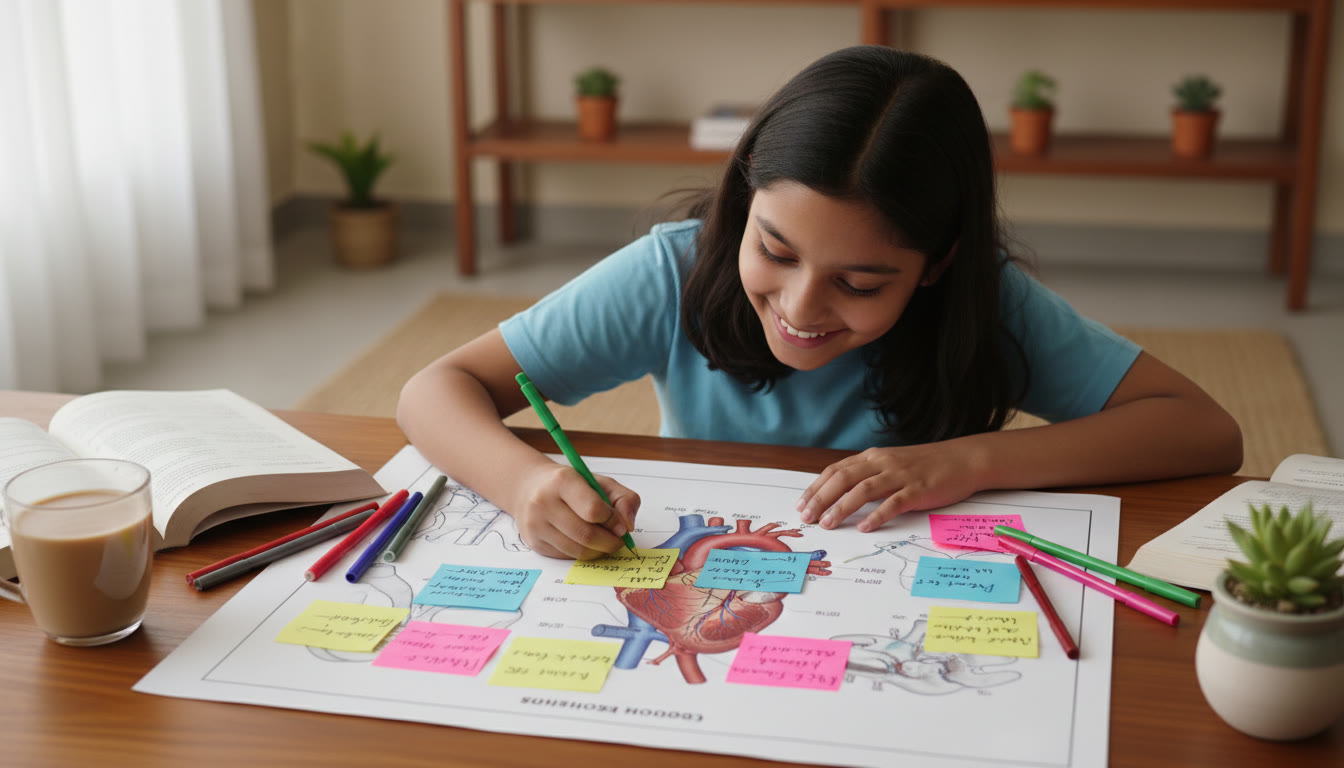
Mock-test logistics: OMR discipline, timing, and the three-hour rhythm
Practice under the same constraints as the actual exam. A full-length mock is not just about answering questions; it’s a rehearsal of behavior: how you pace, bubble, eat, stand up, and reset when panic appears.
- Simulate the full three-hour environment: no phone, single-page water bottle, bathroom break pre-test, and the exact materials you’ll carry on exam day.
- OMR technique: decide whether to bubble as you go (less cognitive load at the end) or in short batches (helps keep track). Whichever you choose, practice that method consistently so it becomes automatic.
- At the 30-minute mark: do a quick OMR check to ensure alignment; at the 10-minute mark near the end, do a final scan of the OMR sheet for stray marks.
Psychology and stamina: avoid the panic cliff
Mental mistakes cluster when physical needs are ignored. Poor sleep, skipped meals, or a last-minute content binge can turn a competent performance into a shaky one. Build a two-part pre-mock routine: preparation (day-before sleep and nutrition) and a two-minute reset (breath counting, shoulders down, three eye blinks) to use during the test if you feel your focus slipping.
- Sleep: aim for consistent sleep cycles the week of mocks.
- Nutrition: avoid heavy meals right before; choose slow-energy snacks for the break if needed.
- Mental drill: practice a 60-second mindfulness reset twice a day for three weeks to reduce in-test panic.
How to turn your error log into a weekly plan
Data without action is just information. Translate your weekly error counts into focused weekly tasks. Here’s a simple table you can model in your notebook or spreadsheet to convert errors into time investments.
| Priority | Topic | Errors this mock | Weekly action | Time (per week) |
|---|---|---|---|---|
| High | Mechanics (Physics) | 6 | 3 focused drills + 1 reworked mock section | 4 hours |
| Medium | Organic reactions (Chemistry) | 4 | Reaction maps + flashcard recall | 2.5 hours |
| Low | Plant physiology (Biology) | 2 | Diagram redraws + 10 Qs | 1.5 hours |
Weekly routine example (practical, not perfect)
- Monday: short concept reviews (2 hours) + 30-minute mixed MCQ set.
- Wednesday: timed sectional practice (90 minutes) + 45-minute analysis of mistakes.
- Friday: targeted drills on top-two weak topics (2–3 hours).
- Saturday: full-length 3-hour mock under exact exam conditions.
- Sunday: ritual analysis (90 minutes) and re-practice of the two most frequent errors.
How personalized help speeds the loop (where targeted tutoring fits naturally)
When you are trying to improve a specific error pattern — for example a persistent confusion in electrostatics or a recurring organic mechanism slip — individualized attention can shorten the learning curve. Sparkl‘s tutors provide one-on-one guidance to diagnose a misconception faster, create a tailored study plan, and suggest AI-driven practice sets that focus on recurring weak points. That combination of human coaching, targeted practice, and data feedback is efficient because it aligns effort with impact instead of random hours.
Small practices that compound into big gains
- Keep a mistake ratio: errors per 50 questions. Aim to reduce it by a fixed percentage in each cycle.
- Make a two-line correction note per error: what I thought → why it’s wrong → correct one-line principle.
- Use spaced recall: test the correction after 24 hours, 72 hours, and one week.
- Practice elimination drills: 10 elimination-only MCQs in 15 minutes to train option analysis.
Final note: mistakes are predictable, fixable, and compounding
Mock tests are not final exams; they are measurement devices. If you instrument them correctly — with a calm mindset, a faithful error log, targeted drills, and consistent OMR practice — your mistakes will stop feeling like random punishments and start looking like predictable patterns you can close. Track frequencies, prioritize the biggest score leaks, and practice under exact three-hour conditions to make your improvements stick. Consistency in the process creates reliability in performance, and that reliability is what the exam rewards.
























No Comments
Leave a comment Cancel