

NEET Mock Test Strategy for 700+ — Why a Mock-Centric Roadmap Wins
Dreaming of a 700+ score is about precision, not panic. The difference between a good candidate and a 700+ candidate often boils down to how you use mock tests. A mock is not just a practice paper; it is a diagnostic microscope, a stamina trainer, and a rehearsal for OMR discipline, timing, and decision-making. Treat every full-length mock as a controlled experiment: change one variable, measure the effect, and iterate.

If you want clarity: the modern NEET environment is an MCQ-based, three-hour exam where negative marking exists and the paper tests Physics, Chemistry, and Biology. Mocks should mirror that exact format — time limit, OMR accuracy, question mix and pressure — so your habits in the exam hall become second nature.
What a Mock Score Really Tells You (It’s More Than a Number)
When you open your mock result, don’t stop at the total. To turn a mock into progress, break the score into actionable metrics. Here are the core lenses to look through:
- Raw score vs. accuracy: How many did you get right vs. how many you attempted? High attempts with low accuracy is a red flag.
- Section-wise balance: Physics, Chemistry, Biology — which section dragged you down?
- Time profile: Average time spent per question; long stalls often hide conceptual gaps or indecision.
- Question-level tags: Mark questions as conceptual, calculation, recall, silly error, or OMR/marking mistake.
- Attempt pattern: First-pass score vs. final score after revisits — shows your decision quality under time pressure.
Quick Score Analysis Table (Use this after every mock)
| Metric | What it reveals | Target for 700+ |
|---|---|---|
| Accuracy (%) | How selective and reliable your attempts are | >85% |
| Attempted (per mock) | Balance between safe attempts and needed risk | Smartly selective — quality over blind quantity |
| Section gap (highest–lowest) | Imbalance that eats your total | Keep gap minimal; convert weakest section gains to +20–40 marks |
| Time per question | Indicators of time sinks | Maintain steady pace; avoid >2x spikes on clusters |
Designing Your Mock Schedule: Frequency, Type, and Focus
Quantity of mocks matters, but quality matters more. For a 700+ target you need two kinds of mocks: diagnostic and simulation. Diagnostics help identify conceptual holes; full simulations build stamina and OMR discipline.
| Week | Mocks | Focus | Post-mock action |
|---|---|---|---|
| 1–2 | 1 full + 2 topic diagnostics | Baseline & weak-topic identification | Error log creation; focused revision plan |
| 3–4 | 2 full + 3 mini timed sets | Build pacing; practice mixed sections | Time analysis; OMR drills |
| 5–6 | 3 full + targeted mocks | Stress-testing weak areas; attempt strategy | Concept reinforcement; formula sheet consolidation |
| 7–8 | 2–3 full; taper mini mocks | Simulation + confidence tuning | Final habit checks; sleep and exam routine |
Two practical notes: (1) Schedule at least one full-length mock each week under strict exam conditions — no phone, timed breaks only as per rules. (2) After every mock, spend at least 2–3 hours analyzing: immediate feedback is where learning cements.
Attempt Strategy: How to Spend 180 Minutes Like a 700+ Candidate
With three hours on the clock, your goal is to maximize net score — that means smart selection, calculated risk, and disciplined guessing. Here is a robust three-pass approach that many top scorers use and fine-tune through mocks:
- First pass (0–90 minutes): Attempt only the questions you can solve confidently in under 2 minutes. This builds a strong early score and reduces panic later.
- Second pass (90–150 minutes): Tackle medium-difficulty questions and longer calculations. Use scratch paper efficiently; if a calculation will take long, flag and move on.
- Third pass (150–180 minutes): Revisit flagged items and educated guesses. Use elimination and probability thinking — if two options seem almost equally likely, the risk-reward may justify an attempt, but avoid random guessing.
Why this works: early high-confidence attempts protect your score from time-sink questions, while later passes let you use remaining time for potential high-margin gains.
Negative Marking: Practical Rules, Not Fear
Negative marking means blind attempts can be costly. Use these simple heuristics:
- If you can eliminate two options, consider attempting — the expected value goes up.
- Never attempt a question if you have zero method to eliminate an option unless you must chase a specific target and accept the risk.
- Keep track of how many “educated guesses” you make across a mock to spot risk-taking patterns that lower net score.
OMR Discipline and Hall Simulation — Practice the Ritual
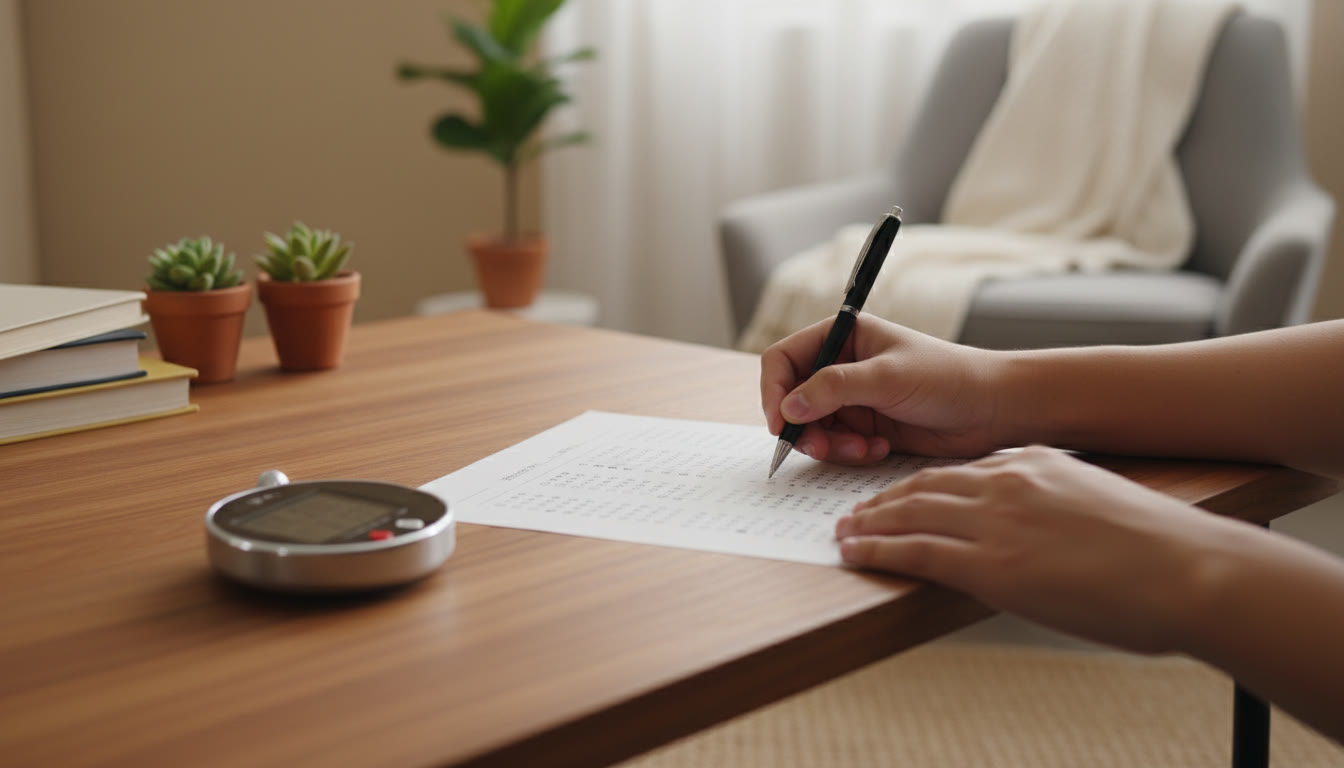
OMR mistakes and silly marking errors are inexpensive to prevent and devastating on test day. Simulate the full ritual in at least the final month: seat, desk, registration, OMR filling, and full-time monitoring. Practice darkening bubbles with the right pen pressure, maintaining your answer index, and double-checking roll numbers. One OMR slip can erase the benefit of weeks of study.
How to Analyze Mistakes — The Error Log Method
After each mock, create a categorized error log with these columns: Question, Topic, Mistake type (conceptual/calculation/silly/OMR), How to fix, Next review date. This is the engine of improvement because it forces reflection and specific remediation.
- Conceptual errors: Re-study the underlying theory, watch a short focused video or re-derive the concept, then solve 3–5 new problems on the same idea.
- Calculation errors: Slow down under timed conditions. Do targeted drills where you practice the calculation until you hit 10/10 accuracy in reduced time frames.
- Silly errors: Create checklists (units, sign checks, diagram orientation) and deliberately use them for the next three mocks.
- OMR/marking mistakes: Add a 3-minute buffer before submission to re-check your OMR entries.
Sample Error Log Entry (How to structure)
| Q# | Topic | Mistake Type | Fix | Review Date |
|---|---|---|---|---|
| 42 | Electrostatics | Conceptual (misapplied formula) | Re-derive formula; do 5 problems on potential vs field | +3 days |
Section-Wise Strategy: Small Wins Add Up
Physics
Physics rewards problem-solving fluency. For mocks, focus on: speed with units, diagram-first approach, and knowing common approximations. Convert weak numerical topics into timed drills. During a mock, if a numerical question needs more than 3–4 minutes, mark and return later.
Chemistry
Chemistry divides into physical, organic and inorganic. Use mocks to identify which sub-section costs you the most time. For physical chemistry, practice multi-step calculations under timed conditions. For organic, practice mechanism recognition and common reaction outcomes. For inorganic, make concise recall charts and test them repeatedly in mocks.
Biology
Biology often yields the largest chunk of marks, so keep it high-yield. Use active recall: convert pages of notes into questions and force yourself to answer them under timing. Diagrams and processes should be used as learning tools — memorize the sequence and causation rather than rote copy. In mocks, try to secure the biology-related easy questions first to build confidence.
Revision That Sticks: Spaced Repetition + Active Recall
Mocks generate the list; revision converts it into durable memory. Use spaced repetition to revisit flagged topics at increasing intervals. Active recall is your friend: closed-book self-testing after a mock is far more powerful than re-reading notes. Create two cheat-sheets: one for formulas, one for quick facts, and use them only during revision, not during learning; the restriction forces recall.
Mini-Exercises to Build Recall
- After each mock, write down five questions you missed and answer them from memory 24 hours later.
- Create 60-second flash drills for high-yield facts (definitions, anatomy points, reaction reagents).
- Use short mixed sets (15–20 MCQs) daily to keep retrieval pathways fresh.
When and How to Use Personalized Help
Personalized tutoring becomes invaluable when your mocks show persistent plateaus. If you’re hitting a wall in one section despite steady study, targeted 1-on-1 guidance can break that plateau quickly — a coach diagnoses the unseen patterns in your attempts and helps you rewire practice habits.
For example, Sparkl‘s tailored study plans and expert tutor feedback can accelerate error correction by offering focused drills that align with your mock performance. Use personalized sessions to convert weak topics into predictable scoring areas, and to sharpen exam habits like OMR discipline and time allocation.
Exam-Day Simulation: More Than Timing
High-score performers simulate the whole ritual: wake time, food, travel time, entry routine, seating, and exact three-hour timing. Practice the two most important non-academic actions: steady nutrition and mental resets. Your mocks should also include intentional “distractions” to train focus: a noisy fan, a small time pressure disruption, or a forced bathroom break mid-test. Building tolerance to small disturbances prevents panic on the real day.
Pre-Mock Checklist
- Set up an exam-like desk: watch the clock, keep an OMR replica and use identical pens.
- Warm-up: 10–15 minutes of quick recall sheets to prime retrieval.
- After finishing a mock, do a 10-minute calm walk before analysis to reset your mind.
Common Mistakes That Kill 700+ Dreams (and How to Avoid Them)
- Chasing every question: Resist the temptation to attempt everything. Controlled attempts with high accuracy beat random attempts.
- Skipping OMR practice: Fill practice OMRs frequently; the real sheet is unforgiving.
- Analysis-lite: Scoring well in mocks but not analyzing mistakes will lead to stagnation. Always follow each mock with a focused plan.
- Mental fatigue ignorance: Mocks are stamina training. If you fade in hour three, fix sleep, nutrition, and practice endurance.
Practical Example: Turning a 600 Mock into a 700+ Plan
Say your mock shows 600 with the following quick read: Biology strong, Chemistry average, Physics low; many silly calculation mistakes and two OMR mismatches. Your plan across the next 6–8 weeks should be:
- Physics: targeted concept sessions twice a week and 3 calculation drills per session.
- Chemistry: reduce time on inorganic rote revision and increase mixed problem sets to improve application.
- Silly errors: daily 10-minute accuracy drills and a post-mock checklist enforced for three consecutive mocks.
- OMR: practice one replica OMR every mock and add a 3-minute final OMR check into your routine.
Measuring Progress: What to Expect from Mocks
Improvements are rarely linear. Expect plateaus and occasional drops — that’s part of the learning curve. However, the signal of progress is consistent reduction in repeat mistakes and rising accuracy, not just a jump in raw marks. Track these qualitative changes alongside totals.
Final Academic Takeaways
To reach 700+ you must make mocks the central tool of your preparation: simulate exactly, analyze ruthlessly, fix specifically, and iterate quickly. Combine disciplined full-length practice with focused revision cycles, OMR and timing drills, and an error-log routine that converts each mistake into a predictable correction. Use personalized guidance selectively to overcome plateaus, and always practice under true exam conditions so habits — not hope — carry you through the three hours.
Consistency, smart analysis, and targeted correction are the academic pillars of a 700+ mock test strategy. End of article.






















No Comments
Leave a comment Cancel