

Daily Revision Routine for NEET: A Calm, High‑Impact Study Blueprint
Revision is not a race to cram more facts; it is a deliberate, repeatable practice that converts knowledge into reliable recall under pressure. For an MCQ-based examination with negative marking and a strict three‑hour full-length runtime, your daily routine should balance consolidation, timed practice, and reflection. This article gives you a natural, student‑friendly plan for building that routine: time blocks you can adapt, subject drills, mock‑test use, OMR discipline tips, and ways to keep your head clear while you sharpen skills.

Think of revision as three linked actions each day: refresh, apply, and reflect. Refresh means revisiting core notes and quick concept checks. Apply means doing focused questions and small timed sets. Reflect means logging errors, rewriting weak notes, and deciding the next day’s focus. Stack these actions into short sessions, and they compound — your weak points shrink while your speed and accuracy grow.
How to Structure Your Day: Blocks That Actually Work
Good routines respect attention cycles. Instead of endless, unfocused hours, divide your day into 60–90 minute blocks with purposeful goals. Rotate subjects so similar cognitive demands don’t pile up back‑to‑back. Keep at least one longer, uninterrupted block of problem practice — that is where accuracy and stamina are built.
Morning: High‑value consolidation
Mornings are great for heavy conceptual work because your mind is fresher. Use this time for:
- Active recall of key formulas and processes — try to reproduce them without notes.
- Working through the hardest concept from the previous day for 45–75 minutes.
- Quick note refinement: convert messy problem solutions into crisp one‑page summaries.
Midday: Practice under small time pressure
After a short break, move to applied practice. Set a 60–90 minute session for MCQs or numericals. Use short timed sets (20–30 questions) to simulate decision pressure and practice eliminating options quickly. Focus on accuracy first, then speed.
Evening: Retrieval and weak‑spot repair
The evening is best for spaced retrieval, flashcards, revising diagrams, and a final short problem set. End with a 15–20 minute error log update: note mistakes, why they happened, and the exact fix. This log is the single most powerful tool for targeted daily improvement.
Sample Daily Schedule (Adaptable)
| Time Block | Activity | Focus | Duration |
|---|---|---|---|
| Morning | Concept consolidation + active recall | Physics/Chemistry concept or Biology process | 60–90 minutes |
| Late Morning | Problem practice (timed sets) | Application and steps | 60 minutes |
| Afternoon | Light review / rest / short exercises | Flashcards, quick MCQs | 30–45 minutes |
| Evening | Mixed subject timed drill + error log | Weak spots and retrieval | 90 minutes |
| Night | Quiet review (notes, formula sheets) | Memory consolidation | 20–30 minutes |
This table is a starting template. Students juggling school, tuition, or other commitments can compress blocks and keep the same cycle: refresh → apply → reflect.
Weekly and Monthly Cycles: When to Increase Intensity
Daily habits scale into weekly rhythms. Reserve one block in the week for deeper practice: a three‑hour full‑length mock at realistic timing to build stamina and reveal pacing problems. The remainder of the week should include at least one deliberate practice session per subject and frequent short timed drills.
How often to take full mocks
- Early in preparation: once in two weeks to gauge baseline and adjust strategy.
- Mid phase: weekly simulated three‑hour mocks to sharpen time management and OMR discipline.
- Final phase: retain weekly mocks, but prioritize analysis — the mock itself is only half the benefit; the other half is the post‑mock correction routine.
Turn Mocks into Learning Machines
Mocks are valuable only if you treat them as data. After each three‑hour full-length mock, spend as much time on analysis as you did on the test. Break down errors by type — careless, conceptual, or time‑pressured. Record them in your error log and plan the next day’s revisions around the most common mistake types.
OMR discipline and real‑exam habits
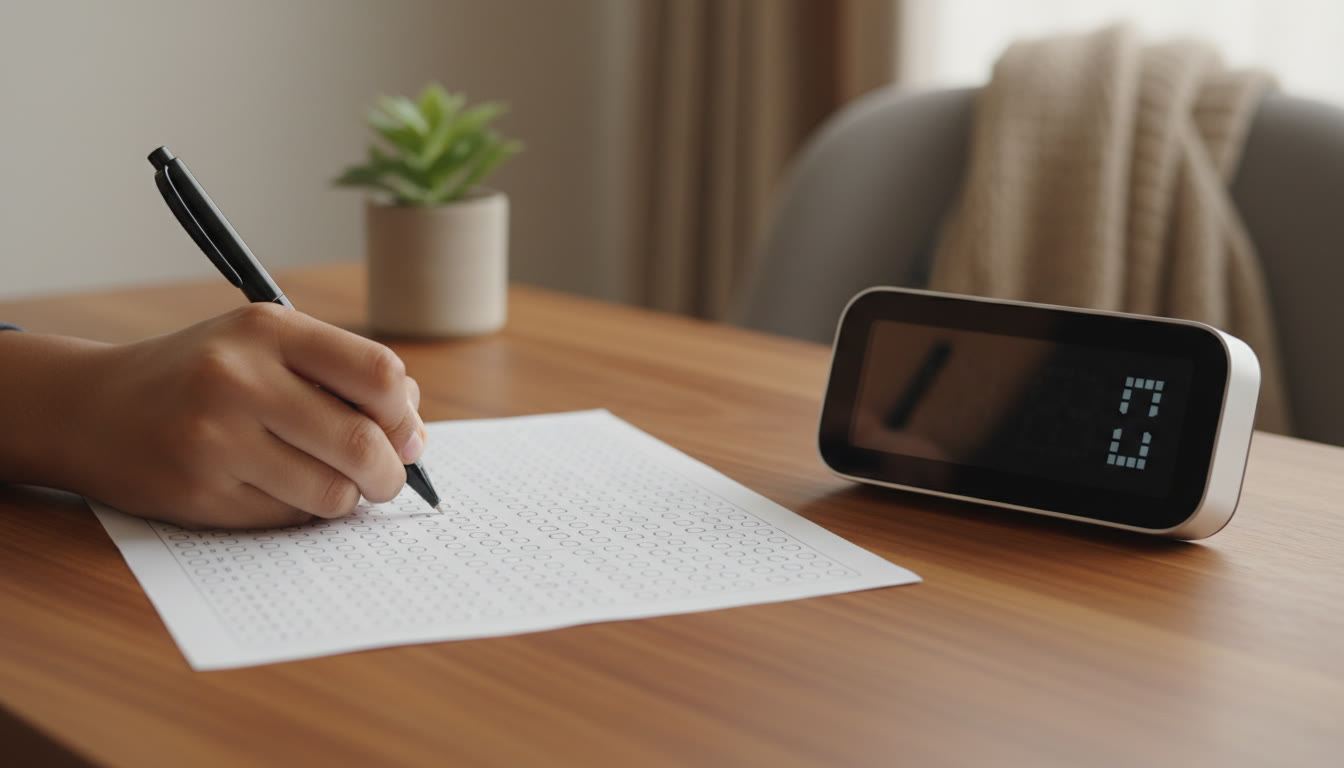
OMR errors are preventable with disciplined practice. Simulate the OMR sheet at least once per week when you take a full mock. Practice these habits:
- Mark only one answer per question and double‑check question numbers before filling.
- Use a real pen in practice as you will on the day of the exam; practice steady shading to avoid stray marks.
- Time checkpoints: know where you should be after each 30–40 minutes to avoid rushes and careless marking.
Subject‑Wise Daily Revision Drills
Physics
Physics rewards pattern recognition and stepwise problem solving. Structure your physics block like this:
- Start with 15 minutes of formula recall and core concept rehearsal.
- Spend the next 45–60 minutes on problem families: pick one concept and solve 6–8 problems increasing in difficulty.
- End by writing a short one‑page ‘cheat sheet’ with key formulas, conditions, and common pitfalls for that topic.
Chemistry
Chemistry divides naturally into different thinking styles. For daily revision:
- Physical chemistry: practice numerical problems with timed sets and focus on units and assumptions.
- Organic chemistry: group reactions into patterns, practice mechanism interpretation, and make sticky flashcards for reagents and conditions.
- Inorganic chemistry: convert factual dumps into tables and mnemonics, then test with quick recall runs.
Biology
Biology requires both conceptual clarity and memory. For each topic, do a two‑phase revision:
- Concept phase: redraw processes or diagrams from memory and narrate them aloud.
- Recall phase: do short MCQ sets focused on the topic, then convert any missed items into one‑line flashcards.
Micro‑Techniques That Multiply Results
Small changes in how you revise make a big difference. Here are practical micro‑techniques to fold into your daily routine:
- Pomodoro with varied lengths: use 50/10 for heavy conceptual work and 25/5 for quick MCQ bursts.
- Active error logging: never just mark an answer wrong; write down the exact reason and the corrective thought.
- One‑page summaries: after every major topic, condense the essentials to a single sheet you can review in 10 minutes.
- Daily randomized mixed sets: at least once a day, solve a mixed set of 15–25 MCQs across subjects to practice switching gears.
Using Personalized Support Wisely
If one‑on‑one guidance fits your learning style, consider targeted help for the weakest areas rather than general coaching. For example, Sparkl‘s personalized tutoring offers tailored study plans and one‑to‑one guidance that can plug specific gaps efficiently. Pair tutoring sessions with your daily routine: arrive with a clear list of three points you want fixed, attempt a rapid problem set beforehand, and use the session to iron out misconceptions rather than start new topics.
How to Analyze and Act on Mistakes
A single mistake can reveal a pattern. Use this three‑step corrective loop every day:
- Identify: classify the error as conceptual, calculation, careless, or interpretation.
- Fix: write the minimal corrective note and, if necessary, do 3 similar problems immediately.
- Verify: re‑test the same concept in two different formats within 48 hours to ensure retention.
Practical Weekly Checklist
Keep this checklist visible and tick items off as you finish them each week:
- One full‑length three‑hour mock under strict conditions.
- Two targeted sessions per subject focused on weak topics.
- Daily error log updated and reviewed on the next day.
- One rapid mixed MCQ set every day to maintain switching agility.
- At least one session with a mentor or tutor for feedback if needed.
Health, Energy, and Focus: Little Things That Matter
Revision quality collapses without consistent energy management. Keep these non‑negotiables in your daily routine:
- Sleep schedule that gives 7–8 hours of real rest; short‑term all‑nighters cost recall and accuracy.
- Regular short movement breaks: a brisk 10 minute walk refreshes attention more than a passive scroll session.
- Hydration and protein‑rich snacks to stabilize focus during long blocks.
Two Real Examples: How a Day Might Look
Example 1: A school‑plus‑prep student with limited hours
- Early morning 60 minutes: revise yesterday’s error log and one key concept.
- Late afternoon 90 minutes: practice timed mixed MCQs and 20 minutes of quick formulas.
- Evening 60 minutes: focused subject drill and 20 minutes of flashcard review.
Example 2: A full‑time prep student with flexible hours
- Morning 90–120 minutes: deep concept work and one dense problem family.
- Midday 90 minutes: timed mixed questions and a short break to decompress.
- Evening 90 minutes: mock segment simulation, OMR practice, and error log updates.
Common Pitfalls and How to Avoid Them
- Pitfall: endless rereading without testing. Fix: always follow review with a self‑test.
- Pitfall: ignoring small errors. Fix: log and force a corrective drill within 24 hours.
- Pitfall: too many new topics late in the cycle. Fix: shift to consolidation mode and reserve new topics for early‑phase study.
Final Checklist Before Any Mock or Test Day
- Set an exact seating and timing routine to mirror exam conditions.
- Practice OMR filling speed and accuracy with an actual sheet if possible.
- Prepare a one‑page formula and mnemonic sheet for last‑minute calm review (do not attempt heavy learning).
- Pack essentials, sleep well the night before, and approach the test with the same stepwise pacing you practiced.
Closing Thought
Consistent daily revision built from short, purposeful blocks — refresh, apply, reflect — combined with regular three‑hour mock simulations and disciplined OMR practice creates reliable performance gains. Treat errors as signals, tune your daily blocks to fit your life, and prioritize clarity over frantic coverage; steady refinement of speed, accuracy, and conceptual depth is what results in dependable exam performance.






















No Comments
Leave a comment Cancel