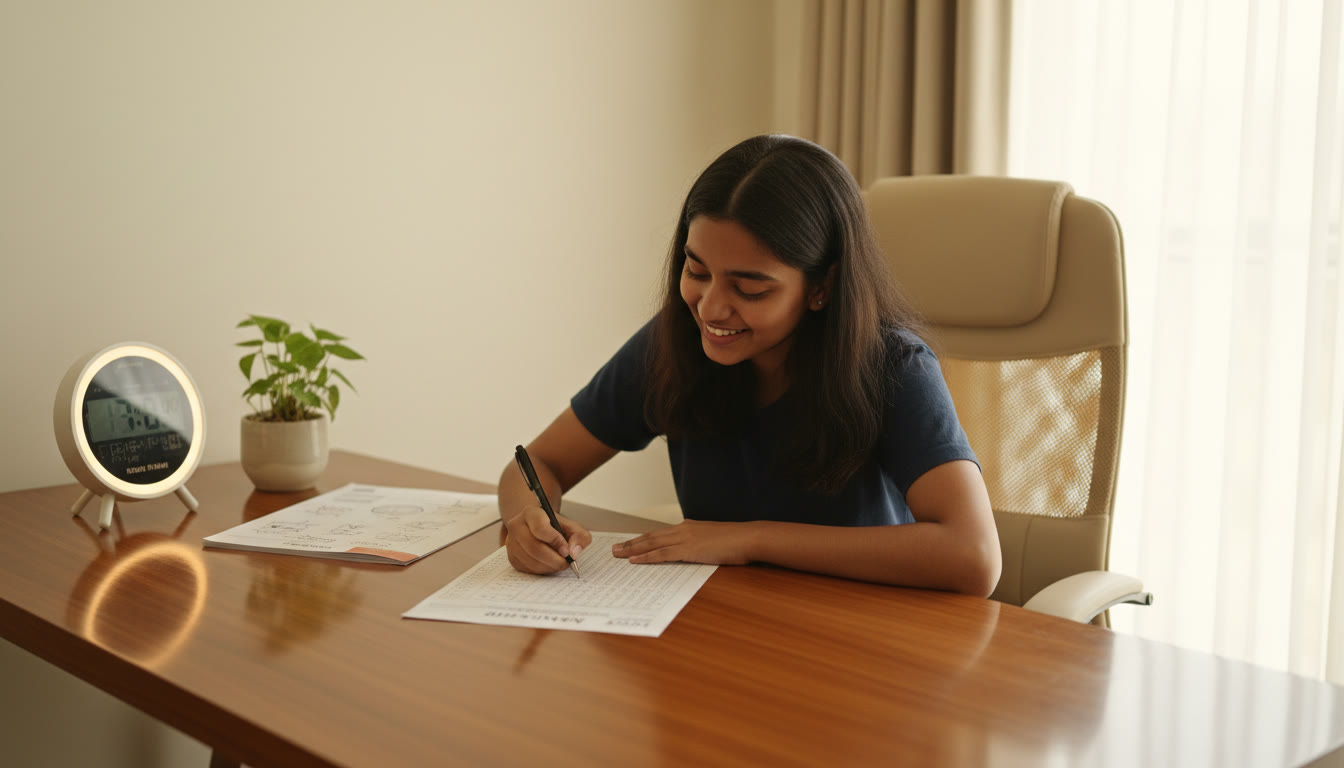

Crack JEE Main: A calm, practical roadmap to the 99 percentile
Hitting the 99 percentile in JEE Main is less about genius and more about design — a clear plan, ruthless clarity on weaknesses, steady practice under time pressure, and exam-smart habits. This article unpacks a realistic, step-by-step strategy you can follow in the current cycle: how to structure study phases, what to do in a mock-test session, how to prioritize concepts, and how to enter exam day with composure and OMR discipline.
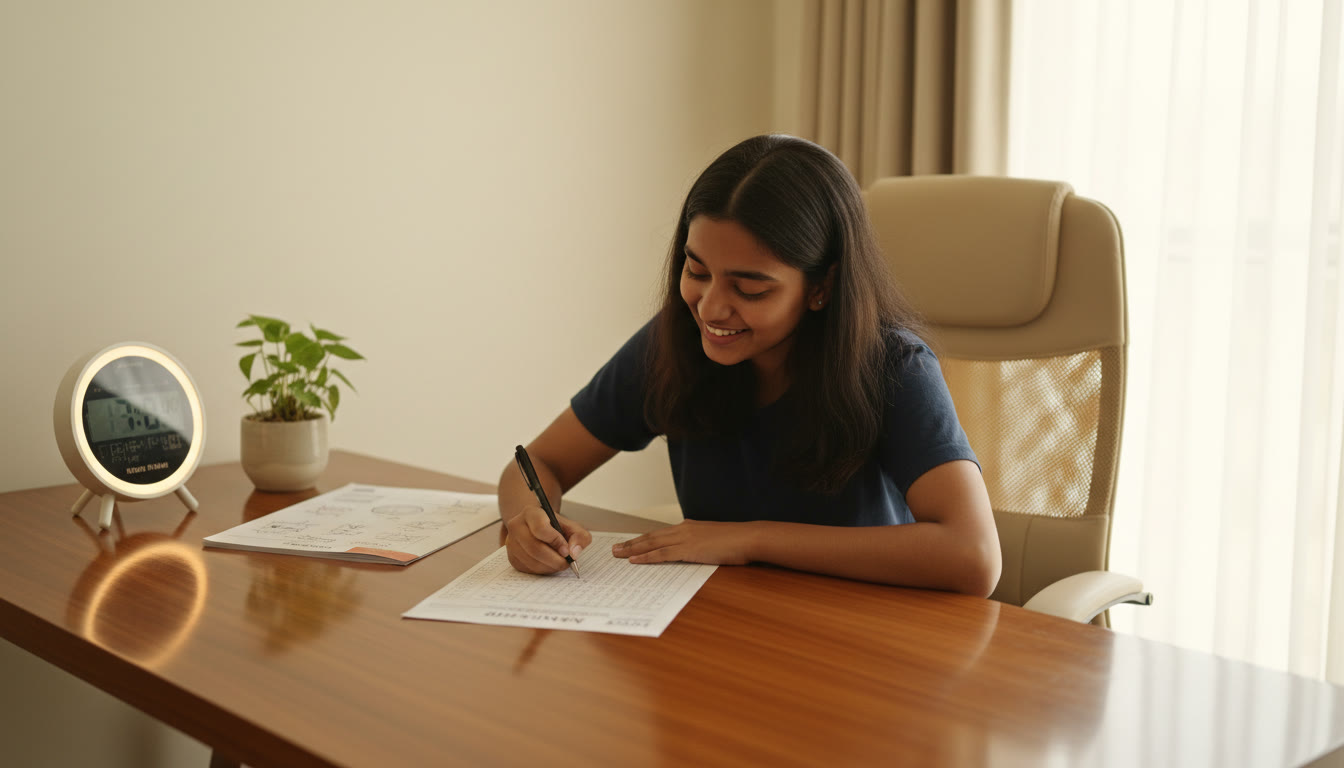
Think of the journey as four things in order: (1) build rock-solid concepts, (2) practice deliberately to convert concepts into fast procedures, (3) simulate the exam until timing and temperament are second nature, and (4) polish smartly. The rest of this post walks through each step with examples, sample schedules, and concrete micro-habits you can adopt today.
Understand the battlefield: exam format, rules and mindset
JEE Main is an objective, MCQ-based test taken under a time limit. The current-cycle exam is administered in fixed-length sessions where time management, accuracy, and steady nerves matter as much as raw knowledge. A few key, evergreen realities to internalize:
- The test is objective and time-bound: practice full-length, timed papers so your speed and accuracy match exam conditions.
- There is negative marking for incorrect attempts in most question types; guessing without strategy lowers average scores. Prioritize accuracy.
- OMR and answer-input discipline matters — marking answers cleanly and following instructions prevents easy losses on exam day.
- The syllabus centers on Physics, Chemistry and Mathematics; treat diagrams and derivations as learning tools, not a source of partial marks in the test itself.
Mindset: focus on processes, not miracles
Rather than chasing a mythical “secret trick,” focus on repeatable processes: how you revise a chapter, how you practice a typical problem, how you analyze each mock. The 99 percentile is often achieved by students who are consistent and reflective: they make the same errors fewer times and learn faster from every mock.
Phase-wise plan: Foundation → Consolidation → Mastery
Break preparation into three practical phases. Allocate time per phase depending on how far you are from the exam and your current level. The goal: in early phases build clarity, then convert clarity to speed, then convert speed to reliability under pressure.
Foundation (concept clarity)
What to do:
- Cover core theory for each chapter — read for understanding, not rote summarization.
- Solve representative problems that highlight the core techniques of a chapter (2–3 problem types per chapter initially).
- Create a concise notes page for each important concept and formula — aim for one page per chapter after first pass.
Why it works: a compact note forces you to decide what’s essential. When you later revise for speed, these pages become your fastest revision source.
Consolidation (procedure building and problem fluency)
What to do:
- Increase problem volume with mixed-level exercises; include medium and tough problems that force you to combine ideas.
- Begin timed mini-sessions (30–60 minutes) to practice speed on typical question sets.
- Maintain an error log: note mistake type, correct approach, and one-sentence reason you made the mistake.
Why it works: this phase converts understanding into repeatable techniques and builds an internal checklist for each problem type.
Mastery and polish (test simulation)
What to do:
- Shift to full-length, 3-hour mock tests under strict exam conditions; simulate the OMR / answer-input steps you will use on exam day.
- Analyze every mock with a checklist: accuracy, time per section, question selection strategy, and recurring errors from the log.
- Reduce new learning; focus on strengthening weak areas and fixing careless mistakes.
Why it works: repeated simulation aligns your speed and decision-making to actual exam pressure and builds test-day confidence.
| Phase | Weekly study hours (typical) | Primary focus | Example activities |
|---|---|---|---|
| Foundation | 20–30 | Core concepts, one-page notes | Chapter reading, simple problems, concise notes |
| Consolidation | 25–35 | Problem fluency, error log | Mixed problem sets, timed mini-sessions, weekly mini-mock |
| Mastery | 30–45 | Full-length mocks, polishing | 3-hour mocks, focused revisions, selective practice |
Subject-wise tactics: how to allocate effort smartly
Each subject demands a slightly different approach. The core idea is the same across subjects — understand, practice, simulate — but the technique mix varies.
Physics: understand principles, train application
Physics rewards clarity in a few physical principles and the habit of converting real situations into the right equations. A practical approach:
- Build physical intuition: for every new topic, ask “What is the simplest physical picture?” before doing algebra.
- Practice a tiered problem set: quick numerical checks → standard JEE-style problems → twist problems that combine topics.
- Work on dimensional checks and limiting cases: they are quick sanity checks in the exam under time pressure.
Example micro-habit: after solving a problem, summarize the strategy in two lines — this builds a quick-reference mental library for similar questions.
Chemistry: balance memory with understanding
Chemistry is three flavors: physical (problem-solving), organic (mechanism and pattern recognition), inorganic (facts and systematic revisions). Practical tips:
- Create reaction-cluster notes for organic chemistry — group reactions by their mechanistic family so recall becomes pattern-based, not rote.
- For inorganic chemistry, prefer repeated short review sessions over long cramming; spaced repetition works well for factual content.
- Use numerical practice for physical chemistry until typical calculations feel automatic and fast.
Mathematics: cultivate accuracy and exam-speed techniques
Mathematics requires a balance of precision and timing. Key tactics:
- Master standard techniques and shortcuts for each topic (e.g., substitutions in integrals, standard inequalities, series tests).
- Do timed sections focused on lengthier problems to practice endurance; then move to short-speed drills for quick wins.
- Learn to triage: spot which problems are worth spending 12–15 minutes on and which should be marked and returned to later.
Mock tests: how to practice them so they truly improve you
Mentioning mock tests is not a platitude — they are the single biggest lever if used thoughtfully. A mock without disciplined analysis is practice waste. Follow a repeatable mock-analysis ritual:
- Run the mock in strict, 3-hour conditions. Treat it as the real exam: same desk setup, same breaks, and the same OMR discipline habits you’ll use on test day.
- Immediately log raw numbers: attempted, correct, wrong, and time spent per section. Record your feelings during the test — where you got stuck or panicked.
- Post-mock, spend at least twice the test time on analysis. Break down mistakes into categories: conceptual, silly, time-management, or misreading the question.
- Update your error log and convert recurring errors into drills. If you lost marks to arithmetic or sign errors, do arithmetic accuracy drills for 30 minutes daily until it stops happening.
Where targeted support helps: personalized tutoring can speed up the analysis cycle by identifying high-impact weaknesses quickly. For example, working with Sparkl‘s personalized tutoring approach can shorten the feedback loop through one-on-one guidance and tailored study plans that focus on the weakest links in each mock.
How to analyze a mock: a simple, three-step template
- Quantify: record section-wise accuracy and time per question type.
- Categorize: tag each mistake (misread, conceptual, time-runout, careless arithmetic).
- Act: convert top three recurring mistakes into a focused weekly drill plan (for example, 90 minutes daily on a single weak chapter until improvement is visible).
Exam-day tactics and OMR discipline
Exam day is where small habits win big. OMR discipline and time allocation are non-negotiable:
- Answer entry: mark answers cleanly, follow the specified filling method, and double-check that you are on the correct question number before shading or entering responses.
- Time scan: spend the first 10–15 minutes scanning the paper and flagging easy questions you can secure quickly. Do not spend long on a single unfamiliar problem early on.
- Smart guessing: avoid random guesses. If you can eliminate one or two options and your probability calculus favors a guess, do it selectively; otherwise leave it and return only if time allows.
- Keep an eye on clock checkpoints (example checkpoints below are illustrative — adapt to your pacing): end of first hour: 30–35 questions attempted with high accuracy; end of second hour: 60–65; final 60 minutes: finish remaining high-value attempts and review flagged answers.
| Stage | Minutes | Action |
|---|---|---|
| Paper scan & secure easy questions | 10–15 | Flag and solve straightforward questions first |
| Focused solving | 120 | Work through moderate to hard questions; skip if time-sink |
| Final review & OMR check | 45–60 | Return to flagged Qs, re-check shading and calculations |
Time management and paper-approach heuristics
Some practical heuristics you can internalize:
- First-pass vs second-pass: First-pass — only attempt questions you can solve within 2–6 minutes. Second-pass — invest time in tougher ones with a clear plan and maximum 12–15 minutes per question before moving on.
- Question selection: prioritize questions with high accuracy probability. Avoid the sunk-cost trap — if 8 minutes have passed and progress is limited, move on and use the final review to revisit.
- Use the error log as your compass — if a particular question type repeatedly costs you marks, include a targeted drill in the next 48 hours.
Mental stamina, health and small routines that matter
Consistency is an output of the body and mind being in tune. Tiny routines compound:
- Sleep: prioritize 7–8 hours in heavy practice blocks; cognition and memory consolidate during sleep.
- Micro-breaks: use the Pomodoro idea — 50 minutes study, 10 minutes break — to avoid burnout and keep intensity high across long days.
- Nutrition and movement: short daily walks and protein-rich meals keep concentration stable during long mock sessions.
Common mistakes top performers avoid
- Not analyzing mocks: treating mocks as trophy runs rather than diagnostic tools.
- Over-chasing new content: repeatedly learning new chapters instead of fixing recurring mistakes.
- Poor OMR practice: not simulating the exact answer-entry method leads to avoidable errors on the day itself.
- Neglecting small but high-impact areas: basics like algebraic manipulations and unit checking.
How personalized coaching shortens the path (practical benefits)
Personalized guidance speeds up improvement by focusing on the smallest high-impact gaps. For many students, one-on-one feedback that points to the single most important weakness after each mock is far more effective than generic advice. Tailored plans — for instance, an individualized weekly practice mix and tutor-led mock analysis — reduce guesswork and accelerate progress. If you use such services, make them specific: request drills that map to your error-log categories and insist on measurable targets (accuracy by topic, time per question type).
For example, Sparkl‘s approach to personalized tutoring blends one-on-one mentorship, targeted study plans, and data-driven insights to highlight the highest-leverage improvements after each mock.
Putting it together: sample 12-week sprint (high-level)
Here’s a compact template you can adapt based on your starting level. The idea is progressive specificity — broad coverage first, then focused correction.
- Weeks 1–4 (Foundation): Complete core theory for weak-to-moderate chapters, create one-page notes, start a daily error log.
- Weeks 5–8 (Consolidation): Increase problem volume, introduce weekly timed mini-mocks, begin 3-hour mock every 10 days.
- Weeks 9–12 (Mastery): Full-length mocks twice a week, daily focused drills on recurring mistakes, OMR and exam-day simulation, sleep and nutrition discipline.
Final checklist: avoid last-minute blindspots
- Practice final full-length mock with exact exam logistics (entry method, permitted materials, breaks).
- Polish one-page revision notes for highest-frequency chapters and formulas.
- Lock in a simple attempt strategy you can execute under pressure — don’t “experiment” with untested plans the night before.
- Ensure stationery and required ID are ready a day before and that you have a calm route to the center.
Conclusion
Reaching the 99 percentile in JEE Main is a disciplined combination of concept clarity, deliberate practice, mock-test simulation, and tight exam-day execution. Build a phased plan, make mock-analysis non-negotiable, keep an up-to-date error log, and cultivate exam habits — especially OMR discipline and selective attempting. Small, consistent improvements compound quickly when you focus on the highest-impact errors and practice under real-time pressure until speed and accuracy become automatic.

























No Comments
Leave a comment Cancel