

Mastering Time on CBSE Sample Papers: A Calm, Practical Strategy
Walking into a sample-paper session for a CBSE exam can feel like stepping into a high-stakes rehearsal: you want the performance to be smooth, the timing precise, and the result reflective of real learning. Time management isn’t about rushing or skipping content — it’s about creating a reliable rhythm that turns knowledge into marks. This guide breaks the process down into human-sized steps you can practice and perfect: how to read the paper, how to divide minutes across sections, what to do when you get stuck, and how to use mock tests so your exam-day timing becomes second nature.
Understand the Paper Before the Clock Starts
The first skill to practice is the quick, disciplined scan of the question paper. Before you start writing, make a plan: check total duration, total marks, section names, and any internal choice or compulsory instructions. Many students skip this because they’re eager to begin — but those extra minutes give you a map of where to invest your effort.
Quick scan: what to look for in 3–5 minutes
- Total duration and reading time (if provided) — use it.
- Total marks and section breakdown; note which questions carry higher marks or internal choices.
- Number of questions and any ‘value per question’ clues (e.g., one-mark MCQs vs five-mark long answers).
- Special instructions about diagrams, units, or the required format of answers.
- Any word limits, compulsory short answers, or passages that require extra reading time.

That short scan helps you estimate time-per-mark and highlights where to spend most minutes. Remember: don’t assume partial marking for long descriptive answers — answer clearly, follow the rubric, and write the required steps or points. If a question explicitly asks for a diagram, a derivation, or a labeled answer, include it; treat diagrams and derivations as clarity tools, not decorative extras.
Make Practice Count: Drills That Build Timing Muscle
Practicing under identical conditions is the single most effective way to improve your timing. Full-length mock tests are not optional practice; they are the laboratory where you test and refine pacing, stamina, and strategy. But the way you practice matters: timed is different from rushed.
How to run a mock so it actually improves your timing
- Recreate the exam environment: same duration, same materials, no phone distractions.
- Start with a strict reading window (10–15 minutes if that matches the paper). Use the first few minutes to map out a plan.
- Time every section and every major question group; record how long each type of question takes you.
- Mark strictly using the sample-paper marking scheme — don’t be generous. That accuracy makes your self-feedback meaningful.
- After marking, write a brief reflection: which questions took too long? Where did you lose marks despite time spent?
For tailored correction and targeted drills — for example, if you habitually lose time on multi-step calculations or long-answer structure — personalized guidance can accelerate improvement. Consider short, focused sessions for weak spots: 1-on-1 feedback helps convert a weak technique into a dependable routine. If you want structured support, Sparkl‘s tutors offer one-on-one guidance, targeted study plans, and AI-driven insights that point to exactly where to focus your timed practice. Those small, guided interventions often repay themselves in faster, more accurate answers during the actual paper.
Allocate Minutes Intentionally: A Practical Template
Every paper is different, but having a flexible time-allocation template gives you a starting point. A useful way to think is: reading and planning first, then three passes through the paper (easy, medium, hard), with a final revision buffer. Below is an example allocation for a standard full-length paper where a short reading window is available. Always check the header of the paper for the official duration and include that in your planning.
| Stage | Marks (example) | Suggested Time | Time per Mark (approx.) | Focus |
|---|---|---|---|---|
| Initial reading & planning | — | 10–15 minutes | — | Map the paper; earmark quick wins and high-mark questions |
| First pass (easy questions, MCQs, one-liners) | ~20 marks | 30–35 minutes | ~1.5–2 min/mark | Secure high accuracy quickly |
| Second pass (short-answer, moderate difficulty) | ~40 marks | 60–70 minutes | ~1.5–1.75 min/mark | Careful steps; neat layout; watch units and definitions |
| Third pass (long answers, problems requiring working) | ~40 marks | 60–70 minutes | ~1.5–2 min/mark (varies by subject) | Plan answers, use headings, check diagrams and logic |
| Final revision buffer | — | 10–15 minutes | — | Fix errors, complete partial answers, tidy presentation |
This template is a live suggestion — adapt it by subject. Numerical or derivation-heavy papers require slightly more time per mark; language papers that ask for long-form writing require a larger chunk for planning and expression. Keep at least 8–12% of total time as a revision buffer; even small corrections can recover marks.
Two-Pass Technique: The Core Classroom Strategy
One of the most dependable methods is a disciplined two- or three-pass approach:
- Pass 1 — Quick wins: Answer all questions you know immediately, including straightforward MCQs, definitions, or short direct answers. This builds momentum and secures marks fast.
- Pass 2 — Main bulk: Tackle questions requiring steps, calculations, or paragraphs. Work methodically and keep an eye on time per mark as per your plan.
- Pass 3 — Stretch & review: Attempt the toughest or optional parts now. Use the revision buffer to finalize answers, label diagrams, and correct sloppy arithmetic.
If you get stuck on a problem during Pass 2, mark it and move on. Long delays on a single question cost more marks than trying a rough, partially correct answer — but do not write random content. If partial credit is possible, write at least the correct formula, the main steps, and the final answer where possible; this is where clear layout and labeled steps help examiners award marks.
Subject-Specific Tweaks: Small Changes, Big Gains
Every subject calls for subtle adjustments to the time template. Here are practical tweaks you can practice to make your minutes better spent.
Mathematics and numerical sciences
- Write down formulas and key constants once per question to avoid re-deriving them later.
- Keep rough work organized in a corner or on separate rough sheet — clearly label final answers to save look-up time for evaluators.
- Allocate a bit more time per mark for multi-step derivations; practice completing similar problems within the suggested time in mocks.
Languages and social sciences
- Spend 2–3 minutes planning answers for long-response questions: jot down 3–4 main points before you write the paragraph.
- Use bullet points where permitted; clarity and relevance often matter more than flowery language.
- For essays, split time into planning, writing, and revising — and keep the conclusion concise and on-topic.
Science papers (theory + practical wording)
- For derivations, write steps cleanly and box final results. Diagrams should be quick but correctly labeled.
- If an answer requires an experimental description or observation, structure it: aim, method, observation, conclusion — this saves time and earns clear marks.
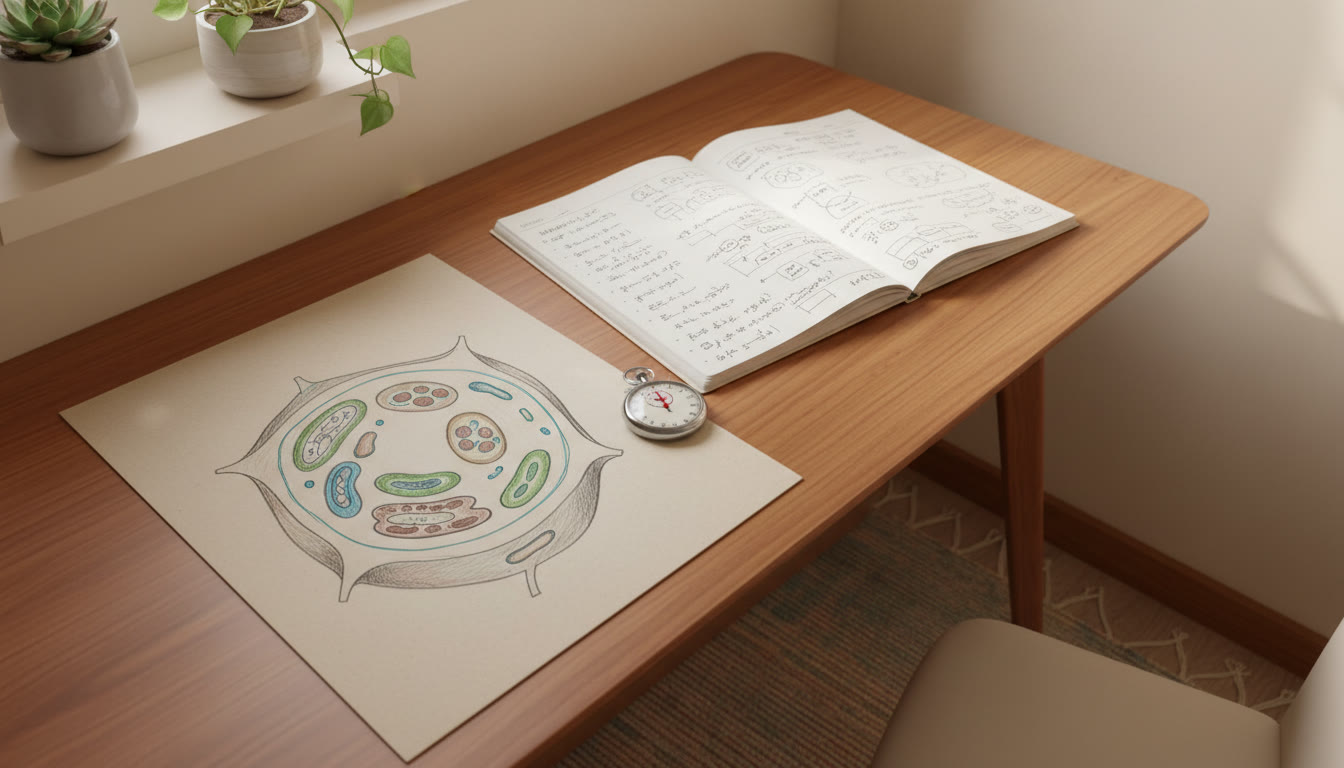
Practicing subject-specific drills during mocks will reveal which steps you habitually rush or over-elaborate. Use that insight to refine minute-allocation on the next mock.
Micro-Techniques That Save Minutes
Beyond big-picture allocation, adopt small habits that chip away at wasted time.
- Underline key terms in the question while scanning so you don’t misread what’s being asked.
- Number your workings clearly and write the final answer on a new line with a box around it — that saves time when checking and looks professional.
- If there’s an internal choice, quickly decide which option you’ll take; don’t oscillate between two choices mid-paper.
- Use abbreviations consistently (e.g., ‘Ans:’, ‘Given:’, ‘Req:’) to make your progression obvious and faster to scan later.
- Keep a small time-check habit: glance at the clock at regular intervals (e.g., every 20–30 minutes) to stay on track.
Exam-Day Readiness: Logistics and Mental Stamina
Good time management starts the night before and continues through basic exam-day logistics. Pack stationery you trust, carry spare pens and pencils, and bring a clear, legible watch. Sleep, hydration, and a light nutritious meal support thinking speed and error reduction. On the day, avoid last-minute cramming; a short, calm review is more time-effective than trying to learn new material.
During the paper, control adrenaline by using controlled breathing if you feel rushed — a 20-second pause clears the head and often saves time you would otherwise lose to panicked re-reading. If your handwriting slows you down, practice writing at speed during mocks while maintaining legibility. In many cases the clarity of an answer matters more than length.
Post-Test Review: Where the Real Improvement Happens
Every mock should end with a clear follow-up: correct the paper, record the time you actually spent on each question type, and note recurring errors. Over time, you’ll see patterns: maybe long-answer planning needs more minutes, or you lose time on calculations that could be reduced by memorizing standard steps. Update your time-allocation template and practice the new routine on the next mock.
Small iterative changes — shaving off 30–60 seconds from routine tasks, improving diagram speed, tightening phrasing — compound into significant time gains by the time you tackle the real exam.
Using Personalized Support Without Losing Your Agency
Structured, individual feedback speeds up improvement because it targets the exact places where you lose minutes. For example, a short cycle of personalized sessions that focus on problem areas (formatting long answers, faster numerical techniques, or diagram efficiency) can make your practice time much more effective. If you choose to work with guided tutors, look for targeted sessions that give clear, timed drills and measurable improvements. One option is to combine self-practice with occasional, focused mentoring — for instance, a tutor could review your last three mocks to suggest precise timing adjustments and provide quick drills that address specific weak spots. Sparkl‘s approach blends one-on-one guidance, tailored study plans, and AI-driven insights to help turn mock-test data into better time management. When you use guided help, remember to keep practicing independently so the timing becomes yours, not just someone else’s plan.
Final Checklist: A Minute-by-Minute Mental Map
- Before writing: spend the permitted reading minutes to map the paper.
- Pass 1: collect easy marks quickly (don’t overthink MCQs).
- Pass 2: handle medium questions with clear steps and neat diagrams.
- Pass 3: attempt hard questions; write partial work if full solution is tough.
- Revision: use the last 10–15 minutes to correct careless errors and ensure all required parts are answered.
Consistent performance comes from a calm routine practiced under realistic constraints. Treat each sample paper as a measurement instrument: it shows not only what you know, but how efficiently you can show it. Time management is a skill you can train — not a personality trait you’re stuck with.
When you practice patiently and review honestly, minutes stop being a threat and become a resource you control. That control is the difference between hurried answers and confident, score-worthy responses.
With steady practice, strategic planning, and periodic targeted feedback, your approach to sample papers will become precise, calm, and repeatable. This will reduce mistakes, improve accuracy, and help you present your knowledge in the clearest, most exam-friendly way possible.
End of article: conclude practice and timing as an academic skill to be practiced and refined.





















No Comments
Leave a comment Cancel