

How to Build Grit and Stamina for the SAT
Preparing for the SAT is a marathon, not a sprint. You can ace individual questions with sharp reasoning and recall, but true success comes when you sustain focus and energy across multiple sections and a full three-hour exam. That sustained effort depends less on innate genius and more on grit and stamina — the mental muscle that keeps you working through fatigue, setbacks, and boredom.
Why grit matters more than natural talent
Grit is the stubborn, steady pursuit of long-term goals. It doesn’t mean being rigid or ignoring wellbeing; it means practicing consistently, learning from mistakes, and building tolerance for discomfort. For the SAT, grit translates to hours of deliberate practice, repeated full-length tests, and the willingness to revisit weak topics until they stop being weak.
Stamina is the practical side of grit. It’s your ability to maintain attention, energy, and effective strategy from Section 1 to the very last math question. Without stamina, your early performance may not carry through; with it, you can perform reliably when it matters most.
Real students, real stakes
Think about a student who studies intensely for two weeks, crams vocabulary and formulas, and then collapses during a full-length practice test. Contrast that with a student who builds up weekly endurance runs of practice, slices weak areas into manageable chunks, and uses feedback to improve. The second student may not be flashier in week one, but by test day they are steadier, calmer, and more likely to convert knowledge into score.
Mindset shifts that build grit
1. Replace ‘I’m not good at this’ with ‘I’m getting better’
Growth mindset matters. The brain is trainable. When you reframe setbacks as useful data instead of final verdicts, you create the mental space to iterate. That’s grit in action: small, repeated corrections that compound.
2. Embrace discomfort strategically
Practice that increases stamina will feel uncomfortable. Long practice tests, intense focus blocks, targeted drills — they’re designed to be challenging. Labeling discomfort as progress helps: it’s the signal that your mental muscles are growing.
3. Focus on systems, not just results
Instead of fixating on a target score alone, create systems: a study schedule, a pattern of timed practice, consistent review, checkpoints. Systems keep you grinding even when motivation dips.
Practical habits to develop grit and stamina
Daily micro-habits (20–45 minutes)
- Short focused sessions on weak topics — 25 to 40 minutes of concentrated practice followed by a 5–10 minute break.
- Active review of mistakes: spend 10 minutes correcting and writing a one-sentence lesson for each missed question.
- Minute-of-focus drills: set a timer and read dense passages, summarizing main ideas aloud.
Weekly structure
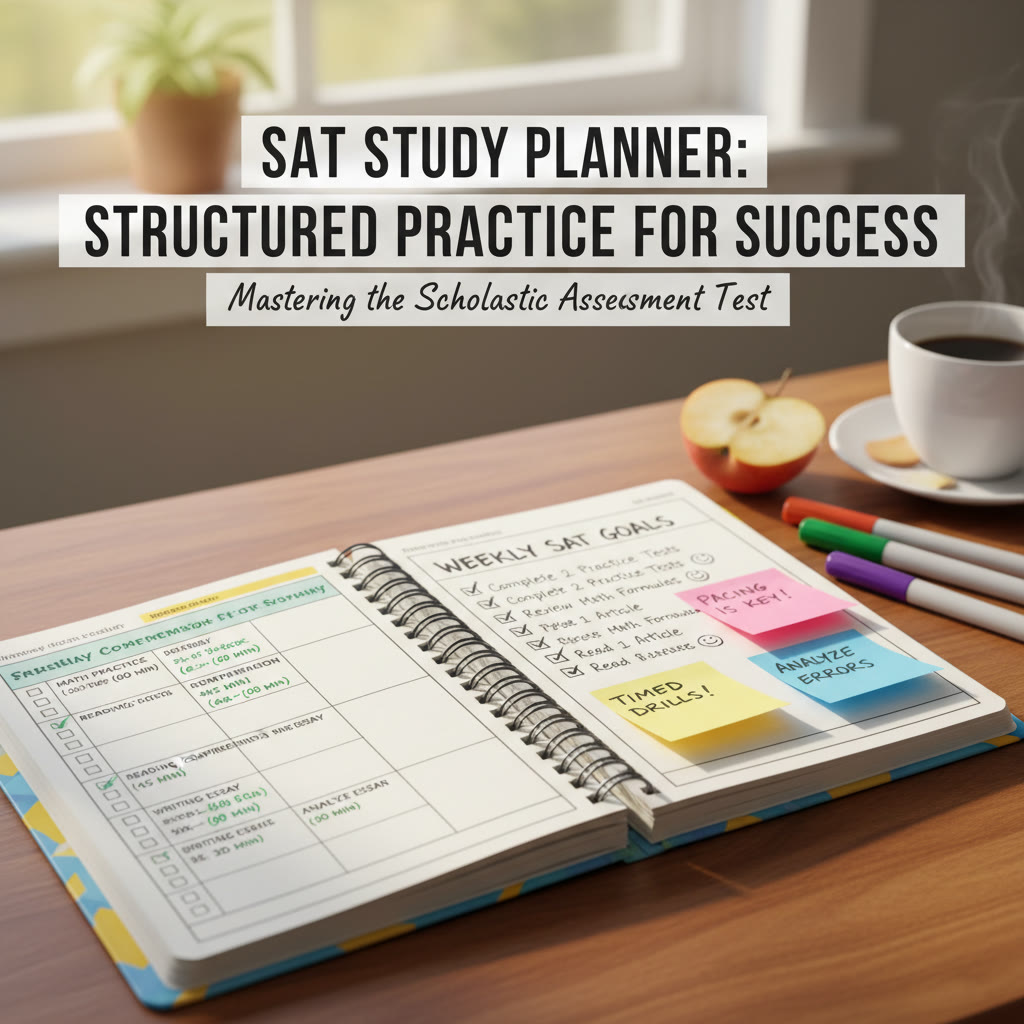
Consistency builds stamina. A weekly routine that mixes targeted practice with longer endurance sessions is ideal.
- 2–3 short focused days (30–60 minutes)
- 1 medium practice day (90–120 minutes, mixed sections)
- 1 full-length test day every 1–2 weeks
- Active review days to consolidate learnings
Longer-term practices
- Gradually increase the length of uninterrupted study by 10–20% every two weeks.
- Rotate content to avoid burnout: alternate math, reading, and writing practice in your schedule.
- Integrate deliberate rest: full rest days and short mental breaks help memory consolidation.
Designing practice sessions that build stamina
The structure of a stamina-building session
A single session aimed at both skill and stamina might look like this:
- Warm-up (10 minutes): light review or a few untimed practice problems to get your brain started.
- Primary block (40–60 minutes): focused, timed practice on a target area (e.g., algebra or long passage reading).
- Mid-session break (10 minutes): stand up, hydrate, do a brief physical activity.
- Secondary block (40–60 minutes): a different section to build switching stamina, e.g., move from math to reading.
- Reflection (10–15 minutes): grade, correct, and note the top 2–3 lessons to carry forward.
Why mixed blocks help
Switching from math to reading and back mirrors the test’s demands. Your brain learns not just the content but how to reset quickly, adapt strategies, and hold attention across different cognitive tasks. That adaptability is a key part of stamina.
Full-length practice: the backbone of stamina
Short practices build skill; full-length tests build the ability to apply skills under fatigue. Aim to take a full-length, timed SAT every one to two weeks. Early on, treat these tests as diagnostics; later, treat them as rehearsals.
How to practice full tests effectively
- Simulate test conditions: strict timing, minimal interruptions, real breaks at the scheduled points.
- Practice timing strategies: know how long to spend per passage, when to skip a question, how to return.
- Post-test review is crucial: spend at least as much time reviewing as you did taking the test.
Table: Short practice vs full-length practice
| Practice Type | Primary Benefit | Recommended Frequency |
|---|---|---|
| Short focused session (20–60 min) | Skill building, targeted correction, focus training | 3–5 times per week |
| Medium session (90–120 min) | Endurance for multiple sections, strategy testing | 1 time per week |
| Full-length timed test (3–4 hours) | Test-day simulation, fatigue management, pacing | Every 1–2 weeks |
Practical tactics to maintain energy and focus
Nutrition and hydration
What you eat before and during a long study block affects stamina. Aim for balanced meals with protein, complex carbs, and healthy fats. During long practice, small snacks like nuts, fruit, or yogurt help maintain glucose levels without causing a crash. Hydration matters—drink water steadily rather than gulping at the end.
Sleep and recovery
Consistency beats all-nighters. A regular sleep schedule with 7–9 hours nightly is one of the most powerful ways to boost mental stamina. Sleep helps consolidate memory and restores attention.
Micro-movements and posture
Short physical resets — 60 seconds of stretching, a quick walk, or simply standing up — refresh blood flow and attention. Good posture supports breathing and concentration during long test-style sessions.
Tracking progress without obsession
Use metrics that matter
Don’t just track raw scores. Track patterns: timing consistency, types of mistakes, percentage of questions corrected after review, and how your fatigue impacts the last 10 questions of each section.
Checkpoint routine
- Every two weeks, review the last three full-length tests to see change in pacing and error types.
- Monthly, adjust the study plan: if stamina dips, increase endurance sessions but reduce total weekly hours to prevent burnout.
- Celebrate small wins like improved section pacing or reducing careless errors.
Sample 8-week plan to build SAT stamina
This plan assumes a baseline of 6–10 hours of weekly study and gradually shifts toward endurance. Adjust durations for your schedule.
| Week | Focus | Key Activities |
|---|---|---|
| 1–2 | Baseline & diagnostics | Take one diagnostic full test; 3 short focused sessions; identify top weaknesses |
| 3–4 | Skill blocks + medium endurance | 1 full-length test biweekly; 1 medium session; daily 30-min drills on weaknesses |
| 5–6 | Increase endurance | Full-length test every week; simulate test schedule; add two 90-min mixed sections |
| 7–8 | Sharpen & taper | Maintain weekly full test, reduce volume slightly; focus on pacing and mental routines |
How to respond to setbacks without losing momentum
Quick recovery script
If a practice test goes poorly, use a short three-step recovery:
- Breathe and step away for 20 minutes to avoid reactive self-talk.
- Log the facts: which sections, how timing behaved, and three recurring errors.
- Create one actionable target for the next week that addresses the most damaging issue.
Why small course corrections work
Large overhauls kill momentum. Small, targeted changes are easier to commit to and compound quickly. They keep grit sustainable, not drudgery-inducing.
Strategies for test day to preserve stamina
Morning routine
- Eat a balanced breakfast: protein plus complex carbs.
- Do a brief mental warm-up: one untimed reading passage and two mental math problems.
- Arrive early to the test center to avoid last-minute stress.
Pacing tactics during the test
- Use the first minute of each section to scan and set a plan — which passages to tackle first, where to allocate time.
- Don’t get stuck: mark and move, then return if time permits.
- During scheduled breaks, don’t cram. Hydrate, eat a small snack, and practice a two-minute relaxation exercise to reset attention.
How Sparkl’s personalized tutoring can help build grit and stamina
Building grit and stamina is personal — different students fatigue in different ways, and weaknesses show up in unique patterns. That’s where personalized tutoring is powerful. Sparkl’s personalized tutoring offers 1-on-1 guidance, tailored study plans, expert tutors, and AI-driven insights that pinpoint not only what you get wrong, but why you get it wrong under fatigue. Tutors can model pacing strategies, set realistic incremental goals, and design practice that gradually increases length and complexity without causing burnout.
With an expert tutor, you get immediate feedback that accelerates learning and keeps grit productive instead of exhausting. AI-driven insights can identify patterns across practice tests — for example, a consistent dip in accuracy during the last ten questions — and suggest targeted interventions like pacing rules or specific endurance drills.
Examples: small routines that produce big results
Example A: The 25/5 build-up
Start with four 25-minute focused blocks on a single skill with 5-minute breaks. Every two weeks, add 5–10 minutes to each block until you can sustain two 50-minute blocks with a single 10-minute break between them. Combine this with a weekly full-length test to see how your focus holds up under longer demands.
Example B: The last-10 focus
Many students lose points in the last 10 questions of a section. Practice by taking the full section under timed conditions, then immediately redoing just the final 10 questions untimed. Analyze whether errors are conceptual, careless, or timing-related. Create a micro-drill to address that specific cause.
Common mistakes and how to avoid them
- Doing only untimed practice: adds skill but not stamina. Mix timed and untimed work.
- Relying only on content review: strategy and pacing training are equally important.
- Skipping review: taking tests without careful analysis wastes effort. Spend at least as much time reviewing as testing.
- Overtraining: too many long sessions without recovery causes burnout. Build rest into the plan.
Final checklist before test day
- Complete at least two full-length, test-pace simulations under conditions similar to your test day.
- Have a clear timing plan for each section and a fallback rule for when you get stuck.
- Pack low-sugar snacks, water, and comfortable clothes for the test day.
- Practice one relaxation routine to use during breaks: deep breathing, progressive muscle relaxation, or a short walk.
Parting thoughts: grit is practiced, not wished for
Developing grit and stamina for the SAT isn’t glamorous. It’s the accumulation of small, intentional habits — consistent practice, smart review, physical care, and well-timed rest. The most effective students I’ve seen treat practice as rehearsal, not judgment. They build systems that protect mental energy and gradually expand the length and intensity of their study in sustainable steps.
If you want an extra boost, consider personalized support. Sparkl’s personalized tutoring blends human expertise with AI-driven insights to design practice plans that respect your life and progressively build your stamina. A tutor can keep you accountable, tune your pacing strategy, and help you convert fatigue into focused performance.
Start simple: pick one micro-habit from this guide, commit to it for two weeks, and watch how steady repetition grows into real endurance. In the end, the SAT rewards those who can think clearly under pressure — and grit is what gets you there.























No Comments
Leave a comment Cancel