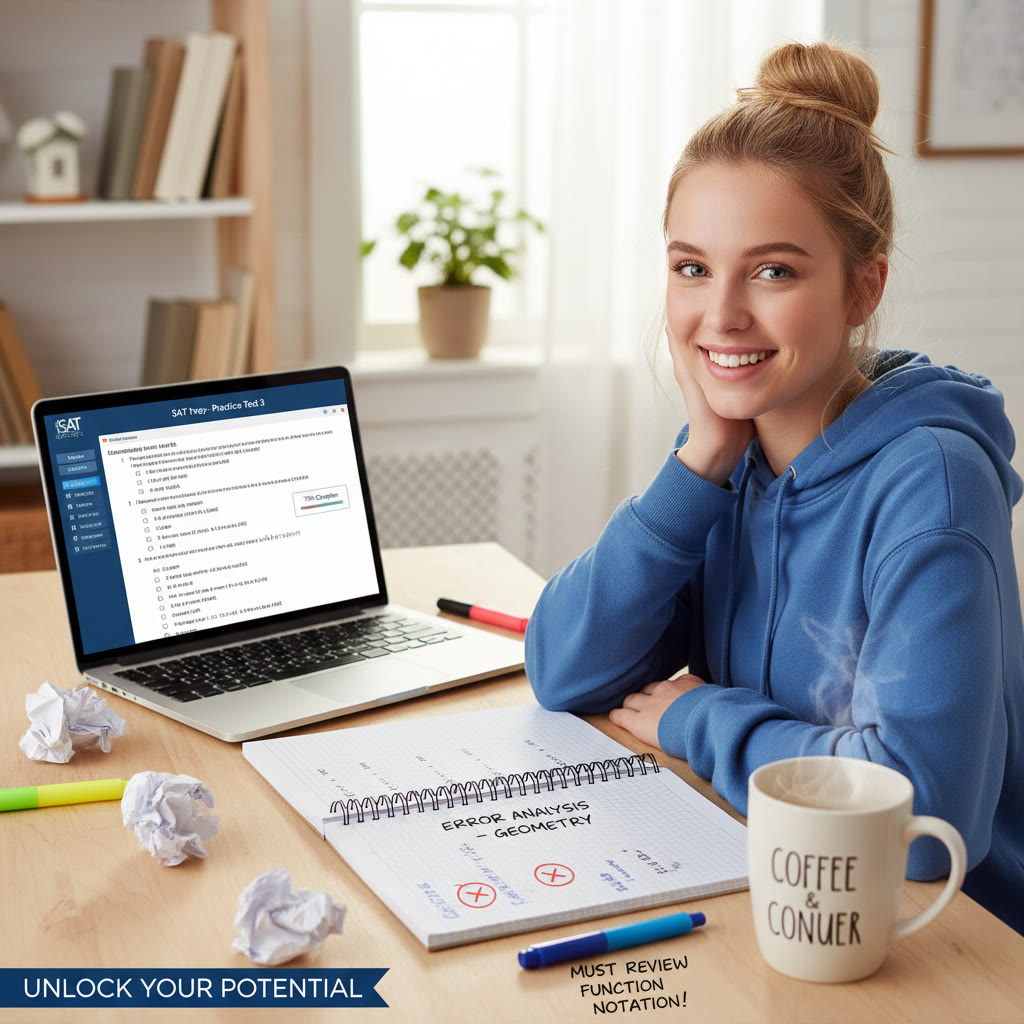

How to Combine SAT Prep With Online Practice Platforms: A Smart, Sustainable Plan
Studying for the SAT can feel like juggling: full-length tests on one hand, targeted drills on the other, and a calendar that seems to shrink every week. But what if you could turn those platforms you already use into a coherent, stress-reducing system — one that helps you learn faster and retain more? This post is a friendly, practical guide to doing exactly that. We’ll break down a sensible approach to blending traditional study routines with the flexibility and analytics of online practice platforms, and show how a little personalization — whether from an app or a human tutor — makes a big difference.
Why blending structured prep with online practice works better
Think of SAT preparation like training for a sport. You need technique drills (grammar rules, math formulas), game simulations (full-length tests), and feedback so you know what to fix. Online platforms excel at immediate feedback, adaptive question selection, and performance tracking. Traditional study methods — books, guided lessons, and one-on-one tutoring — excel at deeper explanation, motivation, and strategy coaching.
By combining both, you get the speed and data from platforms with the nuanced guidance that comes from a tutor or a disciplined study plan. The result: smarter practice, less wasted time, and measurable progress.
Two key principles to keep in mind
- Deliberate practice trumps time spent: Fifty minutes of targeted, feedback-driven practice are worth more than three hours of aimless questions.
- Data-guided study beats guesswork: Use platform analytics to find patterns in your mistakes and design your study cycles around those weak spots.
How to set up a combined SAT study ecosystem
Start by creating a central hub: a weekly schedule that blends timed practice, lesson time, review, and mental rest. You’ll want one place to track what you did, why you did it, and what you learned. A simple spreadsheet, a study journal, or the planner inside an online platform works fine.
Essential components of the ecosystem
- Baseline diagnostic: Take a realistic full-length practice test under timed conditions. This gives you a starting score and highlights major areas for improvement.
- Weekly structure: Block time for focused content study (concepts and strategies), guided practice (platform drills), simulated testing (full sections or full tests), and review.
- Feedback loop: Use platform analytics and personal notes to create a weekly “fix list” — concepts to relearn, question types to practice, timing strategies to adjust.
- Human touch: Work with a tutor or mentor occasionally (weekly or biweekly) to interpret analytics, get clarifications, and receive motivational accountability.
Weekly plan blueprint: mixing learning modes
Below is a flexible four-week sample cycle you can repeat and adapt. It assumes you’re studying about 8–12 hours per week. If you have more or less time, scale the sessions proportionally.
| Day | Main Focus | Platform Tasks | Offline Tasks |
|---|---|---|---|
| Monday | Concept deep dive (Math or Writing) | Targeted question set (adaptive), review answer explanations | Textbook examples, note-taking, formula sheet updates |
| Tuesday | Timed section practice | One timed section on platform, analytics review | Write short error analysis, practice pacing technique |
| Wednesday | Reading comprehension strategies | Passage-based drills, vocabulary-in-context exercises | Active reading and annotation practice on paper |
| Thursday | Review and mixed practice | Mixed question set, revisit earlier mistakes | Flashcards, rework difficult problems step-by-step |
| Friday | Essay / Writing practice | Sample essays, grammar modules | Peer review or tutor feedback session |
| Saturday | Full-length practice test | Take proctored or platform-simulated full test | Detailed score analysis and plan for week |
| Sunday | Active rest and light review | Short, untimed practice for confidence | Mindfulness, sleep schedule reset, light reading |
Why a weekly cycle like this works
It mixes intensity and recovery. Full tests give you stamina and identify timing issues; short, targeted platform drills rewire weak areas; offline review ensures conceptual understanding rather than blind guessing. Practicing this rhythm builds both skill and confidence.
How to use platform features effectively
Platforms come with many bells and whistles: adaptive question engines, item-level analytics, timing trackers, and sometimes AI-driven hints. Use them, but wisely.
Key features to prioritize
- Adaptive practice: Let the platform bring up slightly harder questions as you improve. This keeps you in the growth zone without encouraging guessing.
- Item analysis: Don’t just look at which questions you missed — analyze why. Was it a content gap, careless error, or a timing decision?
- Timing breakdowns: Use per-section time data to decide where to shave seconds — or when to stop overthinking a question.
- Custom problem sets: Build targeted sets focusing on your top three recurring mistakes.
Example workflow for a missed-question
- Record the question and why you missed it (content, strategy, careless error).
- Re-solve it from scratch without looking at the explanation.
- Compare your solution to the official explanation and note the key difference.
- Create a mini-drill of 5 similar problems to reinforce the correct approach.
Balancing speed and accuracy
Speed comes from knowing the right approach before you see the problem; accuracy comes from careful checking. Online platforms often encourage speed with timed drills. While speed is important, rushing leads to avoidable mistakes. Treat timing drills as training, not as the only measure of success.
Tactical approach to pacing
- Set micro-time goals per question (e.g., 1.5 minutes per Reading question), then practice to that target.
- During practice tests, keep an eye on time after every 10 questions. If you’re falling behind, identify whether you’re stuck or just slow and adjust.
- Learn a quick triage method: easy-now, skip-and-flag, or spend-time — and be disciplined about it.
Using analytics to find your real weaknesses
It’s tempting to chase headline categories like “algebra” or “command of evidence.” Analytics lets you be more precise: which algebra sub-skills? Which question wording confuses you? Build a “mistake taxonomy” for a deeper diagnosis.
Sample mistake taxonomy
- Content gap: don’t understand the concept (e.g., systems of equations)
- Procedural error: know the concept but make calculation mistakes
- Interpretation error: misread question or passage
- Strategy error: wrong approach to the problem type
- Timing/careless error: work is right, but rushed or mis-copied
Tag each missed question with one of these labels. Over several full tests, patterns emerge. That pattern is the highest-ROI target for your next two weeks of practice.
How human tutoring fits into the loop
Data and drills are powerful, but sometimes you need someone to help translate analytics into action. That’s where personalized tutoring shines. A good tutor sees the pattern in your mistakes, teaches a better way to think, and helps keep you accountable.
For instance, Sparkl’s personalized tutoring provides 1-on-1 guidance, tailored study plans, expert tutors, and even AI-driven insights that mesh well with what platforms report. When a tutor reviews your platform analytics with you, they can explain subtle misconceptions, model strategies, and create custom drills that address the precise types of errors the platform’s data identifies. The combination — human interpretation plus machine data — is particularly effective for steady, reliable score gains.
When to bring in a tutor
- If your score plateau lasts two full diagnostic tests
- If you consistently make the same type of mistake despite practice
- If you struggle with motivation or time management
- If you want an accelerated plan in a short time frame
Drills and exercises you can do online (and offline) right away
Below are practical drills you can implement now. Each one pairs a platform-based activity with an offline reinforcement so the learning sticks.
1. Mini-timed sets (Reading + Writing)
- Online: Do a 15-question timed block that focuses on evidence-based reading or grammar.
- Offline: Summarize each passage in one sentence and write the grammatical rule you applied for each question.
2. Error bank method (Math)
- Online: Save all wrong math questions in a platform “error bank.”
- Offline: For each, rework the problem without tools and write a 2–3 line diagnosis of the mistake.
3. Timing rehearsal
- Online: Use the platform’s pacing tool to see where you slow down.
- Offline: Do back-of-envelope timing — how long should an average question take? Practice hitting that rhythm in untimed practice until your brain adapts.
Real-world example: Anna’s three-month turnaround
Anna started three months before the test with a 1110 diagnostic. She used an online platform to take practice sections three times a week and logged every mistake. After the first month, platform analytics showed most of her errors were interpretation errors in reading and basic algebra slips in math.
She began weekly tutoring sessions focused on reading strategies and error analysis. Her tutor used the platform data to create custom drills and to role-play passage-based questioning strategies. Anna combined timed platform sections on weekends with targeted practice during the week and used the platform’s adaptive quizzes to push her weak areas.
Two weeks before test day she took a proctored full-length test and scored a 1250. On test day she hit 1310. The secret sauce? Data-directed practice, targeted tutoring, and disciplined pacing — not cramming.
Common pitfalls and how to avoid them
- Overreliance on platform scores: Platforms are useful, but focus on trends more than single-test numbers.
- Counting hours instead of progress: Track improvement in question types and accuracy, not just minutes logged.
- Ineffective review: Reviewing by re-reading the answer explanation isn’t enough — re-solve the question and create a mini-drill.
- Burnout: Build in rest days and active recovery; consistent, moderate practice beats sporadic intensity.
Measuring progress and recalibrating
Every two to three weeks, retake a realistic full-length diagnostic and compare not just score but percentiles and subscores. Look for:
- Improved accuracy on previously weak question types
- More consistent pacing across sections
- Fewer careless mistakes (and evidence you’re addressing them)
If progress stalls, change one variable: increase tutor check-ins, switch to a different type of drill, or rest more. Small changes compound.
Sample 8-week sprint: combining platform practice and tutoring
| Weeks | Focus | Platform Role | Tutor Role |
|---|---|---|---|
| 1–2 | Baseline & fundamentals | Diagnostic tests, build error bank | Diagnostic review, set goals |
| 3–4 | Skill building | Targeted drills, adaptive practice | Teach targeted strategies, review analytic patterns |
| 5–6 | Timed practice & review | Timed sections, pacing analytics | Simulation feedback, pacing strategies |
| 7–8 | Polish & test readiness | Full-length tests, light review | Final strategy tuning, confidence building |
Image ideas

Final tips — small habits that pay off big
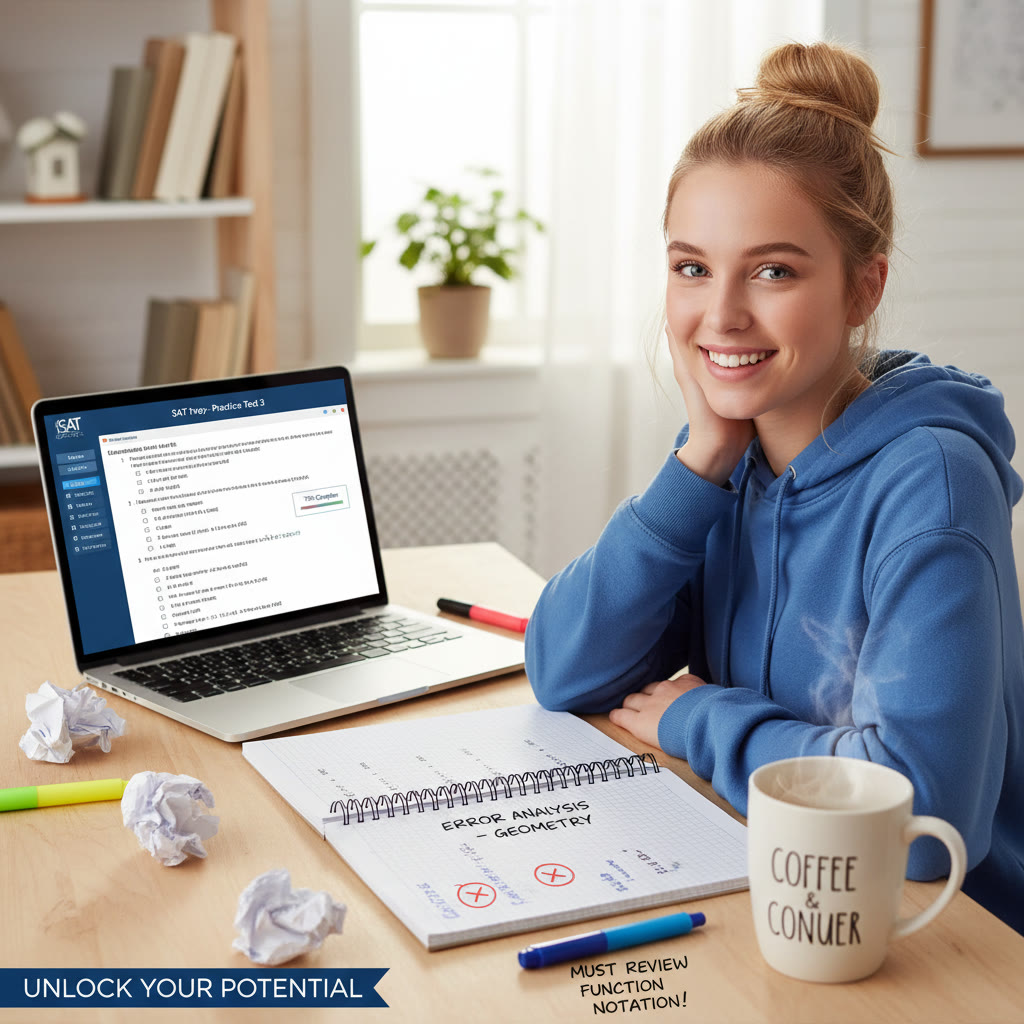
- Keep an error log and revisit it weekly; your mistakes are the map to improvement.
- Use short, frequent practice windows rather than marathon sessions when learning new skills.
- Practice under realistic conditions: timed, quiet, and with the same materials you’ll use on test day.
- Sleep, nutrition, and light exercise matter; cognitive performance is biological.
- Integrate feedback: pair platform insights with human tutoring when possible to translate data into action. Services like Sparkl’s personalized tutoring combine 1-on-1 guidance, tailored study plans, expert tutors, and AI-driven insights to make that translation practical and efficient.
Parting thought
Combining SAT prep with online practice platforms isn’t about choosing one over the other. It’s about aligning strengths: let platforms give you data, speed, and adaptive pressure, and use human guidance or a thoughtful plan to interpret that data and build durable skills. With a realistic schedule, a thoughtful feedback loop, and a focus on targeted improvement, you’ll not only raise your score — you’ll also build test-taking confidence that lasts beyond the SAT.
Ready to get started? Take a diagnostic, build your error bank, schedule a weekly review, and let the platform’s analytics guide your drills. If you want an extra boost, a few sessions of personalized tutoring can turn raw data into strategy and steady progress.

























No Comments
Leave a comment Cancel