
Why a test-day checklist matters more than you think
Picture this: you wake up on test day feeling mostly prepared, but at the test center you realize your calculator’s dead, your ID is tucked under a pile of papers at home, or you didn’t plan for travel hiccups. The hours that follow are stressful, and suddenly the performance you built through months of practice feels shaky. That scenario is painfully common — and entirely avoidable.
A clear, confident test-day checklist is more than a packing list. It’s a mental framework that reduces decision fatigue, saves time, and protects the hours you’ve spent studying. When the logistics are handled, your brain can do the important work: focus, strategy, and calm execution. This guide walks you through creating a personalized SAT checklist — with practical timelines, a foolproof packing list, last-minute moves, and a calm mindset plan. I’ll also show how small supports like Sparkl’s personalized tutoring (1-on-1 guidance, tailored study plans, expert tutors, AI-driven insights) can fit into your checklist so you feel coached, not alone.
Start by confirming the basics (48–72 hours before)
The first step is simple but often overlooked: verify test logistics. Schools and test centers change schedules and formats occasionally, and the last thing you want is a surprise on test day.
- Confirm your test time and test center location. Print the path or screenshot directions and estimate travel time — include parking or security lines.
- Check whether your test is paper or digital. Packing and allowed items differ depending on format.
- Review ID requirements and admission ticket policy. Make sure your name on your registration matches the name on your ID.
- Double-check the calculator policy and battery rules for the test format you’re taking.
Why this matters
These checks remove last-minute uncertainty. If you notice a mismatch — for example, a missing or expired ID — you have time to contact your school or the testing agency for solutions instead of panicking an hour before the test.
The essential packing list (table you can print)
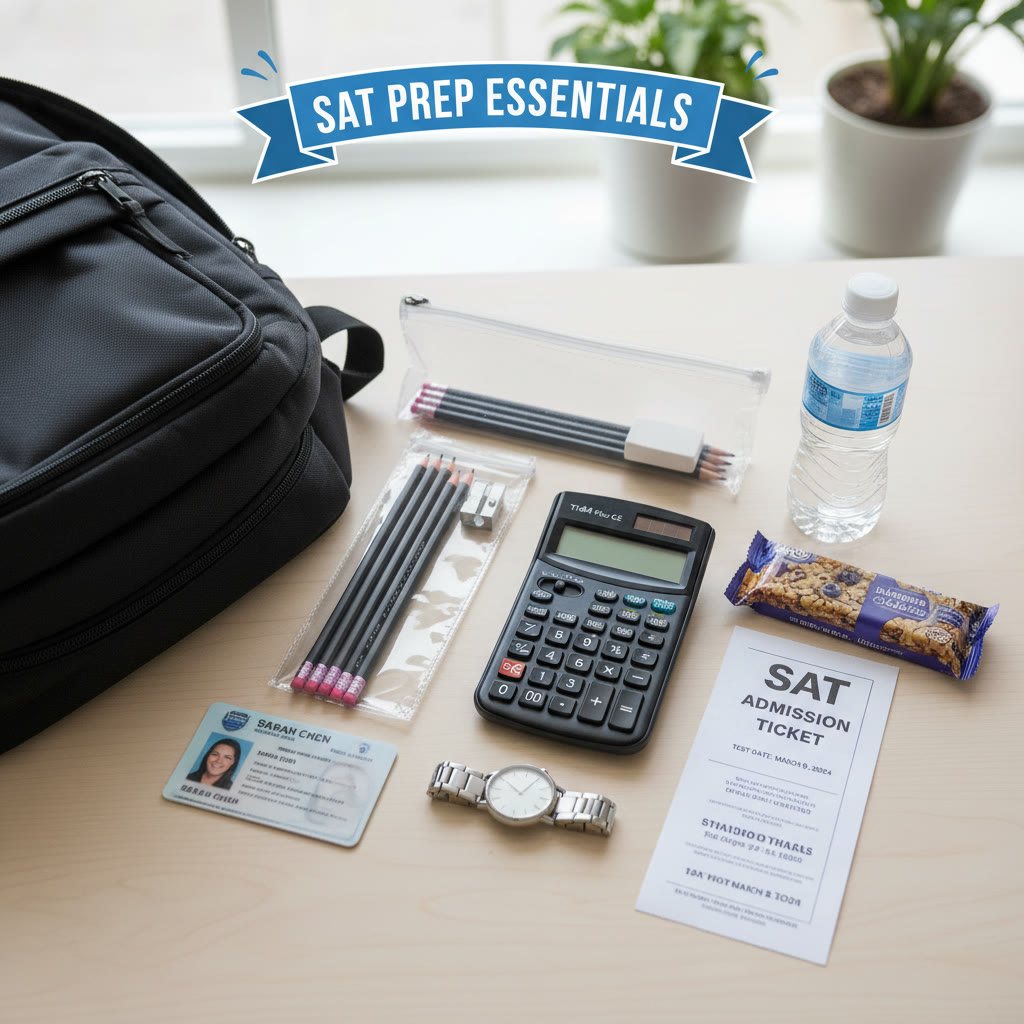
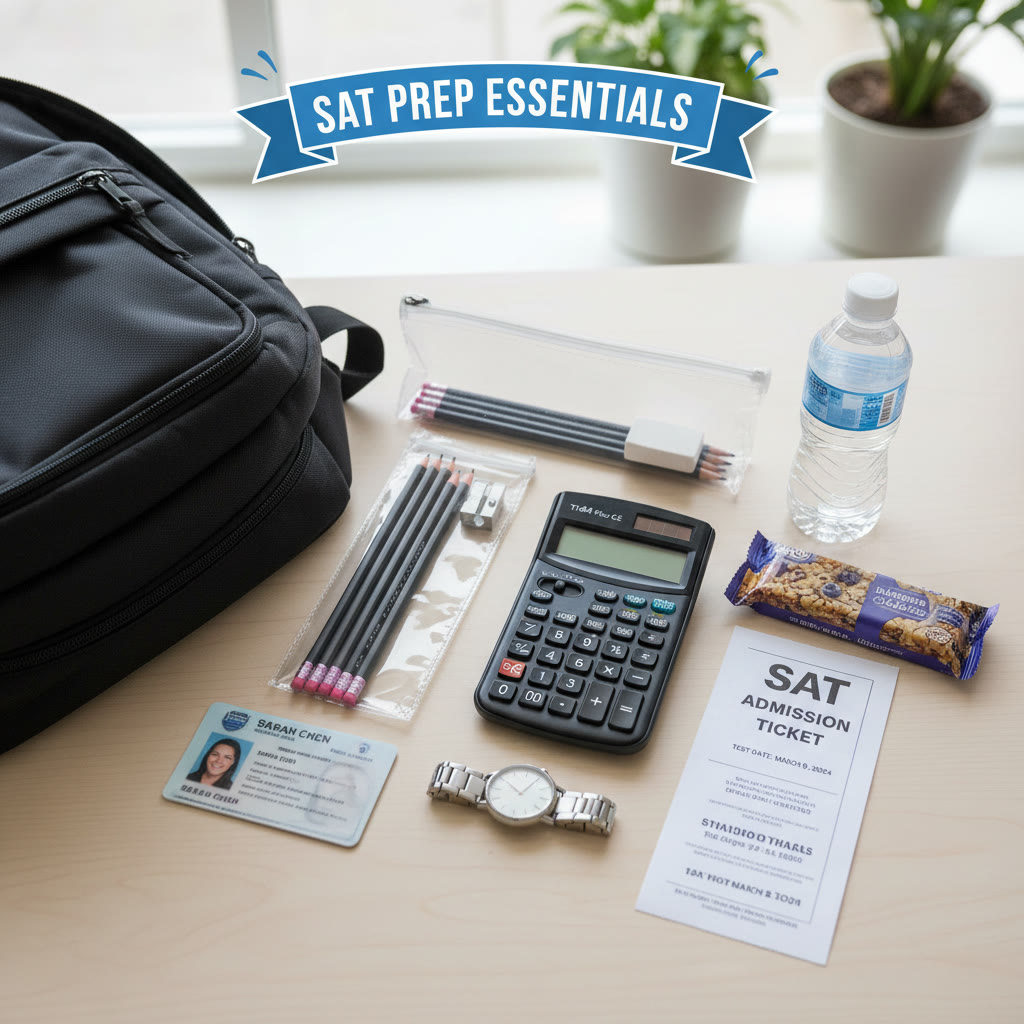
Below is a printable-style table that you can copy into your own checklist. It covers the common items students need for a paper SAT; if your test is digital, adjust items accordingly (e.g., check device rules and power options). Put this table on your fridge or near your bag so you pack it without thinking.
| Item | Why | Last-minute check (yes/no) |
|---|---|---|
| Acceptable photo ID | Required for check-in — name must match registration | Yes |
| Admission ticket / registration confirmation | Speeds up check-in and clarifies details for proctors | Yes |
| Two sharpened No. 2 pencils + eraser (paper tests) | Standard for filling answer sheets; mechanical pencils aren’t always allowed | Yes |
| Approved calculator (with fresh batteries) | Needed for Math Calculator section; avoid unfamiliar models | Yes |
| Watch (analog or simple digital; no smart features) | Helps manage time during sections (if allowed) | Optional — check test rules |
| Light sweater or hoodie | Test rooms can be chilly — comfort helps focus | No |
| Snacks and water for breaks (kept outside the testing room) | Recharge during breaks; avoid strong smells | Yes |
| Quiet bag or pouch for phone and belongings | Phones are typically stored away during the test — a labeled pouch avoids fumbling | Yes |
| Directions, parking info, and emergency contact | For travel hiccups and pickup plans | Yes |
Timeline: What to do the week, day, and hour before
Divide your checklist into timeframes so tasks don’t pile up. Below is a sample timeline you can adapt to your schedule.
| When | Actions | Why it helps |
|---|---|---|
| 7–14 days before | Confirm registration, plan transportation, and run a full timed practice test. | Identifies gaps and confirms logistics early. |
| 3–6 days before | Gather and test materials (sharpen pencils, test calculator batteries, print admission ticket), do light review (no heavy cramming). | Prevents last-minute material failures and calms your mind. |
| 1 day before | Fully pack your bag, lay out clothes, set multiple alarms, and relax with light review (flashcards, strategy checklist). | Reduces morning stress and sleep interference. |
| Morning of | Eat a balanced breakfast, review a short checklist, leave early to allow for delays. | You’ll be calm and on time; hunger won’t sabotage focus. |
Sample morning checklist (copyable)
- Wake up with enough time to eat (avoid rushing).
- Do a brief, 10–15 minute warmup (easy vocabulary or one math strategy you trust).
- Pack bag and double-check ID, admission ticket, and calculator.
- Leave 30–45 minutes earlier than your estimate to account for parking and check-in lines.
What to bring versus what to avoid
Knowing permitted and prohibited items is crucial. Here’s a compact guide that you can pin to your checklist.
Bring
- Valid photo ID and admission ticket
- Approved calculator with fresh batteries (for paper tests)
- Two No. 2 pencils and eraser (paper tests)
- Comfortable clothes, water, and light snacks for breaks
- Any medically necessary items and documentation (notify test center in advance)
Avoid
- Smartwatches, cell phones, earbuds, or other electronic distractions in the testing room
- New strategies or intense cramming the night before
- Excessive caffeine or unfamiliar foods
- Relying on memory for logistics instead of printed confirmations
Quick practice run: simulate test-day logistics
Don’t underestimate the power of a dry run. If you can, do a short rehearsal a few days before: dress similarly, time the commute at the test-day hour, and practice check-in steps. This small simulation lowers anxiety by making the day predictable.
How to simulate effectively
- Wake up at your test-day time and follow your planned morning routine.
- Drive or ride to the test center and note realistic travel time.
- Visit the parking or drop-off area so you don’t scramble on the day.
- Practice filling one section under timed conditions so you remember the pacing.
Minute-by-minute: what to expect at check-in and during the test
Knowing the flow at the center helps you avoid avoidable mistakes. Typical steps include arrival and check-in, a short proctor announcement, the test sections, break(s), and check-out. Here are friendly reminders to add to your list:
- Arrive early and have your ID and admission ticket easily accessible. Proctors may need to see a printed or digital confirmation and your photo ID.
- Turn off and store your phone. Many centers require phones to be turned off and placed in a bag that remains outside the testing room.
- Listen to proctor instructions and ask quiet clarifying questions if something’s unclear.
- During breaks, stretch, use the restroom, eat your snack, and breathe. Don’t try to cram new content.
Mental checklist: focus, pacing, and calm
Beyond the physical items, create a short mental checklist you repeat before you begin each section. This acts like an anchor to a stable routine.
- Pause and breathe for 10 seconds before each section.
- Read the first question fully; don’t assume you know what it asks.
- Use time checks: know how many questions remain and how much time you have.
- If stuck, mark and move on — return if time allows.
Example anchor phrase
Many students use a short phrase like: “Breathe, read, choose, move.” Say it silently before each section to reset focus.
Emergency plan (prepare for the small disasters)
Things happen. A well-made checklist includes contingency items so you don’t spiral when the unexpected arrives.
- Forgotten ID? Have your school administrator or local office number handy and know the testing agency’s ID policy in advance.
- Travel delay? Notify your test center if possible; keep emergency contacts’ numbers in your pocket.
- Calculator or pencil breaks? Keep spares in the car or with a guardian.
- Fill-in plan for medical needs: bring documentation and arrive early so staff can assist.
Small comforts that make a big difference
Comfort items aren’t cheats — they’re focus tools. Add a few to your checklist that help you feel steady without creating distractions:
- A soft hoodie or layers to regulate temperature.
- Familiar chewing gum or mint for the break (check rules about consumption in the test area).
- A tiny object that reminds you of confidence — something you won’t fiddle with during the test but can touch quickly if nerves spike.
How a coach or tutoring service can fit into your checklist
Part of your checklist should be knowing who to call for last-minute reassurance. If you’re working with a tutor or service like Sparkl, include a line in your checklist for a short pre-test check-in. Even a 10-minute pep talk the day before from a tutor who knows your weaknesses can reinforce strategy and calm jitters.
Sparkl’s personalized tutoring provides 1-on-1 guidance, tailored study plans, expert tutors, and AI-driven insights — which can be plugged into your checklist as a built-in support system. For example, have your Sparkl tutor prepare a one-page “strengths and reminders” sheet for test day: two math strategies, three grammar rules, and pacing checkpoints. Put that sheet in your bag or review it 24 hours before the test.
Printable, pocket-sized checklist (ready to copy)
- ID + Admission ticket — in your hand or top of bag
- Calculator (fresh batteries) / pencils + eraser
- Watch, sweater, and comfortable shoes
- Snack and water for breaks (kept outside the testing room)
- Directions, parking info, and emergency contact
- Pre-test anchor phrase and a 5-minute warmup plan
- Sparkl’s one-page strengths & reminders sheet (if you use it)
After the test: debrief and next steps
Don’t make the mistake of either celebrating too early or beating yourself up immediately. Add a short “post-test” checklist so you capture what matters for later improvement:
- Record feelings and problem areas while they’re fresh (what section felt harder, questions that seemed unfamiliar).
- Wait at least 24 hours before reviewing difficult problems — your brain needs rest to consolidate learning.
- Plan a next step: practice more sections, adjust pacing, or meet with your tutor for targeted work. If you’re working with Sparkl, schedule a quick review session to turn the test experience into a focused study plan using AI-driven insights and tutor feedback.
Real student scenario: how a checklist saved the day
Emma, a senior balancing school and part-time work, once forgot her calculator batteries for a weekend practice test and scored below her expectation. After that, she created a checklist and added a “spare batteries” line. On the actual SAT, her bus broke down. Because Emma had rehearsed the commute and left early, she switched to a backup route and still arrived with time to spare. Her checklist cut the stress, and she did exactly what her study routine trained her to do — pace, skip when stuck, and come back.
That’s the power of a checklist: it turns surprises into a small detour rather than a derailment.
Final pep talk and how to personalize your checklist
Make your checklist yours. Personalization is what turns lists into lifelines. If test anxiety hits you, add two minutes of breathing before each section. If time management is your challenge, add a watch check every 15 minutes into the list. If a certain question type trips you up, include a short reminder of the strategy next to that section name.
And remember: tools like Sparkl’s personalized tutoring can help you build this checklist with someone who knows your strengths and gaps. A tutor can offer that calm, objective voice on the day before the test — mapping a tailored study plan into your checklist and providing targeted, confidence-boosting reminders. Whether you do it solo or with a tutor’s help, practice the checklist until it becomes second nature.
Final one-line checklist to memorize
“ID, ticket, calculator/pencils, watch, snack, breathe, and trust your training.” Keep that line on your phone screensaver or a sticky note on your mirror.
Wrap-up: checklist + calm = your best chance to show up
The SAT asks you to demonstrate skills you’ve built. A smart checklist protects those skills from being wasted on logistics. Plan the week, pack the night before, rehearse your commute, and give yourself permission to rest. Small practice runs, a pocket-sized list, and a short mental anchor before each section will keep you steadier and clearer during the test.
Above all, remember that a checklist is a supportive tool — not a magic wand. It reduces friction so your preparation can do the work. If you want help turning your practice into a concise, personalized test-day plan, consider building a checklist with a tutor. Sparkl’s personalized tutoring offers 1-on-1 guidance, tailored study plans, expert tutors, and AI-driven insights you can slot directly into your test-day routine. When logistics are handled, your focus is free to do what matters: think, pace, and perform.
Good luck — you’ve prepared more than you realize. Pack smart, breathe, and walk into the room knowing you’re ready.


















No Comments
Leave a comment Cancel