

How to Build Energy-Boosting Breaks Into SAT Prep
Studying for the SAT can feel like running a mental marathon: long stretches of concentration, occasional hills of difficult practice problems, and — if you’re not careful — the danger of hitting a wall. The secret that many high scorers share isn’t just how many hours they put in, but how they spend those hours. In particular, the breaks they take.
This post is a friendly, practical guide to designing breaks that recharge your brain, sharpen recall, and keep motivation high. We’ll walk through the science, share sample schedules, offer energizing break activities, and show how simple tools (and a supportive tutoring program like Sparkl) can fit into a study plan tailored for you.

Why breaks matter: more than resting your eyes
On the surface, breaks feel like a pause. Under the hood, they’re doing crucial work for your brain. A few reasons breaks matter:
- Memory consolidation: Short rests give your brain time to move newly learned information from working memory into long-term storage.
- Reduced mental fatigue: Continuous intense focus depletes neurotransmitters and attention resources. Breaks restore them.
- Improved problem-solving: Incubation periods — time away from a tough problem — often lead to sudden insight when you return.
- Prevention of burnout: Studying without proper recovery reduces motivation, increases frustration, and makes practice less effective.
Think of study time like interval training. High-quality reps (focused study) separated by intentional rests produce better gains than long, unstructured endurance sessions.
What the science says, in plain language
Researchers find that attention and performance drop after extended periods of concentration, but short rest breaks (even a few minutes) can restore attention and accuracy. Active breaks — movement, short walks, or light stretching — are especially effective at boosting blood flow and alertness. Nutrition and hydration also contribute: low blood sugar and dehydration hurt concentration, while small healthy snacks and water can help you power through a study block.
When to take breaks: finding a rhythm that fits you
There’s no one-size-fits-all timing, but a few tried-and-true frameworks can help you experiment and settle on a rhythm.
- Pomodoro-style (25/5): 25 minutes of focused study, then a 5-minute break. After four cycles, take a longer break (15–30 minutes).
- 50/10 or 52/17: Two longer focused windows with longer breaks. Some people find 50 minutes feels more natural for deep reading or long problem sets.
- Ultradian rhythm approach: Work with your natural energy cycles—roughly 90 minutes on, 20 minutes off.
Try each for a few days and notice which keeps your energy steady and your progress measurable. For example, timed grammar drills may pair well with 25/5 sessions, while full-length practice sections or demanding math problem sets might benefit from a 50/10 structure so you don’t interrupt deep concentration mid-problem.
Practical tip
Set a visible timer and treat breaks as non-negotiable. The same discipline you give to study blocks applies to rest blocks — otherwise you’ll either extend your study time without quality or spend breaks scrolling until the next block is ruined.
Design the perfect break: activities that actually boost energy
A break doesn’t automatically equal refreshment. The right activities matter. Here are practical break ideas categorized by length and purpose.
Microbreaks (30 seconds–5 minutes): instant refresh
- Stretch or do a quick mobility routine (neck rolls, shoulder openers).
- Deep breathing: 4–6 slow breaths to calm the nervous system and refocus.
- Drink a glass of water or eat a small bite of protein/fruit.
- Stand and look outside for a minute to change visual focus and relieve eye strain.
Short breaks (5–15 minutes): clear the fog
- Go for a brisk walk around the block — movement raises alertness and improves mood.
- Do a short bodyweight circuit (jumping jacks, squats, plank) to spike blood flow.
- Practice a 5–10 minute guided mindfulness or breathing session to reduce anxiety before a tough section.
- Play a short, non-addictive game like a quick puzzle or two to reset mental energy.
Long breaks (20–60 minutes): deeper recovery
- Eat a balanced snack or light meal: whole grains, lean protein, fruit — avoid heavy greasy food that causes sluggishness.
- Take a power nap (15–30 minutes) — studies show naps improve memory retention and alertness without grogginess if kept short.
- Do a longer cardio session (20–40 minutes) if you’re prepping across weeks: regular exercise improves overall cognitive resilience.
Rotate these activities depending on the study block length and how you feel. The point is to interrupt mental fatigue with an activity that restores cognitive resources rather than depleting them further.
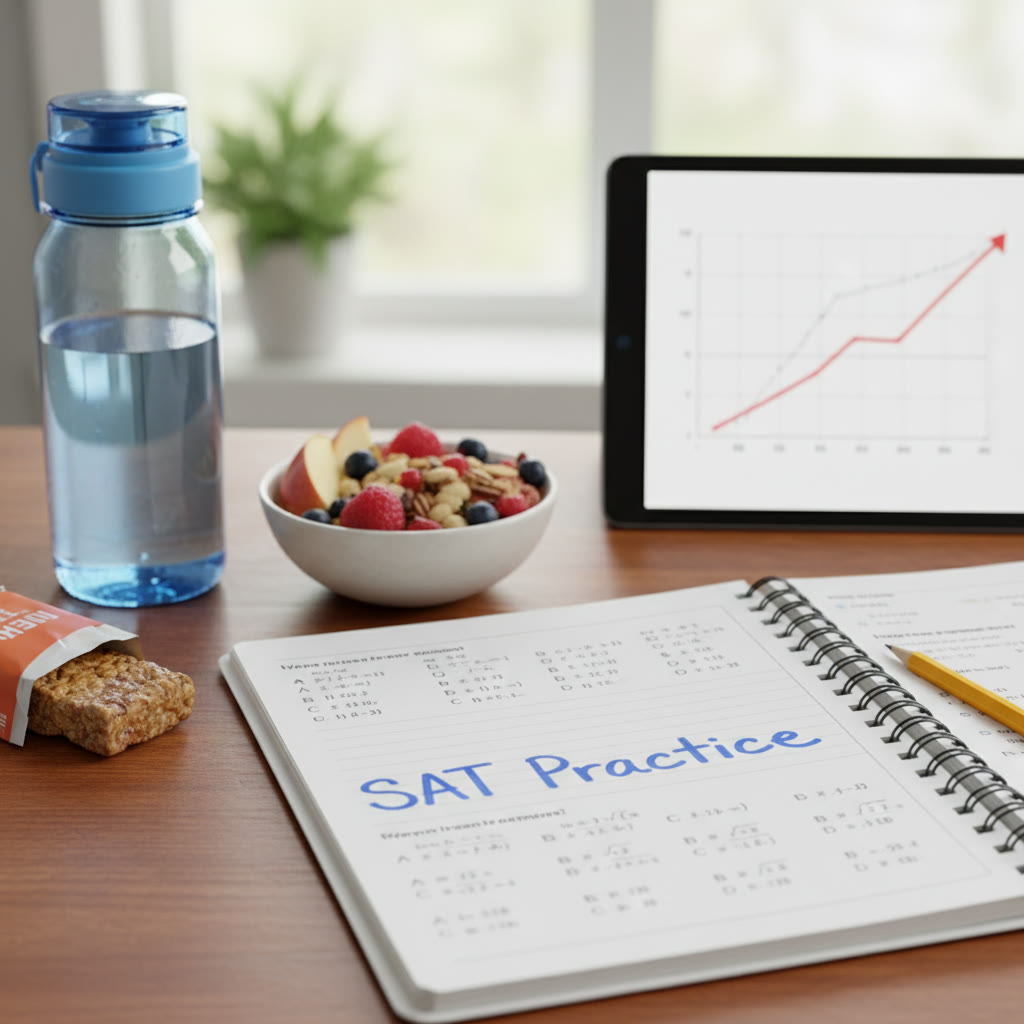
Sample schedules: match a schedule to your day
Below are three sample study days for different time availabilities. Use them as templates — tweak timing and activity to match your personal energy pattern.
| Time | Activity | Break Type | Duration |
|---|---|---|---|
| 4:00–4:25 PM | Math problem set (focused) | Microbreak: stretch & water | 5 min |
| 4:30–4:55 PM | Grammar drills | Short walk outside | 10 min |
| 5:05–5:55 PM | Reading comprehension passage | Longer break — snack & light movement | 20 min |
| 6:20–7:20 PM | Full practice section or review | Dinner & downtime | 40–60 min |
Another quick template for a busy morning:
- 6:30–7:00 AM: Quick review (25/5 style) with microbreaks.
- 8:00–9:30 AM: One deep study block (50/10) before class.
- Evening: 30–45 minute session focusing on weak spots, then a long recovery break for sleep quality.
Micro vs. macro: the balance that prevents burnout
Microbreaks keep you efficient within a single study session; macro breaks (days off, rest weekends, complete digital detox) preserve your long-term stamina. Both are needed. A good rule: schedule at least one full day off learning every 7–10 days to let your brain integrate big chunks of information and to protect mental health.
Example of a weekly rhythm
- Mon–Fri: focused study blocks with short daily recovery (active breaks and one long break per day).
- Saturday: practice test day with ample recovery afterwards.
- Sunday: light review only, hobbies, or social activities — a true rest day.
Real-world practice test day: energy management strategies
Full-length practice tests are essential, but they also tax your energy. Use breaks strategically before and after the test sections and manage nutrition and pacing:
- Before the test: light breakfast with protein + complex carbs (e.g., Greek yogurt and granola), hydrate, and a 5–10 minute light movement routine to wake up.
- During the test (practice at home): simulate realistic break conditions — stand up during experimental breaks, drink water during section transitions, and practice quick breathing to reset between sections.
- After the test: take a longer recovery break — a real meal, a walk, or a nap — then a gentle review session later if needed.
Training your body and brain to the test-day rhythm makes the actual exam feel familiar, so your energy distribution during the test becomes predictable rather than chaotic.
Tools, timers, and small habits that help
Some simple tools make break habits stick:
- Use a visible timer or an app with customizable intervals. Make sure the alarm is pleasant — jarring tones increase stress.
- Create a short break ritual: stand, drink water, do two deep breaths, then step outside or stretch. Rituals make habits automatic.
- Keep a dedicated break kit: small snacks, a water bottle, resistance band, or a notepad for quick reflections on how the session went.
Digital distractions: treat them as part of the plan
Phone scrolling is the biggest break-killer. Instead of pretending you won’t use your phone, schedule intentional phone time during longer breaks and use do-not-disturb during focus blocks. If music helps, pick instrumental playlists that don’t pull you into emotional loops.
How Sparkl’s personalized tutoring can fit your energy-boosting plan
Personalized tutoring is not just about content; it’s about strategy. With one-on-one guidance and tailored study plans, tutors can help you identify your natural energy peaks and craft break schedules that match your brain. Sparkl’s expert tutors and AI-driven insights can suggest which sections to tackle when you’re most alert, and what kind of breaks have worked best for students in similar situations.
If you find it hard to experiment by yourself — for example, matching study types to break lengths or choosing the right pre-test nutrition — a tutor can shorten the trial-and-error process. A coach who understands your strengths and weaknesses also helps convert a research-backed break routine into a personalized plan you’ll actually stick with.
Common mistakes and how to avoid them
- Using breaks as reward bingeing: Don’t let a 5-minute break turn into a 45-minute scroll. Set clear limits and use a timer.
- Overdoing caffeine: Small amounts can help, but too much worsens crashes and anxiety. Prioritize hydration and whole-food snacks.
- Ignoring sleep: No break structure will compensate for chronic poor sleep. Aim for consistent sleep hygiene to make study breaks effective.
- All breaks passive: Passive breaks (endless screens) often reduce alertness. Mix in active movement, fresh air, or creative tasks.
Quick checklist to build your own energy-boosting break plan
Use this checklist to design a testable routine for a week:
- Pick a timing template (25/5, 50/10, or 90/20) and commit to trying it for five study sessions.
- Create a list of micro, short, and long break activities you enjoy and feel restorative.
- Prepare break tools in advance (water, snacks, timer, resistance band).
- Block digital distractions during study blocks and schedule phone time during longer breaks.
- Log energy levels after each study session for a week to find patterns.
- Adjust based on what restores focus and what drains it.
Final thoughts: small habits, steady gains
You don’t need perfect willpower or an extreme routine to make big improvements. Building energy-boosting breaks into SAT prep is about small, consistent habits that protect your attention and make study time more effective. Over weeks, this approach multiplies: better focus in each session, improved retention, reduced frustration, and more confidence on test day.
If you ever feel stuck trying to find the right rhythm — or want help translating strong break habits into higher scores — consider combining deliberate break strategies with targeted tutoring. Personalized guidance, whether from a coach or an AI-informed tutor, helps you turn the messy middle of preparation into a manageable, repeatable system. Sparkl’s 1-on-1 guidance, tailored study plans, expert tutors, and AI-driven insights are designed to slot into routines like this and keep you moving forward smartly, not just harder.
Pick a template, try it for two weeks, and tweak. Your brain is a remarkably adaptable machine — give it the rests it needs, and it will repay you with clearer thinking, more stamina, and better results on the SAT.
Now take a five-minute break: stand up, breathe, and come back ready to tackle the next practice set with fresh energy.



























No Comments
Leave a comment Cancel