
Why Marathon SAT Prep Days Need a Game Plan
There’s a kind of pride that comes with planning a marathon SAT study day: the textbooks stacked like trophies, flashcards in neat piles, a blank page in a planner waiting to be filled. But long stretches of studying aren’t automatically productive. Without a strategy, they can become hours of diminishing returns—fatigue, dwindling focus, and frustration show up faster than you expect.
This post is for the students who want more than grit. You care about effort and results, and you want to protect your energy while you build knowledge. Below I’ll walk you through a friendly, science-backed blueprint for staying alert, avoiding burnout, and making marathon days genuinely effective. Expect practical tips on sleep, food, movement, rhythm, and smart study techniques, plus a sample schedule you can tailor for your own life. I’ll also touch on how Sparkl’s personalized tutoring and tailored study plans can fit naturally into marathon prep without turning your days into a grind.
Start Before the Marathon: Sleep, Planning, and Mindset
Sleep: the foundation you can’t skip
Think of sleep like resetting your computer. The night before a big study day, aim for 7–9 hours. Research consistently shows that sleep supports memory consolidation—exactly what you need when you’re trying to lock in vocab, grammar rules, or math strategies.
If you’ve got a schedule that forces an early start, shift your bedtime gradually the week before. Even an extra 30–45 minutes of quality sleep can make a noticeable difference in alertness and mood.
Plan the day, then commit
Before the study marathon begins, write a simple, realistic plan. Break the day into 60–90 minute study blocks (we’ll refine timing later). Include breaks, meals, and time to move. Having a structure reduces decision fatigue—when you’re tired, deciding what to do next can sap energy. A plan gives you permission to focus on one thing at a time.
Set a gentle goal and a non-negotiable win
Marathon days often go one of two ways: you either pile on every task on your to-do list and flounder, or you focus narrowly and make steady progress. Pick one meaningful goal—for example, finish two full Section 2 practice sections with review—and one non-negotiable self-care win, like topping off water every hour or walking outside at noon. That balance keeps momentum without self-sabotage.
Food and Fuel: What to Eat (and When)
Think steady energy, not sugar spikes
Caffeine and candy give temporary lifts, but come crashes. Aim for meals and snacks that combine protein, healthy fats, and complex carbs to support sustained attention. Examples:
- Breakfast: Greek yogurt with berries and a sprinkle of granola, or whole-grain toast with peanut butter and a banana.
- Snack: A small handful of nuts and an apple.
- Lunch: A quinoa or brown rice bowl with grilled chicken, colorful veggies, and olive oil dressing.
- Snack before a late study block: hummus with carrot sticks or cottage cheese with whole-grain crackers.
These choices provide slow-burning glucose and amino acids for neurotransmitters, keeping your brain fueled without dramatic glucose swings.
Caffeine: use it like a tool
Caffeine can be a great ally if used intentionally. Small, well-timed doses (e.g., a single cup of coffee or a 100 mg caffeine pill) can sharpen attention. But don’t rely on it as a crutch. Avoid multiple large doses that push you into jittery anxiety or disrupt later sleep. If you’re sensitive, opt for green tea which provides a gentler lift plus L-theanine, an amino acid that calms while focusing the mind.
Hydration matters more than you think
Even mild dehydration (1–2% of body weight) lowers cognitive performance. Keep a water bottle visible—set a goal like finishing one bottle each hour or use a bottle with marks. If plain water bores you, add a slice of lemon or a splash of fruit juice.
Move to Think: Breaks, Exercise, and Fresh Air
The power of movement
Physical activity isn’t a distraction; it’s a cognitive enhancer. Short bouts of movement increase blood flow to the brain, release endorphins, and reset focus. Integrate movement into your marathon day:
- Micro-breaks: Stand, stretch, or do 1–2 minutes of jumping jacks between problems.
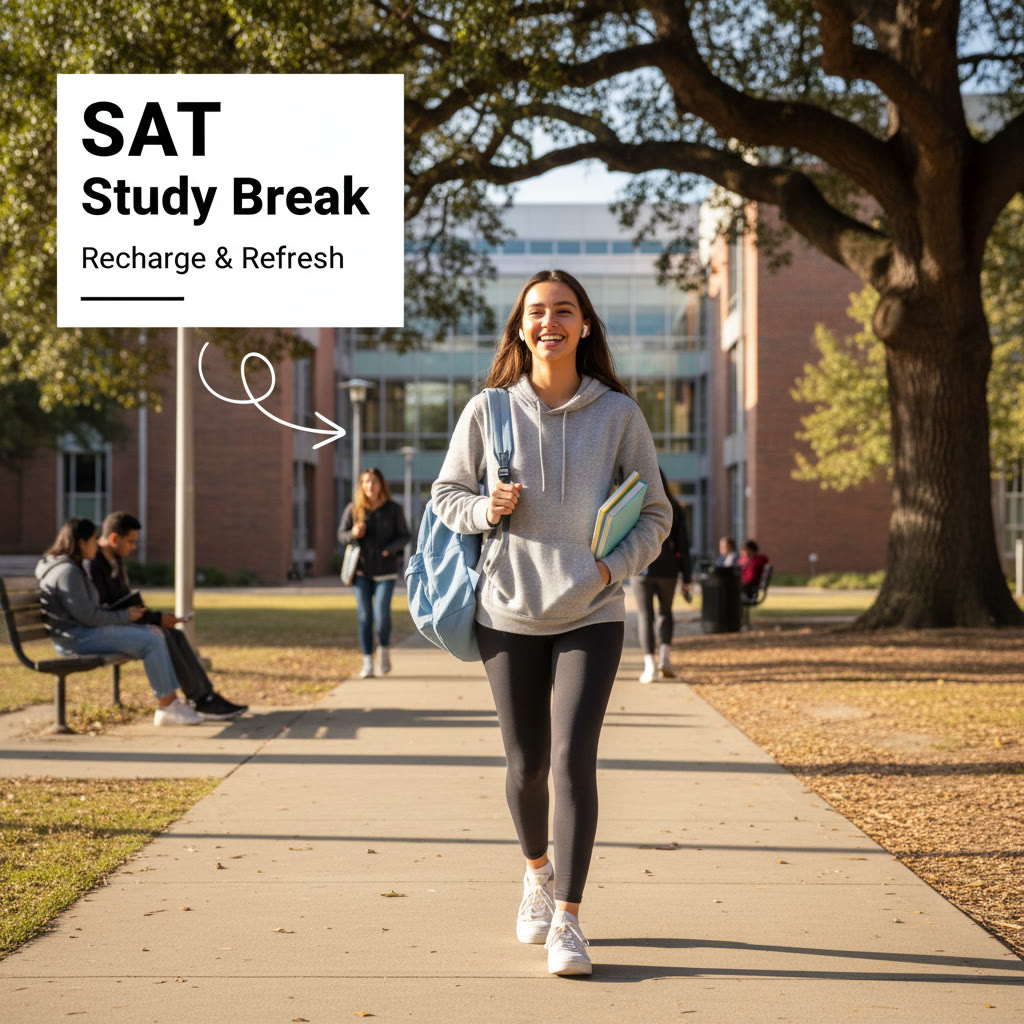
- Longer breaks: A 20–30 minute walk outside after three to four study blocks.
- Active learning: Read aloud, teach a concept to an imaginary class, or pace while reviewing flashcards.
Breathing and posture for instant clarity
Breathing exercises can lower anxiety and sharpen attention within minutes. Try box breathing: inhale 4 seconds, hold 4 seconds, exhale 4 seconds, hold 4 seconds—repeat for one minute. Also check your posture periodically: slumped shoulders and a tucked chin reduce oxygen flow and increase fatigue. Sit tall, feet flat, shoulders relaxed.
Smart Study Techniques That Protect Energy
Pomodoro and variations: work in focused bursts
One of the most reliable tools for long study days is the Pomodoro method: 25 minutes of focused work followed by a 5-minute break. For SAT marathon days, I prefer a flexible variation: 50–60 minutes focused, then a 10–15 minute break. Longer focus periods let you get into deeper problem-solving for math and reading passages; the slightly longer breaks allow for movement and a proper snack.
Alternate subjects to avoid mental fatigue
Your brain tires when you use the same cognitive resources for too long. Rotate between subjects that use different skills: do a math problem set, then a reading passage, followed by vocabulary/grammar review. This alternation helps you stay fresh and reduces the “mental roadblock” effect that can emerge after long runs on one type of task.
Active review beats passive re-reading
Active methods—self-quizzing, explaining concepts out loud, spaced repetition—use effortful retrieval, which strengthens memory. For example, after a math block, write down the main strategy you used to solve an algebra problem without looking at notes. If you teach the concept to someone (or pretend to), you’ll notice gaps quickly and remember better.
Protect Your Attention: Environment and Tools
Create a study-friendly environment
Small details matter: good lighting (natural if possible), a clean desk, comfortable chair, and minimal clutter. Use noise-cancelling headphones or a gentle playlist if background noise bothers you. Have necessary materials within reach: pencils, calculator with fresh batteries, scratch paper, snacks, and a water bottle.
Manage digital distractions
Put your phone on Do Not Disturb or use apps that block social media for scheduled windows. If you use a laptop, keep only the tabs you need. The goal is not techno asceticism; it’s preserving the precious resource of sustained attention.
When Practice Tests Are Part of the Marathon
Simulate test conditions selectively
Full-length practice tests are essential—but doing many on back-to-back days can be draining. Schedule practice tests strategically: use them as benchmarks every 1–2 weeks and on a rest day after a lighter study week. When you do simulate, create the test-day conditions: timed sections, quiet room, and minimal interruptions. Then, treat test review as a separate study block the next day when you’re fresher.
Review with intention
After a practice test, avoid the temptation to stare despondently at mistakes. Instead, categorize errors: careless mistakes, content gaps, timing or strategy errors. Tackle one category per review session. This keeps feedback actionable and reduces overwhelm.
Sample Marathon SAT Prep Day: A Table You Can Copy
Below is a sample schedule built for a 10-hour study day. Tweak the times, lengths, and content to match your personal rhythm—some students are sharper in the morning, others in the evening.
| Time | Activity | Goal | Energy Tip |
|---|---|---|---|
| 8:00–8:45 AM | Breakfast + light review (vocab flashcards) | Gentle warm-up | Protein-rich breakfast; water |
| 9:00–10:00 AM | Math (focused problem sets) | Master one strategy (e.g., systems of equations) | 60-minute focus, then 15-minute walk |
| 10:15–11:15 AM | Reading (timed passages) | Improve passage timing | Stand and stretch between passages |
| 11:30–12:30 PM | Grammar/writing drills | Solidify common grammar rules | Small snack mid-block |
| 12:30–1:15 PM | Lunch + short walk | Refuel and reset | Balanced meal, get fresh air |
| 1:30–2:30 PM | Math (timed sections) | Apply morning learnings under time | One caffeinated beverage if needed |
| 2:45–3:45 PM | Targeted review (errors from practice) | Correct misconceptions | Use active recall; short brisk walk after |
| 4:00–5:00 PM | Mixed practice (one math, one reading) | Build stamina for switching modes | Hydrate and stretch |
| 5:15–6:00 PM | Light review + plan for tomorrow | Consolidate wins | Celebrate two wins; set one goal for next day |
Recovery and Rest: The Often-Ignored Half of Preparation
Wind-down rituals matter
A good marathon day ends with a deliberate recovery. Avoid stimulating screens for 30–60 minutes before bed. Swap social media scrolling for something relaxing—reading a book (not SAT-related), stretching, or a warm shower. This lowers cortisol and helps you sleep well, making the next study day productive.
Active recovery beats passive crash
On the day after a heavy study day, plan an active recovery: light review for 30–60 minutes, followed by enjoyable activities. This protects motivation and prevents the sense that studying must be punishing to be effective.
Tools, Templates, and Tiny Habits That Add Up
Checklists and quick wins
Create a short checklist for each study block: the specific task, how you’ll check success, and a mini reward (a walk, a favorite snack). Crossing off items gives small dopamine hits that keep you motivated without needing drama.
Use data to iterate
Track what worked: note what time of day you were sharpest, which snacks helped, and when you faded. Over several weeks, patterns emerge. Many students find that a morning math block and afternoon reading block fits their attention cycle; others reverse this. The point is to use evidence from your own days to refine the plan.
How Tutoring Fits Into Marathon Prep (Thoughtfully)
One-on-one help can be transformational—especially when you have big days full of self-study and occasional practice tests. Sparkl’s personalized tutoring offers tailored study plans and expert tutors who can point out the most efficient next steps. On marathon days, having a tutor check key problem sets or provide targeted strategy sessions (30–60 minutes) can prevent wasted effort and accelerate gains. Sparkl’s AI-driven insights can also help identify weak spots so your longer study blocks are laser-focused rather than scattershot.
Use tutoring strategically: reserve short, focused tutoring sessions for moments when you need an explanation, a walk-through of a tricky concept, or to review your practice test errors. That keeps marathon days centered on practice and leaves tutors to amplify your progress.
Common Mistakes Students Make—and What to Do Instead
- Mistake: Studying passively all day (re-reading, highlighting). Instead: Use active recall and timed practice.
- Mistake: Skipping breaks to “power through.” Instead: Schedule movement and micro-breaks to sustain focus.
- Mistake: Relying on sugar and energy drinks. Instead: Choose protein-rich snacks, hydrate, and use modest caffeine intentionally.
- Mistake: Overdoing full-length tests every week. Instead: Use full tests as milestones and focus on targeted practice between them.
Final Pep Talk: Make Energy Your Strategy
Studying for the SAT isn’t just about hours logged; it’s about the quality of those hours. Marathon study days can be powerful if you protect your energy, plan intentionally, move your body, eat well, and use smart study techniques. Keep a curious mindset: notice what helps and what doesn’t, treat your body kindly, and let small rituals—like a walk after lunch or a tidy desk—be signals that you’re doing the right work.
On the days when focus feels thin, remember that rest and recovery are part of the training. Even elite athletes build rest into their routines; you’re doing the same for your brain. If you want help creating a lean, personalized prep plan that fits into your marathon days, consider supplementing your work with Sparkl’s personalized tutoring—short sessions and AI-driven insights can make long study days more efficient and less stressful.

With a plan that respects your energy and builds in recovery, marathon SAT prep days stop feeling like endurance tests and start feeling like purposeful progress. You’ve got this—one good block at a time.





















No Comments
Leave a comment Cancel