

Why the SAT still matters — and why you can ace it as an exchange student
First things first: being an exchange student is already a huge advantage. You’re living in a new educational culture, practicing language skills daily, and building independence. The SAT, whether for college applications or scholarship opportunities, is another step in that adventure. It’s also a test that rewards practice, strategy, and smart preparation — and none of those depend on being a native student. With focused work and a plan that fits your exchange schedule, you can get the score you want without missing the best parts of being abroad.
What the SAT looks like today
Over the last few years the SAT has changed shape: the College Board moved to a digital format, keeping the familiar 1600 scoring scale but shortening test time and changing the pacing. In the current (digital) format the test is shorter, uses adaptive modules, and emphasizes clarity and reasoning. The two main pillars remain: Evidence-Based Reading and Writing (EBRW) and Math. The Essay is no longer a standard part of the test for most schools, but always check the requirements of the colleges you’re applying to.
Why exchange students face a different set of challenges — and how that’s actually useful
Common hurdles for exchange students include language differences, varying curricula, and the logistics of registering and testing in a different country. But you also gain advantages: daily immersion in English, exposure to different teaching styles, and the kind of adaptability that makes steady practice easier. The trick is to take an honest inventory of where you are and design a plan that plays to your strengths.
Assess where you are — and make a realistic target
Before you start drilling practice problems, take one full, timed practice test under realistic conditions. Treat it like a dress rehearsal. The score gives you three essential things:
- Baseline: where your strengths and weaknesses lie (reading vs. math, fluency vs. reasoning).
- Pacing information: how long you take on passages or long math problems.
- Motivation: a concrete starting point that you can improve from.
As an exchange student, set a target that balances ambition with realism. If colleges you’re aiming for are test-optional, a strong SAT score can still meaningfully boost an application. If they require scores, prioritize those deadlines early in your plan.
Create a study timeline that fits exchange life
Exchange programs are full of activities, travel, and immersion opportunities. So make a plan that respects those commitments. Below are three common timeframes students use: 8 weeks (intensive), 4 months (steady), and 8–12 months (gradual). Choose or adapt one based on the weeks you have until your intended test date.
| Timeline | Weekly commitment | Focus | Outcome |
|---|---|---|---|
| 8 weeks (intensive) | 10–15 hours | Core content + daily practice tests + targeted review | Fast improvement; best if you already have a solid base |
| 4 months (steady) | 5–8 hours | Balanced content review, weekly full practice, vocabulary in context | Sustainable gains while enjoying exchange activities |
| 8–12 months (gradual) | 3–6 hours | Slow build: fundamental math, reading stamina, test habits | Deeply consolidated skills with less stress |
Tip: block study sessions on your calendar just like cultural exchange activities. That helps you keep both parts of your life in balance.
Choosing test dates and locations
As an exchange student you may need to register at a test center in your host country. Check registration deadlines early and remember ID rules: most centers require an internationally accepted ID, such as a passport. If you plan to take the test back in your home country during a break, register early to secure a spot, especially around popular months like March, May, and October.
Study strategies that actually work for exchange students
1. Build reading and writing muscle in context
Language skills improve fastest through meaningful input. That means reading widely and actively: news articles, short essays, and narrative nonfiction that spark your curiosity. When you read, do the following:
- Annotate: underline main ideas and circle unfamiliar words.
- Paraphrase: after a paragraph, summarize it in your own words aloud or in a notebook.
- Practice focused passage work: do one passage a day and review every question you miss.
Vocabulary for the SAT isn’t about memorizing long lists. It’s about understanding words in context. Learn words through reading and by making short example sentences related to your classes or daily life abroad.
2. Math: prioritize concepts, not tricks
The Math section is surprisingly consistent: it tests algebra, problem solving & data analysis, and what the College Board calls ‘Passport to Advanced Math’ (functions, quadratic work, and some higher-level algebra). For many exchange students the challenge is the different way math is taught. Instead of chasing shortcuts, focus on:
- Core fluency: linear equations, systems, ratios, percentages, interpreting data.
- Problem translation: practice turning word problems into equations.
- Strategy: number plugging and back-solving when algebra gets messy.
Work with pen and paper even when practicing digitally — that muscle matters. Time your problem sets to build speed without sacrificing accuracy.
3. Make practice tests count
Practice tests are more than score predictors. They’re diagnostic tools. After each full-length test:
- Review every missed question and write down the reason you missed it (concept, careless, time, or misunderstanding).
- Create micro-lessons from your mistakes: a 20-minute review on a specific grammar rule or algebra technique.
- Track patterns. If you miss a particular question type repeatedly, schedule targeted practice until it becomes routine.
Practical logistics for exchange students
ID and registration nuances
Test centers require approved identification. For most exchange students, your passport is the simplest and most reliable option. When registering, use the address that best matches your test-day plan: the host-country address if you’ll test there, or your home address if testing back home during a break. Keep copies of your registration confirmation and any required travel documents in a single folder.
Accommodations and special needs
If you need test accommodations (extra time, a separate room, etc.), apply early. The process often requires documentation from a medical or school professional. Because you might be navigating two educational systems, give yourself plenty of lead time to gather paperwork and approvals.
Study while living abroad: tips to balance culture and prep
One of the best parts of exchange life is the access to new perspectives. Use cultural experiences as study fuel:
- Practice speaking and summarizing your day in English — that strengthens vocabulary and fluency.
- Read local newspapers or opinion pieces and debate the ideas with host classmates or a tutor.
- Join study groups at your host school or local library to practice under timed conditions.
Protect one or two consistent study slots each week. For many students, early mornings or late evenings work best around exchange activities. Small, consistent sessions beat sporadic cramming.
Study spaces and materials
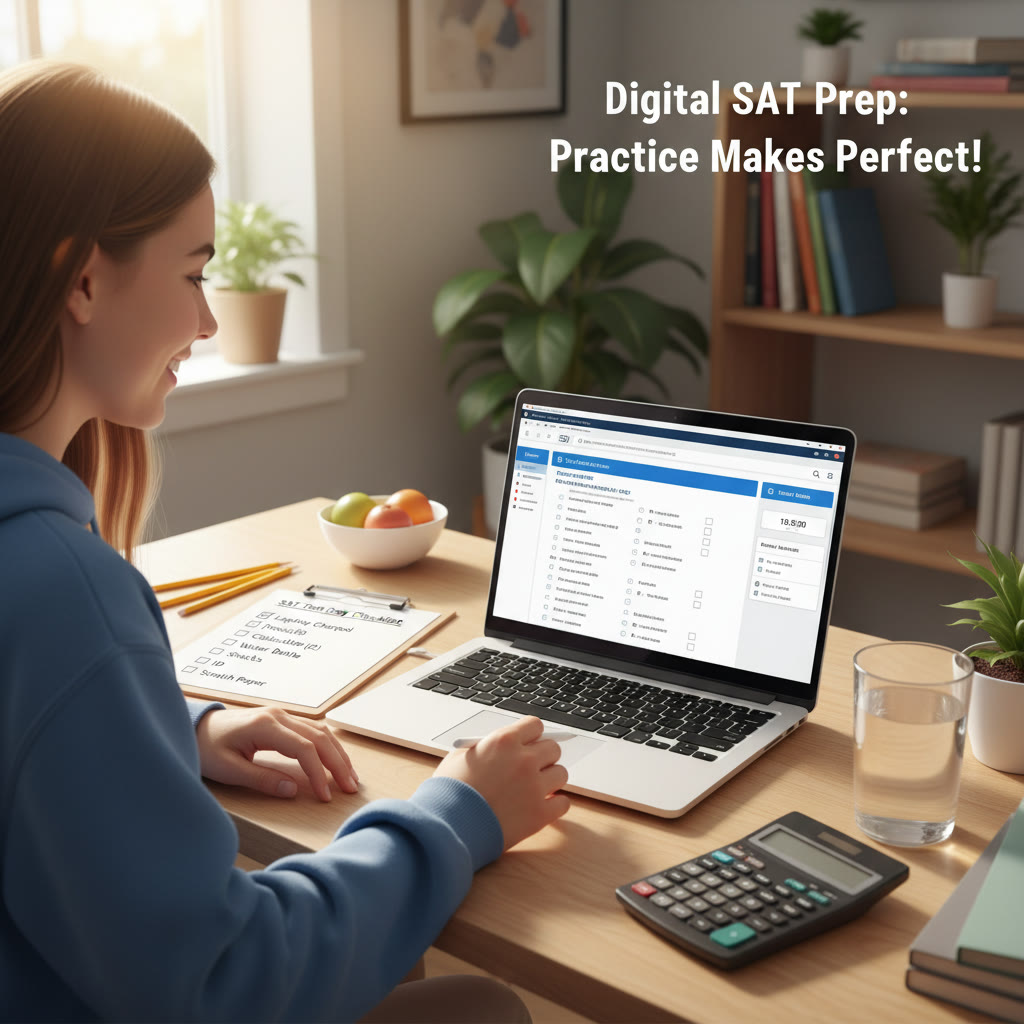
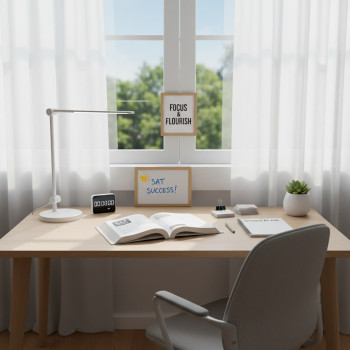
Find at least one reliable study spot: a quiet corner at your host family’s home, a local library, or a campus study room. If you’re practicing digitally, make sure your laptop or tablet is charged and that you’re comfortable writing on paper too. Keep a simple study kit with pencils, a stopwatch, graph paper, and a notebook for error logs.

Smart tactics for the test day
Pacing and question order
Because the digital SAT uses adaptive modules, pacing and early accuracy matter. Quickly scan a passage or math problem to judge difficulty. If a question looks solvable in a minute or two, go for it. If it’s complicated and time-consuming, mark it and move on — then return if time allows. Avoid getting stuck on any single question during the first pass.
Don’t overthink guesses
There’s no penalty for wrong answers on the SAT, so never leave a question blank. Make educated guesses when needed. Narrow choices by eliminating clearly wrong answers, then pick the best remaining option.
Sample 8-week plan for exchange students (compact, realistic)
This plan assumes you have basic familiarity with the SAT content and can dedicate 10–12 hours per week. Adjust the hours and focus areas to fit your reality.
| Week | Main focus | Practice | Goal |
|---|---|---|---|
| 1 | Diagnostic test + review | 1 full practice test, set up error log | Baseline score and list of weak areas |
| 2 | Reading strategies + vocabulary in context | 3 passages, daily vocab in context | Improve accuracy on main idea and inference questions |
| 3 | Algebra fundamentals | Targeted problem sets, 1 timed math section | Faster equation setup and solving |
| 4 | Error patterns + mixed practice | 1 full practice test, review all errors | Reduce careless mistakes by 20–30% |
| 5 | Data analysis & advanced math topics | Data interpretation sets, quadratic practice | Strong handling of charts and higher-algebra items |
| 6 | Timed practice and endurance | 2 timed sections and one full practice | Steady pacing with fewer time panics |
| 7 | Final content polish | Targeted drills on persistent weak spots | Smooth approach to recurring question types |
| 8 | Test simulation and day prep | 1 full practice test, logistics checklist | Confidence and readiness for test day |
How Sparkl’s personalized tutoring can fit into your exchange journey
Studying abroad is a unique experience and sometimes you need guidance tailored to that life. Sparkl offers personalized tutoring designed to match your schedule, your current level, and your goals. That might mean:
- 1-on-1 guidance that targets the specific content you struggle with — whether it’s SAT math techniques or passage-based reading strategies.
- Tailored study plans that fit your exchange calendar, so you don’t sacrifice cultural experiences for prep.
- Expert tutors who understand how different curricula map onto the SAT, offering context-specific explanations.
- AI-driven insights to track your errors and reveal the most efficient path to improvement.
If you feel pulled between commitments or unsure how to pace yourself, a short series of sessions can make practice far more efficient and less stressful.
Mental game and culture shock — prepare for both
Test anxiety is normal. So is occasional culture shock. Both can affect performance. Use these simple habits to stabilize your routine:
- Sleep: get consistent rest the week before your test.
- Nutrition: eat balanced meals; avoid heavy or unfamiliar foods right before the test.
- Micro-routines: a short walk, breathing exercises, or a five-minute review of formula sheets can center you before the test.
Remember: your exchange experience is a strength. Admissions readers know it. A calm, well-prepared test performance is simply another way to show you can thrive in new environments.
Common mistakes exchange students make — and how to avoid them
- Waiting until the end of your exchange to prepare. Start early and distribute practice throughout your stay.
- Studying English only by memorizing vocabulary lists. Read and discuss real texts instead.
- Ignoring test logistics. ID rules, test center differences, and deadlines can derail a plan. Confirm them early.
- Trying to study in too many short bursts without review. Regular review of errors is what produces lasting gains.
Final checklist before test day
- Confirmation email and test center address printed or saved offline.
- Valid ID (usually your passport) and any required documentation for accommodations.
- Charged device for travel, quiet study materials, pencils, and an approved calculator (if allowed in your region).
- Light snacks for before the test and a plan for travel time to the center.
- One last relaxed review of key formulas and reading strategies — not cramming.
Parting advice: make preparation part of the exchange story
Your exchange year is more than a backdrop for test prep — it’s a resource. Use conversations with host students to sharpen language skills, read local commentary to build analytical reading habits, and let the rhythms of a new place help you develop consistent study rituals. If you need a guiding hand, short, targeted tutoring sessions — like those offered by Sparkl — can bring clarity and speed up improvement without stealing your exchange experience.
Above all, stay curious. Preparing for the SAT is a finite project with measurable steps. Enjoy the learning, and remember that your exchange journey already puts you ahead: you have lived experience, adaptability, and a fresh perspective. Combine those with a focused plan, and you’ll walk into test day calm, prepared, and ready to show what you can do.

















No Comments
Leave a comment Cancel