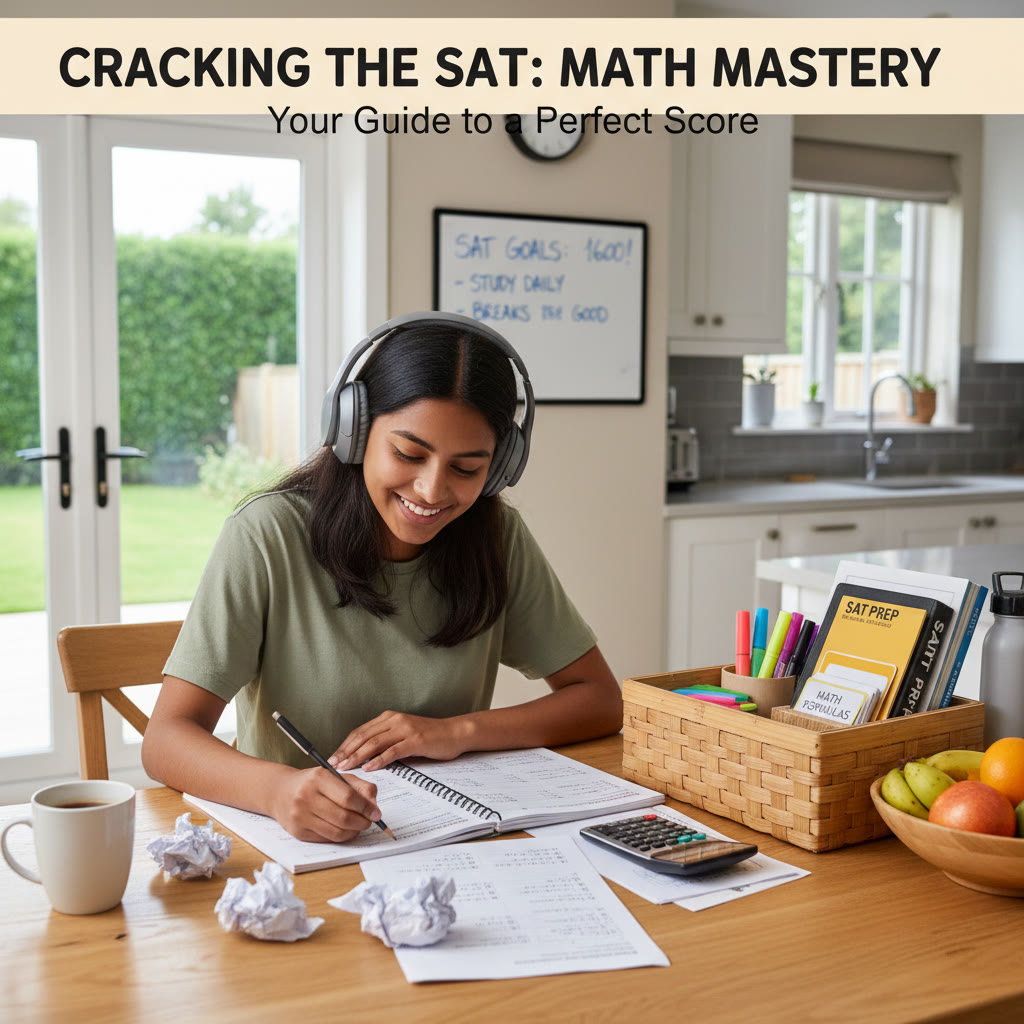

How to Build a Study Routine in a Noisy Home Environment
Studying for the SAT is hard enough without competing with the soundtrack of everyday life — dishes clattering, a sibling’s YouTube marathon, or the neighbor’s lawnmower. If your house is loud, that can feel like a built-in obstacle. The good news: noise doesn’t have to be a deal-breaker. With a few mindset shifts, realistic habits, and specific tools, you can craft a study routine that turns imperfect space into consistent progress.
Why this is a realistic challenge (and why you can beat it)
First, validation: you are not alone. Many successful SAT scorers have trained in noisy environments — dorm rooms, busy family homes, or public spaces. The trick isn’t total silence; it’s consistency and strategy. Neural science shows that repeated, focused practice strengthens memory and reasoning. The environment matters, but routines, focused techniques like active recall, and small environmental controls matter more.
Start with a mindset that accepts constraints
The most effective routines are built on acceptance. If you’re waiting for a perfectly quiet house, you’ll wait forever. Instead, accept three facts:
- Your house will not be silent all the time.
- You can control when and how long you study.
- Small barriers reduced consistently beat rare bursts of perfect study.
Once you accept constraints, you can make practical decisions: choose the best hours, break study into manageable chunks, and prioritize tasks that need deep focus versus those that tolerate noise.
Design a noise-aware study schedule
Your schedule is the backbone of your routine. Build it around noise patterns, energy levels, and official SAT priorities.
Map your household noise
Spend a week tracking when your home is quietest and noisiest. You can do this informally by noting times or more formally using a simple log.
| Time | Typical Noise | Best Activities |
|---|---|---|
| 6:00–8:00 AM | Quiet, people getting ready | Deep work: Math problem sets, timed Reading sections |
| 8:00–3:00 PM | Variable — school, errands | Short review sessions, flashcards, grammar drills |
| 3:00–6:00 PM | High — family time, siblings home | Low-focus tasks: practice drills, note-taking |
| 7:00–9:00 PM | Medium — TV, dinner cleanup | Timed practice with earplugs/white noise or review |
| 9:30–11:30 PM | Quieter for many households | Deep work if your energy allows |
Use this map to place your highest-value work in your quietest windows. For most students, that means early morning or late evening. But don’t force your schedule if it conflicts with sleep — quality sleep beats a late-night cram session.
Prioritize tasks by required focus
Not all SAT tasks are equal. Separate them into three categories:
- High-focus: Full-length practice tests, time-bound Reading sections, dense Math problem sets.
- Medium-focus: Targeted problem practice (e.g., geometry review), error analysis, passage re-reads.
- Low-focus: Flashcards, vocabulary review, watching strategy videos.
Schedule high-focus work in your quietest times and low-focus work during noisy windows. That maximizes productivity while respecting real-world noise.
Build a practical physical setup
Your study corner doesn’t need to be a library. It needs to be consistent and optimized for the kind of work you do.
Create a reliable study nook
- Choose a consistent place — even a kitchen table works if you use it every day for study.
- Keep a small basket with essentials: pencils, snacks, water, headphones, a charged calculator, and a timer.
- Minimize visual clutter so your brain doesn’t get distracted by unrelated objects.
Tools that help reduce noise impact
Not every tool is expensive. Here are practical options, ordered by cost and impact:
- Soft earplugs — inexpensive, effective for lowering ambient noise.
- Over-ear noise-isolating headphones — block and dampen noise better than earbuds.
- White noise or ambient sound apps — steady audio can mask unpredictable home noises.
- Active noise-canceling headphones — high impact for frequent loud interruptions (consider if you study a lot at home).
Pair ear protection with a short routine cue: put on headphones, set a 25–50 minute timer, take three deep breaths, and start. That cue builds automaticity — your brain learns that “headphones + timer = focus mode.”
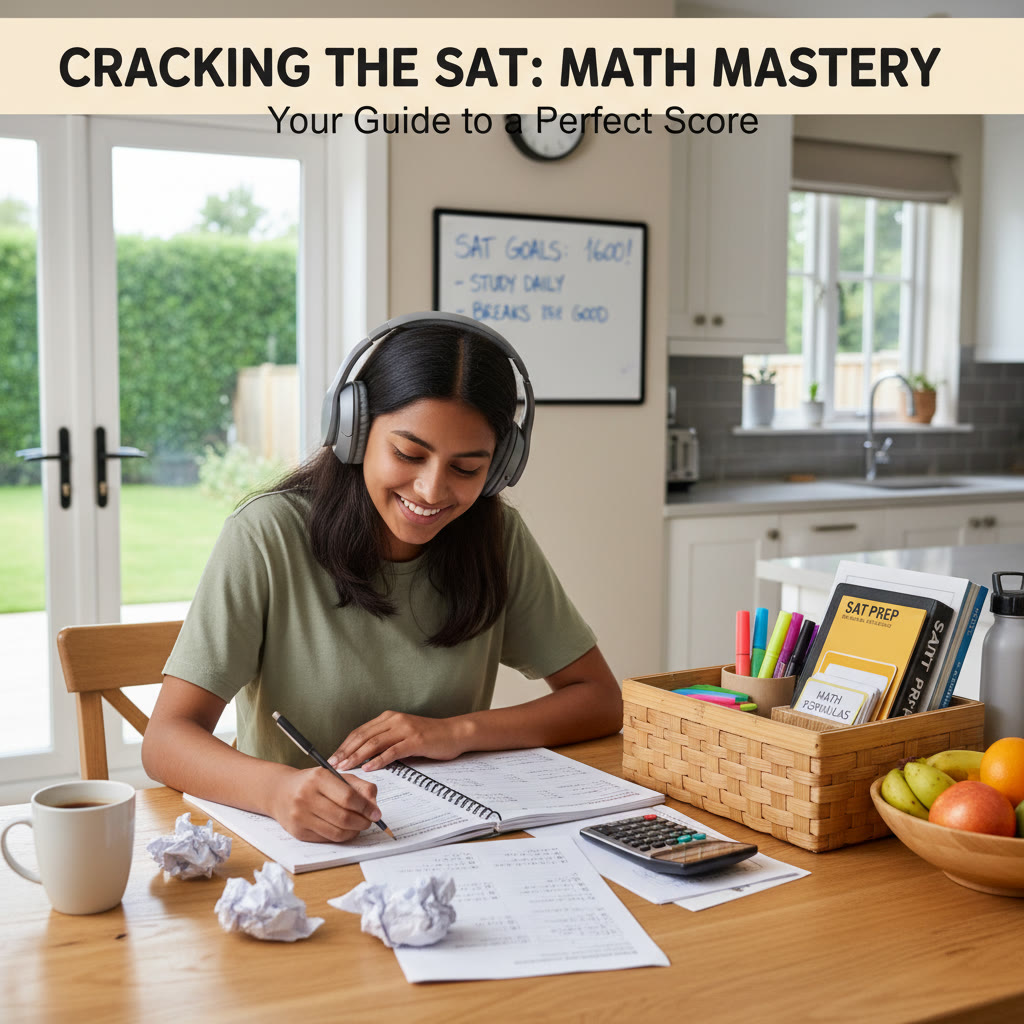
Use short, powerful sessions — the Pomodoro with a twist
Long stretches require quiet; short bursts can handle noise better. Pomodoro-style blocks (25–50 minutes of work, 5–10 minutes break) are ideal. Here’s a version tuned to noisy homes:
- Work blocks: 25–40 minutes depending on your concentration span.
- Micro tasks: each block should have a single clear goal (e.g., solve 6 algebra problems, complete one reading passage).
- Recovery breaks: 5–10 minutes for a true mental reset; leave the noisy room if possible.
- One long break: after four cycles, take 30–45 minutes to recharge.
Short blocks reduce the chance that noise destroys an entire session. Even a noisy interruption is less costly if you’re nearing the next break.
Active study techniques that withstand noise
When the house is noisy, passive review (just rereading notes) is less effective. Use active techniques that force engagement and are more tolerant of background sound.
Active recall and self-testing
Instead of rereading passages, close the book and try to recall the main ideas, question types, or math steps. Flashcards and practice questions are excellent because they demand a response, not passive attention.
Explain out loud — even to an empty room
Teaching is one of the strongest ways to encode information. If you can, verbalize a grammar rule, solve a math problem while speaking your reasoning, or summarize a passage. If it’s too loud, record yourself; the act of explaining is the learning engine.
Chunk problems and use scaffolding
Break complex problems into steps and solve one step per Pomodoro. When noise hits, you’ve still completed discrete progress. This is especially useful for multi-step math problems or dense reading passages.
Simulate test-like conditions strategically
You might assume that noisy practice is bad because the SAT is quiet. The reality: the SAT is quiet, but you also need flexibility. Mix two types of practice:
- Quiet, simulated tests: Full-length practice under strict, quiet conditions to build stamina and timing.
- Noisy adaptation sessions: Shorter practice drills in noisier conditions to learn resilience — e.g., doing error analysis while there’s soft background noise.
This dual approach builds both accuracy and adaptability. You’ll learn to protect your quiet test sessions while becoming resilient enough to study effectively when the house is loud.
Communicate and negotiate with household members
Practical boundaries reduce surprises. A short, respectful conversation can buy you hours.
- Pick one or two quiet windows per week and ask for those times to be respected.
- Offer to reciprocate — help with a chore in exchange for quiet time.
- Use visible signals: a “Do Not Disturb” sign on the door, or headphones on as a cue that you’re studying.
Most families respond to clear, calm requests. Frame it as planning for an important goal — your SAT score is a future opportunity, not a personal preference.
When silence isn’t possible: mental strategies for staying on task
Noise creates cognitive load — it pulls attention. Counter this with intentional mental strategies:
- Grounding rituals: a short breathing exercise or 30 seconds of light stretching before a study block.
- One-thing focus: pick a single, specific goal for the block (e.g., “I will complete three geometry problems and write the error analysis”).
- Redirection plan: if you lose focus, use a 30-second refocus checklist: breathe, re-read the task, set the timer to 10 minutes, start.
Small rituals reduce decision fatigue and make returning to focus faster.
Practical sample weekly schedule (noise-aware)
This sample balances high-focus mornings with flexible afternoons. Adjust times for your personal rhythm.
| Day | Morning (High-focus) | Afternoon (Flexible) | Evening (Review/Workout) |
|---|---|---|---|
| Monday | 6:30–8:00 AM: Timed Reading section | 4:00–5:00 PM: Flashcards & vocab | 8:00–9:00 PM: Math problem set |
| Tuesday | 6:30–8:00 AM: Math (algebra practice) | 3:30–4:15 PM: Grammar drills | 9:30–10:00 PM: Light review |
| Wednesday | 7:00–8:30 AM: Full-length practice (quiet) | 5:00–6:00 PM: Error analysis | 8:00–9:00 PM: Active recall |
| Thursday | 6:30–8:00 AM: Reading/annotating passages | 4:00–5:00 PM: Math drills | 9:00–9:30 PM: Vocabulary |
| Friday | 7:00–8:30 AM: Targeted weakness work | 3:00–4:00 PM: Practice problems | 7:30–8:30 PM: Relaxed review |
| Saturday | 8:00–12:00 PM: Full-length practice or mixed sessions | Afternoon: Rest / light review | Evening: Social time |
| Sunday | 9:00–11:00 AM: Error analysis + strategy | Afternoon: Plan next week | Evening: Prep materials |
Remember: consistency matters more than perfection. If you miss a morning session, reschedule it — don’t cancel the habit.
Use technology wisely — create guardrails, not distractions
Phones and apps can be both helpers and enemies. Use technology to automate focus:
- Use a timer app for Pomodoro cycles.
- Enable focus modes (do not disturb) during study blocks.
- Use apps for spaced repetition (SRS) for vocabulary — short bursts work great in noisy windows.
- Record explanations of problems so you can replay your reasoning later.
Be strict about social media and notifications. If you struggle to resist, set the phone in another room.
When to ask for help — and how Sparkl’s personalized tutoring fits
Sometimes the best way forward is guided support. If noise consistently undermines your progress, consider personalized help. Sparkl’s personalized tutoring offers one-on-one guidance, tailored study plans, expert tutors, and AI-driven insights that can identify weak spots and make practice more efficient. A tutor can help you design a plan that fits your household rhythm, offer accountability, and provide targeted practice during your best focus windows.
Pairing a routine with occasional tutoring sessions can accelerate progress: tutors help you use noisy study time more effectively, suggest high-impact tasks, and rehearse exam strategies so your quiet practice is maximally productive.
Troubleshooting common problems
Problem: I keep getting interrupted and lose momentum
Solution: Shorten blocks to 15–20 minutes, prioritize a single task each block, and use a visible cue (headphones, sign) to reduce interruptions. If interruptions are frequent, negotiate a daily 60–90 minute quiet window.
Problem: I get anxious studying with background noise
Solution: Start each session with a calming ritual (breathing or a two-minute walk). Use white noise to make background sound predictable, which can reduce anxiety.
Problem: I can’t find a consistent study spot
Solution: Commit to a mobile study kit — a small backpack with your essentials. Rotate between two or three consistent spots so you’re not decision-fatigued each day.
Test day and last-week strategies
In the final week, reduce the number of new intense sessions and focus on consolidation. Simulate strict test conditions during at least one full-length practice under quiet conditions to practice timing, pacing, and stamina.
- Practice with ear protection if you use it — don’t surprise yourself on test day.
- Use your noise-aware skills to stay calm: short grounding exercises during breaks, clear decision rules for skipping hard questions, and a pacing plan.
- Stick to your sleep, nutrition, and routine — those make more difference than last-minute cramming.

Final encouragement — make small changes and celebrate progress
Progress on the SAT is rarely dramatic overnight. It’s steady improvement: a few more correct answers on practice sections, clearer timing, and fewer careless errors. In a noisy home, every successful focused block is an achievement — celebrate those wins.
Build a routine that respects your reality: map the noise, choose your priorities, use short focused blocks, and practice active learning. If you need tailored strategies, Sparkl’s personalized tutoring can help fine-tune your plan and provide one-on-one guidance at the moments you need the most impact.
Finally, remember that resilience counts. Learning to study well despite noise is a life skill — you’ll use it in college, work, and beyond. Start small, stay steady, and keep the exam goal in view. With a smart routine, noisy backgrounds become just another detail in your path to a strong SAT score.
Quick checklist to get started tomorrow
- Map your home’s quiet and noisy times for one week.
- Pick two daily study windows that match your energy and noise map.
- Create a 25–40 minute Pomodoro plan with explicit micro-goals.
- Pack a study basket (headphones, timer, snacks, charged calculator).
- Negotiate one weekly quiet window with family members.
- Schedule one quiet, full-length practice test this week.
Start with these small steps and build momentum. You’ll be surprised how much progress is possible, even in a noisy home.
























No Comments
Leave a comment Cancel