
The SAT’s Long Road: A Quick Orientation
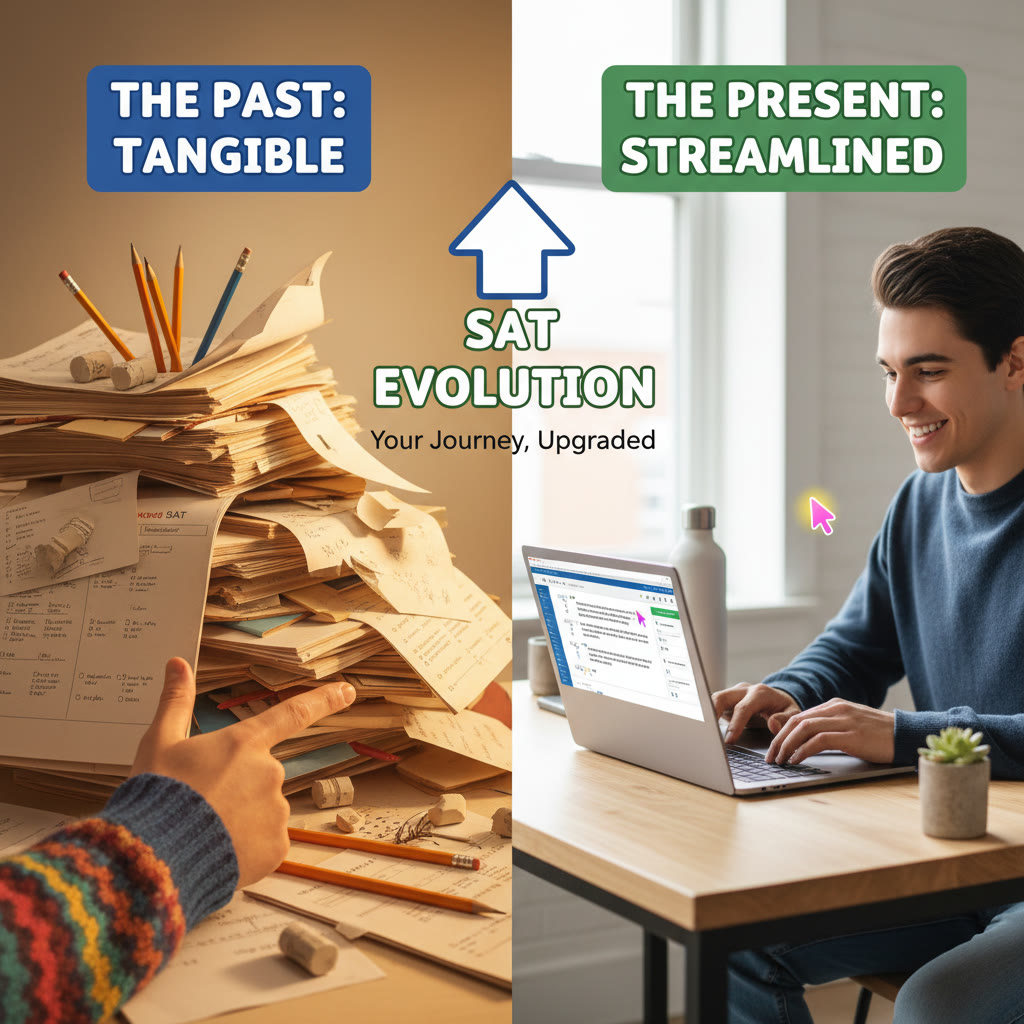
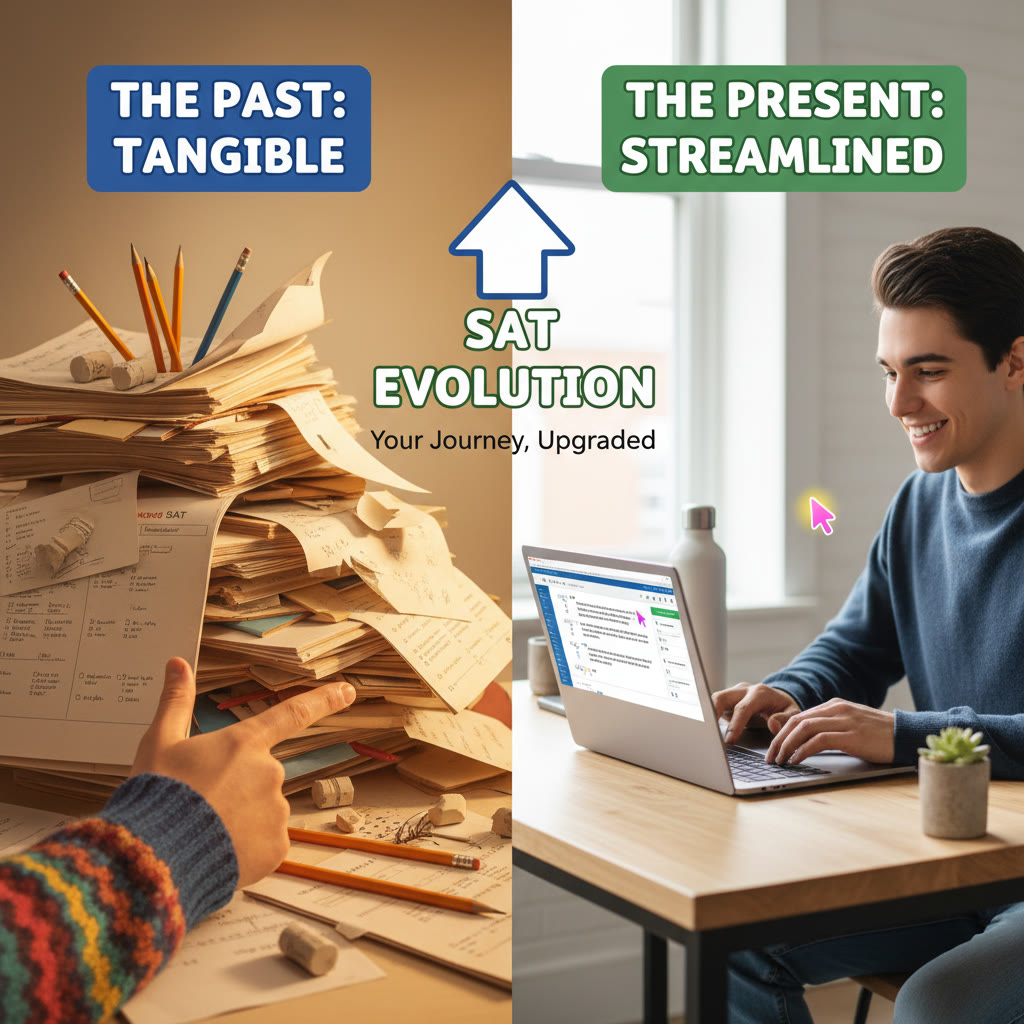
Think about a photograph of a hundred test booklets laid out on a long table, pencil marks marching across bubble sheets, proctors watching the clock. That image might feel like the SAT your older sibling remembers. But if you’re registering for the exam today, your experience could be very different: shorter sections, an adaptive format, and a computer screen where those bubble sheets used to be.
This post walks through how the SAT evolved from a paper-and-pencil snapshot of academic skills into a digital, adaptive assessment. We’ll explore why the changes happened, what students need to know, concrete study strategies for the new format, and how targeted help — including Sparkl’s personalized tutoring — can smooth the transition. No jargon-heavy lecture — just practical context and smart advice.
A Brief History: Milestones on the SAT Timeline
The SAT has been around for nearly a century. Though I’ll keep this short, a few turning points matter for understanding today’s test:
- Origins: The SAT began as a standardized measure used by colleges to compare applicants’ readiness. Over time it won a central place in admissions and in the culture of test prep.
- Mid-century to late-century shifts: The test periodically changed content, scoring, and emphasis as educators and researchers debated what kinds of knowledge and reasoning best predicted college success.
- 2005 revision: The College Board added a writing section and reworked verbal questions, reflecting a different balance of skills than previous decades.
- 2016 redesign: A major overhaul returned the score to a 1600 scale, combined reading and writing into Evidence-Based Reading and Writing (EBRW), reduced emphasis on obscure vocabulary, and made the essay optional. The test also removed the penalty for guessing.
- The digital shift: In the early 2020s, the College Board announced a fuller move toward digital administration. The modern digital SAT is shorter, section-adaptive, and delivered on secure devices, fundamentally changing how timing and strategy work.
Each change reflects research about college readiness and a desire to make the test fairer, more secure, and more practical for students who increasingly live their academic lives online.
Paper vs. Digital: What Really Changed?
It’s tempting to think the difference is only cosmetic — paper pages swapped for a screen. But the changes go deeper. Here’s a plain-English comparison.
| Feature | Traditional Paper SAT | Digital SAT (Modern) |
|---|---|---|
| Length | ~3 hours (plus optional essay when it existed) | ~2 hours, with shorter subsections |
| Scoring | 400–1600 (post-2016), with penalties removed earlier | Same 1600 scale, but score results can be delivered faster |
| Format | Paper, linear (same sequence for every test taker) | Digital, multistage adaptive (modules adjust to your performance) |
| Questions | Longer passages and fixed content | More varied passage lengths, shorter clusters, and emphasis on data and real-world contexts |
| Tools | Pencils, calculators for certain sections | On-screen tools: built-in calculator for allowed sections, highlighting, flagging, and annotations |
| Security | Traditional test-center security | Encrypted delivery, rapid item rotation, and more secure identity verification |
What “Adaptive” Means — and Why It Matters
The adaptive format is the technical heart of the digital SAT. Put simply, the test is delivered in modules. Your performance in the first module of a section influences the difficulty of the second module. Do well early, and tougher questions follow. Struggle early, and the second module will be more moderate.
Why does this matter? Two important consequences:
- Precision: Adaptive testing can estimate ability with fewer questions, which helps shorten the test without sacrificing accuracy.
- Strategy shift: Every question in early modules carries extra weight for where the rest of that section goes. That changes how you manage time and anxiety; strong early performance is rewarded.
Why the Shift to Digital Happened
The move wasn’t driven by novelty. There were clear, practical reasons:
- Faster, clearer results: Digital administration lets testing organizations process responses and deliver score reports more quickly.
- Security: A digital test allows for more robust encryption and item pools, making copying or leaking items harder.
- Fairness and accessibility: Digital tools can present content in flexible ways, support screen readers or adjustable text sizes for disabilities, and standardize test delivery across locations.
- Reflection of modern reading: Students read and research online constantly. The test evolved to measure skills that matter in a digital environment — synthesizing short passages, working with data, and evaluating evidence quickly.
How the Student Experience Has Shifted
Students often report two things: relief at shorter testing time, and a new kind of pressure from the adaptive model. Here are the practical changes a test-day experience now includes:
- Fewer total questions but a sharper focus on reasoning and evidence.
- Faster transitions between sections and a different pacing rhythm — shorter blocks of concentrated work.
- New on-screen tools: you’ll highlight, flag, and move within passages differently than you would on paper. Becoming comfortable with those tools is part of preparation.
- More immediate security checks and device-based settings, meaning you need to be familiar with the test platform beforehand and know how to troubleshoot common issues.
A Real-World Example: How Pacing Changes
On paper, a student might rely on underlining and margin notes across long passages. On-screen, the same student might instead use highlight and quick annotations — and make decisions about when to move on faster. Because modules are shorter, a five-minute misstep in the first module can change the difficulty of the second. Practicing time-awareness becomes crucial.
Preparing for the Digital SAT: Practical Strategies
Prep for the digital SAT is a blend of core skill-building and platform-specific practice. Here’s a phased approach that many students find effective:
Phase 1 — Strengthen the Foundations
- Work through classic content: algebra, geometry basics, grammar rules, vocabulary in context, and reading comprehension using a variety of sources.
- Practice active reading: annotate short passages, summarize paragraphs, and locate evidence quickly.
- Solve word problems and data analysis questions on paper and on a device to ensure transfer of skills.
Phase 2 — Master Digital Fluency
- Take timed practice sets on the same platform style as the digital SAT. Learn the toolbar: highlight, flag, and navigate passages without losing time.
- Simulate modules to get a feel for the adaptive structure: how strong starts yield harder second modules and how pacing matters.
- Practice with the on-screen calculator. Know when it helps and when mental math is faster.
Phase 3 — Game-Day Readiness
- Do full timed sections to build stamina and get comfortable with shorter blocks. You’ll find your rhythm.
- Develop a monitoring routine: quick checks at 1/3 and 2/3 of the time to avoid surprises.
- Learn stress-management techniques like micro-break breathing and positive self-talk to handle the adaptive pressure.
Concrete Practice Ideas and Example Questions
Practice that reflects the format beats blind repetition. Here are specific exercises you can use:
- Timed module drills: Pick a 20–25 minute block of reading passages and practice highlighting the main idea and two supporting evidence sentences per passage.
- Quick-data practice: Use a short spreadsheet or chart and create three math questions from it (one basic, one intermediate, one advanced). Time yourself solving each in under three minutes.
- Adaptive simulation: After a practice module, deliberately review answer patterns. Notice when guessing helps and when it’s better to skip and return.
Example reading item (short form): Read a 150–200 word paragraph about a scientist’s experiment, then answer a two-part question: first identify the main claim, then choose the sentence that best supports it. Practice doing both in 4–5 minutes.
How Tutors and Personalized Help Fit In
Not every student needs the same kind of help. Some want content review; others need test-taking strategy, confidence building, or tech fluency. That’s where tailored tutoring shines. Sparkl’s personalized tutoring offers 1-on-1 guidance, tailored study plans, expert tutors, and AI-driven insights that can speed the learning curve. When your tutor understands which module types trouble you, they can design micro-practices that change your results quicker than generic study guides.
Here’s how a tutor might help differently under the digital SAT model:
- Pinpoint which module (early or late) tends to trip you up and practice the exact timing and question types involved.
- Provide bite-sized, simulated modules that mimic the adaptive jump to build confidence in real conditions.
- Use data from practice tests (including AI-driven analytics, when available) to refine a study plan that wastes no time on mastered skills.
Student Story — Turning a Weak Start into a Strong Finish
Consider Maya, a student who began practice tests nervously and consistently scored lower in the first modules of each section. Her tutor noticed the pattern and created five-minute early-module drills emphasizing quick evidence identification and a simple pacing cue — work the first 20% of the module in the first 20% of time. Within weeks, Maya’s module 1 accuracy rose, and the second modules she faced were more advanced — which improved her final score. A short, targeted intervention changed the trajectory.
Common Myths and Realities
- Myth: The digital format is easier. Reality: It’s different. Shorter tests and adaptive scoring change how you allocate attention. Skills still matter.
- Myth: You can’t annotate on a digital test. Reality: You can highlight and flag; practice makes this feel as natural as margin notes.
- Myth: Adaptive tests are unpredictable. Reality: They’re systematic. Early performance shapes later difficulty — which means preparation of early questions gives you leverage.
Checklist: What to Do in the Last 30 Days Before Test Day
- Take at least two full digital mock tests under timed conditions to build stamina and understanding of the platform.
- Review error patterns. If your mistakes are careless, design short sessions to correct habits; if they’re conceptual, allocate time for content review.
- Simulate test-day logistics: device familiarity, charging, arrival plans, and what materials are and aren’t allowed.
- Practice a calm routine: light exercise, sleep schedule, and a simple pre-test breathing sequence to lower arousal and sharpen focus.

The Bigger Picture: What This Means for Colleges and Students
Tests change; so do admissions practices. The digital SAT’s focus on evidence, data literacy, and concise reasoning mirrors the kinds of skills colleges value in the classroom and beyond. For students, the implication is an opportunity: the test now rewards clear, practical reasoning and comfort with digital reading. That shifts preparation away from rote memorization toward adaptable thinking.
At the same time, access and fairness remain central concerns. The shorter, digitally delivered test can reduce fatigue and speed score reporting, but it also demands access to reliable practice environments. That’s why personalized tutoring and support programs, including technology-friendly training, can level the playing field for students who didn’t grow up with constant device-based study.
Final Thoughts: Embrace the Change, But Prepare Smart
The transformation of the SAT from paper original to a digital, adaptive experience is more than a format update — it’s a reinterpretation of what the test measures. If you’re preparing now, your task is twofold: strengthen the core academic skills that always matter, and get fluent with the tools and timing the new format demands.
Shorter sections, adaptive modules, and on-screen tools create new strategic opportunities. Use them. Practice deliberately, track progress, and when it makes sense, get personalized help that targets your specific struggles. Sparkl’s personalized tutoring can be one of those supports — offering 1-on-1 guidance, tailored study plans, expert tutors, and AI-driven insights that help you practice smarter, not just longer.
Change can be unsettling, but it’s also a chance to reset your approach. Start small: a few targeted module practices each week and a weekly review of error patterns. Over a few months, those modest, consistent habits add up. When test day arrives, you’ll bring content knowledge, practiced digital fluency, and the calm confidence that comes from preparation built for the test you’ll actually take.
Quick Resources for Next Steps (No Links — Just Actions)
- Schedule two timed digital practice tests this month — simulate test day as closely as possible.
- Analyze one practice test thoroughly: categorize errors into careless, strategic, and conceptual, and build a two-week plan around the largest category.
- Try a short run of early-module practice each study session to train strong starts.
- Consider a short stint of personalized tutoring focused on digital strategy and weak content areas — three months can be transformative.
Closing Note
The SAT keeps evolving because education and what colleges look for evolve. That can feel like pressure, but it’s also an invitation: align your study with the skills the modern test values, practice in realistic digital conditions, and use focused support where it helps most. With steady effort and the right strategies, the move from paper to pixel becomes just another part of your growth as a student — one you can confidently manage and even use to your advantage.



















No Comments
Leave a comment Cancel