

The Role of Simulation Exams in SAT Prep
Imagine walking into test day calm, focused, and confident because you have already done the test—many times—under the same pressure, pacing, and time constraints. That confident feeling doesn t come from luck; it comes from deliberate simulation exams. These are full-length, timed practice tests that recreate the SAT experience as closely as possible. But they are far more than rehearsal: well-designed simulation exams act as diagnostic microscopes, pacing coaches, and mental toughness builders all at once.

What Exactly Is a Simulation Exam?
A simulation exam for the SAT is a full-length practice test taken under test-like conditions. That means timing sections strictly, following breaks exactly as the test requires, and removing any non-test aids such as phones, calculators when not allowed, and notes. The goal is twofold: reproduce the environmental factors of test day, and create a controlled dataset you can analyze afterwards.
Key elements of a high-quality simulation exam
- Full-length College Board practice test or equivalent, with the same number of sections and timing.
- Strict timing and adherence to the test’s structure (sections, breaks, calculator policy).
- A quiet, distraction-free environment.
- Complete post-test review with error analysis, timing logs, and targeted practice.
Why Simulation Exams Matter More Than Piecemeal Practice
It s tempting to grind dozens of individual problem sets or spend afternoons on loose sections of math or reading. Those activities build skill, but they miss the holistic lessons that only a full run-through provides.
1. Stamina and mental pacing
The SAT is as much a test of sustained concentration as of academic skill. Working through a three-hour-plus experience once a week gives you a real sense of how your focus waxes and wanes. You learn the small rituals that restore your attention: a few calm breaths before a new section, micro-breaks inside allowed pauses, or a consistent approach to difficult questions that prevents time leaks.
2. Realistic timing and strategy testing
Time management strategies sound good in theory: skip hard questions, mark and return, allocate X minutes to each passage. But it s only when you simulate an entire test that you can see whether those strategies actually work. Maybe skipping a hard question in Reading and returning later costs you comprehension in the next passage because your energy dips. Simulation exams reveal those interactions.
3. Accurate score projection and trend measurement
Single-section practice scores are noisy. Full-length tests produce more reliable indicators of likely test-day performance. Run a series of simulations and you can distinguish real improvement from random variance. You can use these tests to project likely scores, set realistic goals, and measure the impact of specific study changes.
4. High-fidelity diagnostic data
When you treat simulation exams as data collection instead of just practice, they become powerful diagnostic tools. A careful review can show patterns: careless algebra mistakes after minute 25 of a math section, recurring comma errors, or a timing bottleneck in Passages 3 and 4 of Reading. Those insights guide efficient, targeted practice that shifts weak points into strengths.
How to Create a True Test-Day Simulation
There s an art and a science to running simulation exams that actually improve scores. Here s a step-by-step plan you can adopt.
Step 1: Use high-quality materials
If you want accurate indicators, use official College Board practice tests when possible. If you re using third-party materials, ensure the test structure and difficulty resemble the real SAT. The closer the content to the real exam, the more actionable your results.
Step 2: Replicate timing, order, and restrictions
- Start and stop sections per exact timing.
- Take the same official breaks, and don t use unauthorized aids.
- Make the room as close to an official test center as possible: quiet, minimal distractions, and a ticking clock visible to you.
Step 3: Simulate test-day conditions beyond timing
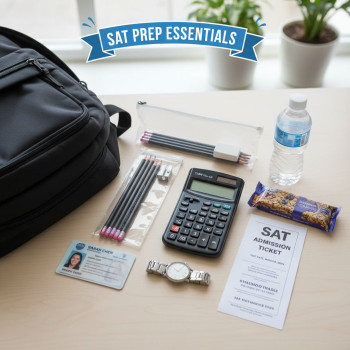
Eat the breakfast you plan to have on test day, wear similar clothing, and avoid last-minute cramming. If you normally fidget, practice with the same small fidget or none at all. These environmental variables affect performance in subtle but important ways.
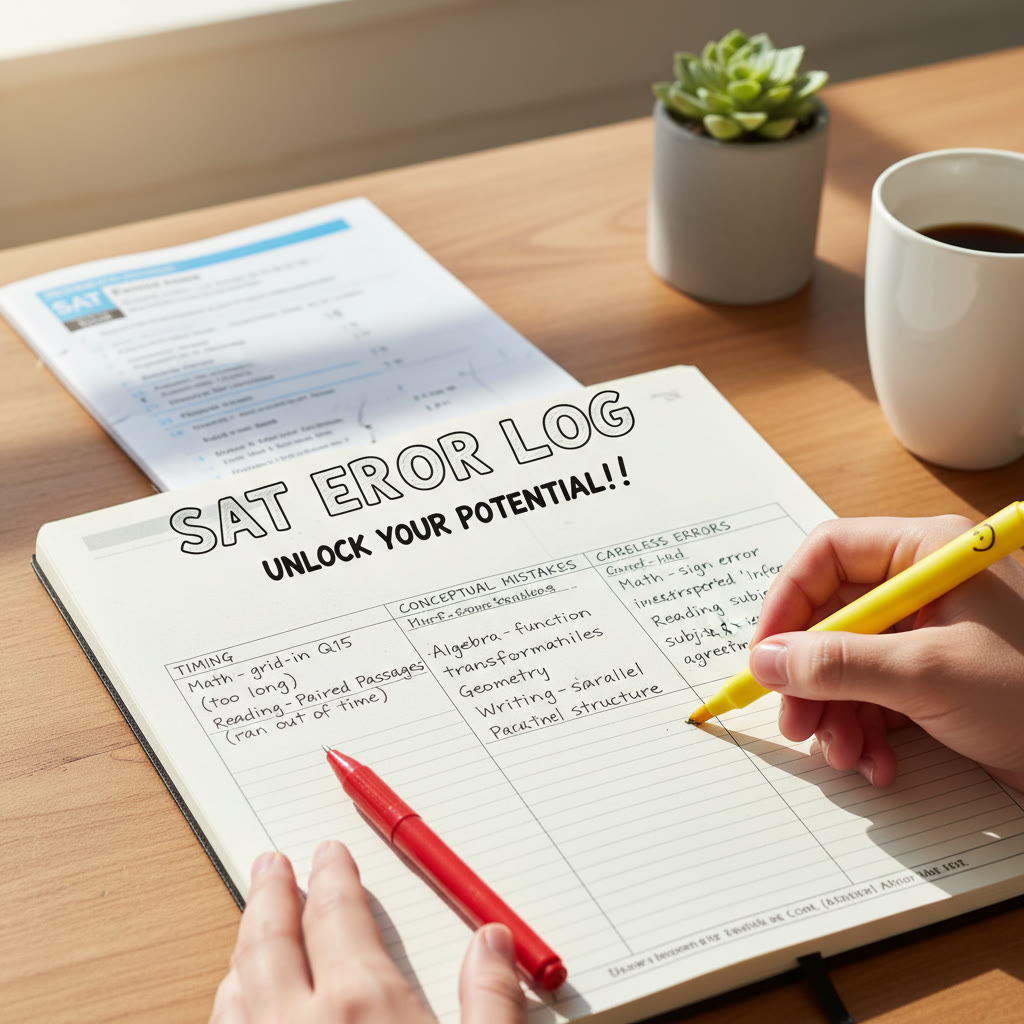
Step 4: Record granular metrics
Don t just record your score. Track:
- Time spent on each question or passage
- Question types missed (e.g., geometry, paragraph analysis)
- Reason for error: knowledge gap, careless mistake, timing pressure, misread prompt
- Your subjective focus level for each section
Step 5: Review immediately and deeply
The hour after a simulation exam is prime review time. You still remember the feeling of each question. Mark the ones you guessed on under time pressure versus those you would have missed even with time. Turn each mistake into a micro-lesson.
How Often Should You Run Simulation Exams?
Frequency depends on the test date and your starting point. If you have months to prepare, the goal is to ramp up both the number and quality of simulations so that your test-day readiness is high without burning out.
Recommended cadence based on timeline
| Time Until Test | Simulation Frequency | Focus |
|---|---|---|
| 3+ months | 1 every 2 weeks | Build baseline; diagnose weaknesses; learn pacing |
| 1-3 months | 1 per week | Practice stamina; apply targeted drills based on diagnostics |
| 2-4 weeks | 2 per week (one full-length, one half-length focus) | Polish timing, reduce careless errors, fine-tune test-day routine |
| Final week before test | 1 full simulation early in the week; light review later | Consolidation, rest, and confidence maintenance (avoid burnout) |
This schedule balances learning and recovery. Full simulations are intense: they produce great data, but require energy and mental reset. Half-length or section-focused timed practices can be used between full exams to keep skills sharp without fatigue.
How to Analyze Simulation Results: A Practical Framework
Running simulations is only half the battle. The payoff comes from disciplined, actionable review. Here s a simple framework to extract maximum learning from each test.
1. Immediate triage
Right after the test, mark questions by why they were missed: misunderstanding, slow reading, algebra slip, misused calculator, or time expiration. This triage tells you which action to take first.
2. Deep-dive error analysis
For each missed question, write a 1-2 sentence note describing the mental step you missed. For example: “I misapplied the distributive property because I didn’t factor out a common term” or “I misread the passage s timeframe and lost context.” Over time these notes reveal trends you can address systematically.
3. Timing and pacing audit
Chart how long you spent per question or per passage. Were there ‘time sinks’—single questions that consumed too many minutes? If so, practice disciplined skipping strategies. If a whole passage took too long, work on rapid passage mapping and purposeful reading.
4. Drill to the gap
Use the diagnostics to create targeted drills. If you miss geometry questions late in the section, build short, timed sets of 10-12 geometry problems, replicating that late-section cognitive state by scheduling them after other practice.
5. Re-test specifically
After focused drills, re-run short simulations that target your weak points: a timed Reading block or math section. See whether the error rate falls. If not, adjust the drill type or seek expert help.
Examples and Mini Case Studies
Nothing teaches like a concrete example. Here are two short case studies that show how simulation exams turned practice into performance.
Case study 1: Maya, a gradual but steady improver
Maya started with an initial simulation that exposed two problems: careless arithmetic mistakes in Math and running out of time on Reading passages 3 and 4. Her tutor recommended weekly full simulations and targeted 20-minute drill sessions for arithmetic accuracy. After six weeks, Maya s simulations showed a 60% reduction in careless mistakes and her Reading timing improved by 30%. Her practice-test score increased by 80 points.
Case study 2: Amir, a stamina issue
Amir did well on untimed practice but fell off in full simulations: his focus dropped dramatically after the second break. The review revealed he wasn t practicing with physical endurance in mind. Amir and his tutor introduced weekly full-length simulations earlier in the schedule, adjusted his nutrition and micro-break routines, and practiced mindfulness techniques. By test day, Amir reported feeling mentally refreshed after breaks and gained 70 points compared to his initial full-length simulation.
Psychological Benefits: Reducing Test-Day Anxiety
One of the most underrated advantages of simulation exams is psychological desensitization. Familiarity with the format reduces the novelty factor on the real day—less adrenaline, fewer surprises, and a stronger ability to follow your plan. Simulations also let you rehearse coping strategies for anxiety: breathing techniques, a written micro-plan for when panic hits, and quick rituals that reset focus. The result isn t just higher scores; it s a calmer, more resilient test-taker.
Common Pitfalls and How to Avoid Them
- Doing simulations without review: a simulation without analysis is a snapshot, not a lesson. Always pair practice tests with a structured review.
- Over-simulating right before the test: intense simulations too close to test day can burn you out. Keep the final 48-72 hours light and restorative.
- Using low-quality materials: misleading practice tests can teach the wrong lessons. Stick to official or carefully vetted resources.
- Neglecting physical factors: sleep, nutrition, and environment matter. A good simulation includes these variables, not just timing.
How Tutoring and Technology Amplify Simulation Value
Simulations become far more effective when paired with expert guidance and smart analytics. That s where personalized tutoring and AI-driven insights shine. A tutor who understands your patterns can spot subtle trends a raw score won t reveal, and AI tools can process many simulations to highlight repeating weak spots and predict how much practice of a certain type is likely to boost your score.
Sparkl s personalized tutoring brings both human coaching and data-driven recommendations together. Imagine running a simulation, then receiving an immediate breakdown that not only shows which questions you missed, but suggests a two-week study plan targeted to those exact errors—plus 1-on-1 guidance to practice new strategies. Expert tutors can demonstrate quicker ways to read a passage, show how to avoid common math traps, and help you rehearse test-day routines until they feel automatic. AI-driven insights can spot long-term trends across tests and help prioritize drills so your practice time yields the biggest return.
Putting It All Together: A Simple 8-Week Simulation Plan
Here s a practical eight-week template that balances learning, simulation, and rest. Adjust it to your own timeline and starting score.
| Week | Focus | Simulation Plan | Review Action |
|---|---|---|---|
| 1 2 | Baseline & diagnostics | Full-length simulation at start (diagnostic) | Deep error log; build study plan |
| 3 4 | Targeted skill-building | Half-simulations: timed Math/Reading sections | 10-15 minute daily drills on weak topics |
| 5 6 | Pacing & stamina | Weekly full-length simulation | Timing audits; stamina routines; adjust pacing |
| 7 | Polish | Two simulations (one full, one focused) | Fix recurring careless errors; refine test-day plan |
| 8 | Consolidation & rest | One light full simulation early; light review | Sleep, confidence work, and final logistics |
Final Notes and a Small Checklist
Simulation exams are the single most powerful lever in SAT prep when used intelligently. They reveal weaknesses you didn’t know you had, teach pacing under pressure, and build the confidence that comes from familiarity. But remember: the magic happens in the review. Here s a short checklist to keep your simulations maximally effective.
- Use official-quality materials for full-length simulations.
- Recreate test-day conditions as closely as possible.
- Record detailed metrics beyond the score.
- Review immediately and convert mistakes into drills.
- Space simulations to balance learning and recovery.
- Bring in expert help or AI-driven insights when progress stalls—Sparkl s personalized tutoring can integrate all these pieces into a tailored plan.
Conclusion: Make Simulations Your Competitive Edge
There s no substitute for doing the work under conditions that mirror the real thing. Simulation exams transform preparation from abstract practice into accurate rehearsal. They give you evidence to make better study decisions, the confidence to stick to your plan, and the stamina to deliver under pressure. Start treating each full-length practice not as a score-reporting event but as a mini-experiment: run it, analyze it, and iterate. With purposeful simulations, smart review, and, when helpful, 1-on-1 guidance and AI-driven insights from services like Sparkl s personalized tutoring, you can convert potential into measurable performance on test day.
Now grab a quiet room, set a clock, and run your next simulation. The real test is not the day you walk into the test center—it s every simulated day that built you up to it.





















No Comments
Leave a comment Cancel