

Introduction: An Unexpected Power Couple — Debate and SAT Reading
If you’ve ever sat through a debate round, you know the buzz: rapid-fire thinking, precise language, and the quiet confidence that comes from seeing where an argument is weak. Now imagine bringing that clarity into the SAT Reading section. The connection is natural, powerful, and often overlooked.
This post is for students who argue in classrooms, on the stage, or in study groups — and for anyone curious why debaters tend to score high on SAT Reading. We’ll unpack the skills that cross over, give practical exercises, show a sample passage approach, and present a study plan you can adapt. Along the way I’ll mention how targeted support — like Sparkl’s personalized tutoring and benefits such as 1-on-1 guidance, tailored study plans, expert tutors, and AI-driven insights — can accelerate the transfer of these skills to test performance.
What Debate Trains You to Do — In Plain Terms
Debate is a compressed training program for reasoning. Here are the core habits debate builds that matter for SAT Reading:
- Identify claims and conclusions quickly
- Locate and weigh evidence that supports or undermines a claim
- Recognize the structure of an argument — premises, subclaims, and conclusions
- Detect tone, purpose, and rhetorical strategies
- Spot assumptions and anticipate counterarguments
- Summarize complex points succinctly
These habits are not just useful for competitions — they mirror the exact cognitive work SAT Reading asks you to do.
How Debate Skills Map to SAT Reading Tasks
The SAT Reading section doesn’t ask you to be a persuader; it asks you to be a careful reader of other people’s persuasion, description, and explanation. Here is a mapping of debate strengths to typical SAT Reading question types.
Claim Identification and Main Idea Questions
Debaters are trained to extract the core claim of a speech or brief. On the SAT, main idea and primary purpose questions reward the same clarity. If you can reduce a paragraph or passage to a one-sentence claim, you’re already halfway to the right answer.
Evidence and Support Questions
In a round, you cite evidence to back a claim. On the SAT, questions often ask: “Which choice best supports the author’s argument?” or “Which detail best illustrates the main idea?” The practice of matching evidence to claims transfers directly.
Inference and Author Perspective
Debaters learn to read between the lines — to infer motives or intents behind an opponent’s statement. The SAT’s inference questions ask you to make a justified leap from the text. Debate gives you discipline: base an inference on explicit cues, not imagination.
Rhetorical Strategy, Tone, and Purpose
Recognizing when an opponent is appealing to authority, emotion, or logic helps debaters respond. SAT Reading asks you to recognize rhetorical moves and tone. Is the author ironic, urgent, or skeptical? Debate training sharpens that ear.
Logical Flaws and Assumptions
Spotting a fallacy in a debate translates into identifying an unstated assumption or an author’s weak reasoning. That skill is particularly helpful on tougher questions that probe the structure of an argument.
Concrete Examples: From a Debate Exchange to an SAT Question
Let’s walk through a short, realistic example to make the transfer clear.
Debate snippet: “The city claims bike lanes reduce traffic, but their study sampled only weekend riders and ignored bus delays. Therefore, their conclusion is unreliable.”
Debate analysis habits: identify the claim (bike lanes reduce traffic), evaluate evidence (sample bias), and expose the flaw (unrepresentative sampling and omitted variables).
Now imagine a short SAT-style paragraph that claims a particular urban policy reduces congestion, supported by a study with a narrow sample. A question might ask: “Which detail most weakens the author’s argument?” or “The author’s reasoning depends on which assumption?” The debater’s reflex—look for sample bias and omissions—points you directly to the right answer.
Practical Strategies: How to Use Debate Skills While Taking the SAT
You don’t need to deliver flair; you need to apply the habits under timed conditions. Here are practical strategies framed the way debaters would use them.
1. Read Like an Opponent
Before you answer, ask yourself: “If I were disagreeing with this author, where would I attack?” That mindset steers you to identify assumptions and weak evidence quickly.
2. Annotate With Purpose
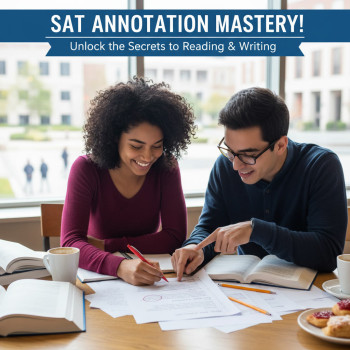
Debaters annotate briefs with claim, evidence, and impact. Do the same with passages: mark the thesis, underline evidence, bracket counterpoints. Your notes should be shorthand — not full sentences — to save time.
3. Translate Answer Choices to Arguments
When you read answer choices, think: Which one changes the argument’s burden? Which one adds or removes support? Eliminating choices that don’t affect the argument is often faster than hunting for the single perfect phrase.
4. Look for Signpost Words
Words like “however,” “therefore,” and “consequently” are debate cues. They indicate shifts between claim and support, or signals of contrast. In debates you listen for those transitions — do the same here.
5. Use Mini Timed Rounds
Debaters practice rounds under clock. Replicate that by timing 15–20 minute practice sets of passages. Gradually push to full-section pacing. Timing trains your brain to find claims and evidence faster.
Practice Exercises: Move From Theory to Skill
Here are focused drills that borrow debate routines and adapt them to SAT Reading.
- Claim Extraction Drill: Read a paragraph and write its one-sentence thesis. Time: 1–2 minutes per paragraph.
- Evidence Match Drill: Read a short passage and list each claim with the sentence(s) that support it. Then answer 3 evidence-based questions.
- Assumption Hunt: For an argumentative passage, list the top two assumptions the author makes. For each, write one possible counterexample.
- Tone Snapshot: After a paragraph, label the tone in a single word (e.g., sardonic, urgent, admiring). Explain your choice in one sentence.
- Speed Rounds: Do 3 passages in 30–40 minutes, focusing on claim identification and evidence location rather than getting every question right.
Sample Passage Walkthrough: Apply Debate Habits Step-by-Step
Below is a condensed example (not an actual SAT passage). Follow the steps as a debater would.
Passage (summary): An author argues that remote work improves urban sustainability because fewer commuters reduce emissions. The author cites a year-long survey of corporations that report decreased commuter numbers but does not account for increased home energy use or suburban sprawl.
Step 1 — State the Claim
Primary claim: Remote work improves urban sustainability.
Step 2 — List the Evidence
Evidence presented: A year-long corporate survey reporting reduced commuting.
Step 3 — Spot Missing Pieces
Potential omissions: home energy consumption, changes in local transportation patterns, shift to longer suburban commutes.
Step 4 — Predict Likely Questions
Possible SAT questions:
- Which detail would most weaken the author’s argument? (Answer: increased home energy use negating commute reduction.)
- The author’s assumption is that… (Answer: decreased commuting necessarily reduces net emissions.)
- The tone of the passage is best described as… (Answer: cautiously optimistic or persuasive.)
Time Management and Pacing: A Table to Guide Practice
Debate rounds are timed so practice maps neatly to SAT timing. Use the table below as a template for pacing practice sessions and for what to focus on during each block.
| Practice Block | Duration | Focus | Debate Skill Emphasized |
|---|---|---|---|
| Warm-Up | 10 minutes | Quick single-paragraph edits and tone labels | Tone recognition, concise summary |
| Evidence Drill | 20 minutes | Match claims to supporting sentences | Evidence identification, claim mapping |
| Assumption Hunt | 15 minutes | List and counter assumptions for one passage | Critical questioning, counterargument |
| Timed Set | 35–44 minutes | Complete 3–4 passages under realistic timing | Pacing, rapid claim/evidence recognition |
| Review | 15 minutes | Analyze missed questions and thought process | Metacognition, error analysis |
Common Pitfalls Debaters Must Avoid on the SAT
Even seasoned debaters can stumble on standardized tests if they rely on habits that don’t fit the format. Watch out for these traps.
- Overconfidence: A compelling-sounding answer that aligns with your beliefs may not be grounded in the passage.
- Outside knowledge: Don’t bring in facts that aren’t in the text. The SAT rewards textual evidence, not real-world expertise.
- Cherry-picking: In debate you might highlight a single strong detail; on the SAT you must consider how choices affect the entire passage’s reasoning.
- Time-sinking: Debaters love nuance; avoid spending ten minutes on one passage when the section requires steady pacing.
How to Practice Smart: Combining Solo Work With Guided Support
Practice is most effective when it balances independent drills with guided feedback. Debate teammates and coaches can give great feedback — and so can targeted tutors who understand both argumentation and the SAT format. For instance, Sparkl’s personalized tutoring and benefits can be especially helpful: 1-on-1 guidance helps you get individualized feedback on your annotations and thinking, tailored study plans direct your practice time, expert tutors show you test-specific moves, and AI-driven insights can reveal recurring error patterns to fix quickly.
Weekly Study Plan for Debaters (Sample)
This plan assumes 6–8 hours of focused SAT Reading practice per week. Adjust to your schedule and starting score.
- Monday — 60 minutes: Claim extraction drills and tone snapshots.
- Wednesday — 90 minutes: Evidence match and assumption hunt exercises; review errors.
- Friday — 60 minutes: Timed 2-passage focus on pacing and annotation speed.
- Saturday — 120 minutes: Full section under test conditions, then 30-minute detailed review.
- Sunday — 30 minutes: Light reading (editorials, short essays) practicing quick claim spotting.
Real-World Context: Why These Skills Matter Beyond the Test
Arguing well and reading carefully are useful life skills. Colleges love to see evidence of clear thinking, and employers prize people who can read reports critically and communicate conclusions succinctly. The habit of weighing evidence and tuning into tone helps in classes, internships, and public conversations. In this sense, the SAT Reading section becomes less of an isolated hurdle and more of a snapshot of habits you’ll use later.
When to Seek Extra Help
Most students improve with consistent practice, but targeted help accelerates gains. Consider seeking extra support if:
- Your reading score stalls despite regular practice.
- You consistently miss the same types of questions (e.g., inference vs. evidence).
- You struggle with pacing or anxiety under timed conditions.
One-on-one tutoring that connects your debate background to reading strategies can be particularly efficient. Tutors who are familiar with debate language can translate your instincts into test-ready habits. Again, Sparkl’s personalized tutoring and benefits — especially tailored study plans and expert tutors — can help align your debate strengths with SAT-specific techniques.
Final Checklist: A Debater’s Pre-Test Routine
Before you sit down for the SAT, run through this quick checklist to prime your debate strengths for the Reading section.
- Warm up with two short editorials; mark the main claim in one sentence.
- Do a five-minute evidence-match drill: read a paragraph and identify its supporting sentence.
- Review a table of common signal words (however, thus, nevertheless).
- Set a simple pacing goal: X passages by Y minutes for the first half of the test.
- Remember: trust the text, not your outside knowledge.
Closing Thoughts: Debate Gives You a Head Start — Make It Count
Debate doesn’t just teach you to speak persuasively; it trains you to listen, read, and think in patterns that the SAT Reading section rewards. If you already enjoy dissecting arguments and weighing evidence, you have a real advantage. The remaining step is deliberate practice — timed drills, targeted feedback, and attention to SAT-specific question types.
Whether you lean on debate club practice, partner up with a coach, or use resources like Sparkl’s personalized tutoring and benefits to get tailored study plans and AI-driven insights, the key is to translate your instincts into fast, evidence-based habits. Do that, and the SAT Reading section becomes less a test of memory and more a familiar exercise in argument analysis — one you were already built to win.
























No Comments
Leave a comment Cancel