

Why a Daily SAT Habit Beats Cramming Every Time
Let’s be honest: the thought of carving out hours each week to study for the Digital SAT feels like adding another class to your schedule. But here’s the good news—consistency wins. Fifty minutes today, thirty minutes tomorrow, quick question sets during lunch—those tiny efforts stack into real improvement. Learning is a marathon, not a sprint; the brain remembers best when exposure is spaced and varied. Building SAT prep into your regular school routine turns studying into second nature rather than an all-nighter panic session.
The principle behind this approach
Spacing, retrieval, and varied practice are the three learning principles that reliably improve retention. Rather than isolating yourself for one long study session, spread shorter, targeted sessions across multiple days. This reduces stress, increases focus, and helps you apply what you learn to the real test—especially now that the SAT is delivered digitally with a different feel than paper tests.
Getting Started: Your Simple 7-Day Diagnostic and Plan
Before blending SAT prep into your school week, spend one small, focused week diagnosing your strengths and weaknesses. This is not about grinding a full-length test—it’s about information-gathering so you study smarter, not harder.
Day-by-day quick plan
- Day 1: Take one short digital quiz (30–45 minutes) in Reading or Math to see your baseline.
- Day 2: Review answers. Identify 2–3 recurring mistake types (e.g., algebraic manipulation, inference questions).
- Day 3: Do a targeted 25-minute practice set on the weakest area.
- Day 4: Try a different section (if you did Reading, try Math) for variety and balance.
- Day 5: Work through one or two official practice questions slowly—focus on thinking aloud and process.
- Day 6: Take a short timed section to practice pacing (30 minutes).
- Day 7: Reflect and write a 10-minute plan: which skills to target each weekday and a weekend checklist.
That’s it—one week to know where to focus. From here, you can fold preparation into each school day without overwhelming your calendar.
Fitting SAT Prep Into a Typical School Week
Here’s a realistic template that respects classes, homework, extracurriculars, and sleep. The idea: micro-sessions + one longer weekly checkpoint.
Daily micro-sessions (15–40 minutes)
- Before school (10–15 minutes): Light warm-up—vocabulary flashcards, one grammar question, or one number-sense problem while you eat breakfast.
- Between classes or during lunch (10–20 minutes): A focused practice set from the student question bank or a Bluebook practice preview. Keep it timed to build rhythm.
- After school (20–40 minutes, alternate subjects): Alternate days between Math practice and Reading & Writing. Make this session application-focused—do problems similar to what you missed that week.
Weekend checkpoint (90–180 minutes)
Reserve one longer session each weekend to take either a full digital section or a mixed review. Use it to practice endurance and to collect data: what questions took too long, which content areas keep tripping you up, and whether your pacing is improving.
How to Make Short Sessions Effective
Micro-sessions only work if they are targeted. Here are practical ways to keep 15–30 minutes meaningful.
Use a purpose for each session
- Practice: solve 6–8 items and check answers.
- Review: take 20 minutes to analyze past mistakes and write a one-sentence rule you’ll remember.
- Pacing: time yourself on 10 problems to build speed without losing accuracy.
- Reflection: after practice, note one strategy that helped and one you’ll change next time.
Examples of micro-session formats
- 15-minute vocabulary + strategy flash: 5 flashcards, 10 minutes on a short passage strategy.
- 30-minute math sprint: warm-up (5 min), three medium problems (15 min), review mistakes (10 min).
- 20-minute reading: one 10-minute passage under timed conditions, then 10 minutes noting question types where you hesitated.
Tools That Fit Into a School Day
Choose tools that respect your day: mobile-friendly, quick, and aligned with the real test experience. Official digital practice tools and question banks let you mirror the test environment. Use a physical notebook for error logs and a single digital timer app to practice pacing.
Suggested toolkit
- Bluebook practice previews or official digital practice tests for true-to-format practice.
- Student question bank to pull targeted practice sets by topic (e.g., heart of algebra, command of evidence).
- A small notebook or note app dedicated to error logs and strategy notes.
- A reliable timer (phone or watch) for micro-sessions and pacing drills.


Weekly and Monthly Tracking: Stay Honest Without Burning Out
Tracking progress is essential—but it should fuel motivation, not anxiety. Use a simple table to monitor time spent, topics practiced, accuracy, and a quick note on mood or energy. Below is an example tracking table you can keep in a spreadsheet or as a printed sheet by your desk.
| Week | Minutes/Week | Focus Areas | Avg Accuracy | Next Steps |
|---|---|---|---|---|
| Week 1 | 180 | Algebra, Passage Mapping | 73% | Drill linear equations; 2 reading passages |
| Week 2 | 160 | Functions, Evidence-based questions | 76% | Timed practice; review common wrongs |
| Week 3 | 200 | Geometry, Grammar | 80% | Mix of timed sections and error log |
Seeing numbers helps you calibrate. If accuracy is rising while minutes fall, you’re getting more efficient. If minutes increase but accuracy stagnates, change the strategy: switch from random questions to targeted drills.
How to Turn Classroom Time into SAT Prep
One of the smartest moves is to treat your regular schoolwork as prep, too. Most SAT skills are reinforced in English, history, and math classes—so connect the dots.
Practical examples
- Reading in class: When your teacher assigns a passage, practice passage mapping like you would on the SAT—note the main idea and the author’s tone in the margins.
- English essays and grammar worksheets: Translate classroom grammar rules into the SAT’s concise editing choices—predict the correct answer before looking at choices.
- Math homework: After finishing a problem, ask whether a faster algebraic trick or a graphing approach would be more efficient—that habit translates directly to test-day time savings.
Managing Time and Energy: When to Rest vs. When to Grind
High-quality study isn’t about more hours—it’s about right timing. Use the ultradian rhythm concept: study for 50–90 minutes followed by a 15–20 minute break for deep sessions. For micro-sessions, the Pomodoro method (25/5) is excellent. Also, prioritize sleep—memory consolidation happens while you sleep, so late-night cramming can be counterproductive.
Energy-based scheduling
- High-energy times (morning or after school depending on your pattern): tackle new or difficult content.
- Low-energy times (late afternoon, late night): review flashcards or error logs—lighter cognitive load.
Noise, Focus, and School-Life Balance
Distraction is the enemy of short sessions. Choose a study spot you can defend for 20–40 minutes: a library corner, a quiet classroom after school, or a kitchen table at home. Turn off notifications, set a clear end time, and use a white noise app or instrumental music if it helps you concentrate.
Keep your social life
Important note: integrating SAT prep into daily life doesn’t mean sacrificing everything. Save one or two evenings per week for friends or sports. The goal is sustainable progress—not study martyrdom.
Using Feedback to Improve Faster
Feedback loops are how you accelerate. After every practice session, do these three things:
- Record the mistake and categorize it (careless error, concept gap, pacing, misread question).
- Write a one-line rule or strategy you’ll apply next time.
- Schedule a quick follow-up drill on that skill within 48–72 hours to reinforce learning.
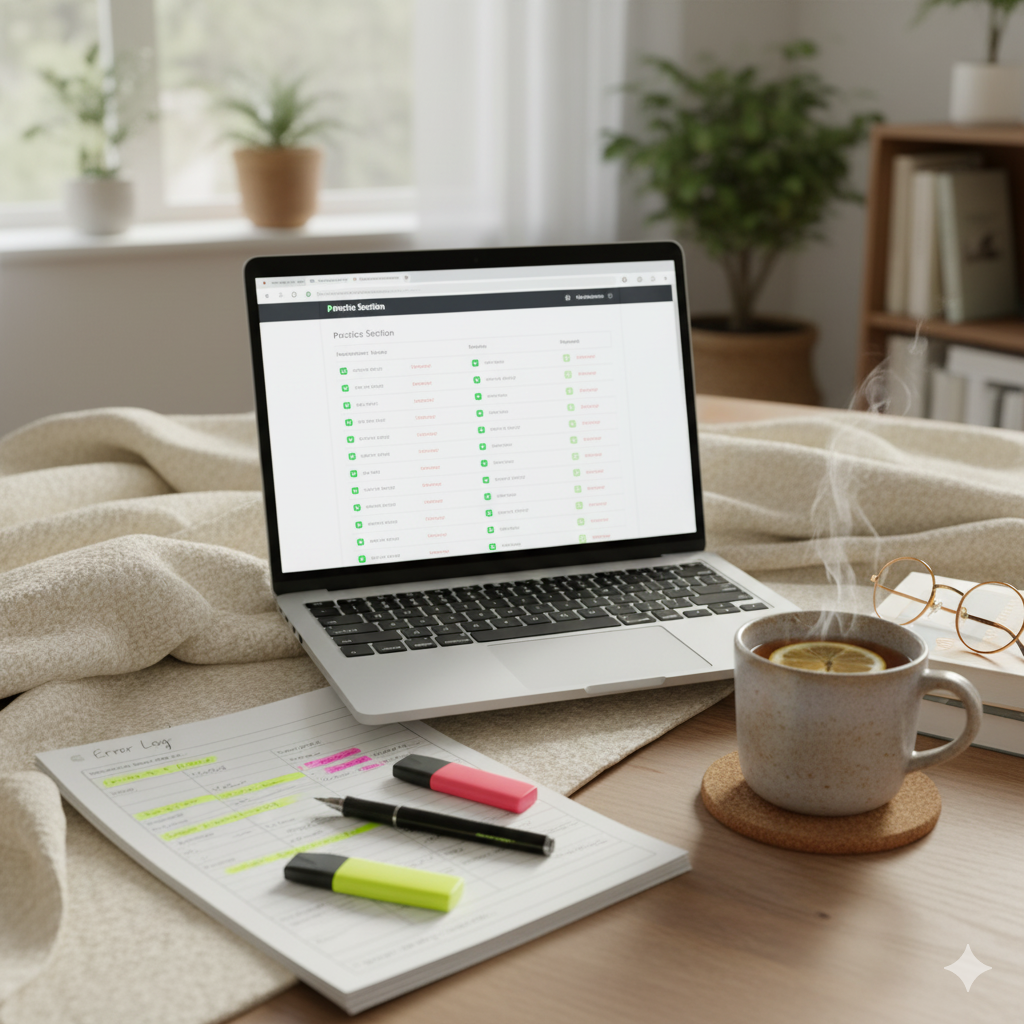
Example error log entry
- Question: Reading Q12—main idea miss
- Category: Passage mapping error
- Fix: Circle thesis sentence and note paragraph purpose before answering next passage
- Follow-up: Do 2 short passages tomorrow focusing on thesis identification
When to Bring in Extra Support: Tutoring That Fits Your Routine
If you find recurring pockets of weakness—especially in tricky math topics or in building reading stamina—targeted tutoring can speed things up. Look for 1-on-1 guidance that respects your school schedule and builds a tailored study plan. Personalized tutors can give quick weekly check-ins, customize drills for your exact gaps, and use data to recommend which micro-sessions to prioritize. For many students, combining daily self-study with occasional expert feedback is the sweet spot—one part consistent habit, one part expert guidance.
Services like Sparkl offer personalized tutoring with tailored study plans and AI-driven insights that help you plug the exact holes in your routine. A short weekly session with an expert tutor can reframe how you use your micro-sessions and keep motivation high—without taking over your life.
Practice Tests: How Often and How to Use Them
Full-length practice tests are sacrosanct because they measure pacing and endurance, but you don’t need one every weekend. A smart schedule looks like this:
- Initial baseline: one full digital practice test at the start.
- Regular cadence: one full section-length practice (digital) every 1–2 weeks.
- Checkpoint tests: a full-length digital practice test every 4–6 weeks to measure growth and adjust the plan.
- Final phase: in the 4–6 weeks before test day, increase to one full practice test every 1–2 weeks, with careful review.
How to review practice tests
- Score first, but don’t linger on score alone—identify the top 3 categories where you lost points.
- Time analysis: mark questions that took too long even when correct.
- Translate findings into next week’s micro-sessions—if geometry cost you time, schedule two focused geometry sprints during the week.
Sample 8-Week Integration Plan
This is a compact plan you can adapt to your calendar. It assumes 4–6 weeks until test day or more; stretch it out if you have more time.
- Weeks 1–2: Diagnostic week + build a routine. Focus on micro-sessions and one weekend checkpoint.
- Weeks 3–4: Target weak areas (use student question bank-style drills). One section practice biweekly.
- Weeks 5–6: Increase full-section timed practice. Start timed endurance work.
- Weeks 7–8: Practice tests every 1–2 weeks, review thoroughly, maintain micro-sessions between tests for maintenance.
Final Advice: Keep It Sustainable and Human
The best routine is the one you can keep doing. If you miss a day, don’t panic—just get back to your micro-sessions the next day. Celebrate small wins: an improved accuracy percentage, a timing breakthrough, or even a week of consistent study. Study with a friend occasionally—turning a 20-minute micro-session into a two-person challenge can make it fun and social.
Remember: the Digital SAT rewards calm, steady practice and clear strategy. Integrating prep into your regular school routine is less about rigid schedules and more about tiny, purposeful actions repeated consistently. With focused micro-sessions, thoughtful review, and occasional expert check-ins, you’ll walk into test day more confident and more prepared—one small step at a time.
One Last Tip
Try this: for the next 7 school days, add three tiny rituals to your routine—one 10-minute warm-up in the morning, one 15-minute focused drill during lunch, and one 20–30 minute review after school. Log each session in a simple table. At the end of the week, celebrate what you did and tweak what didn’t work. That small habit loop is the engine of real improvement.
Good luck—steady wins. And if you ever want a personalized plan to plug into your exact school days, a short 1-on-1 session with an expert tutor can make those micro-sessions work even harder for you.























No Comments
Leave a comment Cancel