

Introduction: Why Quitting Social Media (—for a Little While) Helps Your SAT Score
Let’s be honest: scrolling through quick videos or refreshing feeds is easy, comforting, and ridiculously hard to stop. When the Digital SAT is looming, that comfort can become costly. Your brain is a limited-resource machine — every distraction chips away at the attention you need to learn concepts, practice reasoning, and build stamina for test day.
This article is not about shaming you or pretending to be a productivity machine. It’s about practical, human strategies you can actually use to stay off social media while preparing for the SAT — without turning your life upside down. You’ll find a blend of mindset shifts, concrete tactics, tools, schedules, and realistic examples. And if you want more personalized help, Sparkl’s 1-on-1 guidance and tailored study plans can fill in the gaps where self-discipline falters.
Understand the Cost: What Social Media Does to Studying
Before we get to the plan, let’s talk reality. Social media isn’t just a time-sucker — it shifts how you pay attention.
- Fragmented focus: After a 10-minute scrolling session, it can take up to 25 minutes to fully regain concentration. That’s time you’ll never get back.
- Lowered stamina: The SAT requires sustained attention for long sections. Habitual quick-hit content trains your brain to flit between stimuli rather than dive deep into reasoning.
- Emotional drain: Comparing posts or consuming high-drama content can spike anxiety and reduce motivation — both harmful before an intense exam.
- False productivity: Liking a “study tip” post feels like progress, but it rarely replaces targeted practice.
Knowing the costs makes your goal reasonable, not punitive: we’re protecting your attention so you can perform at your best.
Mindset: Replace Shame with Curiosity and Small Wins
If you’ve tried to quit before and failed, you’re not failing at character — you’re fighting a habit loop. Use curiosity instead of guilt. Ask: When do I reach for my phone? What triggers the urge? What feels better afterward?
- Track one week of your social media behavior without changing it. Note times, feelings, and duration.
- Celebrate tiny wins: completing one full practice section, finishing a 45-minute study block, or turning off notifications for a day.
- Think in experiments: try a 3-day social media pause and see how your practice quality shifts. Then tweak.
Practical Strategy Roadmap: A Step-by-Step Plan
Below is a progressive plan you can adapt. Start with manageable changes and build muscle over weeks.
- Week 0 — Audit: Track current habits (when, where, why).
- Week 1 — Friction: Make social media slightly harder to access.
- Week 2 — Replace: Plug the time with high-value, enjoyable study or rest routines.
- Week 3 — Scale: Add longer distraction-free study blocks and routine rituals for focus.
- Ongoing — Optimize: Tweak based on energy cycles, practice results, and test proximity.
Week 0: The Audit (Your Baseline)
Spend four or five days tracking: how many times you open apps, what triggers it, and how long you spend. Use your phone’s screen-time report or a simple notebook. This isn’t about judgment — it’s about clarity.
Week 1: Add Friction
Make access slightly harder so the default is study. Small barriers work better than total bans for most people.
- Log out of social apps and remove automatic login.
- Move apps off your home screen or into a folder with a name like “Not Now.”
- Use a simple app blocker to block access during study hours (even if it’s for short windows to start).
Week 2: Replace the Habit
Habits don’t vanish — they shift. Replace the scrolling ritual with a better ritual.
- If you check your phone after lunch, replace that with a 5-minute walk, a short stretch routine, or a 5-minute reflection journal: what went well, what to improve.
- Create a “pre-study ritual”: a warm drink, a 2-minute breathing exercise, and opening your study tracker. Rituals signal your brain it’s time to focus.
Week 3: Build Study Muscle
Gradually extend focused blocks. Use the Digital SAT practice tests from official sources for structure and realism. Aim for sustained practice with clear goals.
- Start with three 50–60 minute study blocks per day, with 10–15 minute breaks in between.
- Use a single, measurable goal per block: “Complete 25 Reading questions with annotation strategy” or “Finish one Math practice set and time-check errors.”
- End each block with a quick note: one thing learned, one question to review later.
Daily Routine Examples: Study Schedules That Actually Work
Below are three sample daily schedules tailored to different time availabilities. Pick one and adapt it to your life. Consistency beats intensity.
Schedule A — Busy Weekdays (60–90 minutes total)
- After school: 20–30 minute focused review (short content lesson or flashcards)
- Evening: 40–60 minute practice block (timed section or targeted problem sets)
- Short daily reflection: 5 minutes to capture errors and plan for the next day
Schedule B — Moderate Time (2–3 hours)
- Morning (optional): 30 minutes review of flashcards or vocab
- Afternoon: 60–90 minute practice block (full problem set or timed reading)
- Evening: 30–45 minute review (go over mistakes, read explanations)
Schedule C — Weekend Deep Work (3–5 hours)
- Warm-up: 20 minutes (review notes or quick math drills)
- Deep practice: 90–120 minutes (full practice test section or two)
- Break: 45–60 minutes (move, eat, do non-screen activities)
- Review: 45–60 minutes (detailed error analysis)
Tools and Tech: Use Technology to Beat Technology
You don’t have to rely on willpower alone. Use built-in tools that make the distraction costlier than it’s worth.
- Focus modes / Do Not Disturb: Configure a study profile that silences notifications and hides distracting app icons during scheduled study times.
- App blockers: Set short, intentional blocks during study windows. Start with 60–90 minute blocks and grow longer.
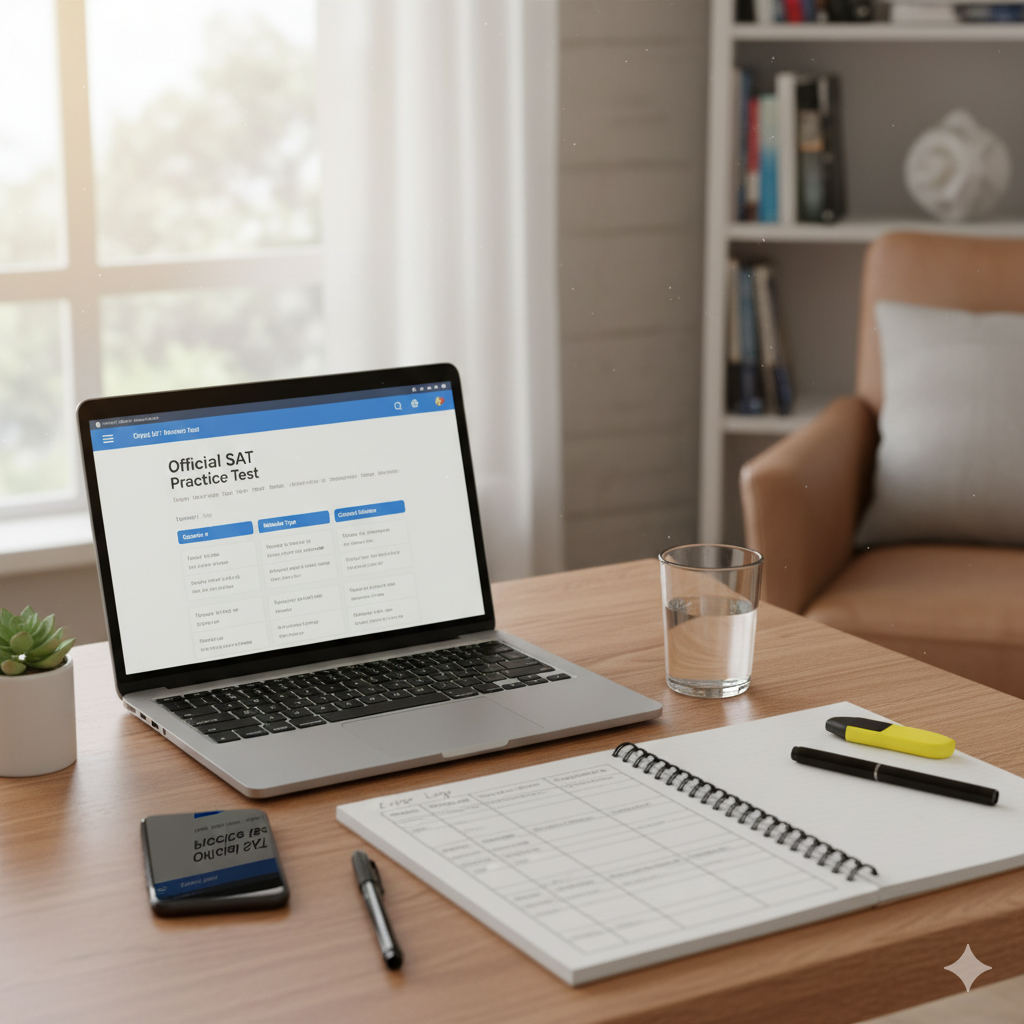
- Bluebook and Official Practice: Use authentic Digital SAT practice apps and official practice tests to simulate test conditions and keep practice purposeful.
- Pomodoro timers: 50 on / 10 off or 25 on / 5 off — pick what works and protect the off period from doomscrolling by switching to a non-phone activity.

Study Methods That Make Focus Easier
It’s easier to stay off social media when study sessions feel rewarding. These methods boost engagement and confidence.
- Active practice: Work on problems with timing, then immediately explain your reasoning out loud or in writing.
- Error logs: Keep a running log of mistakes and “why” behind each one — patterns emerge quickly.
- Interleaving: Switch between math topics or between reading and writing to prevent boredom and improve retention.
- Spaced repetition: Use flashcards for vocab, formulas, and common grammar rules to reduce review time later.
Social Life and Reward Systems: Don’t Cut Out Joy
Quitting social media temporarily doesn’t mean going off-grid socially. Design a reward system so you have real things to look forward to.
- Block out 30–60 minutes of social time daily (video calls, in-person hangouts, or social media if you choose).
- Use study milestones to earn rewards: finish two full practice sections = movie night, finish three weeks of consistent study = small splurge.
- Share study wins with a friend, a parent, or a tutor. Accountability works — and it’s social in a meaningful way.
When You Slip: Gentle Recovery Steps
Slips are normal. Don’t let one scroll spiral into a week lost. Use a quick repair ritual.
- Pause: Close the app and take three deep breaths.
- Re-center: Look at your study goal for the session and re-commit for one short block (25–50 minutes).
- Log: Note when the slip occurred and what triggered it. That insight reduces future slips.
How Sparkl Can Fit In: Personalized Support That Keeps You Accountable
Sometimes the hardest part is translating good intentions into consistent action. That’s where personalized help shines. Sparkl’s tutoring offers tailored study plans, 1-on-1 guidance, and expert tutors who can diagnose weak spots and help you build a realistic routine. If you struggle to stay off social media, a tutor can provide structure, short daily check-ins, and AI-driven insights that keep practice efficient and focused.
Think of Sparkl not as a crutch, but as a coach who helps you build mental habits that last beyond the exam.
Example Week: From Audit to Focus (Practical Timeline)
This sample shows how a high school junior might progress over four weeks, reducing social media time and increasing study quality.
| Week | Key Actions | Study Time (per weekday) | Social Media Goal |
|---|---|---|---|
| 0 (Audit) | Track habits, note triggers | 30–45 min | Baseline measurement |
| 1 (Friction) | Log out, move apps, set focus mode | 45–60 min | Cut sessions by 25% |
| 2 (Replace) | Introduce rituals, replace phone check with walk/journal | 60–90 min | Limit to scheduled social time |
| 3 (Build) | Longer focused blocks, official practice tests | 90–150 min | 1 short session/day or none |
Practical Examples: What a Study Block Looks Like
Here are two concrete study-block examples you can copy and paste into your day.
- 60-minute Reading Block:
- 0–5 min: Set timer, quick breathing, open error log.
- 5–35 min: Timed passage set (annotate as you read).
- 35–50 min: Review answers, mark misunderstandings.
- 50–60 min: Write one-sentence summary of what you learned and one question to revisit.
- 90-minute Math Block:
- 0–5 min: Warm-up with 5 quick math drills.
- 5–55 min: Timed problem set focused on one topic (e.g., linear equations).
- 55–75 min: Go through errors, write correction steps.
- 75–90 min: Spaced-repetition flashcards and short reflection.
Maintaining Energy: Sleep, Food, and Movement
Focus isn’t just about blocking apps. Your brain needs fuel and rest.
- Sleep: Aim for 8–9 hours most nights while ramping up SAT practice. Avoid late-night screen sessions that fragment sleep.
- Nutrition: Balanced meals and protein-rich snacks keep attention stable during practice.
- Movement: Short walks, jumping jacks, or stretches between study blocks reset attention and reduce the urge to check your phone.
What to Expect: Timeline for Real Change
Don’t expect overnight transformation. Most students notice improved focus in 2–3 weeks of consistent practice. By week four, many report deeper comprehension during practice tests and longer sustained focus.
If progress stalls, try mixing things up: change the study time, alter the rewards, or bring in a tutor for a few sessions. Sparkl’s experts can help you refine strategies and keep momentum when motivation dips.
FAQ: Quick Answers to Common Worries
Q: Can I keep social media completely?
A: Sure — many students keep limited access or reserve social time for evenings. The key is intentionality: scheduled and satisfying, not reactive and endless.
Q: What if I need social media for study groups?
A: Create specific channels for study (group chats, scheduled calls) and mute unrelated feeds. Use the platform only during pre-set times.
Q: I tried blocking and still cheated. What now?
A: Be kind to yourself. Identify the trigger and add a replacement habit. If it’s boredom, try interleaving topics; if it’s anxiety, try a 2-minute breathing exercise.
Final Thought: Attention Is Your Most Valuable Exam Prep Tool
Preparing for the Digital SAT is a marathon of attention, strategy, and smart practice. Social media isn’t evil, but it’s designed to steal focus. With gentle changes — adding friction, building new rituals, using tech wisely, and stacking small wins — you can reclaim hours of high-quality study time.
If you want personalized structure, accountability, or a tailored plan that fits your schedule, consider working with a tutor. Sparkl’s 1-on-1 guidance, tailored study plans, and AI-driven insights can help you transform good intentions into consistent progress without burning out.
Start small, measure honestly, and be kind to yourself. The best score isn’t the one you chase by force — it’s the one you earn by building focus, practicing deliberately, and staying consistent. You’ve got this.



















No Comments
Leave a comment Cancel