

Turn Your Commute into a Secret SAT Study Session
If your mornings and afternoons are spent on the bus, train, or in a carpool, you might think those hours are lost. They aren’t. With a few simple changes, long commutes can become one of the most productive parts of your SAT prep routine. This guide walks you through practical, realistic, and calming ways to prepare for the Digital SAT while you travel — without burning out, losing focus, or feeling like your life has turned into a series of flashcard marathons.
Why commuting is underrated SAT prep time
Commuting offers consistent, predictable time blocks: 20 minutes here, 45 minutes there. Those pockets of time are perfect for micro-learning and steady progress. Rather than trying to cram long study sessions into a single evening, spaced, bite-sized practice during commutes helps memory retention, reduces procrastination, and builds confidence slowly but surely.
Set realistic goals for commute study
Before you grab your headphones, decide what “productive” looks like for you on the commute. Keep goals specific and achievable. A few examples:
- Learn and practice three vocabulary words per ride.
- Solve one medium-difficulty math problem and explain the reasoning out loud.
- Read a short passage and circle the main idea and two supporting details.
- Listen to one concept-focused audio lesson (grammar rule, math trick, or reading strategy).
Small wins add up. If you do this five days a week, those tiny wins turn into real score improvements.
Plan your week like a commuter: consistency over intensity
Create a weekly rotation so your commute time covers the whole test: Reading, Writing & Language, and Math (with and without a calculator). For example:
- Monday & Wednesday: Reading passages and question strategies.
- Tuesday & Thursday: Writing & Language practice and grammar drills.
- Friday: Math practice and problem-solving approaches.
- Weekend transit or long rides: a slightly longer practice block—take a 30–45 minute practice section.
Rotate topics so you don’t let one section stagnate. The goal is steady coverage, not heroic, last-minute cram sessions.
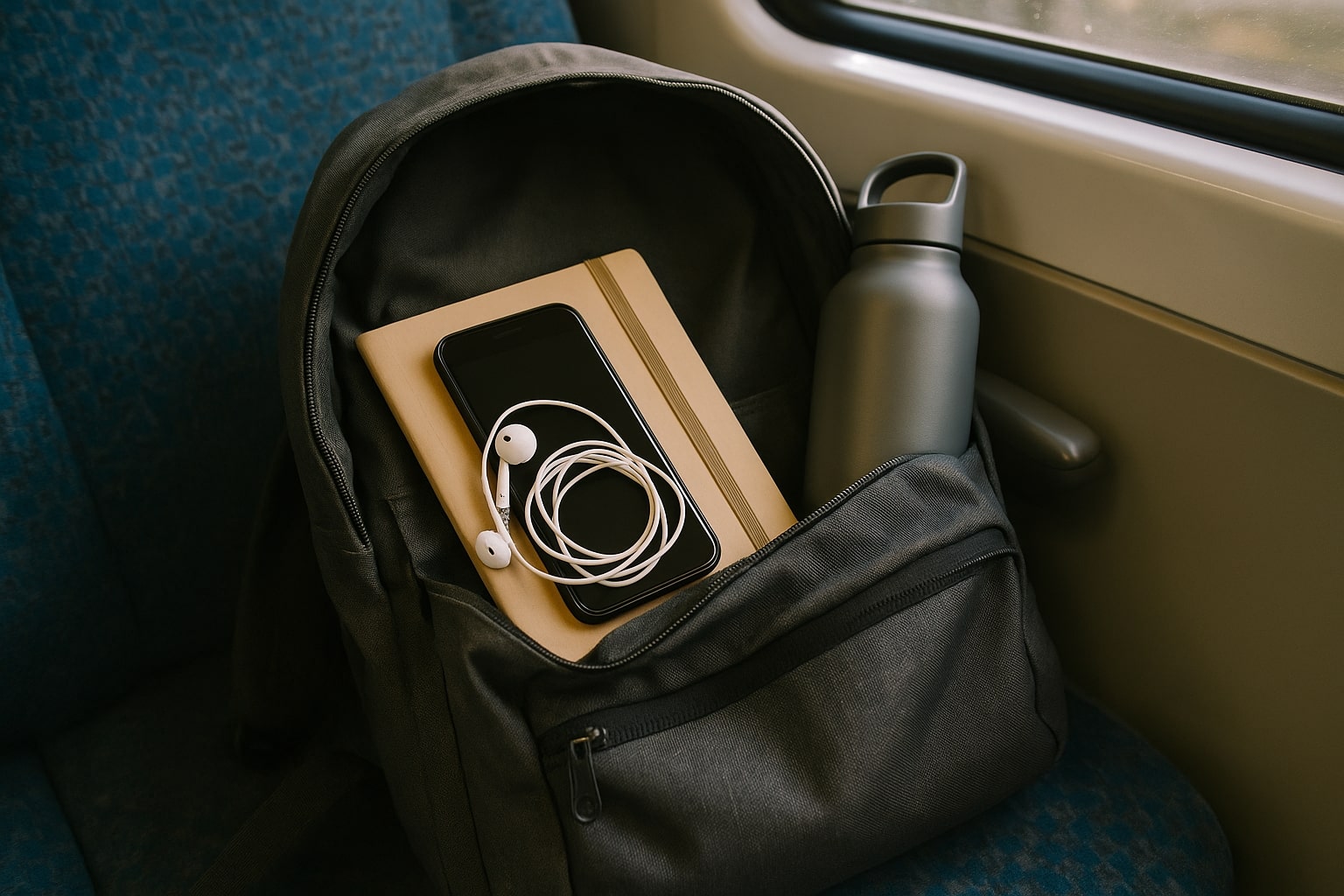
What to bring on your commute: the commuter’s SAT toolkit
Choose tools that match your commute mode. If you’re a rider who can’t write while moving, focus on audio and mental strategies. If you can use a tablet or a notebook, add short written practice.
- Smartphone with downloaded resources (audio lessons, practice questions, and vocabulary apps).
- Noise-cancelling or good-quality earbuds.
- Small notebook or a dedicated study app for quick notes.
- Portable charger or power bank for long travel days.
- Headphones and a phone stand (if you prefer video lessons).

Study formats that work best on the go
Not all study formats translate well to moving vehicles. Pick the ones that fit your attention, motion tolerance, and device access.
Audio lessons and podcasts
Audio is golden during commutes. Look for concise 10–20 minute lessons that explain a single strategy—how to find the main idea, a math shortcut for linear equations, or a grammar rule you keep tripping over. Listening boosts passive learning, and if you actively pause and reflect you convert it to active learning.
Flashcards and spaced repetition
Digital flashcard apps are ideal: short, repeatable, and portable. Use them for vocabulary, math formula reminders, or grammar rules. Spaced repetition ensures you see the same tricky items at the right intervals so they stick.
Short practice questions with immediate review
Instead of a full section, try 5–8 focused questions per ride. The key is immediate review: identify why you got a question right or wrong and note the takeaway. Over time, those little reviews sharpen intuition and pattern recognition.
Mental walkthroughs and self-explanations
If you can’t use a device, practice mentally. Read a sentence and tell yourself the main idea. Solve a math problem in your head, then explain the steps out loud (quietly!). Self-explanation strengthens understanding faster than passive reading.
Sample 4-week commute-friendly study plan
This plan assumes a 45-minute one-way commute and five commuting days per week. It balances skill building, practice, and review with one longer weekend session.
| Week | Daily Commute (each way) | Weekend Focus |
|---|---|---|
| Week 1 |
|
Take a 45-min Bluebook practice section and review mistakes. |
| Week 2 |
|
45–60 minute mixed practice and targeted review. |
| Week 3 |
|
Take a timed practice section and simulate test conditions where possible. |
| Week 4 |
|
45–60 minute practice and final review; set goals for next month. |
Practical tips to keep commute study effective
Use short timers and checkpoints
Set a 10–15 minute timer for a focused burst. On public transit, it’s easy to get distracted; checkpoints bring you back. For example: 15 minutes vocabulary, 15 minutes passage work, 15 minutes math flashcards.
Keep an error log
Carry a tiny notebook or use a notes app to jot down mistakes. On the next ride, review one or two errors and write the correct reasoning. Over time, your log becomes a personalized mini-review book of your toughest concepts.
Mind the motion: know what you can handle
Some students get motion sick reading on buses. If that’s you, opt for audio and mental problems. If you’re steady while writing, use paper or a tablet. Respect your body—consistency is more important than pushing through discomfort.
Active recall beats passive scrolling
Instead of passive reading, force active recall. Cover an answer, try to reconstruct it, then check. Active recall is one of the fastest ways to improve retention during short study bursts.
How to practice full digital SAT sections while commuting
Full sections require focus and a stable connection, which commute time sometimes doesn’t provide. Use these strategies to simulate full-section practice without needing perfect conditions.
- Break a full section into chunks: do 20 minutes of Reading on the train, then 20 minutes later on the bus. Record the time you took and the conditions so you can compare later.
- Use Bluebook practice when you have a quiet, stable commute or a weekend ride. Otherwise, use downloadable question sets you can work through offline and then sync results later.
- Reserve one commute per week for a longer, quieter ride when you can focus on a whole section—perhaps a Saturday train or a carpool where someone else drives.
Keeping motivation: small rewards and accountability
Make commuting study something you look forward to, not a chore. Pair study with a small treat: a favorite playlist after a solid session, or a special coffee if you hit a weekly target. Accountability helps: share weekly goals with a friend, teacher, or tutor. Sparkl’s personalized tutoring is useful here—1-on-1 guidance and tailored study plans can give you targets that fit your commute and a coach to check progress.
Examples: real-world practice activities for specific commutes
Short commutes (10–20 minutes)
- Do 5 vocabulary flashcards and one quick grammar question.
- Listen to a 10-minute tactic audio: how to find evidence in a passage.
- Review two logged errors from last week and note the correction.
Medium commutes (20–45 minutes)
- Solve 6–8 mixed practice questions (timed) and review answers.
- Work through a short math problem end-to-end, explaining steps aloud.
- Practice passage mapping: read a 1-paragraph passage and outline the structure.
Long commutes (45+ minutes)
- Complete a focused section of Reading or Writing and do a quick self-review.
- Use downloaded Bluebook practice for a full timed block when possible.
- Schedule a 30–45 minute tutor check-in (audio or video) to discuss errors and strategies—Sparkl’s expert tutors and AI-driven insights can turn these longer rides into strategic sessions that target your weaknesses.
When to stop studying during a commute: signs you need a break
Knowing when to stop is as important as knowing what to study. Signs you should pause:
- Feeling nauseous or dizzy while reading.
- Mind wandering more than 50% of the time.
- Repeatedly making careless mistakes due to rush or distraction.
Swap to light review—audio lessons, vocabulary, or breathing exercises—and preserve the positive habit instead of forcing low-quality study.
How tutoring complements commute study
Commuter study is powerful for steady gains, but targeted tutoring accelerates progress. A tutor can:
- Create a commute-friendly study plan tailored to your schedule.
- Provide weekly check-ins to review your error log and set new micro-goals.
- Teach strategies in short, digestible segments you can practice on rides.
Sparkl’s personalized tutoring blends expert tutors, 1-on-1 guidance, and AI-driven insights to shape study plans that respect your commute. If you’re balancing busy travel with school and activities, a tailored plan makes every minute count.
Tracking progress: what to measure and why
Measure metrics that show learning, not just time spent:
- Accuracy on practice questions per week.
- Types of mistakes (careless, conceptual, timing-related).
- Average time per question and how it changes over weeks.
- Number of error-log items corrected permanently (not repeated mistakes).
Weekly checkpoints are crucial. Every two weeks, take a slightly longer practice block to see how those commute minutes add up to score improvement.
Sample commute check-in: a realistic 15-minute routine
Whether you have 15, 30, or 60 minutes, a brief, repeatable routine keeps you consistent. Here’s a solid 15-minute checklist:
- Minute 0–3: Quick review of yesterday’s error log (1–2 items).
- Minute 3–10: 3–4 practice questions focused on the weak area.
- Minute 10–13: Active recall—explain why answers are correct/incorrect.
- Minute 13–15: Write one takeaway and one action for the next ride.


Final thoughts: make the commute your ally, not your enemy
The Digital SAT doesn’t require marathon study sessions; it rewards smart, consistent practice. Commuting doesn’t have to be dead time. With structure, a few practical tools, and an error-focused mindset, you can transform travel into a major advantage. Use audio lessons and flashcards on shaky rides, deeper practice on longer trips, and keep your study habit gentle and sustainable.
And when you need that extra push—a clear, personalized plan or a deeper review after a practice test—consider pairing your commute strategy with focused tutoring. Sparkl’s 1-on-1 guidance, tailored study plans, and data-informed recommendations can slot into your travel routine and make every minute count without increasing stress.
Turn the time you already spend moving through your day into meaningful progress. Small, steady gains win the race. Start today: pick one commute, try the 15-minute routine, and see how it feels. You might find that the path to your best SAT score was on the train all along.




















No Comments
Leave a comment Cancel