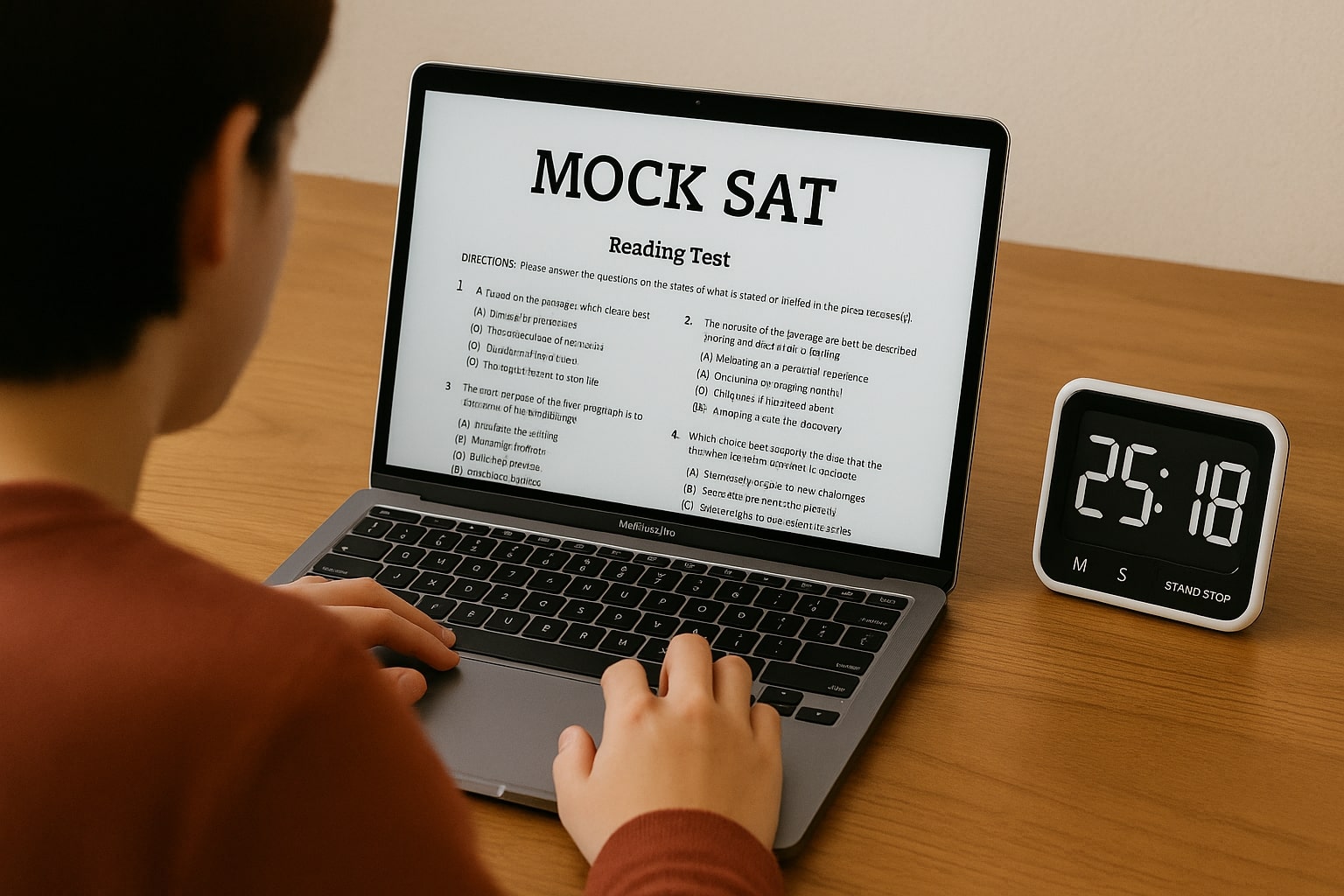

The big question: Timed or untimed SAT prep?
Ask any student who’s stared at a timer in the middle of a Reading passage and you’ll hear the same, breathy confession: the clock is loud. For the Digital SAT, that clock hums in a different rhythm than earlier paper tests because the experience is adaptive and modular. But practice strategies haven’t magically become one-size-fits-all. The truth is subtler—and more hopeful: both timed and untimed practice are essential tools, and knowing when and how to use each one can make the difference between a stressful test day and a confident, meter-by-meter run to your target score.
Why this matters for the Digital SAT
The Digital SAT is shorter in overall length than older formats, but it’s built differently: sections are split into modules and adapt in difficulty based on your performance. That means timing, pacing, and question selection play unique roles. Practicing under time pressure builds endurance, speed, and the ability to make tactical decisions when the clock is tight. Untimed practice, meanwhile, builds accuracy, conceptual clarity, and the kind of deep thinking that helps you avoid careless mistakes.
A quick real-world comparison
Imagine two athletes training for a 400-meter race. One does a lot of wind-sprints (timed practice) to push anaerobic limits; the other drills technique and form slowly (untimed practice). Both are right. Together they create a runner who is fast and efficient. Your SAT preparation should follow the same blueprint.
What timed practice builds
- Exam structure familiarity: Simulates test conditions so you know how full-length digital tests feel from a timing perspective.
- Time management instincts: Teaches you how long to spend on different question types and when to move on.
- Comfort with pressure: Reduces surprise and panic on test day, making adrenaline work for you rather than against you.
- Decision-making speed: Strengthens quick elimination of wrong choices and smart guessing when needed.
- Stamina: Helps build focus for the duration of the test modules with realistic breaks.
What untimed practice builds
- Conceptual mastery: Allows you to slow down and truly understand the why behind each problem.
- Error analysis: Gives time to dissect mistakes—pattern-spotting that improves long-term accuracy.
- Strategy development: Lets you try out different solving methods (diagramming, backsolving, plugging in numbers) to see which sticks.
- Confidence: Reinforces that you can solve hard problems when you’re calm, which translates to steadier scoring when pace ramps up.
- Targeted skill-building: Perfect for drilling weak areas like data interpretation, sentence logic, or advanced algebra steps.
When to use each: a practical roadmap
Rather than choosing one approach and clinging to it, build a rhythm that alternates between untimed and timed work. Here’s a recommended progression based on how far you are from test day.
3–6 months before test day
Spend 60–70% of study time on untimed practice and concept work. This is the phase where you learn and fortify fundamentals.
- Untimed lessons and problem sets for weak topics.
- Slow, deliberate reading with annotation for the Reading modules.
- Weekly short timed drills (e.g., 20–30 minutes) to keep pacing skills from getting rusty.
1–3 months before test day
Shift the balance: move to 50/50 untimed/timed. Start taking full practice modules under time conditions while continuing to analyze mistakes untimed.
- Alternate full digital modules timed on some days and untimed review on others.
- Focus on realistic module pacing (e.g., 32 minutes for an R&W module, 35 minutes for a Math module) and use Bluebook practice tests that mirror official timing.
Last 2–4 weeks
Predominantly timed practice with targeted untimed reviews. This is your fine-tuning window.
- Take 2–3 full timed practice tests spaced out to allow recovery and review.
- Use untimed review sessions to dissect the hardest mistakes you made on the timed tests.
- Work on pacing strategies for the toughest question types you encountered.
How to structure a study week that uses both
Below is a sample weekly plan for a student balancing school and SAT prep. Swap in more or fewer practice hours depending on your schedule, but keep the ratio of untimed to timed work shifting toward timed as the test approaches.
| Day | Activity | Purpose |
|---|---|---|
| Monday | 60–90 min untimed: focused concept work (e.g., algebra fundamentals, grammar rules) | Strengthen weak skills with no time stress |
| Tuesday | 45 min timed drill: R&W module or 20–30 passage set | Build speed and passage pacing |
| Wednesday | 60 min untimed: error review and strategy testing | Analyze mistakes and test alternative methods |
| Thursday | 45–60 min timed drill: Math module (focus on target question types) | Sharpen decision-making under pressure |
| Friday | Short untimed reading: vocabulary in context, active reading practice | Improve comprehension and annotation skills |
| Saturday | Full-length timed practice (modular, with breaks) | Simulate test day and build stamina |
| Sunday | Untimed deep review of Saturday’s test + rest | Extract lessons and recover |
How to run effective timed practice
Timed practice isn’t simply starting a stopwatch. The quality of your simulation matters:
- Use official-style digital practice tools so you get used to the interface (including navigation between questions and built-in tools).
- Replicate test-day conditions: no phone, minimal distractions, and the same break timing as the real test.
- Practice with the exact module lengths you’ll see: treat each module as its own mini-test—finish it or move on when time is up.
- Time your sections, not individual questions: learn to allocate minutes across clusters of questions.
- Build in checkpoint moments (for example: after 20 minutes, you should be at question X). These checkpoints calibrate your pacing sense.
How to make untimed practice truly productive
Untimed work can devolve into passive review unless you structure it. Make untimed sessions active:
- Catalog errors by type (calculation error, misread question, grammar rule confusion) and create a targeted drill list.
- Pause after each question to explain your reasoning out loud or in writing—teaching your future self cements learning.
- Try alternative methods: if you usually algebraically manipulate, see whether plugging in numbers is faster on certain questions.
- For reading, practice annotation systems—underline claims, circle transition words, and write one-sentence summaries.
Example: Turning a timed mistake into an untimed learning win
Scenario: You ran out of time on a Math module and guessed on three questions, losing points on topics you thought you had down. In your untimed review:
- Recreate the three problems and solve them slowly, noting each step.
- Identify whether the mistake was conceptual (e.g., misunderstanding functions), procedural (a missed algebra step), or a pacing error (spent too long on a hard problem).
- Create a two-step drill: first, untimed targeted practice on the concept; second, a timed mini-set of similar questions to rebuild speed.
Common pitfalls and how to avoid them
- Only ever timed practice: You may build speed but also engrain bad habits. Avoid by adding weekly untimed deep-dives.
- Only ever untimed practice: You might know content but freeze on test day. Avoid by running at least one timed mock per week in the last six weeks before the test.
- Poor review discipline: Taking tests without systematic error analysis wastes time. Keep an error journal and revisit it weekly.
- Ignoring the adaptive nature of the Digital SAT: The second module’s difficulty depends on performance in the first—practice both the first-module speed and second-module accuracy.
How to measure progress: metrics that matter
Don’t rely only on raw scores. Track a suite of indicators over time:
- Module accuracy (percentage correct per module)
- Questions attempted vs. skipped
- Average time per question by question type
- Error categories (careless, conceptual, pacing)
- Stamina: number of modules you can take at full focus before errors increase
Simple dashboard example
| Metric | Baseline (Month 1) | Midpoint (Month 3) | Pretest (2 weeks out) |
|---|---|---|---|
| Module accuracy (avg) | 62% | 72% | 79% |
| Avg time per question (Math) | 1:20 | 1:10 | 0:58 |
| Questions skipped per module | 6 | 3 | 1–2 |
| Error types (top 2) | Algebra steps, reading inference | Algebra sign errors, pacing | Minor careless errors |
How tutoring (including Sparkl’s personalized approach) fits in
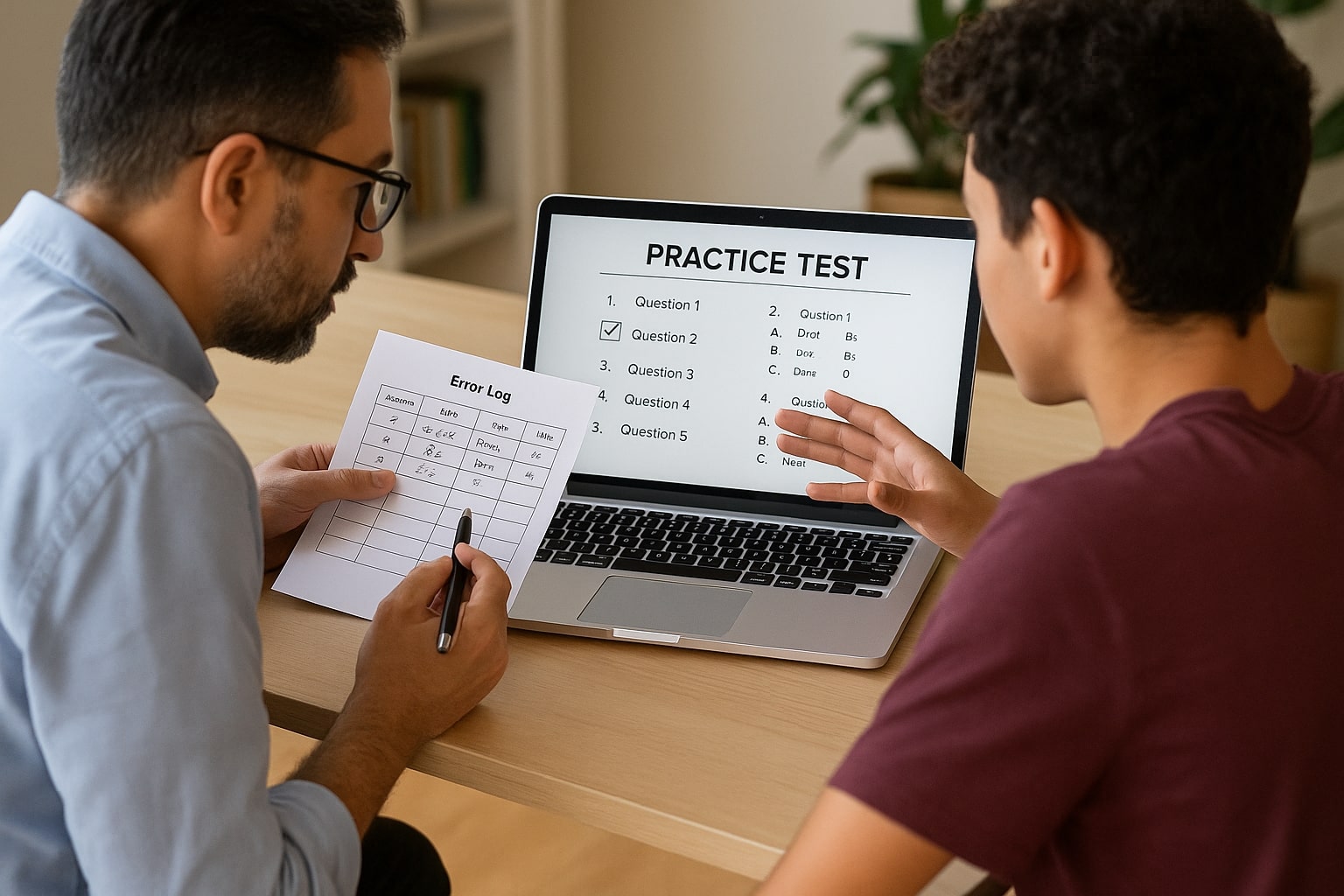
Individualized guidance can accelerate the cycle between timed failure and untimed mastery. A good tutor helps you prioritize which mistakes to fix first and creates tailored practice that balances speed and depth. If you choose to work with a service, look for:
- 1-on-1 guidance that diagnoses root causes of errors, not just surface symptoms.
- Tailored study plans that shift the timed/untimed ratio as you improve.
- Expert tutors who can teach multiple strategies and help you decide which ones fit your test-taking style.
- Data-driven insights—tracking accuracy, pacing, and error types so practice becomes surgical rather than scattershot.
For example, Sparkl’s personalized tutoring pairs students with expert tutors and creates tailored study plans that blend timed Bluebook-style practice with deep untimed reviews. Their approach often includes AI-driven insights to pinpoint stubborn error patterns and keep the student moving forward without wasted practice time.
Practical tools and habits to adopt
- Create a weekly error log—record the question, why you missed it, what you’ll do next time, and a date to retest that topic.
- Time-box your untimed reviews: give yourself a limit (e.g., 60 minutes) so untimed work doesn’t turn into avoidance of timed practice.
- Simulate test day exactly: same device setup, ambient noise level, and break schedule.
- Practice the first module under slightly stricter time so you have buffer for the adaptive second module.
- Build physical routines—sleep, nutrition, and short pre-test rituals—that make your mind steady under the clock.

Final checklist before test day
- Complete 2–3 full timed digital practice tests in the final month, with full untimed reviews after each.
- Have a one-page summary of your top 5 mistake types and the counter-strategies for each.
- Practice the test-day schedule once: wake up, eat the meal you plan to eat on test day, and sit for the first module at the same time your real test will start.
- Plan short mental breaks between study blocks to preserve stamina—quality beats raw hours.
Parting advice: turn practice into a conversation
Treat timed and untimed practice as partners, not rivals. Time yourself to learn how long the race feels. Practice untimed to refine your stride. Then combine both to discover a pacing strategy that matches your brain. The most successful students I’ve worked with are those who treat mistakes as data, not drama—who balance speed drills with patient analysis, and who ask for help when patterns repeat.
One last practical tip
If you ever feel stuck between boosting speed and fixing concepts, try a simple experiment: pick three timed practice modules and compare your error types. If more than half are careless or pacing-related, lean into more timed work that focuses on checkpoints and chunking. If more than half are conceptual, double down on untimed study for those topics until you can explain each solution step-by-step without hesitation.
Conclusion: Your best strategy is a blend
There’s no single magic switch that flips an imperfect practice routine into perfect performance. Instead, the Digital SAT rewards thoughtful preparation—one that marries the intensity of timed practice to the clarity of untimed study. Use timed sessions to condition your speed and test-day nerves. Use untimed sessions to build durable understanding and eliminate recurring errors. Track the right metrics, adjust as you go, and—when you need a hand—consider a personalized tutoring program that adapts the study plan to you. With structure, reflection, and consistent practice, the clock becomes less of an enemy and more of a coach.
Good luck—pace yourself, study smart, and remember: improvement is measurable when practice is intentional.

























No Comments
Leave a comment Cancel