

Why AP Matters for Students Aiming at RPI and Similar Engineering Schools
If you’re a student planning to pursue engineering or a rigorous science major—especially at a place like Rensselaer Polytechnic Institute (RPI)—Advanced Placement (AP) courses can be much more than a transcript flourish. They’re a practical bridge: helping you build real college-level skills, demonstrating academic maturity to admissions committees, and in many cases giving you placement or credit that lets you move faster into advanced, major-specific coursework. This article walks you through how AP fits into engineering and science curricula, how to choose the right set of APs, what scores often mean for credit and placement, and how to prepare strategically (including when Sparkl’s personalized tutoring can help).
AP: Not All Exams Are the Same for Engineering Students
AP covers a wide swath of subjects. For an aspiring engineer, some AP exams are central (Calculus AB/BC, Physics 1/2/C, Chemistry), others are highly valuable for breadth (Computer Science A, Statistics), and a few are complementary (AP Biology, Environmental Science, even AP English and AP Language and Composition for communication skills). Admissions officers look for depth and appropriate rigor: it’s better to show strength in calculus and physics than to have a shallow roster of unrelated APs.

How AP Credit and Placement Typically Work for Engineering Curricula
Colleges have different approaches: some grant credit (semester hours) for strong AP scores, some allow placement (skip an introductory course but not earn credit), and others combine both. For engineering students this can matter a lot: placing out of introductory calculus or chemistry frees up room to take early major labs, research credits, or interdisciplinary electives.
Typical AP-to-College Course Mapping
Below is a representative table showing common AP exams and how they are often mapped to introductory engineering and science courses. Remember: policies vary by institution and department—always confirm with the university registrar or department advising.
| AP Exam | Common Placement or Credit | Why It Matters for Engineering |
|---|---|---|
| Calculus AB | Placement into Calculus II or 4 credits | Allows earlier exposure to engineering math like differential equations and linear algebra. |
| Calculus BC | Placement into higher-level calculus or full credit for Calc I & II | Speeds path to major-specific math and frees room for electives or research. |
| Physics C: Mechanics/Electricity & Magnetism | Credit/placement into introductory physics with calculus | Directly relevant to core engineering mechanics and electromagnetics. |
| Physics 1/2 | Placement for algebra-based physics; limited for engineering where calculus-based is standard | Helpful background, but many engineering programs prefer Physics C for credit. |
| Chemistry | Credit or placement into general chemistry | Important for chemical engineering and materials science; useful for lab readiness. |
| Computer Science A | Placement into introductory programming or elective credit | Valuable for software-focused engineering tracks and data-driven projects. |
Beyond Credit: The Real Value of AP Is Preparation
Even if an institution doesn’t give you credit for an AP exam, the skills you build—problem-solving, lab methods, early exposure to formal proofs or programming—translate directly to success in freshman year. The confidence you gain by mastering college-level material in high school is often the difference between thriving and merely surviving in a demanding engineering curriculum.
Choosing the Right APs: Strategy Over Quantity
It’s tempting to load up on APs to impress admissions. But for engineering hopefuls, a focused plan is smarter. Admissions officers at technical schools want to see you’ve tackled the academic foundations relevant to your intended major and succeeded.
A Balanced AP Roadmap for an Aspiring Engineer
- Sophomore Year: Start with AP Calculus AB (if your background supports it) or AP Physics 1/Algebra-based physics to build momentum.
- Junior Year: Target AP Calculus BC, Physics C (Mechanics), and AP Chemistry if relevant to your track.
- Senior Year: Take AP Computer Science A or AP Statistics and consider a humanities AP like AP English Language to strengthen communication skills.
This sequence shows progression—calculus followed by calculus-based physics is especially compelling for engineering programs because it mirrors the college progression.
When to Take AP Exam Versions That Matter
Note the distinction between AP Physics 1/2 and AP Physics C. Many engineering programs prefer Physics C because it uses calculus. If you’ve taken AP Physics 1 or 2, you still gain useful conceptual grounding, but if your school offers Physics C and you’re aiming for RPI-level engineering, prioritize Physics C where possible.
Admissions: How AP Performance Shapes Your Application
AP courses show rigor on your transcript; strong AP scores reinforce that you didn’t just take hard classes, you mastered them. For selective engineering schools, this is meaningful in two ways:
- Academic readiness — Admissions readers want evidence you can handle calculus-based science and demanding labs.
- Curricular fit — APs aligned with engineering (calculus, physics, programming, chemistry) show intentionality.
That said, APs are one part of a holistic review. Projects, research, internships, robotics club leadership, and demonstrated problem-solving matter, too. A mix of AP success and real-world STEM experience is the strongest signal.
Using AP to Shape Your First-Year Plan
Planning matters. If you do earn AP credit or placement, you can use the freed-up schedule to:
- Take specialized engineering electives early (e.g., statics, circuits, materials).
- Begin undergraduate research sooner—critical for grad school or competitive internships.
- Pursue a double major or a minor without overloading your semesters.
Preparing for AP Exams: Practical Tactics That Work
Preparation is both content and strategy. For engineering-minded APs, that means mastering fundamentals, practicing problem-solving under timed conditions, and developing lab/experimental intuition for science tests. Below are concrete tactics that have helped many students move scores from a 3 to a 5.
Weekly Study Routine (Example)
- 3 focused content sessions (50–90 minutes each): target weak topics in calculus, physics, or chemistry.
- 1 timed practice exam section: simulate testing conditions and review mistakes immediately.
- 1 lab or project session: reinforce conceptual understanding by building circuits, coding a small program, or running simple chemistry experiments at home or in a school lab.
- Ongoing concept log: maintain a one-page sheet of formulas, common traps, and example problems for quick review.
Targeted Practice Tips
- For Calculus: don’t just memorize procedures—practice setting up integrals from real-world descriptions and interpret results.
- For Physics: focus on free-body diagrams, energy methods, and relating constants (like g) to real systems; practice units carefully.
- For Chemistry: get comfortable with stoichiometry, kinetics basics, and interpreting lab data—exams often test reasoning from experimental setups.
- For Computer Science: write code by hand, trace algorithms, and practice designing small programs under time pressure.
How to Use AP Scores Wisely After You Get Them
Once scores arrive, don’t make decisions in a vacuum. Compare your scores to the school’s published policy, then consider your academic goals. If you’ve earned placement but not credit, you may still skip a course and gain a scheduling advantage. If you’ve got full credit, think about whether the department still recommends taking an honors or foundational course—sometimes a lighter introductory course is still useful to align you with departmental expectations.
Example Decision Matrix
| Score | Typical Outcome | Suggested Action |
|---|---|---|
| 5 | Often full credit or high-level placement | Consider advancing to next-level course; consult advisor about honors options. |
| 4 | Likely placement or partial credit | Use placement to enroll in a more advanced course, but verify with department. |
| 3 | Possible credit/placement depending on college | Consider retaking freshman course if foundational skills feel shaky; discuss options with faculty. |
Real-World Example: Building Your First-Year Engineering Plan with AP Credit
Imagine you enter RPI with a 5 on Calculus BC and a 4 on Physics C: Mechanics. Instead of taking Calculus I and the introductory calculus-based physics sequence, you might start in Multivariable Calculus or Differential Equations and move into sophomore-level statics and dynamics. That accelerates access to project-based courses and research labs in your first year—critical experiences for landing internships and building a strong academic profile.
How Personalized Tutoring Amplifies AP Success
Tutoring isn’t a magic wand, but the right personalized support can make preparation efficient, targeted, and confidence-building. Sparkl’s personalized tutoring model combines 1-on-1 guidance with tailored study plans and expert tutors who understand how AP content maps to engineering curricula. A few ways personalized tutoring helps:
- Target weak points quickly—tutors can zero in on the specific subtopics causing errors (e.g., improper setup of integrals or misapplied Newton’s laws).
- Simulate high-pressure testing—timed practice with expert feedback reduces test-day anxiety and improves pacing.
- Create a custom study plan—rather than a generic schedule, you get one that fits your school workload, extracurriculars, and goals.
- Leverage AI-driven insights—Sparkl can track progress, highlight recurring mistakes, and adapt focus areas in real time.
When tutoring is used strategically—paired with deliberate practice and self-reflection—it often results in measurable score improvements and stronger readiness for college-level engineering work.
When to Consider a Tutor
- If your practice exam scores plateau despite regular study.
- If you need help translating conceptual knowledge into AP-style problem solving.
- If you want a personalized pacing plan to balance AP prep with schoolwork and extracurriculars.
Common Pitfalls and How to Avoid Them
Even well-intentioned students stumble. Here are pitfalls common to AP-focused engineering applicants and how to avoid them.
Pitfall 1: Overloading with Too Many APs
Quality beats quantity. Admissions committees prefer a student who took a rigorous sequence aligned with their goals and did well, rather than someone who took every AP and earned mediocre results. Prioritize depth in calculus, physics, and a computing or chemistry AP depending on your track.
Pitfall 2: Ignoring Lab and Project Experience
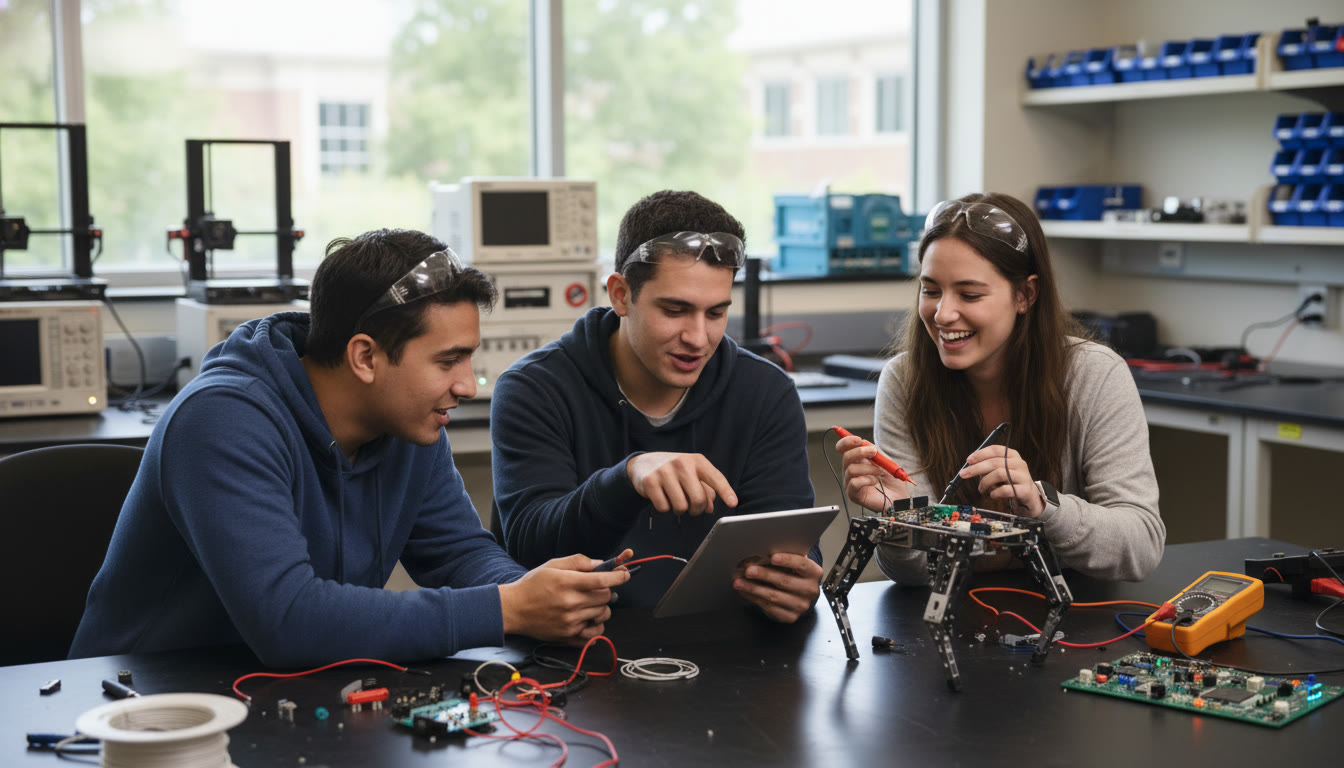
APs teach content, but engineering is hands-on. Seek research or project-based experiences—robotics clubs, science fairs, internships, or open-source coding projects—that demonstrate practical application of AP knowledge.
Pitfall 3: Waiting Too Long to Send Scores
Be aware of deadlines for free score sends and institutional deadlines for credit consideration. Sending scores early gives you more options when planning your first semester schedule.
Preparing Parents and Counselors: Supporting an AP-Focused Plan
Parents and counselors play a huge role in shaping sustainable plans. Encourage balance: rigorous academics but realistic workload, built-in rest, and time for meaningful extracurriculars. Help students choose APs with curricular fit in mind, and invest in targeted support if they stall—tutoring can be cost-effective relative to the long-term payoff of better placement and confidence.
Final Checklist: Ready for RPI-Style Engineering Curricula
- Have you completed or planned AP Calculus (AB/BC) and at least one calculus-based physics course (Physics C) if available?
- Did you take AP Chemistry or AP Computer Science A if your track calls for it?
- Are you balancing AP workload with hands-on projects, research, or competitions?
- Do you have a plan for sending official scores and following up with departmental advisors about placement?
- Have you considered targeted tutoring—like Sparkl’s 1-on-1 guidance and personalized study plans—to sharpen weak areas before exam day?
Parting Thoughts: Play the Long Game
AP courses are an investment. They reward thoughtful planning, targeted preparation, and the willingness to apply classroom knowledge to real projects. For RPI-bound and engineering-aspiring students, APs can unlock early opportunities: advanced coursework, earlier research, and more intellectually stimulating semester schedules. Use APs to prove readiness—but don’t let them replace curiosity and hands-on learning. Pair your AP efforts with real-world projects, seek mentorship, and consider personalized tutoring where it fits. When guided well, your AP experience becomes the launchpad into a rich, hands-on engineering education.
Need a Next Step?
Start by mapping the APs you’ve taken (or plan to take) to the introductory requirements of the colleges you’re targeting. Make a prioritized list: what gives the most curricular alignment? Then, build a study plan around the highest-impact exams. If you’d like a customized study roadmap or targeted 1-on-1 sessions to shore up weak areas, consider scheduling a consultation with a tutor who understands both AP expectations and engineering curricula—small investments now can pay off in advanced placement, earlier research opportunities, and a smoother first year of college.
Good luck—approach this with curiosity and steady practice, and you’ll arrive at college stronger, smarter, and more ready to build the future you want.





























No Comments
Leave a comment Cancel