

Welcome to the AP Reality: Why This Matters for Engineering and Computing
If you’re a student dreaming about engineering or computing at top colleges, or a parent standing beside that hopeful student at 2 a.m. with a cup of coffee, this article is for you. The AP ecosystem—courses like AP Computer Science Principles, AP Computer Science A, AP Calculus AB/BC, and AP Physics C—has become a common language between high schools and selective colleges. But the reality isn’t just a checklist of high scores; it’s a combination of strategy, growth, focus, and smart choices that show colleges you’re ready for rigorous STEM work.

The Big Picture: What APs Do (and Don’t) Do for Engineering/Computing Applicants
AP courses serve several roles at once. They show colleges that you pursued challenging coursework, give you a chance to earn college credit or placement, and build essential skills—problem solving, mathematical modeling, algorithmic thinking—that engineering and computing programs expect. But APs aren’t the only signal colleges examine. Admissions officers look for depth over breadth, intellectual curiosity, and evidence you can thrive in a technical curriculum.
Choosing the Right AP Mix: Quality Over Quantity
It’s tempting to stack your schedule with every AP that has a STEM label. Instead, a tailored AP plan is smarter and more persuasive.
- Core engineering/computing stack: AP Calculus AB or BC, AP Physics C (Mechanics and/or Electricity & Magnetism), and AP Computer Science A or AP Computer Science Principles are the most directly relevant.
- Supplementary strength: AP Statistics, AP Chemistry (for certain engineering fields), and AP Biology for bioengineering interests.
- Strategic humanities: A high-level AP in English or History shows writing and critical thinking—both prized by top programs.
Colleges value rigor, but they also value performance. A student with four APs and solid A grades looks stronger than a student with eight APs and middling performance.
AP Calculus: The Foundation
Calculus is often the single most important AP for aspiring engineers and computer scientists. Whether AB or BC, this course builds the formal language of change and models that you’ll meet in first-year engineering and CS math sequences. Choose BC if you can handle a faster pace—many selective programs expect BC or college-level calculus placement.
AP Physics C: The Calculus-Based Advantage
For engineering applicants, AP Physics C is especially valuable because it uses calculus, mirrors college-level physics, and demonstrates mechanics and electromagnetism understanding—core to many engineering fields. It’s also rigorous in lab work and mathematical reasoning.
AP Computer Science A vs. AP Computer Science Principles
AP Computer Science A is the closer equivalent to a college programming course focused on problem solving with object-oriented programming (often Java). AP Computer Science Principles is broader—emphasizing computational thinking, data, and the societal impacts of computing, and includes a major project. If you want hands-on coding experience and a clear signal of programming skill, CS A often reads stronger to engineering and CS departments, but both bring different strengths. Taking both is ideal if your schedule and stamina allow.
How Colleges Read APs: Placement, Credit, and Context
Admissions committees treat APs as context: they want to see that you pursued challenge relative to what was available. Earning a 3, 4, or 5 can translate into placement or credit at many colleges, but policies vary by institution and department. For engineering and computing, many universities give placement into higher-level math or introductory CS courses—saving time and allowing you to take advanced electives sooner.
| AP Course | Typical College Benefit for Engineering/CS | Why It Helps |
|---|---|---|
| AP Calculus BC | Placement into second-semester calculus or math credit | Frees schedule for advanced math, numerical methods, or early major classes |
| AP Physics C | Credit or placement for introductory physics with calculus | Shows mastery of mechanics and electromagnetism with calculus |
| AP Computer Science A | Placement into introductory programming courses | Demonstrates coding fluency and algorithmic thinking |
| AP Computer Science Principles | Project-based evidence of computational thinking | Highlights creativity, data literacy, and ethical thinking in computing |
Remember: Policies Differ
Some programs prefer students to take their own introductory sequences regardless of AP credit, especially in engineering where lab experiences and specific curricula matter. That’s okay: APs still show readiness and let you skip redundant content—often allowing you to dive into major-level courses faster.
Preparing for APs: A Realistic, High-ROI Study Plan
Success comes from consistent, deliberate practice—especially in STEM APs where conceptual clarity and problem practice are essential. Here’s a practical roadmap you can adapt.
Six-Month Sprint Before the Exam
- Months 1–3: Build fundamentals. For Calculus, focus on limits, derivatives, and integral basics. For CS A, code small programs daily. For Physics C, keep calculus skills sharp and do problem sets on each topic.
- Months 4–5: Intensify practice. Use past AP-style questions and full-length practice exams. Practice under timed conditions and analyze mistakes carefully.
- Month 6 (Final month): Polished review and simulated exam weeks. Triage weak areas and keep your sleep schedule steady—cramming kills recall.
Weekly Routine That Works
- 3–5 focused study sessions per week per course (45–90 minutes each).
- One full practice exam every 2–3 weeks, increasing to weekly in the last month.
- Daily short coding or problem-solving session (15–30 minutes) to maintain procedural fluency.
Active Study Techniques That Beat Passive Reading
Study smart: active recall and spaced practice outperform rereading. For example, attempt practice problems before reviewing solutions. Explain solutions aloud or teach a peer. Use flashcards for key formulas, but more importantly, practice applying formulas in varied contexts.
Three Concrete Study Hacks
- Error Logs: Keep a notebook of every mistake type. Revisit errors weekly—this turns mistakes into lasting gains.
- Mini-Projects: For CS Principles or CS A, build small projects (a simulator, a data visualizer) to connect abstract concepts to tangible outcomes.
- Equation Bank: For Calculus and Physics, create a one-page cheat-sheet (for study use) summarizing key theorems, when to use them, and a single worked example.
Balancing AP Work With Extracurriculars and Applications
Top engineering and computing programs expect intellectual curiosity beyond the classroom. That doesn’t mean dozens of superficial clubs—depth matters.
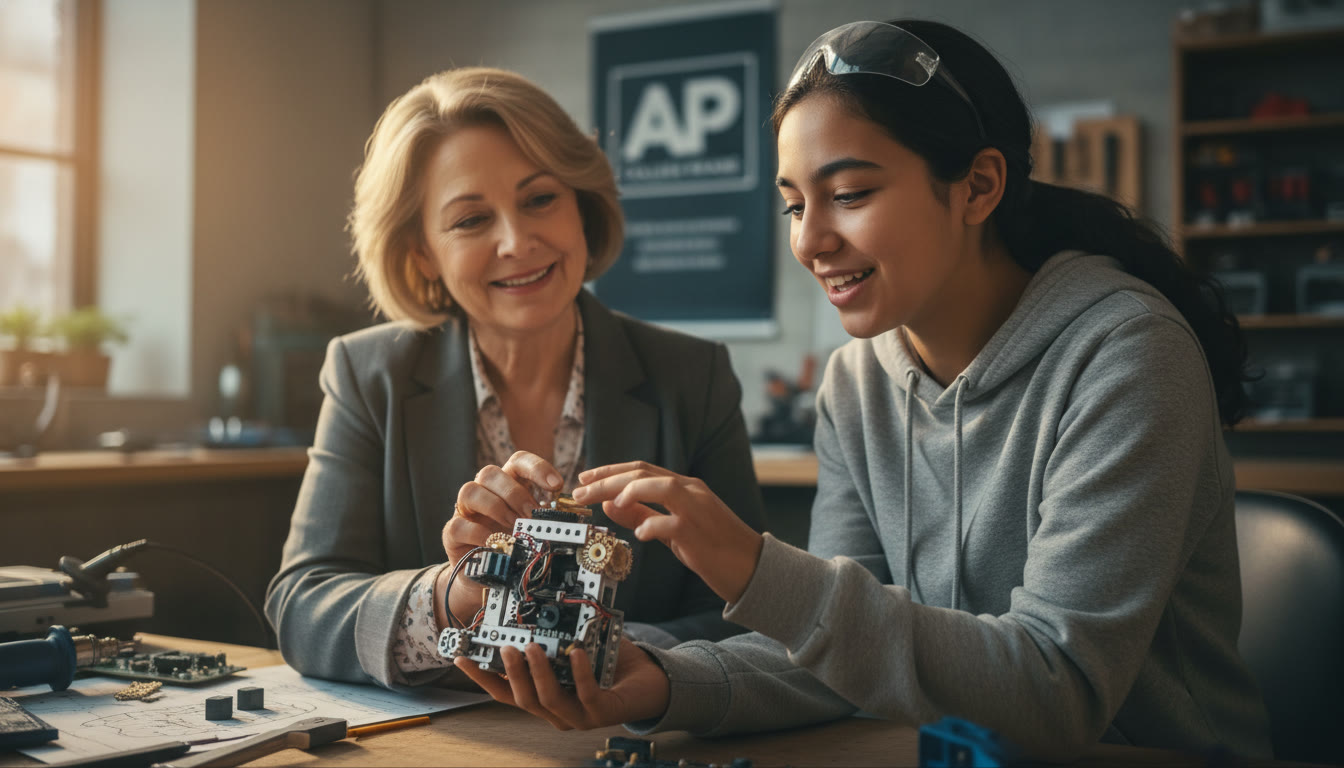
- Pursue a project (robotics, app development, research, independent study) that demonstrates sustained curiosity.
- Contribute meaningfully to team-based activities—leadership and collaboration are essential in engineering.
- Quality letters of recommendation often come from teachers who know your intellectual habits—show up, ask questions, and engage.
How to Talk About APs in Applications
Use essays and interviews to connect AP work to real-world impact. Don’t just list APs—explain how a project or problem changed your perspective, what you learned from struggle, and how the experience prepared you for engineering or computing challenges.
Exam Day Realities: What to Expect and How to Stay Calm
AP exams for STEM are often a mix of multiple-choice and free-response questions (or performance tasks in the case of CSP). Familiarize yourself with formats, practice in the official digital environment if applicable, and make exam-day logistics a non-issue by planning ahead.
- Sleep and nutrition matter more than last-minute cramming.
- On multi-part problems, outline your approach before writing full solutions—this prevents wasted time on dead ends.
- For programming tasks, write clear code with comments; graders value readable logic as much as correct output.
When AP Scores Don’t Go As Planned
If a score is lower than hoped, don’t panic. Many successful engineers and computer scientists had imperfect AP outcomes. You can show mastery later—through college coursework, internships, personal projects, and community college classes. Admissions pays attention to upward trajectories and what you do after a setback.
Repair and Recover Strategy
- Retake the exam the next year if it makes sense and you can meaningfully improve.
- Demonstrate learning by completing more advanced work (e.g., university courses, MOOCs with projects, or local community college classes).
- Use your application essays to honestly reflect on the experience and show how it motivated growth and new action.
Real-World Context: How AP Skills Map to Engineering and Computing Careers
AP coursework builds specific, transferable skills: mathematical modeling, experimental design, algorithmic thinking, data literacy, and ethical reasoning. These are core to fields like software engineering, electrical engineering, robotics, and data science. Employers and professors look for evidence of these habits of mind—APs are a starting point, not the final credential.
Sparkl’s Personalized Tutoring: Where It Fits Naturally
Many students benefit from targeted help. Personalized tutoring—especially 1-on-1 guidance—can pin down weak spots faster than general study. Sparkl’s approach to tailored study plans, expert tutors, and AI-driven insights can fit naturally into the six-month sprint described earlier: diagnostic assessment, a plan that prioritizes high-impact topics, and ongoing feedback loops. When you’re balancing AP commitments with projects and applications, a bespoke tutoring plan helps you stay efficient and confident.
How to Use Tutoring Wisely
- Ask tutors to simulate exam problems and then debrief mistakes—not just show answers.
- Request periodic mock exams with review sessions that mirror grading rubrics.
- Use AI-driven insights to track progress metrics, but insist on human explanation and mentorship—the combination is powerful.
Sample Timeline: Junior Year Roadmap for AP-Focused Applicants
Below is a sample timeline that balances coursework, AP prep, and application-building activities. Adjust it to your school calendar and personal commitments.
| Timeframe | Focus | Action Items |
|---|---|---|
| June–August (Before Junior Year) | Foundations | Brush up on precalculus and programming basics; choose APs for the coming year; start a small coding or design project. |
| September–December (Junior Year) | Coursework and steady practice | Attend classes, weekly problem sets, begin practice exams, meet with a tutor for targeted weakness checks. |
| January–March | Intensify practice | Full-length practice tests every 2 weeks, refine projects, seek teacher feedback for letters of recommendation. |
| April–May (Exam Season) | Final push | Simulate test conditions, keep sleep consistent, submit performance tasks early when possible, and debrief each practice test. |
| June–August (After Exams) | Reflection and advancement | Translate AP experiences into application material, deepen projects, take advanced classes or internships. |
Essays and Interviews: Turning AP Work Into a Compelling Narrative
APs provide concrete hooks for storytelling. An essay that traces how a programming error taught you to debug methodically, or how a physics lab led to an engineering design that solved a real problem, tells admissions more than a sterile transcript. Use specific moments—failed tests, late-night breakthroughs, team conflicts—to reveal character, persistence, and intellectual engagement.
Essay Checklist
- Be specific: name the problem, the steps you took, and the lesson learned.
- Connect to future goals: show how the AP experience informs your intended major or research interest.
- Avoid jargon overload: explain technical points clearly for a general admissions reader.
Final Thoughts: APs as a Launchpad, Not a Destination
APs are a powerful piece of the engineering and computing admissions puzzle, but they’re one part of a broader story. What matters most is what you do with those experiences: the curiosity you demonstrate, the projects you complete, the problems you persistently solve, and the ways you grow intellectually and personally. Be strategic with your course choices, deliberate in your preparation, and reflective in your application narrative.
And remember—help is not a sign of weakness. Whether that comes from supportive teachers, close mentors, or personalized tutoring that offers 1-on-1 guidance, tailored study plans, and expert feedback—like the options Sparkl provides—smart support can convert steady effort into clear results. You don’t have to do it alone.
Parting Advice for Students and Parents
- Prioritize depth over quantity: a few rigorous APs with strong performance trump a crowded transcript.
- Practice deliberately, analyze mistakes, and build projects that showcase applied skills.
- Use tutoring and mentorship strategically to accelerate learning and stay sane during peak seasons.
- Tell a coherent story in your applications—link classes, projects, and aspirations into a meaningful narrative.
The engineering and computing journey is long, exciting, and sometimes messy. APs are a practical way to demonstrate readiness—but the work you do after and around those exams is what shapes the engineer or computer scientist you will become. Lean into projects, ask better questions than you answer, and let curiosity guide your preparation.
Good luck—may your code compile, your integrals converge, and your curiosity never stop pushing you forward.



























No Comments
Leave a comment Cancel