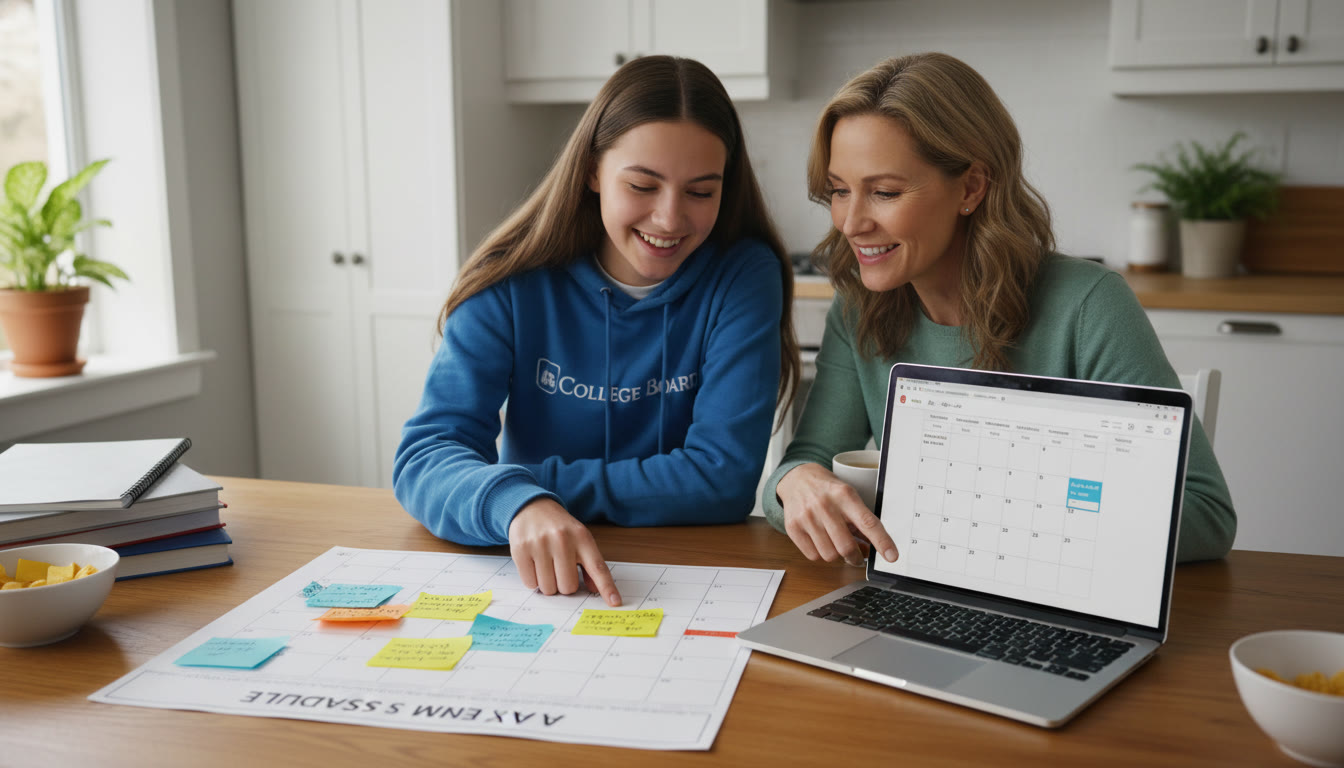

Why a Family Calendar Makes AP Season Less Scary
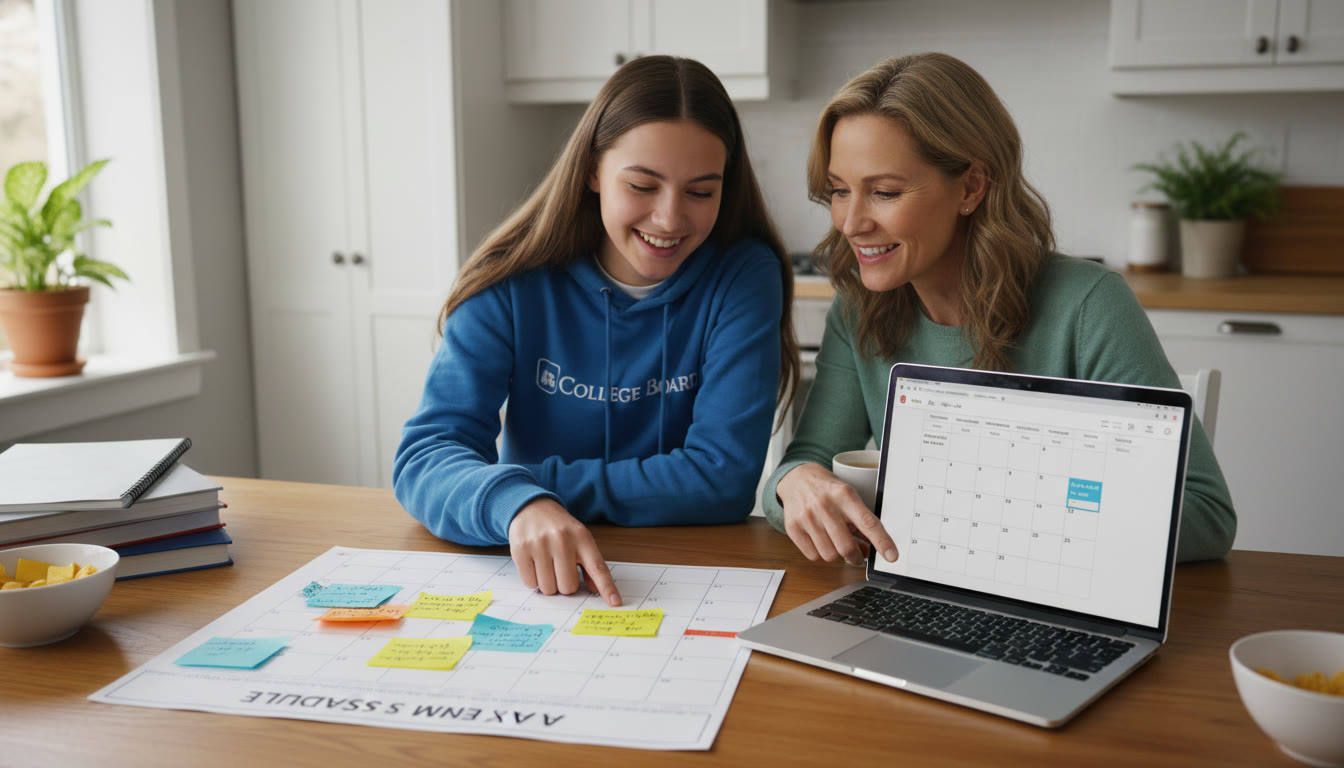
There’s something comforting about seeing a plan laid out on paper (or a bright, shared app): it turns an amorphous blur of tests, projects, and deadlines into a set of clear, manageable steps. For families navigating Advanced Placement (AP) courses, a family calendar is more than a scheduling tool — it’s a communication hub, a morale booster, and a gentle accountability partner.
This post is written for parents who want practical, warm, and realistic ways to help their student succeed in AP courses without turning the home into a constant classroom. You’ll find templates, timing suggestions, real-life examples, a sample calendar table, and ways to fold in targeted support like Sparkl’s personalized tutoring when it naturally fits the flow of your family’s plan.
Start with Purpose: What Should Your Calendar Solve?
Before you add events and to-dos, ask: what problems do you want this calendar to fix? Typical goals include:
- Tracking major academic milestones (unit tests, AP Exam dates, project due dates).
- Balancing study time with extracurriculars and family life.
- Flagging checkpoints for review and practice exams.
- Making room for focused tutoring sessions or study groups.
- Reducing last-minute stress and missed deadlines.
When your family agrees on purpose, the calendar becomes an ally rather than another source of nagging.
Key AP Milestones to Include (and When to Add Them)
AP pathways vary by subject and school, but there are consistent milestone types you’ll want to track. Below is a practical schedule you can adapt to specific course timelines.
Academic Year Calendar: What to Mark
- Course start and end dates — know the rhythm of the semester.
- Major unit tests and midterms — add at least one reminder two weeks prior.
- Project and lab deadlines — schedule buffer days for unexpected revisions.
- AP School Day (if offered) and official AP Exam date — these are anchor dates.
- Practice exam dates and review windows — plan at least two full-length practice tests before the real exam.
- College application deadlines and counselor meetings — AP results sometimes feed into those conversations.
Sample Family Calendar Table (Weekly Snapshot)
The table below models a typical week for an AP student in the five weeks before the AP exam. Use it as a template to build month-by-month views.
| Week | Focus | Daily Habits | Key Events | Parent Actions |
|---|---|---|---|---|
| Week 1 (T – 35 days) | Content Review — All Units | 30–45 min targeted review per subject | Schedule full-length practice test | Confirm practice test logistics; offer quiet space |
| Week 2 (T – 28 days) | Practice Test #1 and Analysis | Work on weakest topic 45–60 min | Meet with teacher or tutor to review practice results | Attend review meeting if useful; praise progress |
| Week 3 (T – 21 days) | Targeted Drills and Timing | Timed section practice 60 min every other day | Refine exam-day plan (sleep, food, transit) | Help arrange exam-day logistics and restful nights |
| Week 4 (T – 14 days) | Practice Test #2 and Final Topic Sweep | Light review and flashcards 20–30 min | Finalize any materials and confirmations | Celebrate progress with small treat; keep calm |
| Week 5 (T – 7 days) | Tapering and Mindset | Very light review, focus on sleep and routine | AP Exam | Provide encouragement and logistics support |
How to Build the Calendar: Tools and Habits
Decide on a Format
Pick one primary calendar that everyone checks. Options include:
- A large wall calendar in the kitchen for daily visibility.
- A shared digital calendar (Google Calendar, Apple Calendar) synced across devices.
- A hybrid approach: digital for reminders and a paper view for weekly check-ins.
The key is a single source of truth. Cross-posting often leads to mismatches and extra confusion.
Color Coding and Labels
Use simple color codes to make the calendar scannable at a glance. Example scheme:
- Blue — Class tests and quizzes.
- Green — AP-specific events (practice tests, review sessions, exam day).
- Orange — Family commitments and nonnegotiable activities.
- Purple — Tutoring sessions or meetings with counselors.
Keep color rules consistent so your student can instantly see what the coming week looks like.
Weekly Rituals to Keep the Calendar Alive
A calendar doesn’t manage itself. Create brief rituals that make checking and updating it easy and even pleasant.
- Sunday 20-minute Planning Huddle: Review the week’s calendar, confirm study blocks, and move any conflicting events.
- Daily 5-minute Check-in: Teen checks plans after school; parents note anything that needs support.
- Midweek Mood Check: A quick chat Wednesday night to address burnout, frustration, or scheduling conflicts.
Rituals build predictability and reduce last-minute surprises.
Planning Study Blocks Without Micromanaging
Parents often want to help but can tip into micro-management. The goal is supportive structure, not surveillance. Here’s how to design study blocks that respect autonomy:
- Agree on total weekly study time rather than policing every minute.
- Help plan which topics to tackle during each block but let the student choose the order.
- Schedule short, frequent breaks (5–10 minutes) and one longer break after a study marathon.
- Reserve one weekly slot for tutoring or teacher check-ins if needed.
Trust grows when teens feel ownership over the plan.
When to Bring in Extra Help: Tutoring, Teachers, and Sparkl
Know the signs that your student could benefit from a little additional support:
- Consistently low scores on practice tests despite effort.
- Persistent confusion around core concepts after classroom review.
- High anxiety that interferes with studying or sleep.
- Difficulty with time management or turning plans into action.
When extra help is helpful, integrate it into your calendar like any other milestone. For example, book a weekly 1-on-1 tutoring session in the purple slot, and mark practice test review meetings in green.
Sparkl’s personalized tutoring can fit naturally here: expert tutors can provide 1-on-1 guidance, create tailored study plans, and use AI-driven insights to pinpoint weak areas. Schedule those sessions at consistent times each week so they become part of your student’s steady routine rather than emergency interventions.

Preparing for Practice Tests and the Real AP Exam
Designing Practice Test Weeks
Practice tests are the cornerstone of AP readiness — they reveal timing issues, content gaps, and stress triggers. Treat them as diagnostic tools, not pass/fail moments.
- Schedule at least two full-length practice tests spaced 1–3 weeks apart in the final 6–8 weeks.
- Block off the full morning in your calendar, and treat it like a real exam: same start time and minimal interruptions.
- Plan a review session within 48 hours where the student goes over missed questions and identifies patterns.
Exam-Day Logistics to Add to the Calendar
On the calendar, include concrete reminders for:
- What to bring (admission ticket if needed, photo ID, pencils or pens, approved calculator).
- When to leave — include traffic and parking time.
- Meals and hydration plan — aim for balanced, familiar foods.
- Pre-exam wind-down: a light evening routine the night before focused on sleep, not cram study.
Listing these items prevents frantic last-minute decisions and helps your student feel calm and prepared.
Handling Setbacks Without Panic
Milestones don’t always go as planned. Tests don’t always reflect the effort put in. When setbacks happen, respond with a recovery plan rather than alarm:
- Debrief gently: ask what the student noticed, not just what went wrong.
- Include a “pause and plan” slot on your calendar within a few days of a setback to map next steps.
- Adjust study blocks or bring in targeted tutoring for the weak topics identified.
- Celebrate effort and small wins to keep momentum going — this can be as simple as a favorite dinner or time off.
Mapping recovery into the calendar turns setbacks into stepping stones.
Balancing Family Life With AP Rigor
It’s important that the calendar protects both academic goals and family well-being. Include deliberate “family-first” events so life does not feel like one long study sprint.
- Weekly family nights or meals where no studying is allowed.
- Blocks for extracurriculars and downtime to preserve identity beyond schoolwork.
- Sleep and exercise reminders — physical health supports cognitive performance.
Think of the calendar as a tool to make space for everything that matters.
Example: A Simple Monthly AP Calendar Template
Below is a compact monthly template you can copy into your family calendar. Replace dates and specifics to match your school’s schedule.
| Week | Primary Goal | Must-Do Events | Parent Check |
|---|---|---|---|
| 1 | Full Unit Review | Two 45-min review blocks, 1 practice section | Confirm quiet workspace and supplies |
| 2 | Practice Test & Analysis | Full practice test Saturday; review Sunday | Attend review session if invited |
| 3 | Targeted Drills | Timed section drills, teacher or tutor check-in | Help schedule tutoring if needed |
| 4 | Consolidation & Rest | Light review, sleep focus, exam logistics check | Help with exam-day plan |
Communication Scripts for the Planning Huddle
Here are a few short scripts to keep weekly planning positive and productive:
- Opening: “Let’s look at the week ahead. What’s your priority this week, and how can I help?”
- If stressed: “I notice you’re overwhelmed. Want to break tasks into smaller steps together?”
- If progress: “You did a great job on that practice test. What helped the most?”
- If considering tutoring: “Would you like to try a couple of sessions with a tutor to target this topic? We can book them and see how it goes.”
These short prompts keep conversations solution-focused and respectful.
Measuring Progress Without Obsession
Use a few simple metrics on your calendar to track growth without becoming score-driven:
- Practice test score ranges (e.g., 3–6 point bands) rather than exact numbers each week.
- Confidence check-ins — note how confident your student feels about a topic on a 1–5 scale.
- Completion ticks for planned study blocks — celebrate consistency more than perfection.
These indicators tell a fuller story than a single test score.
Final Thoughts: Build the Calendar, Then Let It Breathe
A family calendar for AP milestones is a living thing. It will need editing, forgiveness, and occasional reinvention. When parents model calm planning — checking the calendar together, adjusting expectations, and celebrating steady effort — students learn not just how to prepare for exams but how to plan, recover, and grow.
If your student’s needs change, remember that targeted support is a tool, not a label. Sparkl’s personalized tutoring is one way to slot expert help into your calendar — brief, focused sessions that complement classroom learning with 1-on-1 guidance, tailored study plans, and AI-informed insights that point directly to the topics that will move the needle. When used thoughtfully, tutoring becomes a scheduled boost, not a last resort.
Start small: pick one semester, add the exam date, schedule a practice test, and build from there. Over time, the calendar will become a quiet engine of confidence — a family rhythm that turns AP milestones into manageable steps toward bigger goals.
Quick Checklist to Create Your Family AP Calendar Today
- Pick one master calendar and agree to use it.
- Add AP exam date(s) and school-day events first.
- Block practice tests and review windows across the months leading up to the exam.
- Schedule weekly family planning huddles and one weekly tutoring slot if needed.
- Color-code events for instant clarity and set gentle reminders.
- Protect family time and sleep — they’re part of the plan too.
Parting Encouragement
AP season is a journey, not a single exam. The calendar you build with your student can be a source of calm accountability, real progress, and shared pride. Keep it simple, flexible, and kinder than perfection. You’ve got this — and so does your student.




























No Comments
Leave a comment Cancel