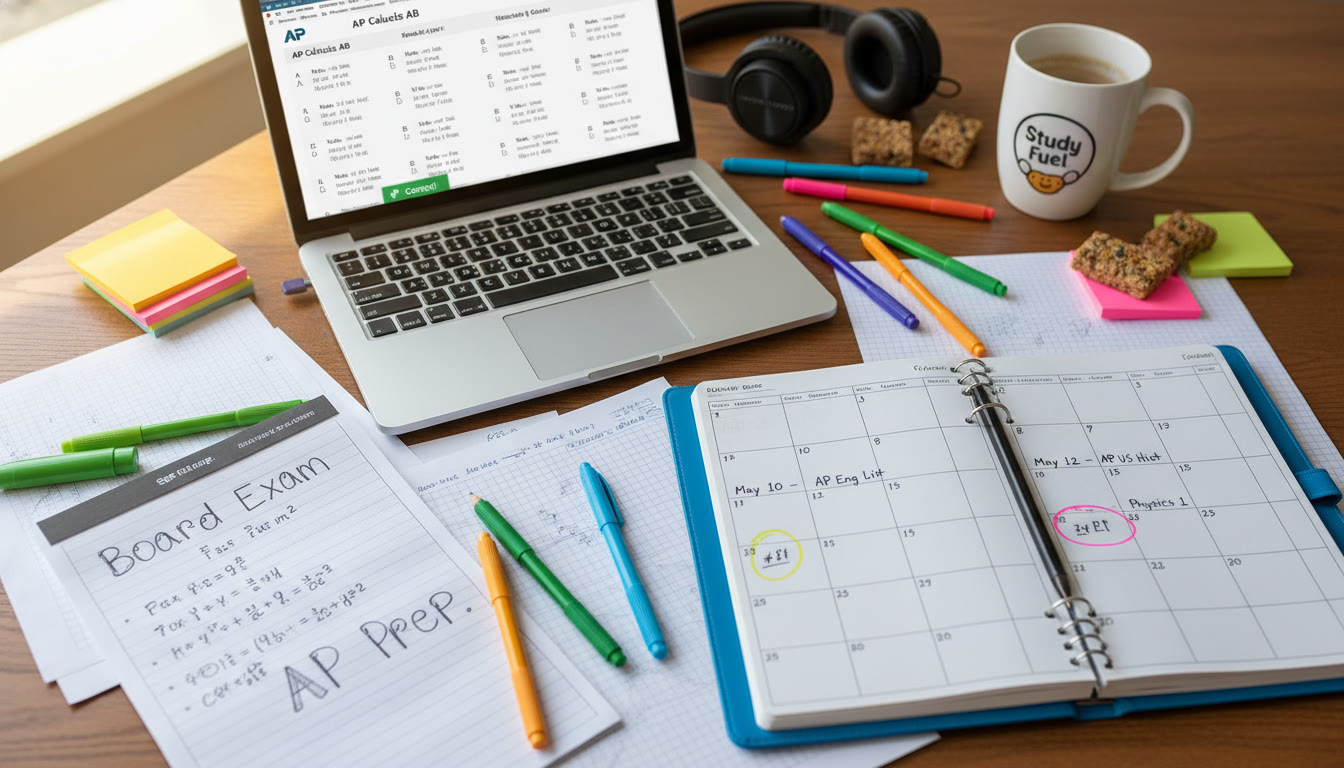

Assessment Weighting: Boards vs AP — Why It Matters
If you’re a student (or a parent shepherding one) juggling multiple high-stakes assessments, the phrase “assessment weighting” probably feels like an abstract math problem — until results day. But understanding how board exams and College Board Advanced Placement (AP) exams are weighted, scored, and interpreted changes everything about how you plan, what you prioritize, and where you invest your energy.
This blog is written for real people: busy students who want clarity, parents who want to support without micromanaging, and educators looking for practical tweaks. It’s conversational, grounded in classroom realities, and loaded with examples you can use right away. We’ll compare the two systems, show how to rebalance prep when both are on the calendar, and offer a sample timeline and study plan. You’ll also see where targeted help — like Sparkl’s personalized tutoring — can make a measurable difference.
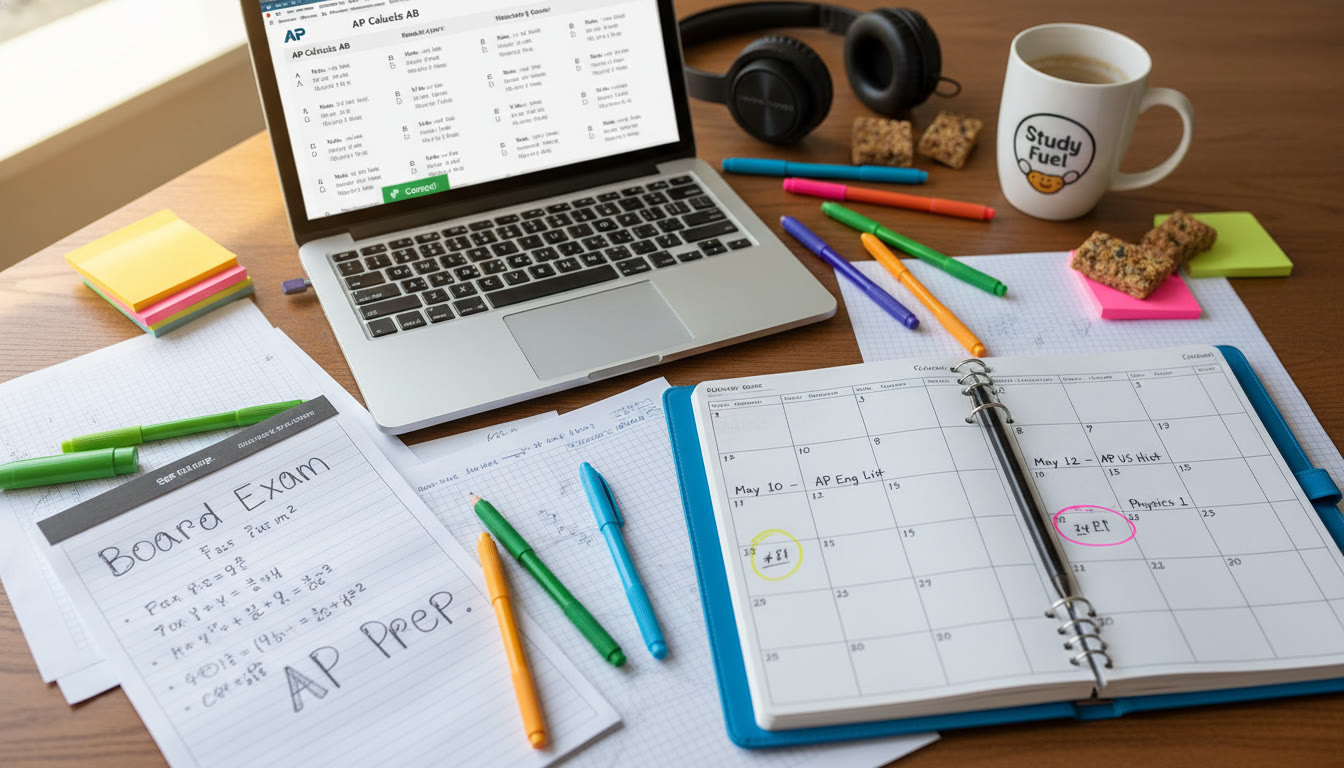
Quick Orientation: Boards vs AP — What’s the Difference?
Before we rebalance anything, let’s be absolutely clear about the two beasts we’re facing.
Board Exams
Board or school-board exams (often state or national systems) usually determine graduation eligibility, diploma honors, and sometimes university placement. Their structure varies by country or state, but common features include:
- Coverage of the full course curriculum as defined by the school or board.
- A mix of long-form answers, short answers, and objective questions.
- High stakes for school transcripts and local university admissions.
AP Exams
AP exams are standardized, internationally recognized assessments administered by the College Board. They evaluate college-level understanding in a subject and can yield college credit or placement if you score well. Key features:
- Standardized across test centers worldwide, with a consistent AP scoring scale (1–5).
- Multiple-choice and free-response sections that reward synthesis and application.
- College credit or advanced placement depends on university policies and your score.
Why Weighting Changes Strategy
Weighting — the relative importance of different topics, question types, or assessment components — is the lens through which you decide where to spend time. If one exam emphasizes problem-solving and another rewards rote recall, you need different tactics. When you face both board exams and AP exams, mismatched weighting creates tension: what you practice for one might leave you underprepared for the other.
Example: an AP Physics exam may give substantial credit to conceptual explanations and multi-step quantitative problems, while your school board might focus heavily on solved examples tied to the textbook. If you only memorize solved examples, you risk losing points on AP-style questions that require flexible reasoning.
Checklist: Evaluate Your Current Weighting
Before you overhaul your study plan, quickly audit where you stand. Use this checklist and be honest — the goal is efficiency, not perfection.
- Identify the percentage of your overall grade each exam impacts (transcript importance vs. college credit).
- List the top 5 topics by frequency for each assessment (from past papers or syllabus).
- Note question formats: multiple-choice, structured short answers, essays, labs, etc.
- Assess your current performance in each format (practice test scores, recent class tests).
- Log time available per week and energy peaks (morning vs evening).
Core Principles to Rebalance Prep
These principles will guide your decisions — whether you’re a senior, a junior, or a parent building a schedule with your student.
1. Prioritize by Impact, Not Panic
Start with whatever affects the most important outcomes: graduation requirements, scholarship eligibility, and university admission priorities. If a board exam determines graduation or local ranking, it can’t be ignored. But AP exams can have outsized influence on college credit and admissions in some systems, so weigh both outcomes together.
2. Convert Overlapping Topics into High-Value Practice
Many topics overlap between boards and AP. Turn those overlaps into multi-purpose study sessions: do AP-style problems that target depth and boards-style recall questions in the same session. You’ll build both breadth and depth more efficiently than treating them separately.
3. Train for Format-Specific Skills
Free-response skills, lab write-ups, and time management are format-specific. Dedicate blocks to each skill type rather than random practice. For example, one evening a week could be “AP FRQ night,” where you write answers under timed conditions; another could be “Board Short Answer drills.”
4. Use Data to Adjust Weekly
Track performance metrics — not just hours logged. If your AP practice tests show steady improvement while board scores stagnate, reallocate time. Small data-driven shifts are more powerful than big, emotional ones.
Sample Rebalancing Plan: 12 Weeks Out
Here’s a concrete, flexible timeline for the last 12 weeks before your exams. Tailor it to your calendar; the structure is the key.
| Weeks Before Exam | Primary Focus | Weekly Goals | How to Use Sparkl |
|---|---|---|---|
| Weeks 12–9 | Content consolidation | Complete syllabus review, create topic maps, identify weak units | One-off diagnostic with a Sparkl tutor to identify gaps and a tailored study plan |
| Weeks 8–6 | Targeted practice | Weekly timed sessions for AP-style FRQs and board short answers; daily mixed drills | Regular 1-on-1 Sparkl sessions focusing on high-impact weaknesses and feedback |
| Weeks 5–3 | Simulated exams | Full-length practice tests every week; review mistakes thoroughly | Mock exams with a Sparkl tutor, instant analysis, and refinement of exam strategy |
| Weeks 2–0 | Polish and recovery | Light review, timed mini-practice, sleep and nutrition plan | Final coaching sessions to tune exam-day strategy and stress management |
Weekly Study Template: Balance That Actually Works
Here’s a simple example of how to split study weekly when both exam types are looming. This assumes about 12–16 hours of study per week outside school. Adjust volumes to match your situation.
- Monday: Concept consolidation (Boards focus) — 2 hours
- Tuesday: AP-style problem set + review — 2 hours
- Wednesday: Mixed drills (timed) — 2 hours
- Thursday: Sparkl 1-on-1 or targeted tutor session — 1 hour
- Friday: Lab/Practical or long-answer practice (Boards/Papers) — 2 hours
- Saturday: Full timed practice or sectional AP practice — 3–4 hours
- Sunday: Light review and planning — 1–2 hours
How to Convert Board Study into AP Wins (and Vice Versa)
Two practical moves to make overlap pay off:
Move 1: Stretch a Board Topic Deeper
Take a board syllabus topic you can solve procedurally (e.g., a math technique) and ask “why” for each step. Translate one worked example into an AP-style explanation: define the underlying principle, explain alternative approaches, and show how to generalize the result. This builds the conceptual depth AP graders prize.
Move 2: Make AP Practice Accessible for Boards
AP free-response questions often require structured reasoning. Practice writing concise, board-friendly answers that still carry the logical steps AP graders want. That way, your board answers gain clarity and your AP answers get the necessary structure.
Common Pitfalls and How to Avoid Them
- Overfocusing on Past Papers: Past questions are gold, but only if you analyze mistakes and generalize lessons. Repeat errors mean you missed the lesson.
- Ignoring Time Management: Both exams punish poor pacing. Time your practice and simulate exam conditions regularly.
- Skipping Weak Topics: Students often avoid the topics they dislike. Confront them in short, frequent sessions until they’re manageable.
- Studying Without Feedback: Practice without feedback can reinforce mistakes. Regular review — with teachers, peers, or tutors — accelerates correction.
When to Lean on Personalized Tutoring
There are times when DIY prep is efficient and other times when an expert shortcut saves weeks of effort. Consider personalized tutoring when:
- Your practice test scores stall despite increased hours.
- Timing and formatting cause consistent point loss.
- You need a diagnostic perspective to prioritize topics before the clock runs out.
Sparkl’s personalized tutoring can be especially helpful here: targeted 1-on-1 guidance, tailored study plans that respect your calendar, expert tutors who know how to bridge board styles and AP expectations, and AI-driven insights to monitor progress. A few targeted sessions often unlock weeks of independent improvement.
Example Case Studies: Two Students, Two Paths
Case A — Aditi: AP Chemistry + State Boards
Aditi’s board syllabus emphasized procedural stoichiometry problems; AP Chemistry demanded deep conceptual explanations. She used the overlap: every stoichiometry problem also became an exercise in reasoning — she wrote a brief conceptual explanation for each step. Sparkl tutors helped her convert three board-style problems into AP free-response templates. Result: her board scores improved and she achieved a strong AP score because her answers demonstrated both technique and understanding.
Case B — Marcus: AP World History + Local Exams
Marcus’s local exams prized factual recall, while AP World required synthesis across eras. He built a “fact scaffold” for fast recall (timed flashcard sprints) and layered weekly synthesis essays connecting those facts into arguments. His Sparkl sessions focused on thesis crafting and evidence selection for AP DBQs, while board practice continued with quick-recall drills. The double approach prevented one exam’s priorities from cannibalizing the other.
Practical Tools and Techniques You Can Start Today
- Create a topic map: draw a one-page map of each subject showing overlap areas between board and AP syllabi.
- Use two-mode practice: for each topic, do one board-style drill and one AP-style synthesis exercise.
- Adopt the 3x Review Rule: review new material the same day, three days later, and one week later to lock retention.
- Time-box your weaknesses: allocate no more than 30% of weekly hours to a single weak area to avoid neglecting others.
- Simulate the test environment: remove distractions, use a printed timer, and practice under the same time pressure.
Sample Rubric for Judging When to Pivot
Make pivot decisions based on objective signals, not anxiety. Use this simple rubric weekly.
| Signal | Action | When to Escalate to a Tutor |
|---|---|---|
| Steady decline in practice scores | Review recent mistakes, cut new material by 20% and increase review | If decline persists after two weeks |
| Time management errors | Do timed sections and analyze pacing; practice faster under lower stakes | If you regularly miss last sections by 10+ minutes |
| Confusion about question expectations | Compare model answers and write-to-model | If confusion affects multiple topics after targeted practice |
Exam-Day Strategies to Keep the Weighting in Your Favor
Knowing how questions are weighted and where the graders look makes exam day less mysterious.
- Scan the paper first: allocate time per section by perceived difficulty and points.
- Start with high-return questions: answer what you can accurately and quickly before tackling time-consuming problems.
- Use residual time for polish: when in doubt, add brief justifications to answers to show thinking.
- For AP free response, structure matters: clear thesis, evidence, and a concluding sentence get you far.
- For board essays, align language with the rubric — show command of keywords and curriculum terminology.
Final Week: The Art of Peaking, Not Panicking
The last seven days are about consolidation and calm. Turn off marathon cramming and follow a recovery-first routine: shorter study bursts, active recall sessions, and sleep hygiene. Keep one or two Sparkl sessions if possible — tutors can remove last-minute uncertainties and lock in a clean exam strategy so you don’t arrive distracted.
Parting Thought: Weighting As a Choice, Not Doom
Assessment weighting is not a trap — it’s a strategic map. When you understand the relative priorities of boards and AP, you can design a plan that respects both. The most effective students don’t study harder; they study smarter. That means converting overlaps into dual-purpose practice, using data to reallocate energy, and bringing in targeted help when feedback is the bottleneck.
Whether you choose to keep most prep in-house or bring in personalized help, remember: consistency beats intensity. A well-structured 90-minute routine repeated for twelve weeks beats frantic 10-hour weekends. Use the templates in this post as a starting point, adapt to your calendar, and focus on the high-yield moves.

Want a Fast Diagnostic?
If you’re unsure where to start, run a short diagnostic: one timed practice section for each exam type, then map errors to topics. If that process surfaces consistent patterns, a few personalized tutoring sessions can close the gap quickly — giving you clear, actionable direction rather than more tasks on an already full plate.
Wrap-Up Checklist
- Audit weighting and list overlapping topics.
- Design weekly blocks that target both board and AP skills.
- Use timed practice and analyze mistakes ruthlessly.
- Bring in personalized support for persistent weak points — short, focused tutoring sessions are most efficient.
- Practice exam-day pacing and rest well in the final week.
Closing Encouragement
Balancing board exams and AP tests is a realistic challenge — but it’s also an opportunity. With a strategic plan, you can make each hour of study pull double duty. Keep the process human: celebrate small wins, adjust when data says to, and ask for help when you need it. Your path to success is built one clear, intentional step at a time.
Good luck — and remember: consistent, targeted effort beats last-minute panic every time.



























No Comments
Leave a comment Cancel