

Why Compare Cambridge Art & Design with AP Art & Design?
If you or your child is studying art in an international or mixed-curriculum setting, you may be wondering how Cambridge Art & Design maps onto College Board’s AP Art & Design. Both programs celebrate creativity, craft, and critical thinking — but they do so through slightly different lenses: Cambridge often emphasizes a broad developmental approach over multiple years, while AP zeroes in on a higher-education-ready portfolio and college-credit outcomes. In this post I’ll walk you through a clear, practical alignment that helps students build a portfolio and skillset that works for both systems.
High-level Comparison: Goals, Structure, and Assessment
Let’s start with the big picture so you can see where overlap makes life easier for students and where you’ll need targeted work.
Goals
- Cambridge: Emphasizes progressive skill development, contextual understanding, and adaptable problem solving in art and design across exam syllabuses and project work.
- AP Art & Design: Focuses on producing a rigorous, college-level body of work (a portfolio) that demonstrates skill, conceptual development, and evidence of sustained investigation.
Structure
- Cambridge: Often split across IGCSE, AS, and A Level stages. Coursework and practical projects are central; students may have long-term projects and multiple shorter tasks.
- AP: Centered on the AP Portfolio (e.g., 2-D Design, 3-D Design, or Drawing). Assessment is portfolio-centric with specific submission requirements and scoring rubrics tied to College Board expectations.
Assessment Approach
The two systems share an emphasis on process, making them compatible in many ways. Cambridge assessment tends to blend teacher assessment with external moderation/exams, while AP relies on external scoring of student-submitted portfolios by trained readers. That means if you prepare with both in mind, the same project can often satisfy both sets of expectations with careful documentation and targeted tailoring.
Where They Overlap — Strengths You Can Leverage
Understanding overlap lets you work smarter, not harder. Here are the key transferable elements.
Visual Inquiry and Sustained Investigation
Both systems prize a strong investigative thread: an idea or question pursued over time, with research, experimentation, and refinement. A Cambridge long project that documents inquiry across concept sketches, experiments, and resolved pieces can often be re-framed for AP’s Sustained Investigation requirement with only modest additions to emphasis and documentation.
Process Documentation
Both curricula require evidence of process: observation notes, artist research, iterative drafts, photographs of work in progress, and reflective writing. If you keep an organized sketchbook and digital archive, those same artifacts will serve both Cambridge moderators and AP readers.
Technical Skill and Craftsmanship
Foundational skills—line, tone, composition, color theory, perspective, material handling—are universal. Cambridge’s steady technical progression is excellent preparation for the AP portfolio’s expectation of technical control and deliberate use of media.
Where They Differ — What to Watch For
Differences are small but crucial for scoring. Address these intentionally so your portfolio matches the right target.
Purpose and Framing
AP expects the student to present a clear portfolio focus (e.g., Investigative, Conceptual, or Skill-Based emphasis depending on the AP Art & Design section). Cambridge projects may be broader; you’ll need to refine the framing to meet AP’s concise statement of intent.
Submission Format and Specific Rubrics
AP portfolios must meet strict submission formats and scoring criteria (quality, concentration/sustained investigation, and breadth). Cambridge marking criteria vary by course and exam session. So when you’re preparing an AP submission, verify the exact piece sizes, number of images, and written commentary required, then adapt Cambridge-produced work to fit those specs.
Timeframe and Pacing
Cambridge allows multi-year development; AP assessments are tied to a single exam cycle. If you’re planning to submit to AP while still completing Cambridge courses, schedule your sustained investigations so a mature body of work is ready within the AP timeline.
Practical Roadmap: How to Align Projects for Both Systems
Below is a step-by-step approach you can use to shape Cambridge work into an AP-ready portfolio without losing the strengths of either curriculum.
1. Pick a Strong Investigative Focus Early
Choose a guiding question or theme that’s broad enough for Cambridge-style exploration but focused enough to serve as an AP Concentration. Example: instead of “Identity,” consider “Negotiating Identity Through Domestic Objects” — this directs research, materials, and resolved work.
2. Keep Meticulous Process Records
AP readers want evidence of development. Make process documentation a habit: dated sketchbook entries, photos of experiments, trial pieces, and reflective notes. If you already do this for Cambridge coursework, keep it digital in parallel for easy AP submission formatting.
3. Build a Balanced Portfolio: Breadth plus Depth
AP requires both depth (sustained investigation) and breadth (range of skills). Use Cambridge’s varied assignments to develop breadth—drawing studies, relief experiments, digital design—then funnel the strongest, conceptually-linked pieces into your AP concentration.
4. Tailor Final Pieces to AP Standards
When a Cambridge project reaches resolution, evaluate it against AP criteria: Does it show technical skill? Does it communicate an idea clearly? Is it an evolution from earlier explorations? If yes, prepare high-quality photographs/scans and write concise explanatory statements that tie the work to your sustained investigation.
5. Practice Artist Statements and Written Reflections
Both systems ask for reflective writing, but AP’s statements should be direct and focused on the sustained investigation. Write a short statement (1–3 paragraphs) explaining your theme, methods, and the choices that led to your resolved works. Keep Cambridge’s longer reflections as supplementary material if required by the school.
Portfolio Checklist: What To Include (and Why)
The following table gives a practical checklist you can use while building a combined Cambridge/AP portfolio. Use it as a working document: tick items as you complete them and revisit regularly.
| Item | Why It Matters | Cambridge Use | AP Use |
|---|---|---|---|
| Sketchbook Pages (dated) | Shows process, experimentation, and progression. | Examiner evidence of development. | Supports Sustained Investigation and process evidence. |
| Artist Research Notes | Contextualizes your work and shows influences. | Part of contextual analysis and critique. | Strengthens conceptual basis of concentration. |
| Experiment Photos | Demonstrates material exploration and risk-taking. | Useful for coursework marks and practical evaluations. | Used to show process and problem-solving to AP readers. |
| Resolved Works (high-quality images) | Final pieces that demonstrate skill and concept. | Main evidence for practical coursework/exam pieces. | Core of AP portfolio; must meet format specifications. |
| Written Reflection/Statement | Explains intent, choices, and learning outcomes. | Helps moderators understand student thinking. | AP requires concise statements to contextualize works. |
Sample Timeline: Two-Term Sprint to an AP Submission
If a student is mid-Cambridge course and decides to submit to AP that cycle, time is tight but doable with a plan. Here’s a condensed timeline for about 16 weeks (two school terms).
- Weeks 1–2: Define investigation and gather research. Decide on media and likely final pieces.
- Weeks 3–6: Intensive experimentation — produce annotated sketchbook entries and small studies.
- Weeks 7–10: Select strongest directions and develop midsized works; begin refinement.
- Weeks 11–13: Resolve final pieces; photograph and scan at high quality.
- Weeks 14–15: Draft and polish written statements; assemble and format AP submission materials.
- Week 16: Final review, quality-control images and statements, submit to AP portal.
Concrete Examples: Turning Cambridge Projects into AP Submissions
Examples often clarify better than rules. Below are two condensed case studies that show how Cambridge projects were adapted into AP-ready portfolios.
Case Study A: Textile Exploration to AP 3-D Design (Textile Focus)
Student background: Cambridge A Level Textile Design long project exploring traditional weaving techniques and digital patterning.
- Cambridge output: Process book, swatches, a woven sample series, and two finished textile panels.
- Adaptation for AP: Chose a focused sustained investigation — “Weaving Memory: Layering Digital and Handcrafted Textiles.” Curated 8–10 images showing initial research, swatch experiments, technique development, and two high-quality images of the finished panels. Wrote a concise AP statement tying historical research to contemporary practice.
- Outcome: The depth of process evidence from Cambridge work provided strong material for AP sustained investigation; only formatting and concise framing were needed.
Case Study B: Observational Drawing to AP Drawing Portfolio
Student background: Cambridge IGCSE and AS emphasis on observational studies — plants, architecture, and portrait studies.
- Cambridge output: A rich sketchbook portfolio with dated studies and multiple media explorations.
- Adaptation for AP: Selected the most rigorous studies, staged a small series exploring “Time and Structure in Urban Flora,” added larger resolved charcoal pieces, and compiled process photos showing buildup and revisions. Wrote a direct statement explaining the concentration and choices.
- Outcome: Cambridge’s consistent observational practice translated smoothly into AP strength in technical skill and evidence of inquiry.
How Teachers and Parents Can Support This Alignment
Parents and teachers play a huge role in helping a student navigate dual systems. Practical supports make the difference between a good portfolio and a great one.
Practical Help From Teachers
- Explicitly map assignment deadlines to AP submission dates so students have time to refine.
- Provide critique sessions focused on conceptual clarity and technical control relevant to AP rubrics.
- Encourage high-quality documentation: consistent lighting for photos, neutral backgrounds, and clear sequencing of process images.
How Parents Can Help
- Create a quiet, well-lit workspace with materials easily available for rapid iteration.
- Support scheduling — protect project time from overcommitment and help track milestones.
- Invest in basic digital tools (a decent phone camera, tripod, and scanner access) so works are documented professionally for AP.
Digital Tools, Documentation, and Presentation
Presentation matters. AP readers and Cambridge moderators are human, and clear, professional presentation lets the work speak more powerfully.
Photos and Scans
- Always use even, diffused lighting. Natural north light or softbox setups are ideal.
- Shoot at high resolution and crop tightly to remove distractions. Include a neutral color card for accurate color when possible.
- For three-dimensional work, photograph multiple angles and detail shots to show construction and surface qualities.
Organization for Submission
Maintain two parallel bundles of files: one organized to Cambridge school requirements and one formatted to AP specs (image sizes, file names, and order). This avoids last-minute scrambling and reduces the risk of missing the AP portal’s strict formatting rules.

Assessment Mindset: What AP Readers and Cambridge Examiners Look For
Knowing what assessors value helps you prioritize effort where it counts.
AP Readers Look For
- Evidence of sustained investigation: coherent, evolving focus across multiple works.
- Technical accomplishment and deliberate use of media.
- Originality and depth: thoughtful risk-taking, not just polished craft.
Cambridge Examiners Look For
- Clear progression and breadth of learning across the syllabus.
- Contextual understanding and evidence of research-driven practice.
- Versatility in materials, ideas, and critical reflection.
When to Seek Extra Support: Tutoring, Workshops, and Sparkl’s Help
Some moments in portfolio development benefit from extra hands-on guidance. Targeted tutoring can accelerate progress, help clarify investigation choices, and improve presentation quality.
What Good Tutoring Provides
- One-on-one guidance to sharpen concepts and develop technical skills.
- Tailored study plans that integrate Cambridge assignments with AP portfolio needs.
- Expert feedback on drafts, plus help with professional-level documentation and artist statements.
For families who want that focused support, Sparkl’s personalized tutoring can be a natural fit: 1-on-1 guidance with expert tutors who understand both international and AP expectations, AI-driven insights to track progress, and tailored study plans that align coursework with submission windows. When used alongside teacher feedback, this extra layer often makes the difference between an acceptable portfolio and an exceptional one.
Common Pitfalls and How to Avoid Them
These are frequent traps students fall into — and practical fixes you can implement today.
- Pitfall: Rushed documentation. Fix: Treat documentation as part of the grade. Take daily/weekly photos and notes.
- Pitfall: Too many disconnected works. Fix: Edit ruthlessly. Choose pieces that support a coherent investigative thread.
- Pitfall: Not tailoring Cambridge language for AP. Fix: Reframe long Cambridge reflections into concise AP statements focused on the sustained investigation.
- Pitfall: Poor image quality. Fix: Invest time in good photos/scans; practice consistent lighting and cropping.
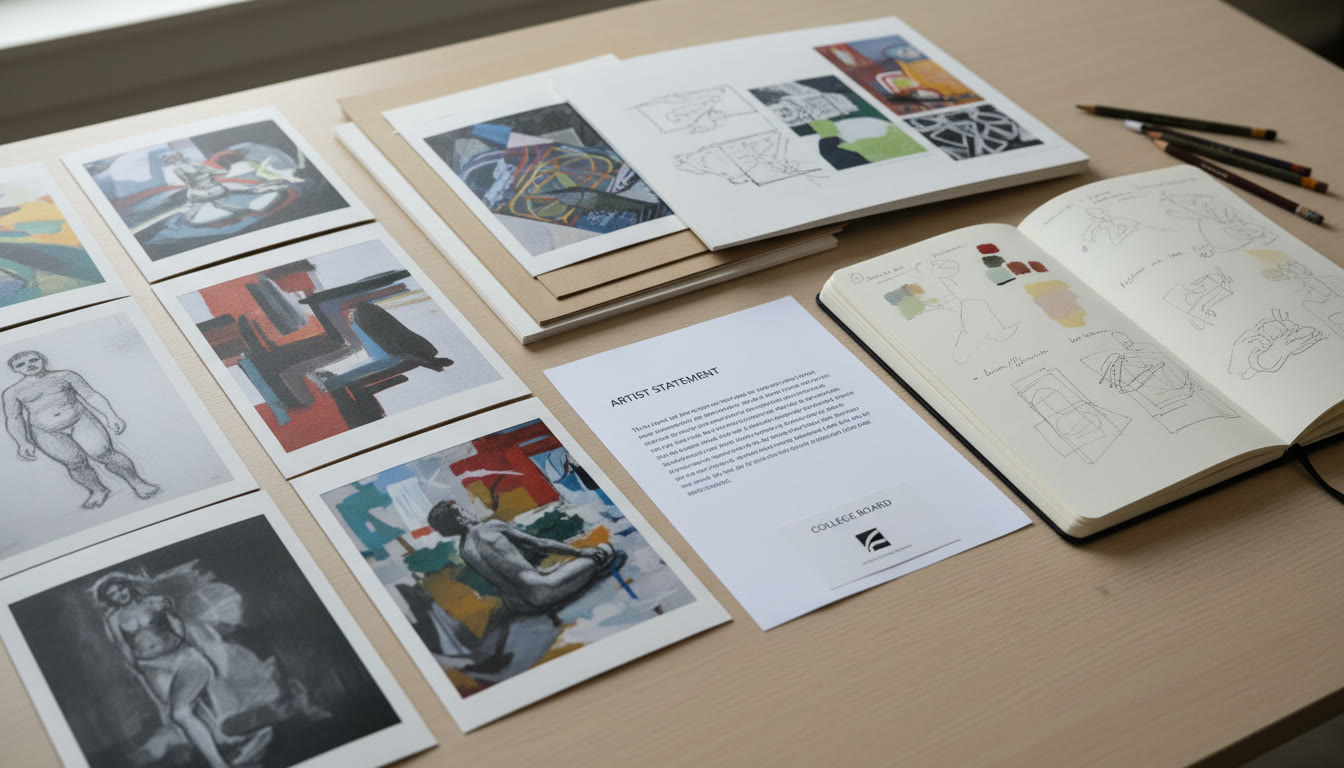
Final Checklist Before Submission
Use this final checklist to ensure your combined Cambridge/AP portfolio is polished, coherent, and competitive.
- Clear, focused sustained investigation statement (concise and specific).
- Chronological process evidence with dates and brief notes.
- High-resolution images of resolved works and experiments.
- Balanced portfolio showing both technical skill and conceptual depth.
- Format files to AP specifications (image sizes, file naming, and order).
- Backups of all files in at least two places (cloud and physical drive).
- Third-party review: a tutor, teacher, or mentor (Sparkl’s tutors can provide this targeted review).
Wrap-Up: A Unified Path Forward
Cambridge Art & Design and AP Art & Design are not opponents; they’re complementary frameworks that, when understood together, create a robust pathway to college-level work and admissions-ready portfolios. Cambridge’s structured development and AP’s portfolio rigor pair well: Cambridge gives you the time to grow; AP gives you the focus to crystallize that growth into a portfolio that speaks clearly to college readers.
With deliberate documentation, a focused sustained investigation, professional presentation, and targeted support when needed, students can convert years of Cambridge practice into AP success — and build a body of work that’s meaningful beyond any exam. If you’d like help planning a timeline, refining a concentration, or getting a final portfolio review, consider pairing teacher feedback with one-on-one tutoring for tailored coaching. That combination—consistent classroom practice plus personalized guidance—often unlocks the best results.
Need a Next Step?
Start by picking one ongoing Cambridge project and asking: What’s the central question here? Then create a two-page plan: one side for process & research habits, the other for AP formatting and deadlines. That small step organizes months of work into action, and it’s how great portfolios begin.
Good luck — and remember that the most compelling portfolios are the ones that show curiosity, persistence, and personal conviction. Those qualities shine through whether your pathway says Cambridge, AP, or both.

























No Comments
Leave a comment Cancel