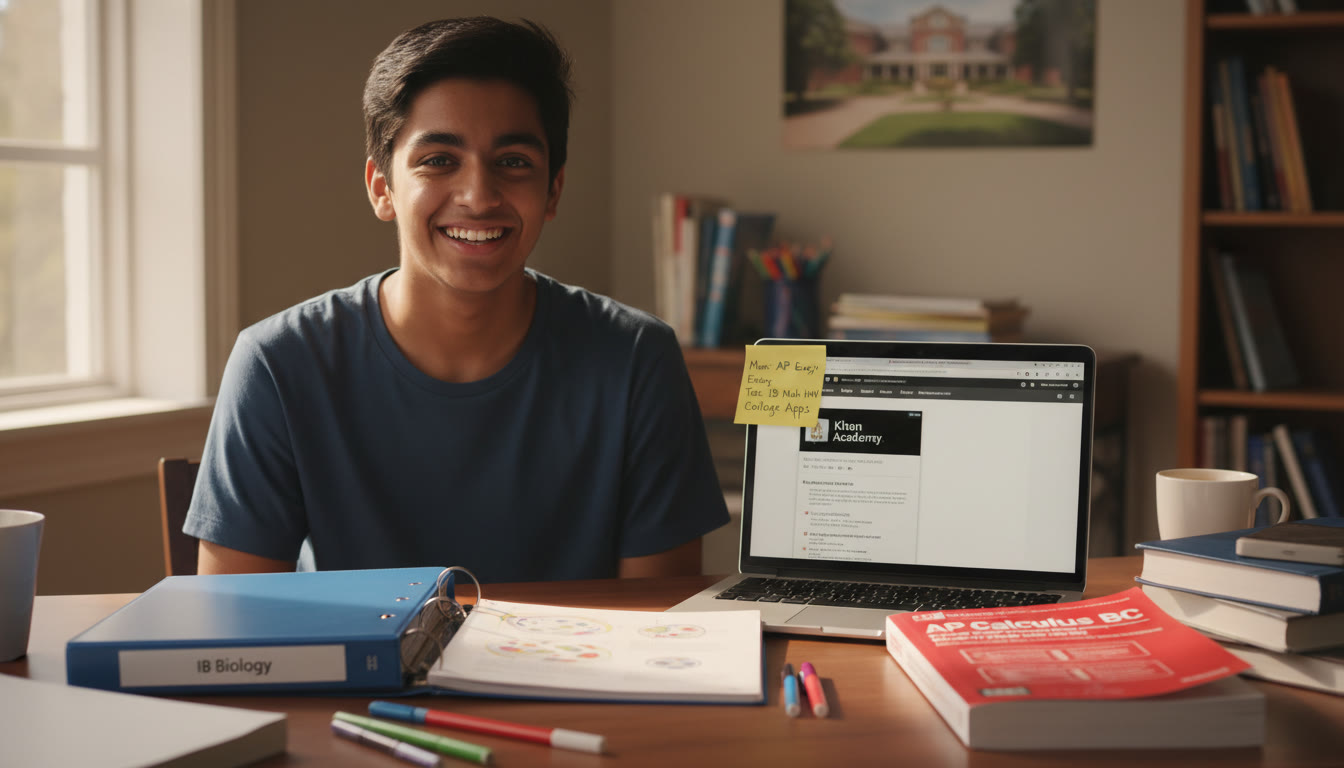

Introduction: Why These Case Studies Matter
Advanced Placement (AP) courses offer a valuable bridge between high school learning and college-level expectations. But every student’s school system, schedule, and learning style is different. That’s why realistic examples — not hypotheticals — are so useful. Below you’ll find six in-depth case studies of students who combined AP with other curricula (IB, A Level, CBSE, ICSE, International School programs, and a self-study route). Each profile focuses on goals, challenges, practical schedules, study strategies, and measurable outcomes. You’ll also find comparative data, helpful at-a-glance tables, and actionable advice you can start using today.
How to Read These Case Studies
Each profile follows a consistent structure so you can quickly compare: background, academic goals, course and exam choices, weekly schedule, strengths and challenges, targeted study plan, resources and tactics, a short timeline to exam day, and final outcomes. These are grounded, human stories — not idealized models. You’ll see trade-offs, real constraints, and how targeted support (for example, Sparkl’s personalized tutoring and tailored study plans) made a measurable difference.
Who benefits most from these examples?
- Students deciding whether to add AP on top of another curriculum.
- Parents helping shape a realistic workload and support system.
- Guidance counselors designing schedules that balance depth with wellbeing.
- Self-study learners wanting a concrete plan with milestones.
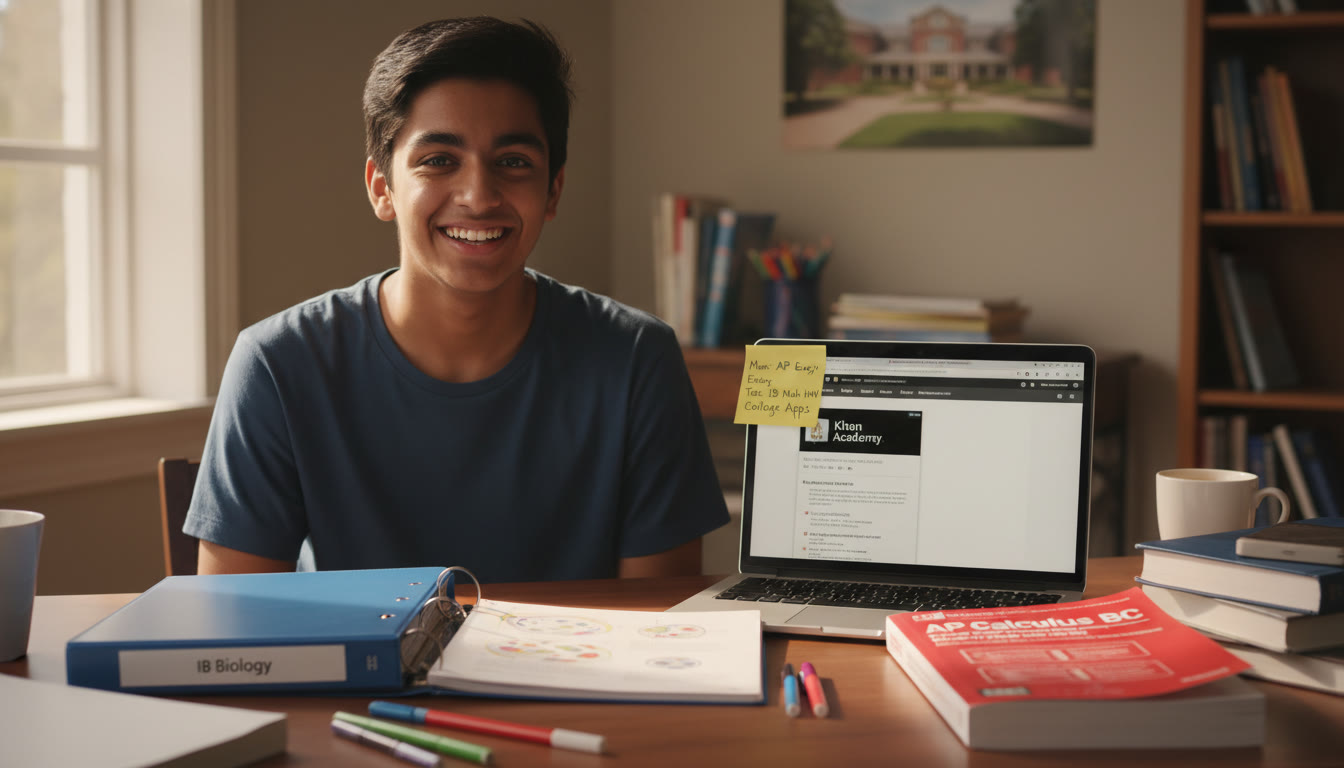
Case Study 1 — IB Student + AP: Maya
Background: Maya is in Year 12 of the IB Diploma Program at an urban international school. Her core IB subjects include English HL, Biology HL, Math SL, and a Language ab initio. She is applying to competitive science programs in the U.S. and Canada.
Academic Goals
- Maximize admission chances to selective STEM programs.
- Earn college credit/placement where possible to reduce first-year load.
AP Choices
- AP Calculus BC — to demonstrate advanced math readiness beyond IB Math SL.
- AP Biology — to strengthen subject depth alongside IB Bio HL.
Weekly Schedule (Sample)
- Mon/Wed/Fri: 30–45 mins AP Calculus practice (focused problem sets).
- Tues/Thurs: 45 mins AP Biology concept review and practice FRQs.
- Weekend: 90 min mixed review + practice exam sections every 2–3 weeks.
Strengths & Challenges
- Strengths: Strong conceptual reasoning, project management skills from IB Extended Essay and TOK.
- Challenges: Heavy internal assessment deadlines and the need to align exam techniques (IB essay style differs from AP short-answer and multiple-choice formats).
Targeted Study Plan
- Map overlapping content (e.g., cellular respiration, evolution) to avoid duplication.
- Use AP-style timed FRQs monthly to build quick analytical writing for AP format.
- Reserve two weeks of intense AP practice post-IB mocks to simulate full-length AP exams.
Outcome
Maya earned a 5 in AP Calculus BC and a 4 in AP Biology. The math score translated to first-semester credit at one university, allowing her to take an advanced lab course in freshman year.
Case Study 2 — A Level Student + AP: Tariq
Background: Tariq is completing A Levels in Mathematics, Physics, and Chemistry at a British curriculum school. He wants to apply to engineering programs in the U.S. and wants AP scores to show readiness for U.S. admission readers.
Academic Goals
- Show subject-matter alignment with U.S. standards.
- Potentially earn credit for calculus or physics courses.
AP Choices
- AP Calculus BC — complements A Level Math.
- AP Physics C: Mechanics — demonstrates calculus-based physics competency for engineering.
Weekly Schedule (Sample)
- Daily 40-minute problem sessions alternating math and physics.
- Weekly mock physics MCQ sets to build speed.
- Monthly full-section simulations for exam pacing.
Strengths & Challenges
- Strengths: Deep theoretical understanding from A Levels.
- Challenges: AP Physics C’s emphasis on quick, exam-focused computation under timed conditions.
Targeted Study Plan
- Adopt AP-style short-answer practice weekly, building toward full past exams two months before test day.
- Use lab-based problem sets to translate A Level theory into AP calculation speed.
Outcome
Tariq scored 5 in AP Calculus BC and 5 in AP Physics C: Mechanics, which helped strengthen his U.S. applications and secured advanced placement in several universities.
Case Study 3 — CBSE Student + AP: Anika
Background: Anika attends a high-performing CBSE school in India and is preparing for both CBSE board exams and selective U.S. college applications. Her strongest subjects are Chemistry and English.
Academic Goals
- Balance CBSE board preparation with AP subject mastery.
- Highlight written expression and conceptual clarity in exam scores.
AP Choices
- AP Chemistry — aligns well with CBSE chemistry content and lab skills.
- AP English Language and Composition — to demonstrate strong argumentation and writing skills.
Weekly Schedule (Sample)
- Mon/Wed: 60 mins AP Chemistry problem solving; focus on stoichiometry and thermodynamics.
- Tues/Thurs: 45–60 mins AP Lang practice (rhetorical analysis and timed essays).
- Sat: 2-hour mixed review with CBSE board-style questions integrated.
Strengths & Challenges
- Strengths: Strong content knowledge from CBSE textbooks and a solid foundation in rote and conceptual learning.
- Challenges: AP essay and synthesis skills need practice — CBSE writing tasks can differ in style and timing.
Targeted Study Plan
- Incorporate weekly timed AP essays for writing fluency and speed.
- Use problem banks to convert CBSE-style questions into AP-style multiple-choice and free-response problems.
Outcome
Anika achieved a 4 in AP Chemistry and a 5 in AP English Language — results that balanced well with her CBSE board scores and strengthened her U.S. applications.
Case Study 4 — ICSE Student + AP: Rohan
Background: Rohan studies in an ICSE school and has a broad curriculum with depth in humanities and sciences. He’s especially strong in History and wants to showcase analytical writing and critical thinking.
Academic Goals
- Combine ICSE knowledge with AP credentials to apply for liberal arts programs.
- Highlight writing, argumentation, and historical reasoning.
AP Choices
- AP United States History (APUSH) — to demonstrate comparative analytical skills and essay proficiency.
- AP English Literature — to show textual analysis and close reading skills.
Weekly Schedule (Sample)
- Daily 30–40 minutes reading primary sources or critical essays.
- Biweekly timed DBQ practice and thesis-driven essays.
- Monthly written-feedback sessions (peer or tutor) to refine argument clarity.
Strengths & Challenges
- Strengths: Strong reading and essay skills from ICSE coursework.
- Challenges: APUSH demands U.S.-centric content knowledge and a specific chronology that must be internalized.
Targeted Study Plan
- Build a timeline review routine — 10–15 minutes daily flash-recall of key events and dates.
- Practice DBQs with strict time limits; get feedback that targets argument structure and evidence use.
Outcome
Rohan earned a 5 in AP English Literature and a 4 in AP US History. Tutors from Sparkl helped him refine thesis clarity and evidence selection during timed essays, improving his scores significantly in the final month.
Case Study 5 — International School Student + AP: Sofia
Background: Sofia attends an international school that uses a hybrid curriculum. She’s aiming for competitive European and U.S. universities and wants APs to show proficiency in quantitative subjects.
Academic Goals
- Secure admission to a top-tier program with strong STEM credentials.
- Gain placements so she can tailor her first-year university courses.
AP Choices
- AP Statistics — appeals to social science and interdisciplinary majors.
- AP Computer Science A — to show coding and algorithmic thinking.
Weekly Schedule (Sample)
- Four 40-minute coding practice blocks per week.
- Two 45-minute statistics problem sessions focusing on inference and interpretation.
- Weekend paired-project time to build portfolio examples (small apps or data reports).
Strengths & Challenges
- Strengths: Exposure to diverse pedagogies and collaborative projects.
- Challenges: Loose curriculum alignment sometimes requires self-directed content mapping to AP topics.
Targeted Study Plan
- Construct a skills map connecting school projects to AP learning objectives.
- Use coding kata and timed mock exams to build fluency under exam constraints.
Outcome
Sofia scored 4 in AP Statistics and 5 in AP Computer Science A, showcasing practical skills for admissions reviewers. Her coding projects also served as talking points in interviews. A few sessions with a Sparkl tutor helped her structure the portfolio and align projects with AP rubrics.
Case Study 6 — Self-Study Student + AP: Leo
Background: Leo is a motivated self-learner who doesn’t attend a traditional school (home-educated). He plans to take AP exams independently and wants to demonstrate strong initiative and academic rigor.
Academic Goals
- Score highly on multiple AP exams to emulate a rigorous transcript.
- Develop disciplined study routines and evidence of external assessment.
AP Choices
- AP Psychology — accessible to self-studiers and useful for social science applications.
- AP Calculus AB — to show quantitative discipline.
Weekly Schedule (Sample)
- Daily 60–90 minute blocks split between video lessons, active note-taking, and practice problems.
- Weekly self-administered quizzes and monthly proctored practice with a mentor or local testing center.
Strengths & Challenges
- Strengths: Flexible schedule, intrinsic motivation, and ability to customize pace.
- Challenges: Lack of structured feedback, accountability, and access to lab or discussion-based enrichment.
Targeted Study Plan
- Set 12-week blocks with specific content and skill milestones. Break each block into weekly learning targets.
- Arrange regular check-ins with an expert tutor (Sparkl’s 1-on-1 guidance is ideal here) to receive targeted feedback and maintain accountability.
Outcome
Leo scored a 5 in AP Psychology and a 4 in AP Calculus AB. His use of proctored practice and regular tutor check-ins simulated a school environment and provided the external validation admissions officers value.
Comparative Snapshot: How the Profiles Stack Up
| Profile | AP Subjects | Score Range | Primary Strategy |
|---|---|---|---|
| Maya (IB) | Calculus BC, Biology | 4–5 | Overlap mapping, timed FRQ practice |
| Tariq (A Level) | Calculus BC, Physics C | 5 | Speed-focused computation, lab problem translation |
| Anika (CBSE) | Chemistry, English Lang | 4–5 | Timed essays, converting question styles |
| Rohan (ICSE) | US History, English Lit | 4–5 | DBQ practice, timeline recall |
| Sofia (Intl) | Statistics, Comp Sci A | 4–5 | Portfolio projects, coding katas |
| Leo (Self-Study) | Psychology, Calculus AB | 4–5 | Proctored practice, tutor check-ins |
Common Lessons Across Profiles
Reading these six stories reveals practical patterns you can reuse regardless of your background.
1. Map and Merge Content Where Possible
If your main curriculum covers topics that appear on AP exams, create a crosswalk: a short chart mapping which course topic satisfies which AP learning objective. This reduces duplication and frees up time for exam-specific practice (timed essays, multiple-choice speed work, etc.).
2. Focus on Exam Techniques — Not Just Content
AP exams reward particular skills: concise thesis-driven answers, economy of words on FRQs, and rapid problem solving on MCQs. Practicing full sections under timed conditions is non-negotiable.
3. Use Micro-Milestones and Mock Exams
Break the months leading to the exam into micro-goals (weekly topics, biweekly full-sections, monthly full-length practice). Treat mock exams like real events — start at the scheduled time, sit uninterrupted, and score honestly.
4. Make Feedback Work for You
High-quality feedback accelerates improvement more than quantity of practice. A targeted 1-on-1 tutoring session that corrects a student’s recurring mistake is worth multiple unguided practice hours. When students in these profiles used Sparkl’s personalized tutoring, they improved faster because the tutoring focused on their unique weak points and exam technique.
5. Prioritize Wellbeing and Sustainable Pace
AP success is a marathon, not a sprint. Build regular breaks, realistic schedules, and sleep into your plan. Overloading in April before AP exam blocks is common but avoidable with steady, incremental practice.
Practical Toolkit — What to Keep in Your Back Pocket
- Weekly planner template: blocks for conceptual review, problem practice, and timed sections.
- One short notebook for every AP subject: use it for errors, quick formulas, and polished mini-essays.
- Monthly mock exam checklist: environment, materials, timed sections, scoring rubric.
- Flash-recall cards: 5–10 minutes daily to cement key facts and timelines (especially helpful for history and science facts).
- Peer review or tutor sessions every 2–3 weeks for targeted feedback.

FAQ: Quick Answers to Common Concerns
How many APs should I take if I’m already in another rigorous curriculum?
Quality beats quantity. Two well-chosen APs that align with your strengths and application goals will usually have more impact than a long list of average scores. Admissions officers prefer depth and mastery.
Can AP scores help with college credit if I’m applying from a non-U.S. curriculum?
Yes — many universities consider AP scores for placement or credit regardless of the student’s home curriculum. Check target universities’ policies, and prioritize APs that best match the first-year coursework you hope to skip or place out of.
What’s the best way to prepare when juggling internal assessments and project deadlines?
Use a rolling calendar: identify high-load weeks ahead of time and taper AP intensity during those periods while maintaining short, high-leverage daily practices (20–30 minutes). After internal deadlines, switch to a two-week intensive AP push to regain momentum.
Final Thoughts — Your Personalized Path
These six case studies show one essential truth: there’s no single right way to combine AP with other curricula. What matters is alignment — of goals, time, and support. Whether you’re in IB, A Level, CBSE, ICSE, an international program, or learning independently, a focused plan, smart practice, and timely feedback will move the needle.
If you need help turning one of these profiles into a plan for yourself, consider a short diagnostic and tailored study plan; personalized tutoring (like Sparkl’s 1-on-1 guidance, tailored study plans, expert tutors, and AI-driven insights) can accelerate progress by cutting out wasted effort and directly addressing what will raise your score. The result: more confidence on exam day, less last-minute scrambling, and better alignment with your college goals.
Ready to take the next step?
Start by choosing one realistic AP goal, build a 12-week plan with micro-milestones, and schedule a single feedback session every 2–3 weeks. Applied consistently, that approach turns ambition into results — one focused block at a time.
Good luck — and remember: your profile is uniquely yours. Use these case studies as a blueprint, not a blueprint prison. Adjust, iterate, and go after the score that opens the doors you want.

























No Comments
Leave a comment Cancel