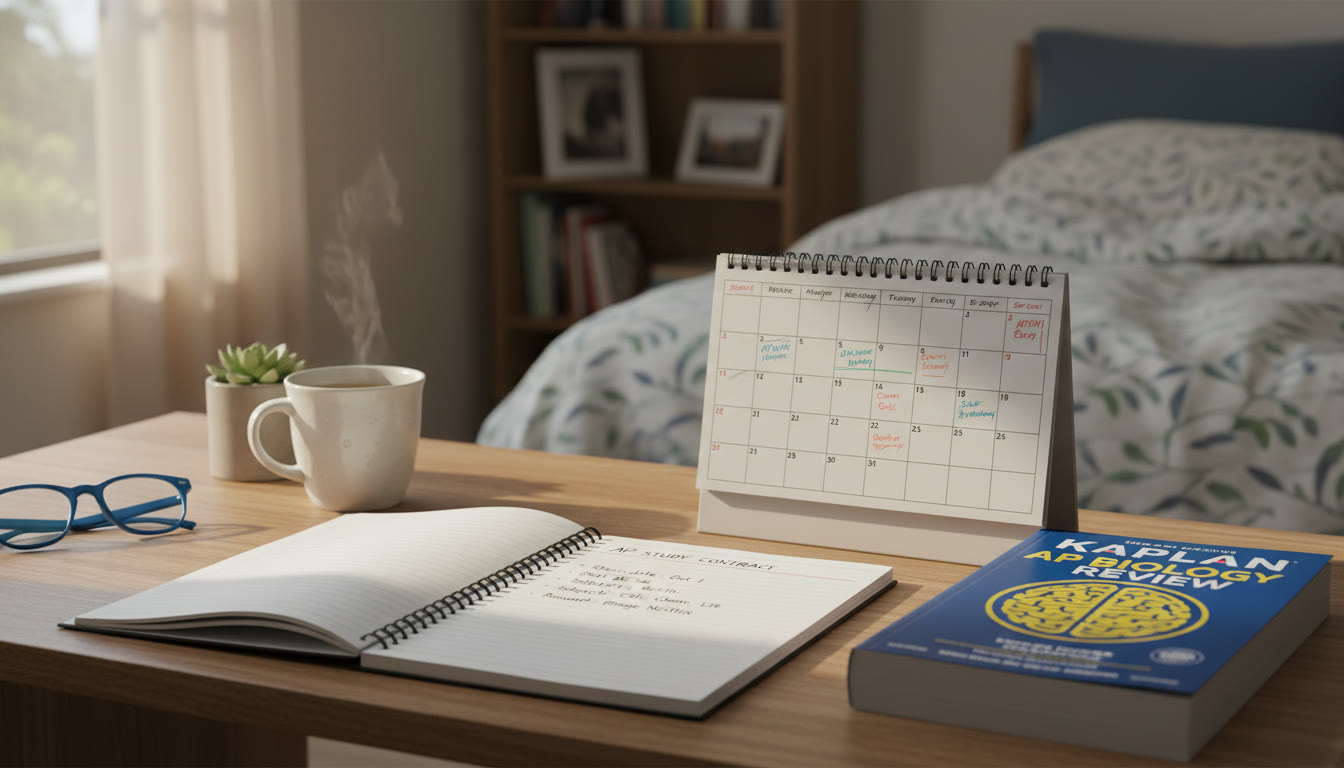

Why an AP Study Contract Works (Even If You’re Skeptical)
Let’s be honest: most study plans live somewhere between a Pinterest board and a forgotten sticky note. They look great in theory, but when junior year hits and clubs, homework, and a social life demand your time, plans crumble. An AP Study Contract is different. It’s not a magical shortcut—it’s a clear, human agreement that turns intention into action.
Here’s the core idea: you write down what you’ll do, when you’ll do it, and how you’ll measure it. Then you sign it. And yes—signing matters. The act of putting your name on a commitment increases ownership and follow-through. Psychologists call this commitment devices; in practical terms for AP students, it’s the difference between saying “I’ll review chapter 4” and actually sitting down and doing a focused 45-minute session with purpose.
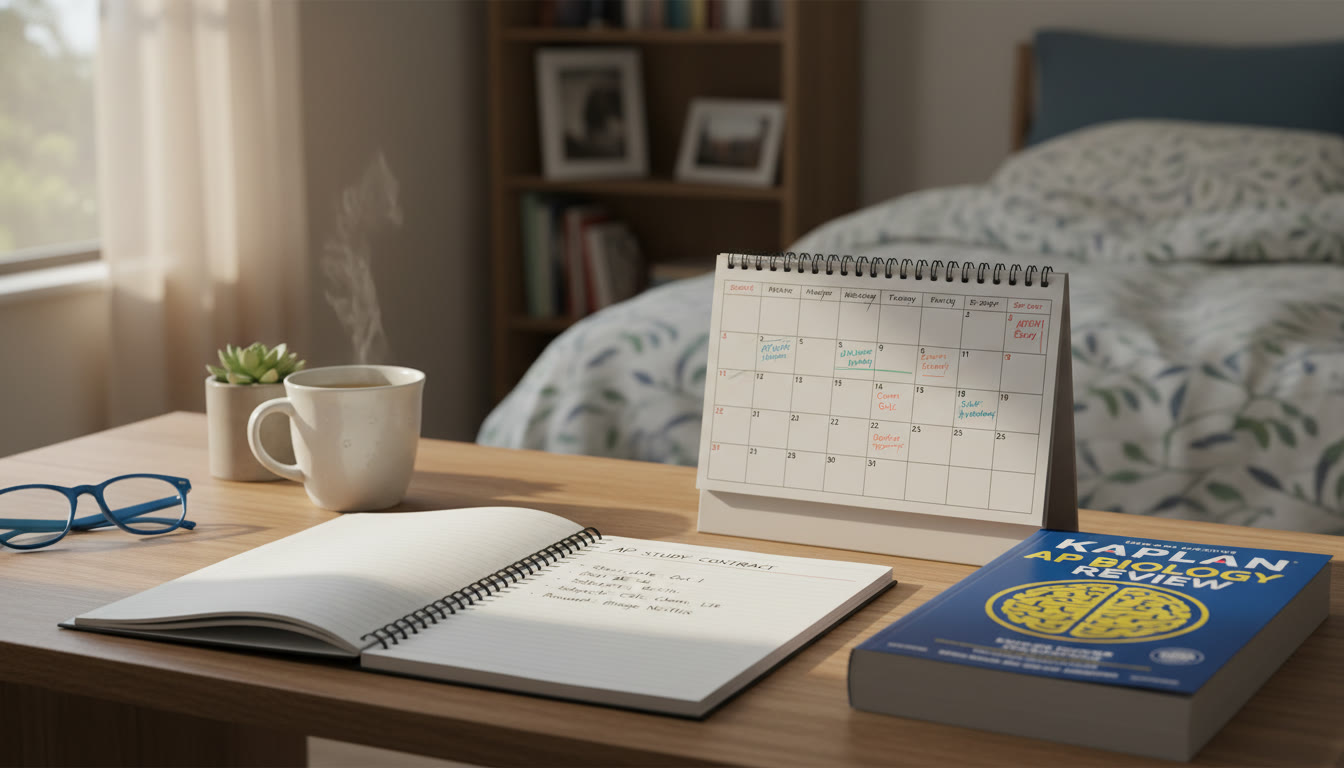
Who Should Use an AP Study Contract?
- Students juggling multiple AP courses who need a realistic plan.
- Procrastinators who want a gentle but effective accountability structure.
- High-achievers who want to optimize study time and reduce burnout.
- Self-studiers preparing for an AP exam without a school course.
Whatever category you fall into, the contract is flexible—designed to work with how you actually live, not against it.
How to Write an AP Study Contract — Step by Step
Think of this as a short, practical ritual. It takes 20–30 minutes to set up and repays you with focused weeks of study.
Step 1: Start with Why (Real Reasons, Not Pressure)
Write one to three sentences explaining why you’re taking this AP exam and what success looks like. Avoid vague pressure like “because my parents expect it.” Make it personal: “I want to earn college credit for Calculus AB so I can place out of freshman calculus and start with more advanced classes in college.”
Step 2: Describe the Exam and the Target Score
Be specific. Which AP exam? Paper or digital testing format? What score are you aiming for (2, 3, 4, 5)? Different colleges and majors have different thresholds—pick a realistic target that matches your goals.
Step 3: Block the Time — Realistic, Not Aspirational
Use weekly time blocks instead of vague “study more” promises. For example:
- Monday, Wednesday: 5:00–6:00 p.m. — Content review & active recall.
- Saturday: 10:00–12:00 p.m. — Practice exam section + review mistakes.
- Sunday: 30 minutes — Plan next week and quick concept flashcards.
Put these blocks in your calendar right away. Treat them like a class you can’t skip.
Step 4: Choose Evidence of Progress
Decide how you’ll measure success. Evidence beats feelings. Examples:
- Score on a timed practice test section (e.g., 70% or above on multiple choice).
- Number of scored free-response questions completed per week.
- Mastery of a set of core topics: list them and check them off when you can explain and apply them.
Step 5: Add Accountability and Rewards
Accountability can be social, digital, or contractual. Choose what will push you most gently.
- Sign the contract and give a copy to a parent, teacher, or study partner.
- Schedule weekly check-ins: 15 minutes to review wins, struggles, and next steps.
- Pick micro-rewards for milestones: a coffee outing, a gaming hour, or a small purchase.
Step 6: Include Contingencies (Life Happens)
Build in forgiving rules for missed sessions so your contract survives real life. Examples:
- Missed one session? Do a 30-minute recovery session the same week.
- Illness or tests in other subjects? Temporarily adjust intensity rather than abandoning the plan.
Sample AP Study Contract (Template You Can Copy)
Below is a customizable contract you can use. Keep it short—clarity beats legalese.
| Field | Example Entry |
|---|---|
| Student Name | Alex Martinez |
| AP Exam | AP Biology (May 2026 — Digital) |
| Target Score | 4 |
| Why | Earn college credit and strengthen my application to pre-med programs. |
| Weekly Plan | Mon/Wed: 5–6pm content review; Sat: 9–11am practice FRQs; Sun: 30-min flashcard review. |
| Progress Metrics | Weekly topic check-offs; one timed practice section per week; monthly full-length practice exam. |
| Accountability | Weekly check-in with my AP teacher on Fridays; share checklist with parent. |
| Rewards | After three consecutive weeks: new headphones or a night out with friends. |
| Contingencies | Missed sessions moved to recovery block on Sunday; extended breaks allowed for major school events. |
| Signatures | Student: ___________________ Date: ______ Supporter: ___________________ Date: ______ |
How to Make the Contract Stick — Practical Tools and Habits
Writing a contract is only half the battle. Here are practical tools and small rituals that help it survive a busy school year.
Use Active, Evidence-Based Study Methods
Not all study time is equal. Two hours of passive highlighting won’t beat 45 minutes of deliberate practice. Prioritize:
- Retrieval practice (self-quizzing without notes).
- Spaced repetition for vocabulary, formulas, and key concepts.
- Interleaved practice — mixing problem types instead of repeating one skill.
Schedule ‘Hard’ Tasks Early
Do heavy lifting—like timed multiple-choice sections or free-response practice—in your first study block when your energy is high. Reserve light tasks, like flashcards or review, for evenings.
Keep a Visual Progress Board
A simple whiteboard or digital tracker where you mark completed topics creates momentum. Visual progress reduces anxiety by showing you how far you’ve come.
Use the Right Practice Materials
Prioritize official or closely aligned practice: course descriptions, past practice questions, and digital question banks that reflect exam format. This reduces unpleasant surprises on test day.
Bring in Personalized Help When Needed
Sometimes the most efficient move is to get tailored guidance. Personalized tutoring—like Sparkl’s 1-on-1 sessions—can help you unpack sticky topics, design a targeted review plan, and interpret practice exam results with clarity. The right tutor saves weeks of wasted effort by focusing on your specific gaps.
Sample 12-Week Countdown Plan (How a Contract Evolves)
Here’s what a typical 12-week plan might look like as you move from breadth to exam readiness. Use this as a flexible scaffold—your contract should reflect your calendar and energy, not this template verbatim.
| Weeks Until Exam | Focus | Weekly Plan | Goal |
|---|---|---|---|
| 12–9 | Content coverage | 3–4 sessions of 45–60 min; concept mapping; light practice. | Complete first pass of all topics. |
| 8–6 | Skill practice | 2 sessions of mixed problem practice + 1 session focused review. | Build fluency on core question types. |
| 5–3 | Timed practice | Weekly timed sections and FRQ practice; review errors. | Improve pacing and reduce careless errors. |
| 2–1 | Polish and rest | Short, focused reviews, light practice, sleep hygiene. | Hit exam mentally sharp and calm. |
Real-World Examples: Contracts That Worked
Here are three short case studies showing how students used contracts to make meaningful progress.
Case 1 — Maya, AP Chemistry
Maya struggled with stoichiometry and timed sections. Her contract included two weekly timed problem sets and a monthly tutor session. After three months her practice accuracy rose from 60% to 82%, and she reported less test anxiety because she no longer feared the pace of the exam.
Case 2 — Jordan, AP US History
Jordan’s problem was breadth: there was too much to memorize. He switched from passive reading to weekly synthesis essays and timeline flashcards. He added a weekly check-in with his history teacher to keep his argument structure tight. The contract turned scattered review into meaningful synthesis—a skill that translated directly to long-essay scores.
Case 3 — Priya, AP Computer Science Principles (Self-Study)
Priya’s school didn’t offer the course. She built a contract around AP Daily videos and weekly project milestones. She also used tailored tutoring sessions to debug project components and get quick feedback—sped up progress and gave her confidence to complete the performance task early.
Common Pitfalls and How to Avoid Them
- Overplanning: Too many hours = unsustainable. Aim for consistent, realistic blocks you can keep for months.
- Not measuring results: Without evidence, confidence is an illusion. Track scores, not just time.
- Perfectionism: One missed session is not failure. The contract should make recovery simple.
- No review of mistakes: Practice without analysis equals repeating the same errors. Build error review into every practice session.
How Parents and Teachers Can Support (Without Micromanaging)
Supportive accountability helps—but overbearing pressure undermines. Here are ways adults can help productively:
- Ask to see the signed contract and offer a single weekly check-in rather than daily questioning.
- Provide tangible support: a quiet study space, help scheduling, or covering costs for a helpful resource.
- Celebrate milestones visibly: a small ritual reinforces progress and motivation.
When to Bring in a Tutor or Coach
Bring in a tutor if:
- You hit a consistent accuracy plateau after multiple practice attempts.
- Your contract shows effort but the evidence (practice scores) don’t improve.
- You need help translating practice exam errors into a targeted study plan.
Personalized tutors—especially those familiar with AP exam style and rubric expectations—can turn weeks of inefficient studying into targeted improvements. Sparkl’s 1-on-1 guidance can fit seamlessly into your contract: slot a weekly tutor review, use their insights to refine your contract metrics, and get AI-driven suggestions for where to focus next.

Checklist: What Your Contract Should Contain
- Clear target score and reason for that target.
- Concrete weekly time blocks and activity types.
- Evidence metrics (practice test scores, topics mastered).
- Accountability partner and check-in cadence.
- Reward structure and contingency plans for missed sessions.
- Signature line—yes, sign it.
Maintaining Momentum: Weekly Review Ritual
Spend 15 minutes each Sunday to review the past week and plan the next. Use this quick ritual:
- Look at your evidence: what improved? What didn’t?
- Adjust next week’s blocks based on energy, school commitments, and upcoming deadlines.
- Book any tutoring sessions or lab time needed that week.
- Set one clear small goal for the week—something achievable that builds confidence.
Final Thoughts: Contracts as a Habit, Not a Cage
An AP Study Contract isn’t about rigidity or removing joy from learning. It’s about creating freedom through structure—freeing you from last-minute cram sessions, chronic anxiety, and wasted hours. When you write, sign, and stick to a contract that fits your life, studying becomes a sequence of deliberate, confident steps toward a measurable goal.
Remember: the contract evolves. If a technique isn’t working, change it. If you need help interpreting practice exams or designing a smarter plan, a skilled tutor can plug the leaks in your study ship and help you sail steady to exam day. Small consistent steps add up—your contract is simply the map that keeps you on course.
Ready to Start?
Take 20 minutes now. Draft your contract, sign it, and put one study block on your calendar. Then, take the first 45 minutes to do focused work. Momentum builds through action—your signed plan will help you turn nervous hope into steady, exam-ready confidence.
Good luck—this is your plan, your pace, and your score. Stick with it, adjust when needed, and celebrate every step forward.


























No Comments
Leave a comment Cancel