

Why an AP Plan Matters for Gap Year Students
Taking a gap year can be one of the smartest moves you make between high school and college: time to work, travel, heal, gain perspective, or tackle passions. But it can also feel like stepping off a moving walkway — how do you preserve academic momentum and make choices that help, rather than complicate, your college path? Enter the AP plan for gap year students: a flexible, targeted approach to preparing for and taking Advanced Placement exams while you’re away from traditional school rhythms.
This guide is written with one aim: to give you a practical roadmap that respects the freedom of your gap year while maximizing the benefits AP exams can offer — college credit, placement, and the confidence that you can do college-level work. It combines logistical realities, study strategies, and a gentle nudge toward personalization (because one plan does not fit every student). Along the way we’ll mention how Sparkl’s personalized tutoring can plug into your plan when you want targeted help — for example, 1-on-1 guidance, tailored study plans, expert tutors, and AI-driven insights that adapt as you progress.
Who this is for
- Students who postponed college and want to take AP exams during a gap year.
- Recent high school graduates who want to convert fresh learning into college credit.
- Self-directed learners who didn’t take an AP course in school but still want to earn AP scores.
- Students using the gap year to strengthen transcripts or test readiness before matriculating.

Big-picture timeline: When to plan, study, and test
AP Exams are typically administered once a year (in May). If you’re on a gap year and want to take exams, the key is to map backwards from the May administration you plan to target. Below is a flexible 12–18 month timeline you can adapt depending on when you begin preparing.
| When | Milestone | What to do |
|---|---|---|
| 12–18 months before target May | Decision & Research | Choose AP subjects, check college credit policies, find local testing sites or coordinate with a school to administer your exam, and gather Course and Exam Descriptions. |
| 9–12 months before | Study Plan & Resources | Create a study schedule, collect practice exams, sign up for online classes or tutoring if needed, and enroll in AP Classroom resources where available. |
| 6–9 months before | Deep Study & Practice | Tackle content areas, do timed sections, practice free-response questions, and get regular feedback (peer, tutor, or teacher). |
| 2–3 months before | Refine & Simulate | Take full practice exams under test conditions, review weak areas, and finalize registration details with the test center. |
| Exam Month (May) | Test & Recover | Take the exam(s), rest afterward, and plan score sends if you want colleges to see the results. |
That table is a scaffold, not a rulebook. Some students prepare with concentrated bursts over a few months, while others maintain a slow, steady pace across a full year. What matters most is setting milestones and checking progress against them.
Choosing which AP exams to take on a gap year
Not every AP exam is equally easy to self-study. When deciding which APs to pursue during a gap year, weigh three lenses: college payoff, content fit with your strengths, and logistics.
1. College payoff
Some AP scores are widely accepted for credit or placement at many colleges (e.g., Calculus, Biology, English). Research the credit policies of the colleges you plan to apply to or attend. If your goal is to reduce tuition costs or place out of introductory courses, prioritize exams that align with those objectives.
2. Content fit
Are you stronger at conceptual reasoning, writing, memorization, or problem-solving? Choose APs that match your learning style. For example, students comfortable with math and structured practice often find AP Calculus or AP Statistics accessible to self-study; those who enjoy reading, analyzing texts, and writing may prefer AP English Literature or Language.
3. Logistics and availability
Some AP exams require coursework or submission (AP Seminar, AP Research, and some portfolio-based art exams have specific enrollment and submission requirements). If you’re not enrolled in the corresponding course or don’t have access to the portfolio process, those exams may not be feasible during a gap year. Also, you’ll need to arrange a testing location if your home school doesn’t administer the exam.
Practical steps to register and test as a gap year student
Registration logistics are the part that turns plans into reality. Here are the practical steps you’ll want to follow.
- Contact an AP coordinator at a local high school or testing center early — schools set ordering deadlines and policies and often have limited capacity for outside students.
- Use the AP Course Ledger to find schools in your area that administer AP exams and call their AP coordinators to ask about testing as an outside student.
- Mark your calendar with the exam ordering deadline (commonly in November) and confirm any late-order possibilities, fees, and whether they will accept outside students.
- Understand score reporting: you usually get one free score send per year — plan which college or program should receive it if you want free delivery.
- If you took an AP exam in the past, know that your score history may be included in reports sent to colleges; you can request to withhold scores in certain situations.
Study strategies that work for gap year rhythms
The biggest advantage gap year students have is control. You can choose when and where you study. Use that advantage wisely.
Create a realistic weekly routine
Block out consistent study times around your gap year activities — early mornings, afternoons between work shifts, or focused weekend blocks. Even 8–10 focused hours per week, split into shorter sessions, compounds powerfully over months.
Mix content work with exam practice
Structure study sessions in two parts: learn or review content for the first part and practice exam-style questions for the second. Over time, tilt the balance toward more practice and less passive review.
Use past free-response questions
AP exams publish past free-response questions and scoring guidelines — they’re gold. Practice under timed conditions and then compare your answers to sample responses to understand score descriptors. This is where a tutor or mentor can give critical, targeted feedback.
Deliberate practice beats cram sessions
Targeted, short practice spaced out over weeks helps cement skills better than last-minute marathon sessions. For example, do a 30–45 minute problem set focused on weak topics three times a week rather than a single 6-hour cram the week before the exam.
How to keep accountability and momentum
Working independently during a gap year requires intentionally-built accountability. Consider these approaches:
- Regular check-ins with a tutor or mentor (weekly or biweekly).
- Study partner cohorts — pair with another student preparing for the same exam for mutual motivation and timed practice.
- Short-term goals with rewards — e.g., finish a unit and celebrate with a day trip.
- Use digital tools to track progress: practice logs, calendar blocks, and time trackers.
Sparkl’s personalized tutoring can fit seamlessly here: a structured plan from an expert tutor, 1-on-1 feedback on free-response practice, and AI-driven insights to show which topics demand more attention. If you’re juggling travel, work, or internships during your gap year, this tailored support can keep you efficient and focused.
Examples: Three realistic AP plans for common gap year scenarios
Here are three sample plans — pick the one closest to your situation and adapt.
1. The Working Gap Year (limited hours, steady progress)
- Goal: Take 1 AP exam (e.g., AP English Language) in May.
- Weekly commitment: 8–10 hours.
- Plan: Two evenings for reading and writing practice; one afternoon for timed practice; monthly tutor check-in for essay feedback.
- Outcome: Solid preparation balanced with work responsibilities.
2. The Travel / Experience Gap Year (intermittent study windows)
- Goal: Take 1–2 AP exams (e.g., AP World History and AP Psychology).
- Weekly commitment: Variable; use micro-sessions (30–45 minutes) while traveling.
- Plan: Prioritize syllabus-aligned podcasts or short video lessons; do free-response Qs on rest days; intensive 4-week review block prior to May.
- Outcome: Keeps learning alive while enjoying the gap year; focused review consolidates knowledge before the exam.
3. The Academic Reset (full focus before college)
- Goal: Take 2–4 AP exams to earn college credit.
- Weekly commitment: 15–25 hours.
- Plan: Weekly schedule with alternating deep content days and exam-practice days; frequent full-length timed exams; 1-on-1 tutoring blocks to shore up weaknesses.
- Outcome: Strong chance to earn multiple AP credits; readies you for college-level workload.
How colleges treat AP scores — and what to check
Policies vary widely. Some colleges grant credit for scores of 4 or 5, others grant placement but no credit, and some award credit for 3 in certain subjects. During your gap year, check the policies of the colleges you plan to apply to or attend. If you’re already admitted and deferring enrollment, contact the admissions or registrar’s office to ask about accepting AP credit submitted after admission.
Practical tips
- Look up each school’s AP credit policy and document the minimum score required for credit and for placement.
- If you plan to send your AP score after matriculation, confirm the deadline for submitting scores before course registration.
- Remember: even if a school doesn’t award credit, AP scores can sometimes place you into higher-level courses.
Common pitfalls and how to avoid them
Gap year students often trip over a few predictable obstacles. Here’s how to avoid them.
1. Waiting too long to arrange a testing site
AP coordinators and schools have ordering deadlines and limited seats for outside students. Start contacting them early — ideally in the fall before the May exam.
2. Choosing exams that require coursework or portfolios you can’t complete
Some AP exams have prerequisites or require teacher submissions. If you’re not enrolled in a course, verify that the exam’s format works for outside test-takers.
3. Overestimating your self-study capacity
Be honest about how much time and structure you can maintain. If you struggle with self-motivation, a tutor or a structured online course can provide the discipline and feedback you need.
What success looks like — beyond a single score
AP preparation during a gap year can yield more than a number on a score report. Success can mean:
- Stronger writing, problem-solving, and study habits.
- College readiness and confidence in academic settings.
- Reduced tuition costs or fewer months in introductory college classes.
- Peace of mind entering college with a plan and some credits already earned.
When to bring in expert help
Independent study is powerful, but expert help speeds progress and reduces wasted effort. Consider 1-on-1 tutoring when:
- You want focused feedback on free-response answers or essays.
- You’re targeting multiple APs and need a tailored study plan to balance them.
- You have a narrow window and need to maximize efficiency.
Personalized tutoring options — such as those Sparkl provides — can give you a structured roadmap, adaptive review tools, and the direct, human feedback that turns practice into higher scores. If you’re juggling a job, travel, or other gap-year commitments, a tutor who tailors sessions to your schedule can be the difference between aiming and achieving.
Putting the plan into motion — a short checklist to start this week
- Decide which AP exam(s) you want to take this gap year.
- Contact nearby schools’ AP coordinators to ask about testing as an outside student.
- Download the Course and Exam Descriptions for each AP subject you plan to take.
- Create a draft weekly study schedule with clear milestones and realistic hours.
- Reserve at least one block (4–6 weeks) of intensive review before the exam.
- Consider scheduling an initial session with a tutor for a diagnostic and personalized plan.
Final thoughts: Make your gap year count — academically and personally
One of the best things about a gap year is that it’s yours to design. If you want to build marketable skills, recharge before college, or get a head start on credits, AP exams are a flexible and credible way to do it. The secret is thoughtful planning: choose exams that match your goals, set a timeline, secure a test site early, and design a study rhythm that respects your gap year priorities.
And remember: help is available. Whether you want occasional feedback, a rigorous weekly accountability partner, or an intensive pre-exam sprint, personalized tutoring — with 1-on-1 guidance, tailored study plans, expert tutors, and adaptive insights — can make your study hours more effective and less stressful. Use the autonomy of your gap year to experiment with study methods, and return to college not just with scores or credits, but with the confidence that you’re ready for the next chapter.
Parting encouragement
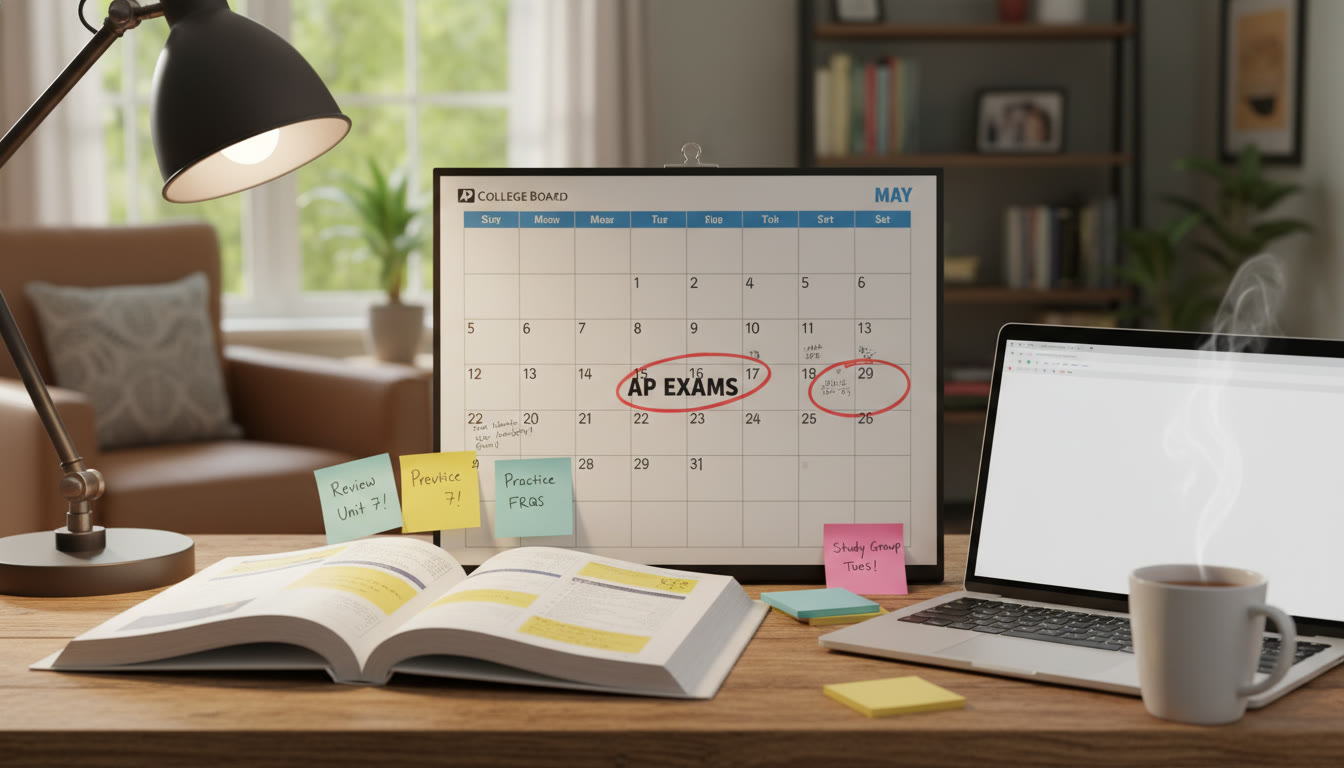
If you ever feel stuck, remember that many successful students have taken gap years and used AP exams as a bridge to college success. Start small, plan intentionally, and adjust as you learn what works. With clear milestones, consistent practice, and the right support when you need it, your AP plan can be a quiet superpower for your college journey.
Good luck — and enjoy the gap.



























No Comments
Leave a comment Cancel