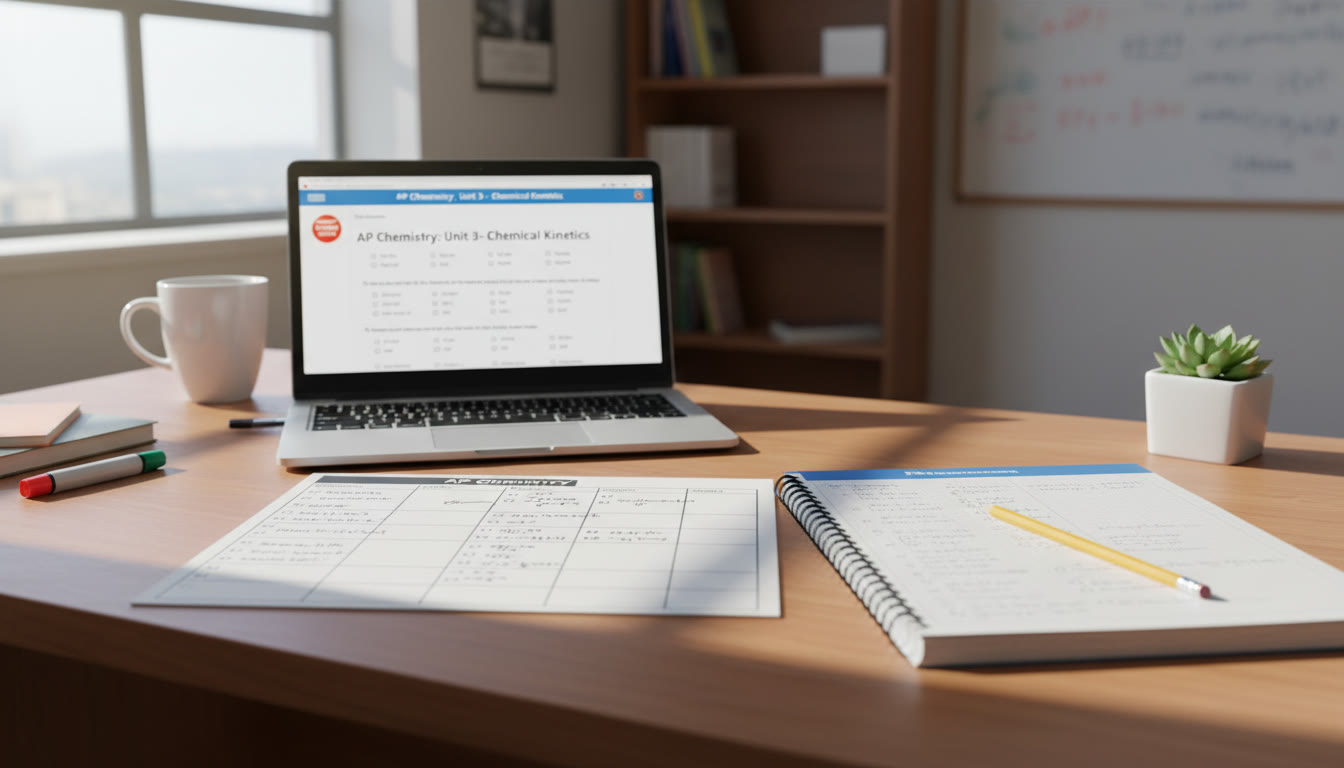

Why Printable Templates Still Matter for AP Students
There’s a moment in every AP student’s life when their digital calendar, three to-do apps, and hastily scribbled sticky notes all collide into a pile of half-done tasks. If that sounds familiar, you’re not alone. Printable templates — planners, study logs, and rubrics — bring calm to chaos. They’re simple, tangible, and flexible: you can pin them, carry them, or lay them flat on your desk next to your practice test. Best of all, they force one tiny habit that beats a dozen apps: visible accountability.
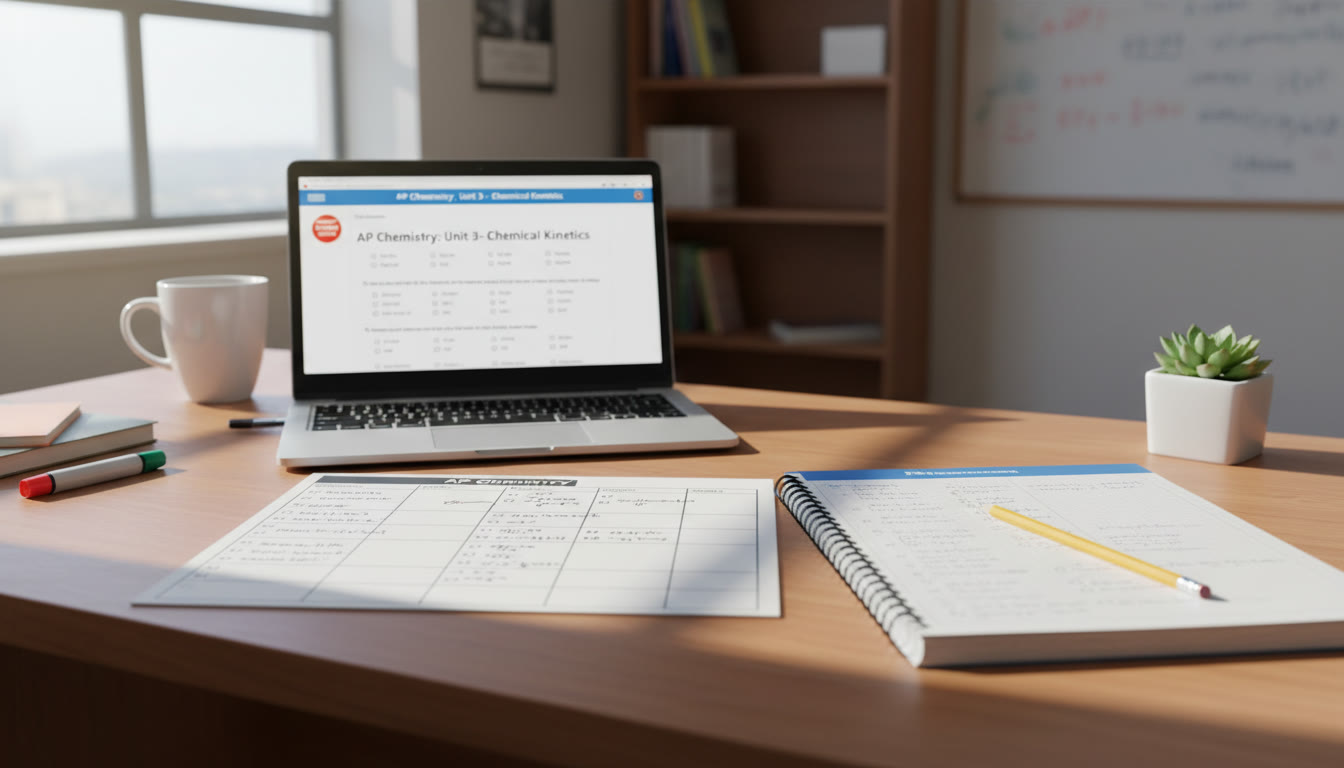
How printables complement digital tools
Digital calendars and study apps are fantastic for reminders and notifications, but printables give you a physical record to annotate, highlight, and personalize. When preparing for AP exams, combining both approaches captures deadlines in a calendar app while using printable logs for focused reflection and tracking progress on skills that matter (like thesis formation in AP English or a free-response scoring rubric practice in AP U.S. History).
Core Printable Templates Every AP Student Needs
Below are the templates that provide the most return on your time. Each serves a distinct purpose and can be quickly adapted for any AP course.
1. Weekly Planner — The Foundation
Why it matters: A weekly planner keeps your coursework, extracurriculars, and AP study sessions visible at a glance. Use it to schedule content review, practice exams, and short, focused study blocks.
- Sections: Priorities, Daily Blocks (Mon–Sun), Top 3 Goals, Quick Notes.
- Best practice: Break study time into 25–50 minute blocks with 5–10 minute breaks (Pomodoro-style) and label each block by task (e.g., “AP Physics: Kinematics Practice”).
- Tip: Reserve at least one weekly block for active retrieval (closed-book practice) rather than passive review.
2. Study Log — Track Practice, Not Just Time
Why it matters: Logging what you practiced and how you performed helps you spot patterns. Did you miss multiple questions on the same concept? The log shows it.
- Fields to include: Date, Time Spent, Topic, Task Type (MC/FRQ/Reading), Questions Missed, Why I Missed Them, Next Steps.
- Example entry: “June 3 — 45 min — AP Biology: Cellular Respiration — FRQ practice — missed 2/3 due to misreading question; review enzyme kinetics and practice more timed FRQs.”
3. Performance Rubric — Turn Feedback Into Action
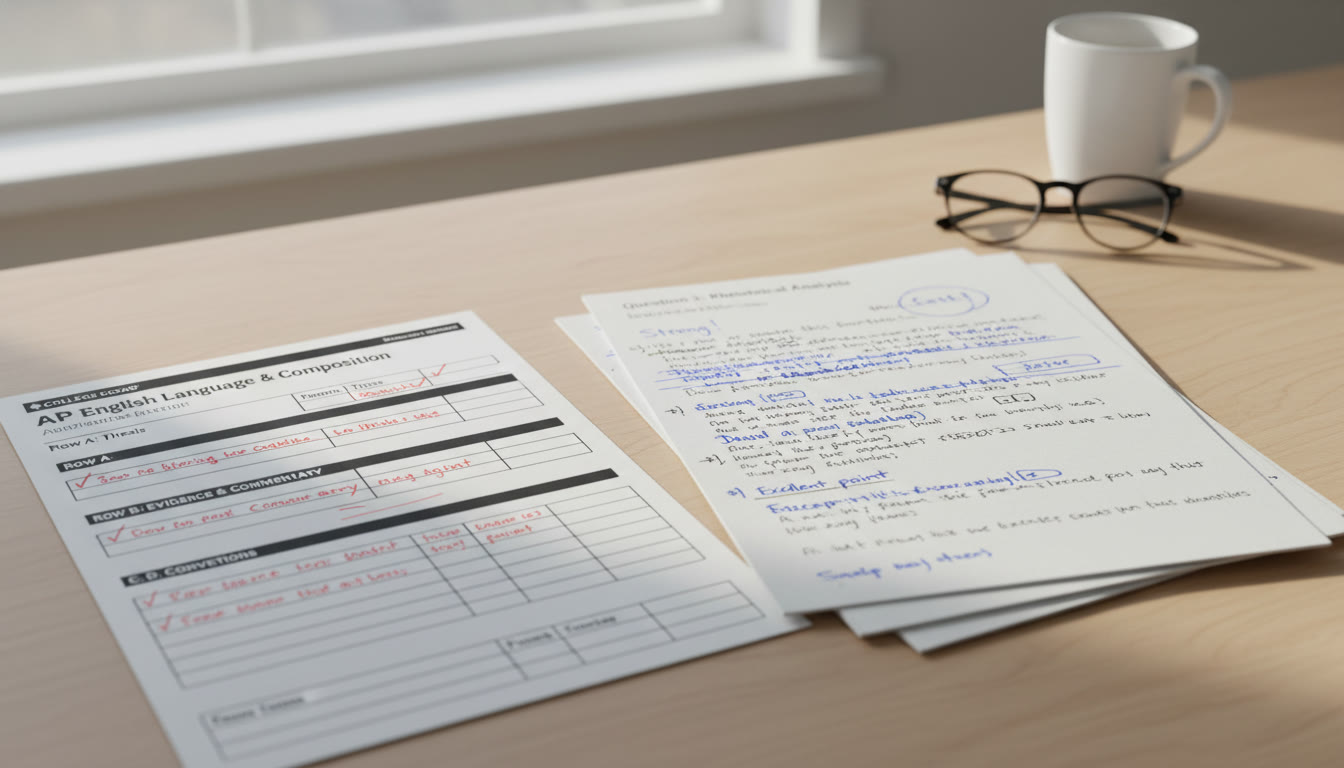
Why it matters: Rubrics convert vague feedback into concrete steps. They help you self-assess essays and long-form responses using the scoring language of AP graders: thesis clarity, evidence/support, reasoning, organization, and command of content.
- Structure: Criteria across columns (e.g., Thesis, Evidence, Analysis, Organization, Mechanics) and performance levels across rows (Exemplary, Competent, Developing, Needs Work).
- Use: After completing an FRQ, quickly score yourself and list 1–2 actionable items per low-scoring criterion.
How to Use These Templates — A Practical Workflow
Templates are most effective when they’re part of a weekly loop: plan, practice, record, reflect, and adjust. Here’s a straightforward routine you can start this week.
Weekly Routine (Example)
- Sunday evening: Fill out the weekly planner with fixed commitments and three AP-focused goals.
- Daily: Use study blocks for targeted practice (30–50 minutes) and jot entries in the study log immediately after each session.
- Friday: Use the performance rubric to score a timed practice FRQ or an essay; note the two skills to improve next week.
- Monthly: Take a full-length, timed practice exam and create a corrective study plan based on the aggregated study logs and rubric scores.
Sample Templates and How They Look
Below are concise examples of the kind of contents each printable should include. Feel free to copy these layouts into a document and print — or customize them for your AP subject.
Weekly Planner (Sample Layout)
| Section | Details |
|---|---|
| Top 3 Priorities | Complete AP Calc practice set on integration, outline AP Lang synthesis essay, revise lab report |
| Daily Blocks | Mon: 6–7pm Calc; Tue: 7–8pm AP Lang; Wed: 5:30–6:30pm Biology review; Thu: Practice test blocks |
| Weekly Reflection | What went well? What needs to change? Which topics still unclear? |
Study Log (Sample Layout)
| Date | Time Spent | Topic | Activity | Missed/Notes | Next Steps |
|---|---|---|---|---|---|
| Oct 12 | 50 min | APUSH: Reconstruction | DBQ practice | Struggled with synthesis | Review rubric, practice 1 more DBQ |
Rubric (Short Form Example)
| Criterion | Exemplary | Competent | Developing | Needs Work |
|---|---|---|---|---|
| Thesis | Clear, arguable, precisely addresses prompt | Clear and relevant | Vague or partially addresses prompt | No clear thesis |
Customizing Templates for Different AP Subjects
One size rarely fits all. Here’s how to tweak each printable for common AP courses so that study time stays high-impact.
AP Science (Biology, Chemistry, Physics)
- Study Log: Include a “Lab Skills” column (e.g., data interpretation, experimental design).
- Planner: Block time for problem sets and a separate block for conceptual review (graphs, laws, mechanisms).
- Rubric: Add a “Units/Significant Figures” or “Safety/Procedure” check where applicable.
AP History (USH, World, Euro)
- Study Log: Mark whether practice was document-based (DBQ), long-essay (LEQ), or short answer (SAQ).
- Planner: Reserve weekly blocks for source analysis and synthesis exercises.
- Rubric: Break down evidence into “Primary/Secondary” and “Relevance to Argument.”
AP English (Language & Composition, Literature)
- Study Log: Track timed essays separately from reading annotations.
- Planner: Alternate close reading days with practice essay days.
- Rubric: Use categories like “Thesis/Claim,” “Evidence and Commentary,” and “Style/Mechanics.”
Measuring Progress: What the Data Should Tell You
Templates are only as good as the insights you extract. Here are metrics you should track weekly and monthly to know whether your study plan is working.
- Accuracy on targeted practice sets (topic-by-topic percent correct).
- Time-to-completion for timed sections (speed + accuracy).
- Rubric trendlines for FRQs/essays (average rubric score per criterion over 4 weeks).
- Retention: percent of previously missed concepts correct on a second attempt after review.
Sample Progress Table
| Metric | Week 1 | Week 3 | Week 6 |
|---|---|---|---|
| Topic Accuracy (Integration) | 58% | 72% | 84% |
| FRQ Average (Rubric Score) | 6/9 | 7/9 | 8/9 |
| Timed Section Completion | Incomplete | Mostly Complete | Complete w/ Buffer |
How to Make Printables Stick
Downloading a gorgeous template is easy. Using it for months is the hard part. Here are practical habits that make printables a living tool, not a decorative PDF.
Daily Micro-Habits
- Keep your current planner page visible—on your wall, in your binder, or on your desk—where you’ll see it the moment you sit down to study.
- Make the study log entry immediately after a session. If it takes more than two minutes, simplify the format.
- Use color-coding sparingly: one color for strengths and one for weaknesses.
Weekly Reflection Prompts
- What did I learn this week that surprised me?
- Which question types still take me the longest?
- What’s one strategy I will change next week?
When to Seek Extra Help (And How to Use Templates With a Tutor)
Printables will take you far, but sometimes you need extra eyes on your work. That’s where targeted tutoring can amplify progress. If you’re working with a tutor, bring your study log and rubrics: they show the tutor exactly where time is going and which skills need instruction.
For students using Sparkl’s personalized tutoring, these templates become even more powerful. Sparkl tutors can:
- Translate rubric feedback into a step-by-step plan tailored to your rubric weaknesses.
- Create tailored study blocks that align with your weekly planner and school schedule.
- Use AI-driven insights to identify recurring error patterns and suggest targeted practice items.
When a tutor can see your physical logs and planner, session time becomes hyper-focused: no guessing, just action.
Printable Checklist: What a Useful Template Pack Should Include
If you’re downloading or creating your own pack, make sure it contains the essentials below. Keep the printable set in a single folder so you never hunt for the right sheet.
- Weekly Planner — undated, printable for repeated use.
- Daily Study Log — compact, single-page entries for quick use.
- Rubric Templates — subject-specific and a short generic one for cross-course use.
- Monthly Review Sheet — for practice test summaries and next steps.
- Goal Tracker — long-term goals with milestone checkboxes (e.g., “Score 5 on AP Biology”).
Real-World Example: Turning One Mistake Into Mastery
Let’s walk through a short, realistic example to show how templates transform study into measurable improvement.
Case: Jordan, AP Chemistry student. Problem: consistently missing equilibrium calculation questions on practice tests.
- Step 1 (Planner): Jordan scheduled three 45-minute blocks that week specifically for equilibrium practice.
- Step 2 (Study Log): Each session logged the exact problems worked and why errors happened (e.g., misapplication of ICE tables).
- Step 3 (Rubric/Checklist): Jordan and a Sparkl tutor created a mini-rubric for equilibrium mastery: “Set up ICE correctly,” “Carry out algebraic simplification without sign errors,” “Interpret results contextually.”
- Step 4 (Measure): Over two weeks, Jordan’s log showed improvement from 50% to 87% correct on targeted problems. The tutor adjusted the next week’s plan to focus on multi-step synthesis problems.
The difference wasn’t magic. It was structure: dedicated blocks in the planner, honest logging of mistakes, and a rubric that translated errors into a clear fix.
Template Maintenance: When to Refresh or Replace Sheets
Printables aren’t forever. Refresh them periodically to stay aligned with your growing skills and changing schedule.
- Refresh weekly planner every quarter or when your school schedule changes.
- Replace study log format if entries take longer than two minutes to complete.
- Revise rubrics after major practice tests to reflect where scoring criteria need to be tightened.
Final Tips — Make Templates Yours
Here are quick, human-centered tips to personalize templates so they work for you (not the other way around):
- Add small rewards: a starred sticker for a full week where all study log entries were completed.
- Write one-sentence mission statements at the top of each planner page to anchor weekly intent (e.g., “This week I will improve my FRQ analysis by focusing on evidence selection”).
- Share one weekly log entry with a tutor or accountability partner to increase follow-through.
Conclusion — Small Sheets, Big Gains
Printable planners, study logs, and rubrics are deceptively powerful. They convert vague intentions into documented progress and transform random study into a strategic plan. Use them for focused practice, honest reflection, and measurable improvement. And when you want to accelerate growth, pairing your template stack with personalized tutoring — like Sparkl’s 1-on-1 guidance, tailored study plans, expert tutors, and AI-driven insights — delivers clarity and momentum so your hard work translates to higher scores.
Start with one sheet, commit to one week, and measure the difference. Often, that tiny change is all it takes to move from overwhelmed to in control — and from practicing to improving.
Good luck, and happy planning.
























No Comments
Leave a comment Cancel