

Why Handwriting and Formatting Still Matter on AP Exams
When you think about AP exams, it’s easy to focus on content: knowing dates, formulas, quotations, or the right method to solve a problem. But there’s a practical, quieter side of test performance that matters just as much—how you present that knowledge. Your handwriting, formatting choices, and the overall legibility of your answers directly affect how a reader (the scorer) interprets your work. Clear presentation helps scorers find your best ideas quickly; messy presentation invites misreading, skipped points, and unnecessary stress.

The common myth: content trumps everything
Yes, content is king—your argument, analysis, or mathematical reasoning is the core. But imagine two essays with identical ideas: one is cleanly structured with clear paragraphing and legible handwriting, the other is cramped, scratched, and hard to follow. The clean essay will almost always lead to better scoring outcomes because the grader can quickly locate claims, evidence, and reasoning. Under timed conditions, you want every advantage that helps the scorer read and reward your best thinking.
Small Habits That Make Big Differences
Legibility isn’t an all-or-nothing trait. It’s the product of small, repeatable habits. Below are simple shifts that pay off immediately.
1. Pencil or pen? Choose with purpose
- Practice with the writing instrument you’ll use on test day. If you prefer a pen for permanence, use a black or blue pen you’ve written with for hours before—no surprises in ink flow or hand fatigue.
- Mechanical pencils with a comfortable grip are great for diagrams, math work, and neatness. They provide consistent line width which improves readability.
2. Slow down (a little) when it counts
Under time pressure, slowing down for 10–20 seconds to write a clear thesis or label an axis neatly is an investment. That small pause can prevent the need for later rewrites and reduces the chance that a grader misses your point.
3. Keep margins and spacing friendly
- Leave one clear line between major paragraphs or steps. Crowded paragraphs are visually difficult to parse.
- When solving multi-step problems, number your steps: (1), (2), (3). Numbering acts like signposts for graders and for your own brain.
4. Standardize abbreviations and symbols
Create and consistently use short abbreviations for frequently repeated phrases (e.g., “EV” for evidence, “AN” for analysis) in practice essays. As long as they’re consistent and obvious, they save time and help with clarity.
Formatting Strategies by Question Type
Different AP exam sections have different demands. Here’s how to format responses for the highest payoff.
AP Free-Response Essays (English, History, Psychology, etc.)
- Open with a one-sentence thesis—bold it mentally. If possible, write it on its own line so a scorer immediately sees your claim.
- Follow a clear structure: Thesis → Evidence → Analysis → Link back to thesis. Repeat this mini-structure for each paragraph.
- Use paragraph headers sparingly in practice (e.g., “Evidence” above a paragraph) if it helps you stay organized, but don’t clutter the page on test day. Keep it natural.
AP Math and Science Free-Response (Calculus, Physics, Chemistry)
- Box or clearly label your final answer. Many graders look specifically for the final number or formula—make it findable.
- Keep units visible and aligned with numbers. Writing units only at the end causes avoidable errors.
- When showing work, use aligned columns for multi-line algebra or multi-step calculations so each operation is visible and traceable.
AP Computer Science and Data-Driven Responses
- When pseudocode is required, use indentation and consistent variable names. This is legibility, not style points.
- If asked to analyze data, label axes and include brief captions for any sketches or graphs you draw.
Time Budgeting: Write Sharp, Not Long
Every AP exam has a clock that doesn’t care about your anxiety. A tight time budget ensures you present answers clearly without running out of time.
A simple time allocation template
| Section | Example Time Allocation | Formatting Focus |
|---|---|---|
| Reading/Planning | 10% of the question time | Outline thesis or final results |
| Writing/Working | 75% of the question time | Detailed steps, labeled work, evidence |
| Review/Neatening | 15% of the question time | Underline claims, box final answers, add units |
This is a guideline you should adapt during practice. The review step is non-negotiable: spend those final minutes making your answers easy to grade.
Practice Routines That Build Legibility Under Pressure
Legible, well-formatted work emerges from practice that simulates test conditions. Do these consistently and you’ll develop muscle memory for clean presentation.
Daily 30-Minute Drills
- Set a timer for a single free-response question and practice the full process: read, plan (2–3 minutes), write, and review. Focus on neatness as a scoring tool—not just speed.
- Practice writing starters: thesis sentences, topic sentences, and conclusion phrases. When you know how to start, you write faster and more clearly.
Weekly Mock Sessions
- Do a full-section mock under timed conditions once a week. Treat it like the real exam: use the writing tool you’ll bring, practice page layout, and perform the review step intentionally.
- After each mock, mark every instance where poor legibility cost clarity—then retrain that habit in subsequent drills.
Self-Review Checklist
- Is my thesis/main answer on its own line and easy to find?
- Are my steps numbered or separated clearly?
- Is the final answer boxed and labeled with units?
- Would a grader be able to follow my reasoning without guessing at my words or numbers?
Quick Formatting Templates You Can Memorize
Memorized templates free cognitive bandwidth during the exam so you can focus on content instead of layout. Here are a few that work across subjects.
Argument Essay Template (3–4 paragraphs)
- Intro: Thesis sentence (1 line) + Brief roadmap (1–2 lines)
- Paragraph 1: Claim → Evidence → Analysis → Link back
- Paragraph 2: Claim → Evidence → Analysis → Link back
- Conclusion: One-sentence restatement + significance
Math/Science Problem Template
- Given: List the knowns and units
- Goal: State what you must find
- Work: Numbered steps, show substitutions
- Final: Box the result and include units
Real-World Examples and Mini Case Studies
Seeing how tiny presentation choices change outcomes makes the point real. Below are three short scenarios students frequently encounter.
Case Study 1: The Missing Unit
A physics student solved a kinematics problem perfectly but forgot to write the units on the final answer. The numerical answer matched the expected magnitude, but without units the scorer had to work to confirm intent. A simple habit—write units with the final number—would have avoided this near-miss.
Case Study 2: Unlabeled Graph
On an AP Biology free-response, a student sketched an otherwise perfect energy flow graph but didn’t label the axes. The grader had to infer the x- and y-axes, which introduced ambiguity. A two-second label would have made the response unambiguous and safe from misinterpretation.
Case Study 3: Messy Algebra Under Time
A calculus student scribbled many algebraic manipulations on top of each other. The grader had to reconstruct steps and may have missed a simple justification. Writing steps in a clean vertical column and boxing the answer makes it far easier to follow.
Scoring Mindset: Think About the Reader
Graders have limited time and follow rubrics strictly. Your goal is to make the rubric-checking process as effortless as possible for them. That means:
- Present the claim clearly so it can be matched to rubric language.
- Link evidence to claims in an explicit way rather than hinting at connections.
- Make technical steps traceable—if a grader can follow each step, partial credit is straightforward.
Tools and Comforts for Test Day
On exam day, small comforts and the right tools help keep your writing steady and your layout consistent.
Comfortable Grip and Erasers
- Test your pen or pencil grip so your hand doesn’t cramp over long writing periods.
- A soft eraser or correction tape (where allowed) helps maintain neatness without frantic scribbles.
Clocks and Positioning
Position a watch or glance at the room clock regularly to maintain your time budget for each question. When timing feels tight, revert to your short template and box your final answer rather than rewriting a long paragraph.
When Accommodations Matter
If you have documented needs—extra time, a scribe, or voice-to-text tools—use them. College Board accommodations exist to ensure students can demonstrate knowledge without being penalized for disabilities that affect handwriting or pacing. Coordinate with your school’s SSD coordinator well before test day.
How Tutoring Can Help You Develop Legible Habits
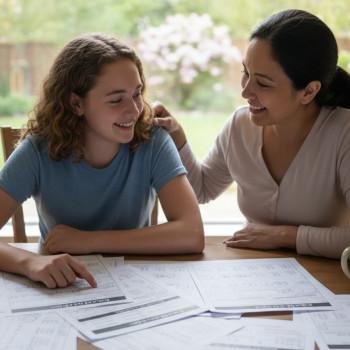
Personalized, focused practice accelerates improvement. One-on-one guidance helps you diagnose weak presentation habits and replace them with efficient routines. When a tutor watches your timed practice, they can:
- Spot recurring legibility issues and correct them on the spot.
- Help you create a personalized time budget and format templates tailored to the AP subject’s rubric.
- Provide targeted drills that replicate the exact cognitive load you’ll experience on test day.
Services like Sparkl’s personalized tutoring can be particularly helpful here—offering 1-on-1 guidance, tailored study plans, expert tutors, and AI-driven insights that track your progress. The right tutor will not only coach content but also engineer your presentation habits until they become second nature.
Checklist for the Week Before the Exam
- Complete at least two full timed practice sections under test-like conditions.
- Practice final-answer boxing and labeling for every question type.
- Polish your most-used templates so they’re automatic.
- Ensure your pen/pencil is tried-and-true and pack spares.
- Rest well and plan a calm morning routine—handwriting tightens when you’re anxious.
Final Thoughts: Clarity Is a Competitive Advantage
Content mastery opens doors. Presentation makes the door easy to find. On AP exams—where many students arrive with similar content knowledge—the legibility of your responses can become a meaningful differentiator. Neat answers don’t change your reasoning, but they change how quickly and accurately graders can award points.

Treat formatting and handwriting as part of your test-taking toolkit. Practice deliberately: time yourself, use templates, and enlist focused feedback. If you can, work with a tutor who will correct small habits and give you personalized drills. Make your answers easy to read, and your knowledge will shine through.
Quick Reference: 10 Do’s and Don’ts
- Do box and label your final answer. Don’t bury it in a paragraph.
- Do number your steps for multi-part solutions. Don’t stack operations without spacing.
- Do write units with numbers. Don’t assume units are understood.
- Do practice with your chosen pen/pencil. Don’t try a new tool on test day.
- Do leave short margins and line breaks between paragraphs. Don’t cram text together.
Handwriting and formatting under time are skills you can train. With consistent practice, mental checklists, and occasional targeted tutoring, you’ll convert messy, anxious pages into clear, score-friendly responses. Show the grader the best version of your thinking—neatly, confidently, and on time.
Ready to make your writing work for you? Begin by timing a single free-response question today, apply one formatting template, and notice how much clearer your answers become. Small wins add up fast.
























No Comments
Leave a comment Cancel