
Why 3D Materials and Safety Matter for AP Students
Whether you’re tinkering with a PLA model for an AP Physics project, testing a resin print in AP Chemistry, or prepping a prototype for an AP Environmental Science field study, understanding 3D materials and safety is more than a lab-week checkbox. It’s a practical life skill that connects classroom concepts to hands-on problem solving. This post is written with AP students in mind: clear, grounded, and full of usable tips that align with the rigor and curiosity expected in Advanced Placement courses.
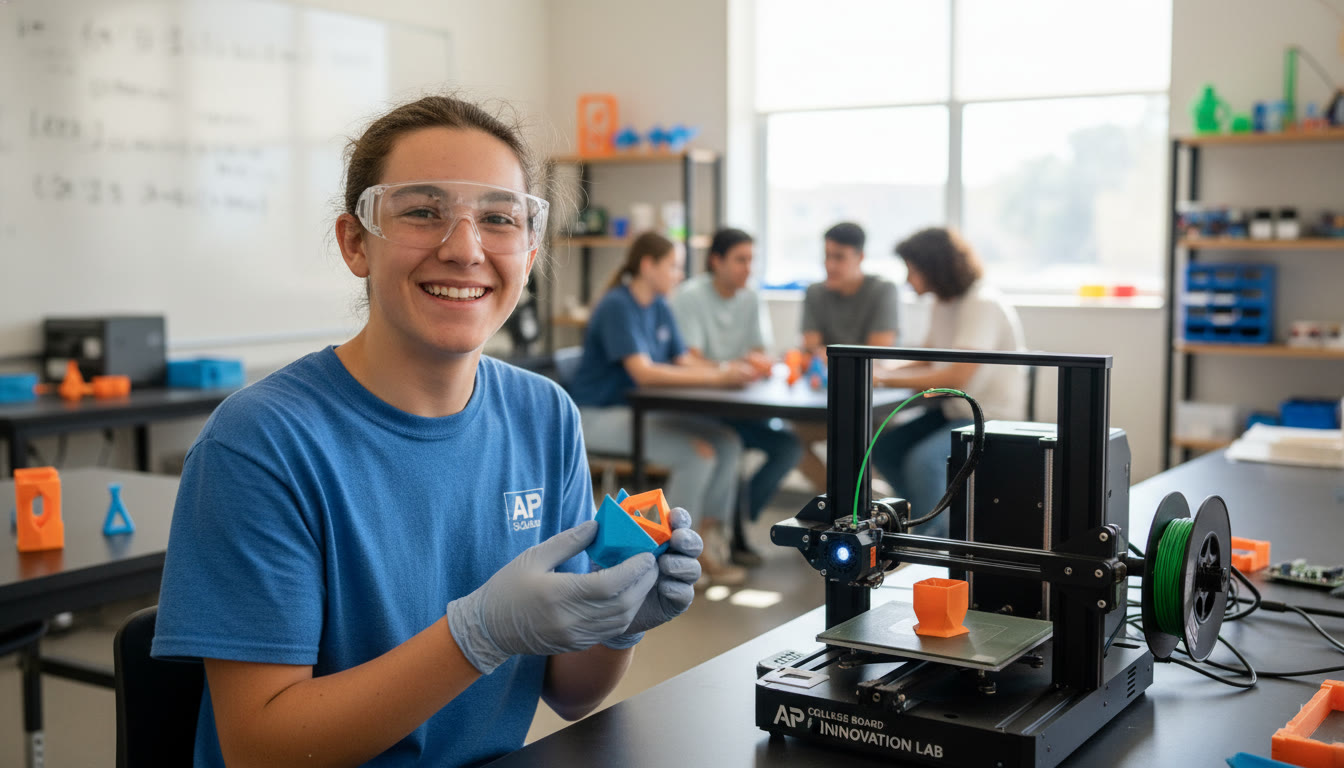
Getting Started: The Basics of 3D Materials
Before diving into safety, let’s quickly frame the common materials you’ll encounter. Knowing how they behave helps you choose safer handling methods and link what you see in the lab to what you learn in class.
Common 3D Printing Filaments and Resins
- PLA (Polylactic Acid): Plant-derived, easy to print, low odor, and commonly used in schools. PLA is one of the friendliest plastics for beginners but still benefits from proper ventilation and handling, especially when post-processing (sanding, melting).
- ABS (Acrylonitrile Butadiene Styrene): Tougher and heat-resistant, but emits stronger fumes when printed. Use with well-ventilated printers and enclosed, filtered setups if possible.
- PETG (Polyethylene Terephthalate Glycol-modified): A middle ground—durable and food-safe in some forms, but still a plastic that needs sensible post-processing precautions.
- Resins (SLA/DLP): Photopolymer resins produce highly detailed prints but are chemically active when uncured. They can be skin irritants or sensitizers until fully cured under UV. Careful handling, gloves, and eye protection are essential.
- Specialty Filaments (Wood PLA, Metal-Filled, Carbon Fiber): Great for projects and demos, but often abrasive (wears nozzles) or contain organic additives—handle dust and particles carefully.
How Material Choice Links to AP Concepts
Choosing a material is a practical application of what you study in AP courses. For example:
- In AP Chemistry, examine polymerization and how additives change thermal properties.
- In AP Physics, consider tensile strength, flexural modulus, and how layer orientation affects mechanical behavior.
- In AP Environmental Science, weigh the life-cycle impacts of biodegradable PLA versus petroleum-based plastics.
Fundamental Safety Rules (Simple, Smart, Non-Negotiable)
These rules are short on words but long on impact. Think of them as the safety “checklist” you should know before you switch on any 3D printer, handle resins, or sand a finished part.
- Never work alone when using chemical resins or heated setups—always have a partner or instructor nearby.
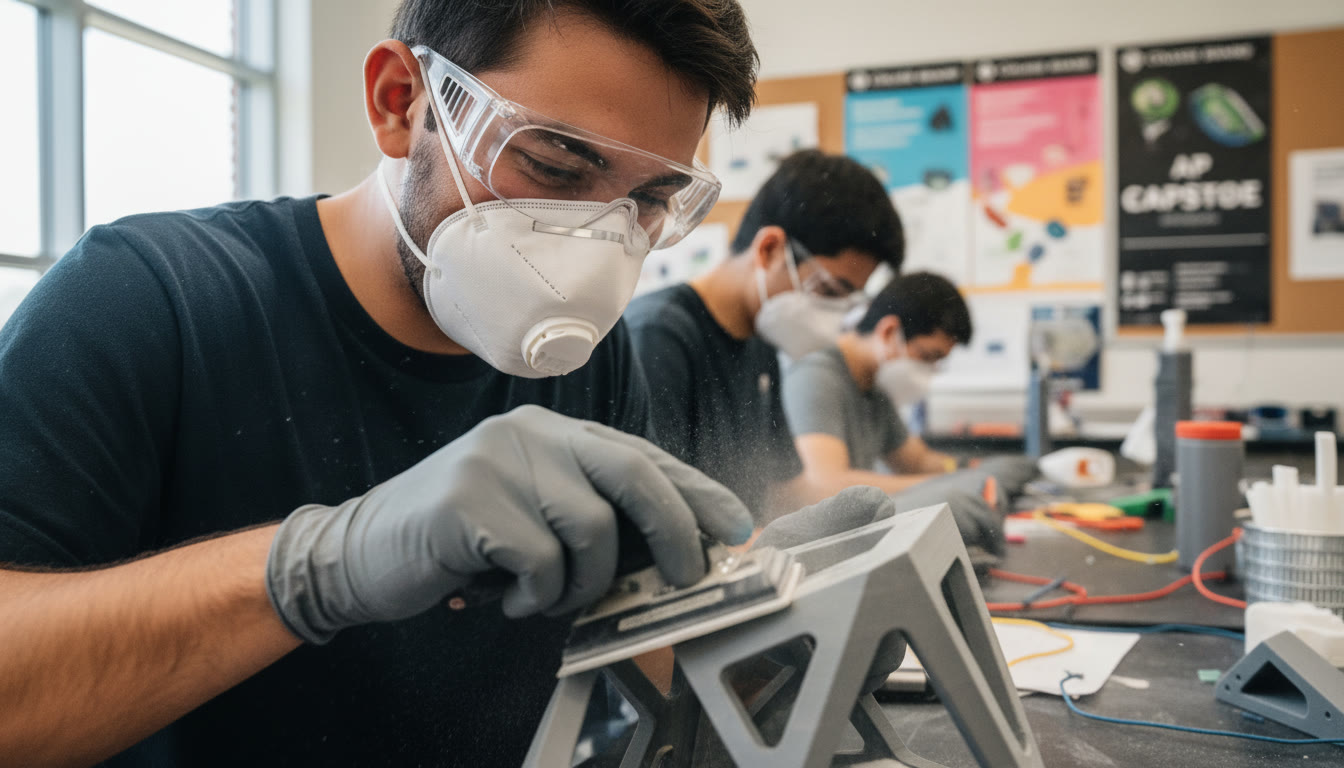
- Wear appropriate PPE (personal protective equipment): safety goggles, disposable nitrile gloves for resins, and a dust mask or respirator when sanding or cutting plastics.
- Ventilation matters: Use a well-ventilated room, and where available, run a printer with a filtration system (HEPA + activated carbon) for filaments that emit fumes.
- Read the Material Safety Data Sheet (MSDS): This provides hazards, first-aid, and handling instructions—an essential skill in any AP lab situation.
- Keep workspaces clean: Dispose of waste resin and plastic scraps properly and label containers to avoid accidental exposure.
Quick PPE Guide
- Goggles: Protect against splashes (resin) and flying debris (trimming, cutting).
- Gloves: Nitrile for resins and solvents; thicker work gloves for heat handling (hot beds/nozzles).
- Respiratory protection: At minimum, a P2/N95 for dust. For fumes or reactive resins, a respirator with organic vapor cartridges is safer.
Practical Tips: Before, During, and After Printing
Good habits keep projects running and teachers relaxed. These practical steps are the ones that make lab time productive and safe.
Before You Print
- Inspect the printer—check for loose wiring, filament jams, and a clean build plate.
- Confirm the material settings (temperature, bed adhesion, retraction) to avoid printing failures and excess fumes.
- Prepare a spill and exposure plan: where to wash, who to notify, and where the MSDS is located.
While Printing
- Stay attentive during the first few layers—many failures occur early and can lead to clogging or smoke.
- Keep flammable materials away from hot ends and heated beds.
- Don’t touch moving parts or hot surfaces. Even if the print looks cool, the nozzle and bed may be dangerously hot.
Post-Processing: The Often-Overlooked Risk Zone
Trimming, sanding, and curing prints are where students often get hurt or exposed to dust and chemicals.
- Sanding produces fine plastic dust—work outdoors or with a dust collection system and wear a mask.
- For resins, wash prints in isopropyl alcohol (IPA) in a closed container and fully cure under UV before handling. Never pour uncured resin down a drain.
- Label and store leftover liquids (IPA, solvents, uncured resin) in clearly marked, closed containers in a ventilated area.
Classroom Policies and Project Planning
Good classroom policy reduces risks and increases fairness. If you’re designing an AP project that uses 3D printing, think about documentation and safety steps as part of your rubric.
Suggested Classroom Checklist for AP Teachers and Students
| Item | Action | Why It Matters |
|---|---|---|
| Material MSDS | Available and reviewed by students | Informs emergency response and safe handling |
| PPE Station | Gloves, goggles, and masks stocked | Immediate access reduces exposure risk |
| Ventilation | Printer placed near exhaust or filter | Controls fumes and particulates |
| Waste Disposal | Clear labels and proper chemical disposal | Prevents environmental contamination |
| Emergency Plan | Posted and practiced | Reduces panic during incidents |
Project Examples and How to Make Them Safer
Examples make safety concrete. Below are three AP-style project ideas with safety-minded tweaks you can apply right away.
1. Physics: Testing Beam Strength With Different Infill
- Objective: Compare how infill patterns and densities affect bending strength.
- Safety tweaks: Use PLA to avoid fumes, test samples outdoors or in a ventilated maker-space, and wear eye protection when breaking samples for analysis.
2. Chemistry: Investigate Polymer Melting Points
- Objective: Observe thermal behavior of PLA vs. ABS under controlled heating.
- Safety tweaks: Use small samples, a temperature-controlled hot plate with a shield, and run experiments under a fume hood if ABS is heated beyond normal printing temperatures.
3. Environmental Science: Life-Cycle Comparisons
- Objective: Compare biodegradability and carbon footprint of PLA and conventional plastics.
- Safety tweaks: When working with soil microbes or chemical tests, follow biosafety and waste protocols; don’t release lab waste into the environment.
Common Mistakes Students Make (And How to Fix Them)
Knowing what other students do wrong helps you avoid the same pitfalls. These are practical fixes, not lectures.
- Skipping the MSDS: Fix—Make checking the MSDS part of your lab plan checklist.
- Underestimating resin hazards: Fix—Assume uncured resin can irritate skin; always glove up and wash exposed skin promptly.
- Improper waste handling: Fix—Assign a waste manager for projects and create a clear label-and-dispose routine.
- Rushing post-processing: Fix—Set aside a dedicated post-processing session with PPE and ventilation—quick cleanups lead to long-term problems.
Tools and Technologies That Make Safety Easier
Modern tools reduce risk and improve outcomes. If your school is budgeting or you’re proposing a project, consider these options.
- Enclosed printers with HEPA and carbon filtration: Great for ABS or materials that off-gas.
- UV curing stations: Provide controlled, enclosed curing for resins instead of ad-hoc sunlight curing.
- Fume hoods and dust extractors: Essential for larger labs that deal regularly with sanding and solvent usage.
- Digital logging and print monitoring: Cameras and sensors can remotely notify you of failures, reducing the need to hover by hot printers.
How to Study 3D Safety for AP Exams and Projects
AP assessments reward clear reasoning and the ability to connect lab practice with theory. Use safety as part of your analysis and experimental design answers.
Tips for Writing Better Lab Reports
- Include a concise safety section in every report—list PPE, ventilation, and waste procedures.
- When proposing experimental variables, also discuss safety trade-offs (e.g., why PLA was chosen over ABS due to ventilation limitations).
- Quantify risk where possible: if you measured particulate levels or temperatures, report them and discuss mitigation.
Practice Questions to Try
- Design an experiment to compare heat tolerance of two filaments. Describe controls, safety measures, and how you would collect data.
- Explain the environmental trade-offs of using biodegradable PLA versus recyclable PETG in a community program.
Real-World Context: Beyond the Classroom
Understanding 3D materials and safety prepares you for internships, maker fairs, and careers in engineering, design, and research. Employers and college programs look for students who can combine technical skill with safe, ethical practice.
- Volunteer at a community makerspace to see professional-grade safety systems in action.
- Document your projects—photographic evidence of safe procedures strengthens college applications and resumes.
How Tutoring and Guided Practice Can Help
Sometimes the fastest way to improve is personalized coaching. Sparkl’s personalized tutoring can help bridge the gap between theory and practice—whether that’s 1-on-1 guidance on an AP project, a tailored study plan for lab report skills, or expert tutors who can offer AI-driven insights into your experimental design. When tutoring is focused on practical projects, you learn faster and make fewer safety mistakes.
Emergency Response: Quick Reference
Memorize these steps and keep a printed copy at your station.
- Skin exposure to resin: Remove contaminated clothing, rinse skin with soap and water, and seek medical guidance if irritation persists.
- Eye exposure: Rinse with clean water for 15 minutes and seek urgent medical attention.
- Fume inhalation: Move to fresh air; if symptoms (dizziness, headache) persist, get medical evaluation.
- Small fires: Use a fire extinguisher rated for electrical and chemical fires; call emergency services for anything larger than a contained small fire.
Checklist for AP Students: Day-Of Project Ready
| Task | Done? | Notes |
|---|---|---|
| MSDS Reviewed | ☐ | Check expiry and supplier information |
| PPE Ready | ☐ | Goggles, gloves, respirator as needed |
| Ventilation Set | ☐ | Filter on? Window open? |
| Post-Processing Plan | ☐ | Where will sanding and solvent work happen? |
| Waste Disposal Labeled | ☐ | Who takes it to the chemical disposal area? |
Final Thoughts: Make Safety Part of Your Science Identity
Safety is not just a set of rules—it’s a habit and a statement about how seriously you take your work. For AP students, attention to materials and safety showcases maturity, critical thinking, and professionalism. It’s a part of the narrative you build in lab notebooks, portfolios, and college applications.
When you pair curiosity with mindful practice—checking MSDSs, selecting appropriate PPE, and reflecting on environmental impacts—you transform a project from a one-off assignment into a credible, sharable achievement. If you want targeted help preparing a safe and rigorous AP project, consider seeking personalized support; expert tutors can help you shape experimental design, safety documentation, and clear lab reporting so your work stands out for the right reasons.
Quick Reference Summary (Save This)
Follow these three steps every time: 1) Know your material (MSDS). 2) Wear the right PPE and ensure good ventilation. 3) Plan for safe post-processing and waste disposal. Practice these, and you’ll keep yourself and your classmates safe while producing better, more reproducible science.
Good luck with your projects—print smart, stay safe, and let your AP work show the best of your creativity and responsibility.




























No Comments
Leave a comment Cancel